Authentic Dwaeji Gukbap (The Busan Pork Bone Soup Most Recipes Get Wrong)
A milky, collagen-rich pork bone broth from Busan with tender sliced pork and rice, built on hours of hard-boiling bones into a cloud-white soup. We broke down the technique behind the iconic opaque broth — the kind you can only get by doing the opposite of what French stock-making taught you.

“Every Korean stock tutorial tells you to skim the foam, keep the heat low, and keep the broth clear. Dwaeji gukbap tells you to throw all of that out. The defining characteristic of a proper gukbap broth — that thick, milky, bone-white opacity — only comes from boiling hard and long, forcing fat, gelatin, and marrow into full emulsion. If your broth is clear, you did it wrong.”
Why This Recipe Works
Dwaeji gukbap is Busan's great working-class dish — pork and rice in a bone broth white as fog, eaten fast in low-lit restaurants at hours that have no business serving soup. It is one of the most technically specific Korean dishes to execute at home, not because the steps are complicated, but because the broth demands you ignore almost everything Western cooking says about stock.
The Emulsion Problem
French stock technique exists to produce clarity. The French skim, simmer low, and filter repeatedly because a clear consommé is the goal. Dwaeji gukbap broth operates on the opposite principle. The milky white color isn't an accident or an impurity — it is the result of forceful, extended boiling that physically breaks fat and collagen into particles too small to separate from the water. This is called an emulsion, and violent heat is the only mechanism that creates it.
At a true rolling boil, the turbulence acts like a natural homogenizer, shattering fat globules into microdroplets that distribute uniformly throughout the liquid. The same process happens with dissolved collagen from the marrow, which is why a proper gukbap broth gels solidly when cooled. Reduce that heat to a simmer and you get a golden, thin pork stock — technically correct, deeply wrong for this dish.
The two-stage cleaning process — cold soak, then blanch and scrub — removes the compounds that would otherwise give the white broth an unpleasant gray tinge. Blood and excess proteins need to be fully purged before the main cook. You are not skimming during the real boil because there is nothing left to skim.
The Bone Geometry
Neck bones are the correct choice for this broth. They contain a high ratio of marrow, connective tissue, and thin bone to actual meat, which means more gelatin and fat per pound than meatier cuts. Spine bones work, trotters work even better if you want a nearly molten broth that coats the inside of the bowl. What you want to avoid are leg bones, which are dense with mineral mass and low in the collagen that produces body.
After two hours of hard boiling, remove the stockpot lid and observe the broth directly. If it looks like whole milk, you are done. If it looks like skim milk, give it another 30 minutes at maximum heat. The broth is the entire dish — the pork belly is almost secondary.
The Pork Belly Role
The pork belly cooks in the broth for the first two hours, then comes out. This is not a braise — you are using the belly's fat to enrich the broth during cooking, then removing it before it disintegrates into the liquid. Slice it cold for the cleanest cuts. Room-temperature pork belly is too soft to slice evenly; refrigerated belly holds its structure and gives you the thin, translucent pieces that fan across the top of a properly assembled bowl.
Tableside Architecture
Dwaeji gukbap is one of the few Korean dishes where seasoning at the pot is intentionally incomplete. The broth is lightly seasoned with doenjang and soup soy sauce — enough to give it a savory baseline, not enough to define its character. That work happens at the table, where each diner builds their bowl with the condiment lineup.
Saeujeot goes in first. A small spoonful of fermented salted shrimp dissolves into the hot broth, releasing a deep oceanic umami that transforms the pork flavor entirely. It is not interchangeable with regular salt or fish sauce. The fermentation adds a complexity that is specific to aged shrimp paste and irreplaceable in the final bowl. Find it at a Korean market; it lasts for months refrigerated.
Gochugaru adds heat and color. Doenjang adds more depth. Each addition changes the character of the bowl in a different direction. The experience is not just eating — it is assembly, calibrated to individual preference, which is why dwaeji gukbap restaurants in Busan are built around wide tables with ample space for condiment dishes.
The earthenware bowl is not decorative. Stone and clay retain heat dramatically longer than porcelain, keeping the broth at serving temperature through the full meal. A cold bowl is the enemy of gukbap. Warm your bowls in the oven at 200°F for 10 minutes before ladling if you don't have earthenware.
Where Beginners Mess This Up
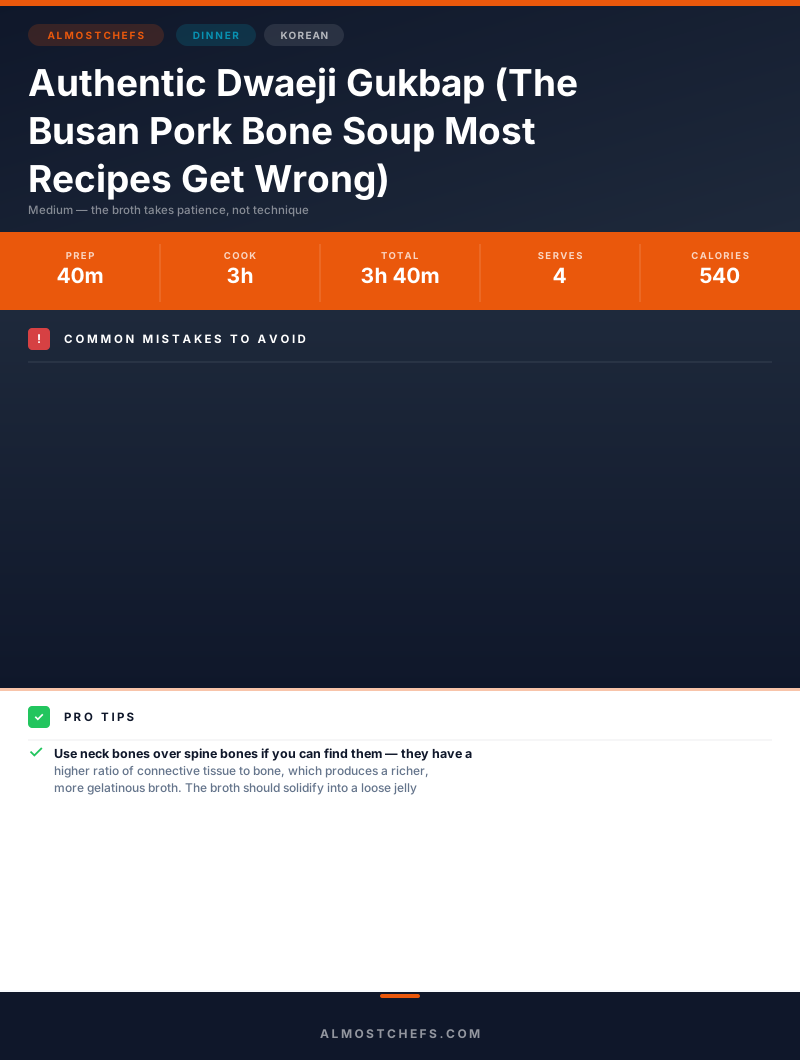
Before we start, read this. These are the 4 reasons your authentic dwaeji gukbap (the busan pork bone soup most recipes get wrong) will fail:
- 1
Skipping the cold-water purge: Pork bones need to soak in cold water for at least an hour before any heat touches them. Blood and impurities locked inside the marrow will muddy the broth with a gray, metallic bitterness that no amount of simmering will fix. The purge pulls those compounds out into the soak water, which you discard. Do not skip this.
- 2
Simmering instead of boiling: Dwaeji gukbap broth is made by rolling boil, not a gentle simmer. The violent agitation is the mechanism that breaks fat droplets into fine emulsion particles, turning the liquid from amber to white. If you keep the heat low out of stock-making habit, you will get a watery, transparent broth with none of the body that defines this dish.
- 3
Blanching too briefly: After the cold soak, the bones must be blanched in boiling water for 5-7 minutes and then scrubbed under cold running water before the real broth cook begins. Shortcuts here leave behind coagulated proteins that give the soup an off-white grayish tone rather than the pure milky white of a properly cleaned bone.
- 4
Under-seasoning at the table: Dwaeji gukbap is intentionally under-seasoned at the pot — the salt level stays low so each diner can adjust with saeujeot (salted fermented shrimp), doenjang, or gochugaru. If you season aggressively during cooking, you eliminate the tableside customization that is core to how this dish is eaten.
🛠️ Core Equipment
- Large heavy-bottomed stockpot (at least 8 quarts)The rolling boil required for a milky broth needs volume — crowded bones in a small pot reduce circulation and produce a weaker, less opaque result. You need room for the liquid to move.
- Spider strainer or slotted spoonFor removing the pork bones and meat after the long broth cook without disturbing the emulsified fat in the liquid. Also essential for blanching and removing blanched bones cleanly.
- Fine-mesh sieveStrain the finished broth through this to remove any bone fragments or large impurities before serving. A cleaner liquid means a better texture in the bowl, even if the broth itself is opaque.
- Earthenware or stone bowlsRetain heat longer than ceramic or glass. Dwaeji gukbap is served boiling-hot and should stay that way through the meal. A cold bowl is the fastest way to kill the experience.
Authentic Dwaeji Gukbap (The Busan Pork Bone Soup Most Recipes Get Wrong)
🛒 Ingredients
- ✦2.5 pounds pork neck bones or spine bones
- ✦1 pound pork belly, whole slab
- ✦12 cups water, plus more for soaking and blanching
- ✦1 medium yellow onion, halved
- ✦1 head garlic, halved crosswise
- ✦2-inch knob fresh ginger, sliced into coins
- ✦4 green onion roots or whole green onions
- ✦2 tablespoons doenjang (Korean fermented soybean paste)
- ✦1 tablespoon guk ganjang (soup soy sauce)
- ✦Sea salt to taste
- ✦4 cups cooked short-grain white rice
- ✦4 green onions, thinly sliced, for serving
- ✦Saeujeot (salted fermented shrimp), for serving
- ✦Gochugaru (Korean red pepper flakes), for serving
- ✦Doenjang, for serving
- ✦1 cup kimchi, for serving
👨🍳 Instructions
01Step 1
Place the pork neck bones in a large bowl and cover completely with cold water. Soak for 1 hour, changing the water once halfway through.
02Step 2
Drain the soaked bones. Place them in a large pot, cover with fresh cold water, and bring to a boil over high heat. Boil for 5-7 minutes.
03Step 3
Drain the bones and immediately rinse them under cold running water, rubbing each bone to remove any remaining coagulated proteins. Rinse the pot as well.
04Step 4
Return the cleaned bones to the pot. Add the pork belly slab, halved onion, garlic head, ginger, green onion roots, and 12 cups of fresh cold water. Bring to a boil over high heat.
05Step 5
Once boiling, maintain a vigorous boil over medium-high to high heat for 2 hours, adding water as needed to keep the bones submerged. The broth will gradually turn opaque and milky white.
06Step 6
After 2 hours, remove the pork belly slab. Set aside to cool, then slice thinly against the grain into 1/4-inch pieces. Return the bones to continue cooking.
07Step 7
Continue boiling the bones for 1 more hour. The broth should be fully milky and noticeably thick.
08Step 8
Strain the broth through a fine-mesh sieve into a clean pot, discarding the bones and aromatics. Season lightly with doenjang, guk ganjang, and salt — keep it mild.
09Step 9
To serve: ladle hot broth into bowls. Add a serving of cooked rice — either directly into the broth (gukbap style) or in a separate bowl on the side. Arrange sliced pork belly on top. Garnish with sliced green onions.
10Step 10
Set out small dishes of saeujeot, gochugaru, doenjang, and kimchi at the table. Each person seasons their own bowl.
Nutrition Per Serving
Estimates based on standard preparation. Adjustments alter macros.
🔄 Substitutions
Instead of Pork neck bones...
Use Pork trotters or feet
Higher collagen content produces an even thicker, more gelatinous broth. Requires the same soaking and blanching process. The broth will set even more firmly when chilled.
Instead of Pork belly...
Use Pork shoulder
Leaner than belly, slightly less rich. Slice across the grain after resting. Works well for those who want the broth richness without the fat layer from belly slices.
Instead of Saeujeot...
Use Fish sauce mixed with a small amount of salt
Loses the fermented shrimp funk that defines the traditional tableside seasoning. Use sparingly — fish sauce is saltier than saeujeot. Start with half the amount you would use of saeujeot.
Instead of Short-grain white rice...
Use Barley or mixed grain rice (japgokbap)
Adds nuttiness and slightly more texture in the broth. Common in health-focused Korean households. Does not change the soup itself.
🧊 Storage & Reheating
In the Fridge
Store broth and pork separately in airtight containers for up to 4 days. The broth will gel when cold — this is correct. Reheat over medium heat, stirring to re-emulsify.
In the Freezer
Freeze broth in portions for up to 3 months. Freeze sliced pork for up to 1 month. Thaw broth overnight in the fridge and reheat hard to restore the milky consistency.
Reheating Rules
Bring the broth back to a full boil before serving — not just warmed through. The texture and flavor of gukbap depends on the broth being actively hot. Add the pork slices to the hot broth for 1-2 minutes to reheat without drying out.
❓ Frequently Asked Questions
Why is my broth not turning white?
Your heat is too low. The white color comes from fat and collagen being physically broken into fine emulsion particles by turbulent boiling. A gentle simmer can cook the bones but will never produce the milky opacity. Turn the heat up until you have a rolling boil and maintain it for the full cook time.
Can I make this in a pressure cooker?
You can produce a rich, flavorful broth in a pressure cooker in about 1.5 hours, but it will not be milky white. Pressure cooking is a closed, low-agitation environment — the emulsification mechanism doesn't work. If color doesn't matter to you, a pressure cooker is fine. If you want the authentic Busan white broth, use an open pot with a rolling boil.
What is saeujeot and where do I find it?
Saeujeot is salted fermented shrimp — tiny whole shrimp packed in salt and aged for months. It is the essential tableside condiment for dwaeji gukbap and not optional in the traditional version. Find it at any Korean grocery store in the refrigerated banchan section. It keeps for months in the fridge.
Should the rice go in the soup or on the side?
Both are correct. In Busan, this is a matter of personal preference and establishment style. Rice submerged in the broth absorbs flavor and becomes softer over time. Rice on the side stays distinct and lets you control each spoonful. First-timers often prefer rice on the side until they find their preference.
Why does the recipe use doenjang in the broth and at the table?
A small amount of doenjang goes into the broth during cooking to add depth and round out the pork flavor — it melts into the background. The tableside doenjang is a finishing seasoning added in small amounts to adjust individual bowls. They serve different functions.
How do I know the broth is done?
The broth should be fully opaque and milky white with visible body when you tilt the pot. Scoop a ladle and hold it up to the light — you should not be able to see through it. If it looks like weak tea with white tint, it needs more time at a harder boil.
The Science of
Authentic Dwaeji Gukbap (The Busan Pork Bone Soup Most Recipes Get Wrong)
We turned everything on this page into a beautiful, flour-proof PDF cheat sheet. Print it out, stick it to your fridge, and never mess up your authentic dwaeji gukbap (the busan pork bone soup most recipes get wrong) again.
*We'll email you the high-res PDF instantly. No spam, just perfectly cooked meals.
AlmostChefs Editorial Team
We translate the internet's most popular cooking videos into foolproof, beginner-friendly written recipes. We analyze multiple methods, test them in our kitchen, and engineer a single "Master Recipe" that gives you the best possible result with the least possible stress.