Pan-Fried Pork Dumplings (Crispy Bottom, Steamed Top)
Handmade dumplings with ground pork, napa cabbage, and fresh aromatics — seared until the bottoms are deeply golden, then steam-cooked until the dough turns soft and the filling is fully cooked through. The potsticker method is a two-phase technique, not a choice between frying and steaming.
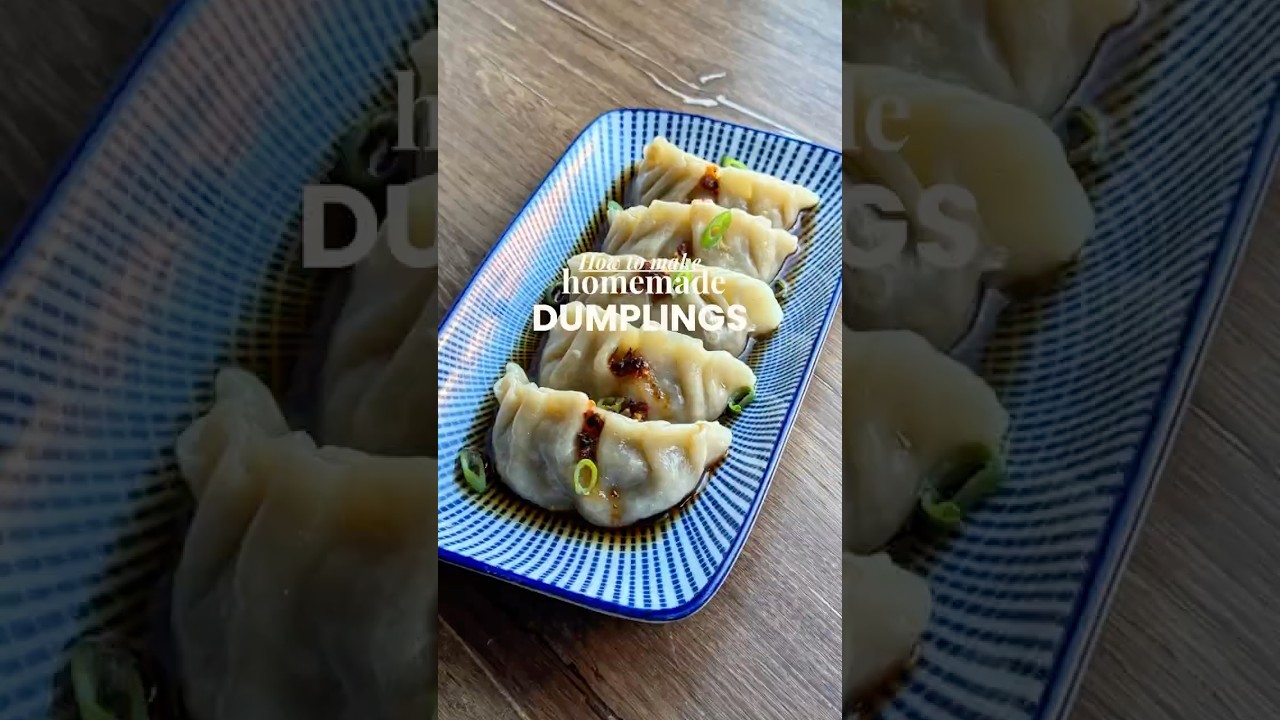
“Dumpling failures cluster around two moments: the first three minutes when the bottoms burn before the crust sets, and the uncovering moment when steamed-soft dough fails to re-crisp. Both failures are technique problems, not ingredient problems. The fix is mechanical — high heat before the water, lid on immediately after, lid off at exactly the right moment. Once the two-phase sequence clicks, every batch comes out correctly.”
Why This Recipe Works
Dumplings are not complicated food. They are precision assembly followed by a two-phase cook that most home recipes describe either incompletely or incorrectly. Fix the technique and the rest is just chopping and folding.
The Filling Is a Moisture Problem
Ground pork does not need much help — it has fat, protein, and flavor. The variables that ruin dumpling filling are almost entirely water-related. Napa cabbage is roughly 94% water by weight. When it heats inside a sealed dough wrapper, that moisture releases as steam and turns a cohesive filling into a pressurized slurry. That pressure is what splits the seam from the inside.
The salt-and-squeeze step extracts that water before it can cause damage. Toss the chopped cabbage with a pinch of salt, wait five minutes for osmosis to pull the water out of the cells, then squeeze the cabbage firmly until no more liquid releases. The amount of liquid that comes out will be surprising. That is the exact amount that would have destroyed the filling texture and blown out the seam during cooking.
The cornstarch in the filling is doing secondary moisture management. It absorbs the residual liquid that the squeeze did not remove and gelatinizes during cooking, creating a slightly smoother, more cohesive texture throughout the filling. Do not skip it.
Directional Mixing Is a Protein Alignment Technique
This is the most counterintuitive step in the recipe and the one that separates mediocre dumpling filling from genuinely good dumpling filling. Ground meat contains myosin proteins that, when worked under mechanical stress, extend and cross-link with adjacent protein strands to form a gel-like network. This network creates the bounce — the slightly springy, cohesive texture — that defines well-made dumpling filling.
The cross-linking only happens efficiently when the strands are being extended in a consistent direction. Stir clockwise for 60 seconds and the network forms. Stir randomly and you break the forming chains as fast as they develop. One direction, one minute, and the filling transforms from crumble to cohesive. Mix it once and you will understand why the instruction exists.
The Two-Phase Cook Is a Distinct Technique
Potstickers are defined by their cooking method. The name is a functional description of the process — they stick, and then you unstick them with steam. The crispy bottom and the tender, steamed top are not competing qualities; they are the product of two deliberately sequenced phases.
Phase one: dry heat at high temperature. The 12-inch non-stick skillet must be properly preheated with shimmering oil before a single dumpling touches the surface. The dough sets on contact with the hot pan and releases on its own timeline — not yours. Moving a dumpling before the crust forms tears the bottom off and creates a wound that leaks filling into the oil for the rest of the batch.
Phase two: wet heat in a sealed environment. The quarter cup of cold water hitting a screaming-hot pan generates an immediate burst of steam that fills the enclosed lid space and cooks the filling from the inside out while the upper dough softens and turns translucent. The water quantity is calibrated — it should evaporate in 5–6 minutes, which is the same time the pork needs to cook through to safe temperature. When the wet sizzling becomes a dry crackle, the steam phase is over.
The uncovered finish is not optional styling. Condensed steam leaves a thin layer of moisture on the bottom of each dumpling. One minute of uncovered heat at medium-high evaporates that moisture and restores the crust to its phase-one texture. Skip this and you have technically cooked dumplings with pale, soft bottoms — structurally correct but texturally incomplete.
Why the Fold Does Not Need to Be Perfect
Professional dumpling folders produce 15–18 pleats per dumpling with one hand in under 10 seconds. This skill takes years. The purse fold in this recipe — bringing the two bottom corners of the half-moon together — requires zero dexterity, creates a stable three-dimensional form, and sits flat-side down in the pan without rocking. It holds its filling, seals completely, and produces a recognizable dumpling shape.
What the fold does require is a proper seal. A well-sealed seam with no air inside is the structural requirement. Trapped air expands under steam pressure and ruptures the wrapper from the inside — the most common visible failure in a pan of dumplings. Press from the center of the seam outward and make sure every press point is actually bonded, not just touching. If a seam opens during assembly, wet it and re-press. The dough is forgiving.
The Dipping Sauce Is Architecture
Soy sauce alone is salt. What makes a dumpling sauce work is balance between acid, heat, and fat: rice vinegar cuts through the pork fat, chili oil adds fragrance and heat, sesame oil contributes a low register that rounds the profile. Start with two parts soy, one part rice vinegar, half part chili oil. Adjust from there. The sauce should complement the dumpling without overwhelming it — if you can taste the sauce more than the dumpling, the ratio is off.
Where Beginners Mess This Up
Before we start, read this. These are the 4 reasons your pan-fried pork dumplings (crispy bottom, steamed top) will fail:
- 1
Wet cabbage in the filling: Napa cabbage is roughly 94% water by weight. Uncured, it releases all of that water inside the sealed dumpling during cooking, turning a cohesive filling into a loose slurry that forces the seam open and floods the pan. Salt the chopped cabbage, let it rest 5 minutes, then squeeze every drop of liquid out with your hands before it touches the pork. This is the most important prep step in the recipe.
- 2
Mixing the filling in random directions: Ground pork filling develops a sticky, cohesive texture — what Chinese cooks call a bounce — when the myosin proteins in the meat bind together under mechanical agitation. This only happens when you stir in one consistent direction. Mixing randomly breaks the protein chains as fast as they form. One direction, one minute of steady stirring, and the filling goes from crumble to cohesive.
- 3
Lifting the lid during the steam phase: The steam trapped under the lid is doing the cooking. Lifting it releases accumulated heat that will not immediately recover and leaves the filling undercooked at the center. The lid stays on for the full 5–6 minutes. When the sizzling shifts from a wet burbling to a dry crackle, the water has evaporated and the steam phase is over.
- 4
Skipping the dry finish after steaming: After the lid comes off, there is residual moisture on the bottom of each dumpling from condensed steam. One minute of uncovered heat at medium-high evaporates that moisture and restores the crust. Skip this step and you have technically cooked dumplings with a soft, pale bottom — which is not a potsticker.
The Video Reference Library
Want to see it in action? Here are the exact videos we analyzed and combined to build this foolproof recipe translation:
The primary reference for this recipe. Shows the filling prep, the directional mixing technique, the fold, and the full two-phase cook with close-up detail on the crust color target.
🛠️ Core Equipment
- Large non-stick skillet with tight-fitting lidNon-stick prevents the wrappers from bonding to the pan surface during the initial sear. The lid needs a good seal — a loose lid extends the steam phase unpredictably. A [12-inch non-stick skillet](/kitchen-gear/review/non-stick-skillet) is the correct tool here; cast iron is too porous for this application.
- Small bowl of water for sealingWonton wrapper edges need moisture to bond under pressure. Dry edges produce seams that split open the moment steam pressure builds inside. Keep a small bowl at the assembly station and wet the full edge perimeter before sealing.
- Thin flexible spatulaFor releasing the finished dumplings cleanly after the crust sets. Attempt to slide a thick spatula under a hot dumpling and you tear the bottom off. Thin and flexible gets underneath without resistance.
Pan-Fried Pork Dumplings (Crispy Bottom, Steamed Top)
🛒 Ingredients
- ✦24 round wonton wrappers
- ✦1 lb ground pork
- ✦2 cups napa cabbage, finely chopped
- ✦3 scallions, minced
- ✦2 tablespoons low-sodium soy sauce
- ✦1 tablespoon sesame oil
- ✦1 tablespoon fresh ginger, minced
- ✦3 cloves garlic, minced
- ✦1 teaspoon rice vinegar
- ✦1 teaspoon cornstarch
- ✦0.25 teaspoon white pepper
- ✦1 teaspoon sugar
- ✦2 tablespoons vegetable oil for pan-frying
- ✦0.25 cup water for steaming
- ✦Chili oil for serving, optional
- ✦Fresh cilantro for garnish, optional
👨🍳 Instructions
01Step 1
Toss the finely chopped napa cabbage with a pinch of salt in a medium bowl. Let sit for 5 minutes. Squeeze the cabbage firmly with both hands until no more liquid releases. Discard the liquid.
02Step 2
Combine ground pork, squeezed cabbage, scallions, soy sauce, sesame oil, ginger, garlic, rice vinegar, cornstarch, white pepper, and sugar in a bowl.
03Step 3
Stir the filling continuously in one direction for 60 seconds until the mixture becomes noticeably sticky and pulls away from the bowl walls.
04Step 4
Lay a wonton wrapper flat on a clean, dry surface. Place exactly 1 teaspoon of filling in the center. Do not overfill.
05Step 5
Wet the entire edge of the wrapper with water using your fingertip. Fold the wrapper in half over the filling, pressing the center of the seam first, then working outward toward each corner to push out any air pockets. Press firmly to seal.
06Step 6
Bring the two bottom corners of the half-moon together and press to form a rounded purse shape. Set on a clean surface. Repeat with all remaining wrappers and filling.
07Step 7
Heat vegetable oil in a large non-stick skillet over medium-high heat until shimmering.
08Step 8
Place dumplings flat-side down in a single layer with space between each. Cook undisturbed for 2–3 minutes until the bottoms are deeply golden.
09Step 9
Add 0.25 cup of water to the pan and immediately cover with the lid.
10Step 10
Steam covered for 5–6 minutes until the water is absorbed and the dough is translucent and tender. Do not lift the lid.
11Step 11
Remove the lid, tilting it away from you. Cook uncovered for 1 minute at medium-high heat to evaporate residual moisture and re-crisp the bottoms.
12Step 12
Slide a thin spatula under each dumpling to release. Serve crispy-side up with chili oil, soy sauce, or black vinegar dipping sauce.
Nutrition Per Serving
Estimates based on standard preparation. Adjustments alter macros.
🔄 Substitutions
Instead of Ground pork...
Use Ground chicken or turkey
Leaner and less rich. Add an extra teaspoon of sesame oil to compensate for lost fat flavor. Both alternatives need a full additional minute of steam.
Instead of Napa cabbage...
Use Finely chopped mushrooms or shredded zucchini
Mushrooms add significant umami and pair especially well with chicken filling. Zucchini adds moisture — squeeze it dry the same way you would cabbage.
Instead of Round wonton wrappers...
Use Square wonton wrappers
Fold into triangles or rectangles instead of half-moons. Cooking technique is identical. Round wrappers produce the traditional shape but square ones taste the same.
Instead of Vegetable oil...
Use Avocado oil
Higher smoke point handles the initial high-heat sear more cleanly. Slightly nuttier flavor that does not compete with the sesame in the filling.
🧊 Storage & Reheating
In the Fridge
Store cooked dumplings in an airtight container for up to 3 days. The crispy bottoms soften in storage — reheat in a dry skillet over medium heat for 2–3 minutes to restore the crust.
In the Freezer
Freeze uncooked assembled dumplings for up to 2 months. Freeze flat first to prevent sticking, then transfer to a freezer bag. Cook directly from frozen.
Reheating Rules
Skillet only — never microwave. Add a small splash of water to the pan, cover, heat 2 minutes, then uncover 1 minute to re-crisp. Microwaving produces rubbery, pale dumplings with no structural integrity.
❓ Frequently Asked Questions
Why do my dumpling seams keep splitting open?
One of three causes: edges were not wet before sealing, filling was too close to the edge, or there were air pockets inside. Wet the full edge perimeter, leave at least 1/4 inch of clean wrapper around the filling, and press from the center outward to push out air before sealing the ends.
Why do my dumplings stick to the pan even with non-stick cookware?
The oil was not hot enough before the dumplings went in. Cold oil lets the wrapper bond to the pan surface before a proper crust forms. The oil must be visibly shimmering before any dumpling touches it.
Can I steam-only without the pan-fry?
Yes. Line a bamboo steamer with parchment, place dumplings with space between them, and steam over boiling water for 8–10 minutes. You lose the crispy bottom but the dough texture is slightly softer and more delicate — which is a different dish, not a better or worse one.
How do I know when the filling is cooked through?
After the steam phase, the dough should be translucent and the filling should have pulled slightly away from the wrapper walls. If uncertain, cut one open — the pork should show no pink and the juices run clear.
Why should I mix the filling in one direction?
Directional mixing aligns the myosin proteins in the ground meat, allowing them to cross-link and form a network that binds the filling together. Random mixing disrupts this chain formation and produces a crumbly, loose filling that falls apart when bitten. One direction, one minute of steady stirring.
Can I use this technique for vegetable dumplings?
Yes. Replace the pork with a mixture of finely chopped shiitake mushrooms, firm tofu (pressed dry), shredded carrot, and scallions. Season with the same soy, sesame, and ginger ratios. Skip the directional mixing — it applies to protein, not vegetables.
The Science of
Pan-Fried Pork Dumplings (Crispy Bottom, Steamed Top)
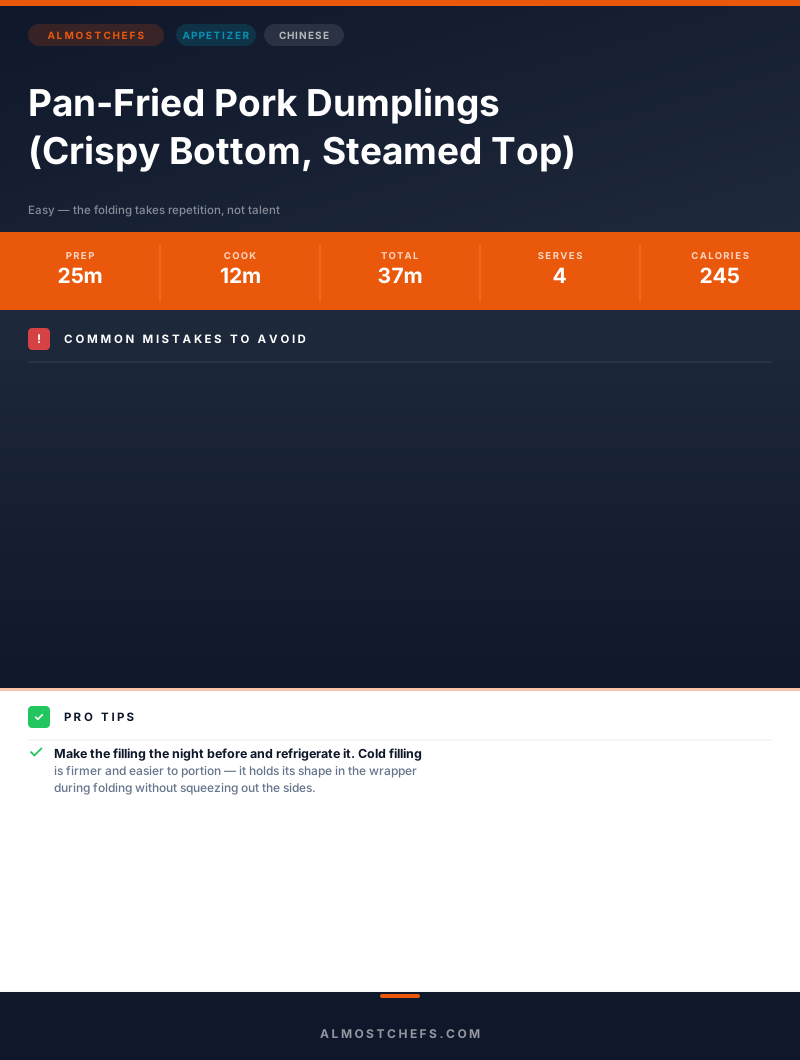
We turned everything on this page into a beautiful, flour-proof PDF cheat sheet. Print it out, stick it to your fridge, and never mess up your pan-fried pork dumplings (crispy bottom, steamed top) again.
*We'll email you the high-res PDF instantly. No spam, just perfectly cooked meals.
AlmostChefs Editorial Team
We translate the internet's most popular cooking videos into foolproof, beginner-friendly written recipes. We analyze multiple methods, test them in our kitchen, and engineer a single "Master Recipe" that gives you the best possible result with the least possible stress.