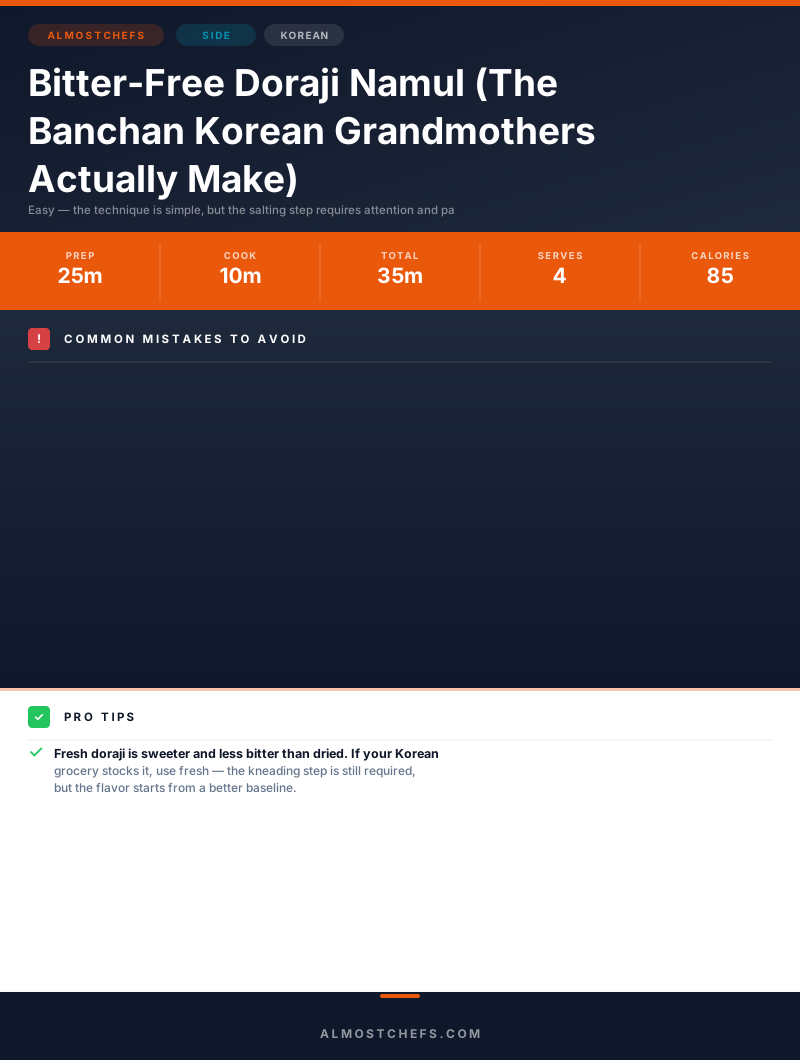
Bitter-Free Doraji Namul (The Banchan Korean Grandmothers Actually Make)
A classic Korean bellflower root banchan — chewy, nutty, and lightly seasoned with garlic and sesame oil. The bitterness that ruins most home attempts is entirely avoidable if you know the salting and kneading technique that Korean home cooks have used for centuries.

“Doraji namul is one of the oldest banchan in the Korean table — bellflower root stir-fried with garlic and sesame oil, dating back to records from the Joseon dynasty. The reason most home versions taste unpleasantly bitter has nothing to do with the recipe and everything to do with one skipped step: kneading salt into the raw root until the white liquid runs clear. Skip that, and the saponins that make bellflower root one of the most studied anti-inflammatory vegetables in Korean traditional medicine will make your banchan taste like medicine.”
Why This Recipe Works
Doraji namul is one of those dishes that looks so simple on paper that most cooks assume they can improvise their way through it. Salt. Garlic. Sesame. How hard can it be? Hard enough that the majority of home attempts produce something unpleasantly bitter, texturally wrong, or drowned in sesame oil. The technique here is not complicated, but it is specific — and every step exists because the raw ingredient demands it.
The Bitterness Problem
Bellflower root contains platycodin, a triterpenoid saponin responsible for its distinctive medicinal reputation in Korean traditional medicine and equally responsible for the bitter, soapy flavor that ruins most home versions. These compounds are concentrated in the outer fibers of the shredded root, suspended in the milky white liquid that the root releases under pressure.
The fix is physical, not culinary. You knead coarse salt into the raw root for three to five minutes — not a gentle massage, but aggressive squeezing and working — until that milky white liquid runs clear. The salt draws out moisture, the kneading physically expresses the saponin-rich liquid from the fibers, and rinsing removes what's left. Skip this step, or rush it, and every subsequent technique decision is irrelevant. The bitterness is structural.
What makes this technique worth understanding beyond the recipe: this is the same logic behind removing excess liquid from shredded zucchini before making fritters, or salting eggplant before roasting. Salt as a dehydration mechanism first, flavor second.
Why High Heat Is Non-Negotiable
Once the root is properly prepared and squeezed dry, it needs a carbon steel wok at high heat — not a nonstick pan at medium, not a stainless skillet with butter. The goal is stir-fry contact, not steaming. Any residual moisture in the root will vaporize on contact with a hot wok surface. On an insufficiently hot pan, that moisture simply accumulates as steam and braises the root soft.
The result of proper high-heat stir-frying: exterior fibers with slight color and texture contrast, interior that stays firm and chewy. The result of low-heat cooking: uniform mush. The wok is the right tool here because its curved surface pushes the ingredients against the hottest part with each toss rather than pooling them in the cooler center.
Seasoning Order and the Sesame Rule
Korean namul follows a specific seasoning logic: aromatics first (garlic in hot oil), salt and soy during cooking to penetrate the fibers, sesame oil and seeds off the heat as a finishing note. This is not arbitrary. Sesame oil is composed almost entirely of volatile aromatic compounds that evaporate rapidly at cooking temperatures. Adding it to a hot pan destroys what you're paying for. Every drop of sesame oil in this recipe goes in after the heat is off.
The quantity matters as much as the timing. One teaspoon per 300g of root is the ceiling, not the floor. Doraji's flavor profile is mild and clean — it is not a canvas for sesame. It is a delicate ingredient that sesame oil should complement at a distance, not overwrite entirely.
The Gut Health Angle
The inulin content in doraji is worth mentioning not as a marketing note but as a cooking constraint. Inulin, the prebiotic fiber that feeds beneficial gut bacteria and contributes to the root's traditional use as a digestive tonic, degrades with extended heat exposure. Short, high-heat stir-frying preserves more of it than slow braising. This is a case where good technique and good nutrition happen to be the same technique — the dish is best when cooked fast and hot, and it's also most nutritionally intact when cooked that way.
Doraji namul earns its place at the Korean table not because it's dramatic or complex, but because it does exactly what banchan is supposed to do: provide a quiet, textural, subtly flavored counterpoint to the intensity of kimchi, gochujang-dressed proteins, and fermented pastes that dominate the rest of the spread. Its restraint is the point.
Where Beginners Mess This Up
Before we start, read this. These are the 4 reasons your bitter-free doraji namul (the banchan korean grandmothers actually make) will fail:
- 1
Skipping or rushing the salt-kneading step: Raw doraji contains saponins — bitter, soapy compounds concentrated in the outer fibers of the root. Salting and vigorously kneading the root for 3-5 minutes until the milky liquid is squeezed out removes the bulk of these compounds. Rinsing alone does almost nothing. The physical pressure is the mechanism.
- 2
Using too much sesame oil: Doraji has a delicate, slightly earthy flavor that sesame oil can easily overwhelm. The ratio is 1 teaspoon per 300g of root — not a tablespoon, not a drizzle. More sesame oil doesn't make it taste more Korean. It makes it taste like sesame oil with a vegetable problem.
- 3
Overcooking the root: Doraji namul should have a firm, slightly chewy bite — not mushy. Stir-fry over high heat for no more than 4-5 minutes. The roots are thin-shredded and cook fast. Extended cooking collapses the fibers and destroys the textural contrast that makes this banchan interesting.
- 4
Using pre-packaged dried doraji without adequate rehydration: Dried bellflower root needs at least 30 minutes of soaking in cold water before the salting step. Under-rehydrated root stays tough and fibrous even after cooking. The soaking step is separate from — and before — the salting step. Both are required.
🛠️ Core Equipment
- Large mixing bowlYou need room to knead the salted root aggressively. A bowl that's too small means the liquid splashes out before you can squeeze it from the fibers.
- Wide stainless steel or carbon steel wokHigh, even heat is essential for proper stir-frying. A [carbon steel wok](/kitchen-gear/review/carbon-steel-wok) creates the wok hei that separates stir-fried namul from something that's been sautéed.
- Cheesecloth or clean kitchen towelFor squeezing the final liquid from the kneaded root. Hands work, but cloth gets more liquid out and protects you from the heat if blanching is involved.
Bitter-Free Doraji Namul (The Banchan Korean Grandmothers Actually Make)
🛒 Ingredients
- ✦300g fresh or rehydrated dried bellflower root (doraji), shredded into thin strips
- ✦1.5 teaspoons sea salt, divided
- ✦1 tablespoon neutral oil (such as avocado or sunflower)
- ✦3 cloves garlic, minced
- ✦1 teaspoon sesame oil
- ✦1 teaspoon toasted sesame seeds
- ✦1 teaspoon soy sauce
- ✦1/2 teaspoon sugar
- ✦2 stalks green onion, thinly sliced
- ✦Freshly ground black pepper to taste
👨🍳 Instructions
01Step 1
If using dried doraji, soak the shredded root in cold water for 30-40 minutes until fully rehydrated. Drain thoroughly.
02Step 2
Place the drained doraji in a large mixing bowl. Sprinkle 1 teaspoon of sea salt over the root. Knead and squeeze firmly for 3-5 minutes until milky white liquid is expelled and the root feels slightly softened.
03Step 3
Rinse the kneaded root under cold running water two to three times to remove the salt and expelled liquid. Squeeze dry in a clean kitchen towel or cheesecloth, removing as much moisture as possible.
04Step 4
Heat the neutral oil in a wok or wide pan over high heat until shimmering. Add the minced garlic and stir-fry for 30 seconds until fragrant but not browned.
05Step 5
Add the squeezed doraji to the pan. Stir-fry over high heat for 4-5 minutes, tossing frequently, until the root turns slightly translucent and picks up light color at the edges.
06Step 6
Add the soy sauce, sugar, and remaining 0.5 teaspoon salt. Toss to coat evenly and stir-fry for another 1 minute.
07Step 7
Remove from heat. Add sesame oil, toasted sesame seeds, and sliced green onion. Toss gently to combine.
08Step 8
Taste and adjust salt. Serve at room temperature or chilled as banchan. The flavor improves after 30 minutes of resting.
Nutrition Per Serving
Estimates based on standard preparation. Adjustments alter macros.
🔄 Substitutions
Instead of Bellflower root (doraji)...
Use Jicama or daikon radish, thinly julienned
Neither has the same earthy depth, but the textural profile — firm, slightly chewy — is similar. Skip the extended salt-kneading for daikon; it only needs 10 minutes.
Instead of Sesame oil...
Use Perilla oil (deulgi-reum)
Perilla oil is traditional in some regional Korean variations and has a distinctly herbal, nutty flavor that pairs beautifully with the mild earthiness of the root. Harder to find but worth seeking out.
Instead of Sugar...
Use Honey or rice syrup (mulyeot)
Rice syrup adds a subtle chewiness and mild sweetness that integrates more smoothly than granulated sugar. Use the same quantity.
Instead of Soy sauce...
Use Coconut aminos
Slightly sweeter and lower sodium. Adjust salt accordingly. Fully vegetarian and soy-free for allergy requirements.
🧊 Storage & Reheating
In the Fridge
Store in an airtight container for up to 4 days. The flavor improves significantly on day two as the garlic and sesame meld into the root.
In the Freezer
Not recommended. The chewy texture of the root collapses after freezing and thawing, producing a watery, soft result.
Reheating Rules
Doraji namul is a cold or room-temperature banchan. If it's been refrigerated, simply remove it 15-20 minutes before serving. It doesn't need reheating.
❓ Frequently Asked Questions
Why is my doraji namul still bitter after following the recipe?
The salt-kneading step was either too short or the liquid wasn't fully squeezed out. The milky white liquid must run clear — or near clear — before you rinse. If you kneaded for 3 minutes and still see heavy milky liquid, keep going for another 2 minutes. Physical pressure is the mechanism, not time alone.
Can I use canned or pre-salted doraji?
Yes. Pre-salted or canned bellflower root has already had the initial bitterness reduced during processing. Rinse it thoroughly, squeeze dry, and skip the salt-kneading step entirely. Proceed directly to stir-frying. Be careful with additional salt in the seasoning — canned varieties retain significant sodium.
What does doraji namul taste like?
Mild, slightly earthy, and faintly sweet with a firm, pleasantly chewy texture. Think of it as the muted, sophisticated cousin of fernbrake (gosari) namul — less assertive, more delicate. The sesame oil and garlic do most of the flavor lifting.
Is bellflower root actually good for you?
Korean traditional medicine has used doraji as a respiratory and digestive tonic for centuries, and modern research has validated some of those claims. The root is high in inulin (a prebiotic fiber that feeds beneficial gut bacteria), platycodin (a saponin with documented anti-inflammatory properties), and dietary fiber. It's also low in calories. The same saponins responsible for bitterness are the ones with anti-inflammatory activity — you remove the surface concentration through kneading, not the entire compound.
Why does my doraji turn mushy when I stir-fry it?
One of two reasons: the root wasn't squeezed dry enough before hitting the pan (trapped moisture steams the root instead of frying it), or the heat was too low. High heat and a dry root are the only two variables that control texture. If your wok isn't smoking-hot before the root goes in, you're braising, not stir-frying.
How do I serve doraji namul as part of a full banchan spread?
Its mild flavor makes it a good counterbalance to stronger banchan like kimchi, kongnamul (spicy bean sprouts), or gochujang-dressed spinach. It works equally well in a simple home meal with rice and soup as it does on a restaurant-style table with eight or nine banchan. The white color is also visually valuable — it breaks up the red and green dominance of most Korean spreads.
The Science of
Bitter-Free Doraji Namul (The Banchan Korean Grandmothers Actually Make)
We turned everything on this page into a beautiful, flour-proof PDF cheat sheet. Print it out, stick it to your fridge, and never mess up your bitter-free doraji namul (the banchan korean grandmothers actually make) again.
*We'll email you the high-res PDF instantly. No spam, just perfectly cooked meals.
AlmostChefs Editorial Team
We translate the internet's most popular cooking videos into foolproof, beginner-friendly written recipes. We analyze multiple methods, test them in our kitchen, and engineer a single "Master Recipe" that gives you the best possible result with the least possible stress.