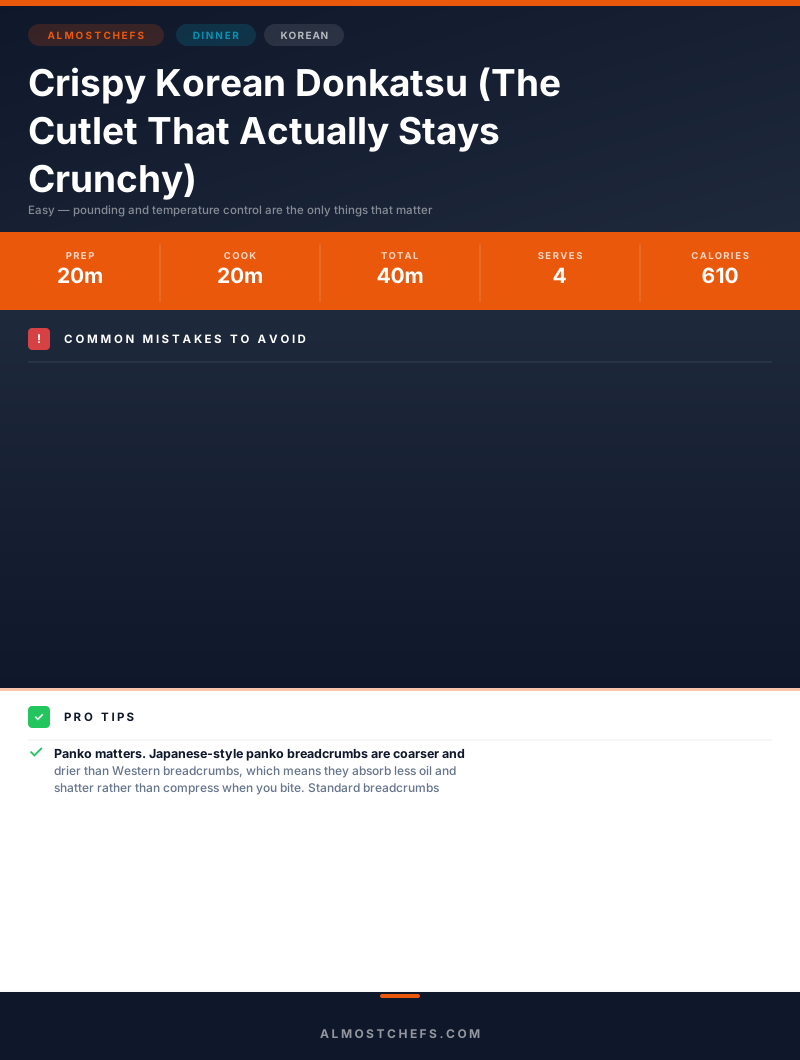
Crispy Korean Donkatsu (The Cutlet That Actually Stays Crunchy)
Korean-style breaded pork cutlet with a shatteringly crispy panko crust, tender pounded meat, and that glossy, tangy-sweet donkatsu sauce you only find in Korean diners. We broke down every variable — oil temperature, pork thickness, breading technique — to build the version that holds its crunch from pan to plate.

“Donkatsu is Korea's answer to Japanese tonkatsu, and the differences are deliberate: thinner cutlet, denser crunch, served with a specific tangy-sweet sauce that cuts through the fried richness like it was designed to. Most home versions fail at the same three points — uneven thickness, oil too cool, breading that separates from the meat the moment you cut in. This recipe solves all three.”
Why This Recipe Works
Donkatsu is a study in what happens when one country adopts another country's dish and decides it isn't quite right. Japan gave Korea tonkatsu — a thick, substantial cutlet with a chewy crust and a fruity, molasses-forward sauce. Korea took one look at it, pounded the pork thinner, cranked up the heat, and built a sharper sauce to match the crispier result. The dish that emerged is faster, more intense, and in many ways more technically demanding because there is less margin for error. Thin pork in hot oil is unforgiving.
Thickness Is the Whole Game
Everything about donkatsu follows from the 1/4-inch target. At that thickness, the pork cooks through in the time it takes the panko to turn deep gold. The crust-to-meat ratio tilts dramatically toward crust, which is the point — you're not eating a pork chop with breading, you're eating a fried shell with pork inside it. That shift in priority changes every other decision in the recipe.
Pounding technique matters. Work from the center of the chop outward, applying even pressure across the entire surface with a meat mallet or a rolling pin. Uneven thickness means the thin edges are done at two minutes while the thick center is still pink at four. Score the fat cap at 1-inch intervals before pounding — this severs the connective tissue that contracts at frying temperature and curls the cutlet into a bowl shape.
The Breading Architecture
The three-layer system — flour, egg, panko — is not arbitrary. Each layer has a function. The flour creates a dry surface for the egg to grip; without it, egg slides off meat like water off glass. The egg is the adhesive that bonds the panko to the meat; thin coverage means sections of crust that are held by nothing and will detach the moment structural stress is applied (i.e., cutting). The panko provides the thermal insulation and textural contrast that make the whole thing worth eating.
Press the panko into the surface. Use your palm. The goal is mechanical bonding, not just coverage — you want the breadcrumbs physically embedded into the egg layer, not sitting on top of it. Then rest the cutlet for five minutes on a wire rack before it touches the oil. The egg continues to set during this window, and the difference between a rested and an un-rested cutlet is immediately visible in how the crust behaves when you slice it.
Oil Temperature as a Dial
Three hundred fifty degrees is not a suggestion. Below 325°F, the panko absorbs oil faster than it crisps — you're essentially slow-basting the breading in fat, which produces a heavy, translucent crust that reads as greasy even when it isn't. Above 375°F, the exterior carbonizes before the interior reaches temperature. The window is narrow and matters.
A deep-fry thermometer removes the guesswork. If you don't have one, the panko test works: drop a single breadcrumb into the oil. It should sizzle immediately, rise to the surface, and begin turning golden after about 10 seconds. If it sinks and sits still, the oil is too cold. If it turns brown in 3 seconds, the oil is too hot.
The Sauce Is Not Optional
Donkatsu sauce is where the dish separates from its Japanese ancestor. Built from Worcestershire, soy, ketchup, oyster sauce, and a knife-edge of mustard, it leans sharper and more savory than the fruity tonkatsu sauces from Bulldog or Kikkoman. The acidity cuts directly through the fried fat, functioning the way a squeeze of lemon works on fish and chips — not just as condiment, but as palate reset between bites. Make it first. Let it cool. The flavor integration improves as it sits.
The shredded cabbage works the same way. Raw, lightly dressed, slightly bitter — it exists to contrast everything the cutlet is. This is intentional flavor architecture, not garnish.
Where Beginners Mess This Up
Before we start, read this. These are the 4 reasons your crispy korean donkatsu (the cutlet that actually stays crunchy) will fail:
- 1
Not pounding the pork thin enough: Donkatsu is cut and pounded to roughly 1/4 inch — significantly thinner than Japanese tonkatsu. Thicker cuts mean the interior is barely cooked by the time the crust is golden, forcing you to lower heat and extend fry time, which turns the crust greasy. Pound evenly so every part of the cutlet hits the oil at the same thickness.
- 2
Oil temperature too low: The oil must be at 350°F (175°C) before the cutlet goes in. Below that, the panko absorbs oil before crisping, producing a heavy, sodden crust instead of a shatteringly light one. Use a thermometer or test with a single breadcrumb — it should sizzle and rise immediately without turning brown in under 5 seconds.
- 3
Skipping the resting step after breading: After pressing the cutlet through flour, egg, then panko, let it rest on a wire rack for 5 minutes before frying. This allows the coating to adhere fully. Dropping a freshly-breaded cutlet directly into hot oil shocks the coating and causes it to separate from the meat as you slice.
- 4
Pressing down on the cutlet while frying: Pressing forces oil up through the breading from the underside and releases steam that softens the crust from within. Lower the cutlet in gently and leave it alone. Flip once, halfway through, and resist every instinct to press it flat.
🛠️ Core Equipment
- Meat mallet or rolling pinFor pounding the pork to an even 1/4-inch thickness. Uneven thickness is the single most common structural failure in home donkatsu — some parts overcook while others stay underdone.
- Deep skillet or wide saucepanYou need at least 1.5 inches of oil depth to shallow-fry properly. A shallow pan forces you to tilt and maneuver the cutlet, which disturbs the crust. A [Dutch oven](/kitchen-gear/review/dutch-oven) or high-sided sauté pan is ideal.
- Instant-read thermometerOil temperature determines everything about the final crust. Guessing by eye works until it doesn't. A [kitchen thermometer](/kitchen-gear/review/instant-read-thermometer) removes the variable entirely.
- Wire rack over a baking sheetFor resting the breaded cutlet before frying and draining after. Resting on paper towels traps steam under the cutlet and softens the bottom crust. The rack keeps air circulating on all sides.
Crispy Korean Donkatsu (The Cutlet That Actually Stays Crunchy)
🛒 Ingredients
- ✦4 boneless pork loin chops (about 5 oz each)
- ✦1 cup all-purpose flour
- ✦2 large eggs, beaten
- ✦2 cups panko breadcrumbs
- ✦1 teaspoon garlic powder
- ✦1 teaspoon onion powder
- ✦1 teaspoon fine sea salt
- ✦1/2 teaspoon freshly ground black pepper
- ✦Neutral oil for frying (vegetable, canola, or rice bran)
- ✦4 cups shredded green cabbage, for serving
- ✦Steamed white rice, for serving
- ✦3 tablespoons Worcestershire sauce
- ✦2 tablespoons ketchup
- ✦1 tablespoon soy sauce
- ✦1 tablespoon oyster sauce
- ✦1 teaspoon sugar
- ✦1/2 teaspoon Dijon mustard
👨🍳 Instructions
01Step 1
Make the donkatsu sauce: combine Worcestershire, ketchup, soy sauce, oyster sauce, sugar, and Dijon mustard in a small saucepan. Heat over medium-low, stirring until the sugar dissolves and the sauce thickens slightly, about 3 minutes. Set aside.
02Step 2
Place each pork chop between two sheets of plastic wrap. Using a meat mallet or rolling pin, pound to an even 1/4-inch thickness, working from the center outward.
03Step 3
Season the pounded pork on both sides with salt, pepper, garlic powder, and onion powder.
04Step 4
Set up a three-station breading line: flour in a shallow dish, beaten eggs in a second dish, panko in a third. Working one cutlet at a time, dredge in flour (shaking off excess), dip in egg (letting the excess drip off), then press firmly into panko on both sides.
05Step 5
Transfer the breaded cutlets to a wire rack and rest for 5 minutes.
06Step 6
Pour oil into a deep skillet to a depth of 1.5 inches. Heat over medium-high to 350°F (175°C).
07Step 7
Carefully lower one or two cutlets into the oil (do not crowd). Fry for 3-4 minutes per side until deep golden brown. Do not press down.
08Step 8
Transfer to a wire rack (not paper towels) to drain. Repeat with remaining cutlets.
09Step 9
Slice each cutlet into 1-inch strips crosswise. Serve over steamed rice with shredded cabbage alongside and donkatsu sauce drizzled over or served in a small dish.
Nutrition Per Serving
Estimates based on standard preparation. Adjustments alter macros.
🔄 Substitutions
Instead of Pork loin...
Use Chicken breast
Pound to the same 1/4-inch thickness. Chicken cooks faster — reduce fry time to 2.5 minutes per side. This is effectively dak-donkatsu, which is widely served in Korean diners.
Instead of Panko breadcrumbs...
Use Crushed rice crackers
Gluten-free alternative that produces an aggressive, shattering crunch. Different texture profile — more crackly than airy. Works well.
Instead of Oyster sauce (in donkatsu sauce)...
Use Hoisin sauce
Slightly sweeter and more aromatic. Acceptable swap — the flavor profile shifts but stays in the same family.
Instead of Vegetable oil...
Use Rice bran oil
Higher smoke point (450°F vs 400°F) and a cleaner, more neutral flavor. The preferred frying oil in Korean restaurant kitchens for exactly this reason.
🧊 Storage & Reheating
In the Fridge
Store cooled cutlets in an airtight container for up to 2 days. The crust softens overnight — plan on reheating in the oven.
In the Freezer
Freeze fully cooked and cooled cutlets in a single layer on a baking sheet, then transfer to a freezer bag for up to 1 month. Reheat from frozen at 400°F for 15 minutes.
Reheating Rules
Wire rack in a 400°F oven for 8-10 minutes. This re-crisps the crust by driving off the moisture that accumulated during storage. Avoid the microwave entirely.
❓ Frequently Asked Questions
What's the difference between donkatsu and tonkatsu?
Tonkatsu is the Japanese original — typically thicker (3/4 inch), served with a heavier, fruitier tonkatsu sauce, and often accompanied by a light salad. Korean donkatsu is cut thinner (1/4 inch), has a crispier crust due to the reduced thickness, and uses a slightly sharper, less sweet sauce. Korean diners also commonly serve donkatsu over rice rather than alongside it.
Why does my breading fall off when I cut it?
Either the flour layer was too thin (the egg has nothing to grip), the egg wasn't fully coating the floured surface, or the breaded cutlet went straight into the oil without the 5-minute rest. The rest period is what lets the egg set and bond the panko to the meat. It's not optional.
Can I bake donkatsu instead of frying it?
You can, but the result is meaningfully different. Spray the breaded cutlet generously with oil and bake at 425°F on a wire rack for 18-20 minutes, flipping once. The crust will be crisp but not shatteringly so — more like a thick cracker than a proper fried crust. For weeknight convenience it works. For the real experience, fry it.
My donkatsu is golden outside but pink inside. What happened?
The oil was too hot, the cutlet too thick, or both. At proper 1/4-inch thickness, 350°F oil should cook the pork through in 3-4 minutes per side. If the interior is still pink, your cutlet wasn't pounded thin enough. Pound more aggressively next time — 1/4 inch is thinner than most people assume.
Can I make the donkatsu sauce ahead of time?
Yes — it keeps refrigerated in a sealed jar for up to 2 weeks and actually improves after 24 hours as the flavors meld. Make a double batch and use it as a dipping sauce for chicken tenders, a glaze for roasted vegetables, or a condiment for any fried dish.
What cut of pork is best for donkatsu?
Boneless pork loin chops are the standard — lean, uniform thickness, and they pound flat easily. Avoid pork tenderloin, which is too lean and dries out quickly, and pork shoulder, which has more fat marbling and connective tissue that resists pounding evenly. If you want more flavor than loin provides, pork neck (moksal) is the Korean diner's secret — ask your Korean grocery butcher for it.
The Science of
Crispy Korean Donkatsu (The Cutlet That Actually Stays Crunchy)
We turned everything on this page into a beautiful, flour-proof PDF cheat sheet. Print it out, stick it to your fridge, and never mess up your crispy korean donkatsu (the cutlet that actually stays crunchy) again.
*We'll email you the high-res PDF instantly. No spam, just perfectly cooked meals.
AlmostChefs Editorial Team
We translate the internet's most popular cooking videos into foolproof, beginner-friendly written recipes. We analyze multiple methods, test them in our kitchen, and engineer a single "Master Recipe" that gives you the best possible result with the least possible stress.