Donggeurangtaeng (Korean Meat Patties)
Pan-fried meat and tofu patties coated in egg wash — Korea's beloved holiday jeon. Crispy golden outside, savory and juicy inside.
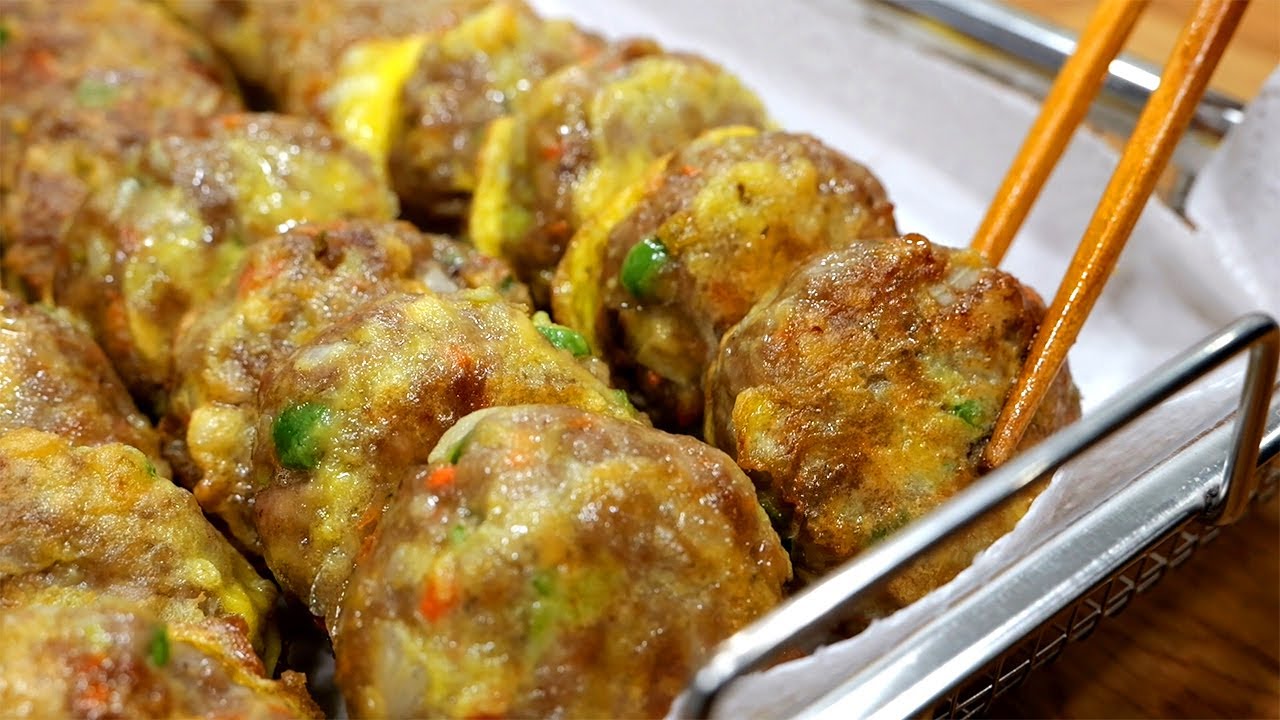
Why This Recipe Works
Donggeurangtaeng does not care about your feelings. It is a holiday food engineered by necessity — a dish that Korean home cooks spent centuries refining not because they were chasing beauty but because they were feeding large, hungry families out of limited protein and had to stretch every gram of meat as far as physics would allow. The result, predictably, is something far more interesting than anything designed purely for pleasure.
Let's start with the structure, because structure is everything here.
The Tofu-to-Meat Ratio Is Functional, Not Philosophical
The 1:2 ratio of firm tofu to ground meat is not a wellness decision. It is a moisture retention strategy backed by simple food chemistry. Ground beef and ground pork, when exposed to the direct heat of a frying pan, lose water rapidly through evaporation. Without intervention, a 1/2-inch patty at medium heat will shed roughly 20-25% of its weight in moisture within four minutes — and that moisture is what separates a tender bite from a compressed disc of protein sadness.
Tofu — specifically firm tofu that has been pressed and crumbled fine — acts as a sponge matrix inside the patty. It carries water-soluble flavor compounds from the soy sauce, sesame oil, and garlic deep into the interior of the meat mixture, and more importantly, it physically inhibits the contraction of meat proteins during cooking. Myosin and actin fibers in beef and pork tighten aggressively above 140°F. Tofu's protein structure, being soy-based, behaves differently under heat — it firms slowly and gently, buffering the tightening of the surrounding meat proteins. The patty stays cohesive but not compacted. Juicy but not loose.
Pressing the tofu dry before incorporating it is non-negotiable. Residual water in the tofu will steam the patty from the inside, collapsing the egg-wash coating before it has time to set into anything worth eating.
The Flour-Before-Egg Principle and Why It's Not Optional
There is a reason this recipe dusts patties in flour before the egg wash, and it has nothing to do with tradition. It is adhesion physics. Egg wash is roughly 75% water and 25% protein. Water does not bond to fat, and the surface of a raw meat patty is coated in a thin layer of rendered fat and myoglobin — neither of which provides a surface that egg proteins can grip. Applied directly, the egg wash beads up and slides.
Flour is hydrophilic. A light dusting creates a dry, absorbent layer that the egg proteins can penetrate, spread across, and bind to as they coagulate during frying. The result is a coating that stays on — a thin, golden shell with a slightly custard-like interior that is distinctly Korean jeon rather than a generic pan-fried patty. This is the detail that separates donggeurangtaeng from everything else in the world's catalog of fried meat patties.
Heat Management in the Pan
Medium heat in a frying pan with roughly 1/4 inch of vegetable oil is not arbitrary. It is calibrated to two simultaneous goals: the Maillard reaction on the outside and full protein coagulation on the inside.
At medium heat — approximately 325-350°F in the oil — the egg coating sets gradually over three to four minutes per side. This allows the interior of the patty, which is only 1/2 inch thick, to reach a safe internal temperature of 160°F before the exterior burns. Crank the heat to high and you incinerate the egg before the meat cooks through. Drop it too low and the coating absorbs oil passively, turning greasy and soft before it has the chance to brown.
The oil depth matters too. A shallow 1/4 inch allows the bottom of the patty to fry while the ambient heat of the pan finishes the sides. You are not deep-frying — you are using conductive oil as a precise heat-transfer medium. There is a difference.
Why the Shape Is Engineered, Not Aesthetic
Two inches wide and 1/2 inch thick is not a casual instruction. A patty this size has a surface-area-to-volume ratio that maximizes the proportion of golden crust relative to interior mass. Go thicker and the exterior overcooks before the center sets. Go wider and the patty becomes structurally fragile — the egg coating can't support the weight during flipping. The round, flat disc is the optimal geometry for this cooking method, which is why donggeurangtaeng has looked exactly like this for generations.
Storage and Make-Ahead Logic
The structural integrity of these patties makes them exceptional for batch preparation. Uncooked patties freeze cleanly on a sheet pan — spread flat, flash-frozen individually before bagging — and cook from frozen with only two extra minutes per side. This is why Korean households make them in industrial quantities before Chuseok and Lunar New Year. The labor is front-loaded. The payoff distributes across days.
For reheating cooked patties, an air fryer at 375°F for five minutes restores the exterior crispness more effectively than any other method. The circulating hot air re-evaporates surface moisture and re-crisps the egg coating without adding oil or activating the Maillard reaction aggressively enough to over-brown. A dry pan over medium heat is a workable second option but requires attention. The microwave is not an option — it introduces steam, collapses the coating, and transforms a beautifully textured patty into something that tastes like a wet sponge.
The Dipping Sauce as a Functional Component
Soy dipping sauce is not garnish. The salt and umami in soy sauce provide the contrast that makes the mild, lightly seasoned interior of the patty register as savory rather than flat. Donggeurangtaeng is intentionally under-salted in the mixture itself — 1/2 teaspoon for over a pound of protein and tofu — because it is designed to be eaten with the sauce. The dish is a system. The sauce is part of the structure.
Korean holiday food is not sentimental by accident. It is sentimental because someone, a long time ago, figured out exactly how to do this correctly, and then refused to change it.
Donggeurangtaeng (Korean Meat Patties)
🛒 Ingredients
- ✦8 oz ground beef
- ✦8 oz ground pork
- ✦1/2 block (7 oz) firm tofu, pressed and crumbled
- ✦1 small onion, finely minced
- ✦3 green onions, finely chopped
- ✦2 cloves garlic, minced
- ✦1 tablespoon soy sauce
- ✦1 teaspoon sesame oil
- ✦1/2 teaspoon salt
- ✦1/2 teaspoon black pepper
- ✦1 egg for the meat mixture
- ✦3 eggs, beaten (for egg wash coating)
- ✦1/4 cup all-purpose flour (for dusting)
- ✦Vegetable oil for pan-frying
- ✦Soy dipping sauce for serving
👨🍳 Instructions
01Step 1
Press tofu dry in a towel, then crumble finely. Mince the onion as small as possible — no large chunks.
02Step 2
Combine ground beef, ground pork, crumbled tofu, onion, green onions, garlic, soy sauce, sesame oil, salt, pepper, and 1 egg. Mix thoroughly with your hands until the mixture is sticky and cohesive.
03Step 3
Shape the mixture into round, flat patties about 2 inches wide and 1/2 inch thick. You should get 16-20 patties.
04Step 4
Set up a coating station: flour on one plate, beaten eggs in a shallow bowl.
05Step 5
Dust each patty lightly in flour, then dip in beaten egg to coat all sides.
06Step 6
Heat vegetable oil (about 1/4 inch deep) in a large pan over medium heat. Pan-fry the patties for 3-4 minutes per side until golden brown and cooked through.
07Step 7
Drain on paper towels. Serve warm or at room temperature with soy dipping sauce.
Nutrition Per Serving
Estimates based on standard preparation. Adjustments alter macros.
🔄 Substitutions
Instead of Ground beef + pork mix...
Use All ground pork or all ground beef
Mixed is best for flavor balance — all pork is richer, all beef is leaner
Instead of Tofu...
Use Extra vegetables (minced mushrooms, zucchini)
Adds moisture similarly — squeeze vegetables dry before mixing
Instead of All-purpose flour...
Use Cornstarch or rice flour
For gluten-free — rice flour gives an even crispier coating
🧊 Storage & Reheating
In the Fridge
Store for 3-4 days. One of the best make-ahead banchan.
In the Freezer
Freeze uncooked patties on a sheet pan, then bag for up to 2 months. Cook from frozen, adding 2 minutes per side.
Reheating Rules
Re-crisp in a dry pan over medium heat for 2 minutes per side. Air fryer at 375°F for 5 minutes works well.
❓ Frequently Asked Questions
What is the difference between donggeurangtaeng and wanjajeon?
They're the same dish — different regional names. Donggeurangtaeng is more common in Seoul/Gyeonggi, while wanjajeon is used in other regions. Both refer to round meat-and-tofu patties coated in egg wash and pan-fried.
Why add tofu to the meat?
Tofu serves three purposes: (1) it keeps the patties moist and tender, (2) it stretches the meat further (practical economy), and (3) it adds a softer texture that contrasts with the crispy egg coating. This meat-tofu combination is distinctly Korean.

The Science of
Donggeurangtaeng (Korean Meat Patties)
We turned everything on this page into a beautiful, flour-proof PDF cheat sheet. Print it out, stick it to your fridge, and never mess up your donggeurangtaeng (korean meat patties) again.
*We'll email you the high-res PDF instantly. No spam, just perfectly cooked meals.
AlmostChefs Editorial Team
We translate the internet's most popular cooking videos into foolproof, beginner-friendly written recipes. We analyze multiple methods, test them in our kitchen, and engineer a single "Master Recipe" that gives you the best possible result with the least possible stress.