The Donburi Rice Bowl (Blood Sugar-Friendly Korean-Style)
A deeply savory Korean-style rice bowl with seasoned protein, jammy egg, and a soy-dashi glaze over short-grain rice. Built around the 덮밥 (deopbap) tradition, this version is engineered for blood sugar stability — balanced macros, lower glycemic load, and maximum flavor per bite.

“Every culture has its rice bowl. Korea's 덮밥 tradition and Japan's donburi tradition both arrived at the same answer independently: cook the protein in a savory, slightly sweet glaze, slide it over rice, crown it with a soft egg. The genius is in the simplicity. What most recipes miss is the glaze ratio — too sweet and it tastes like takeout; too salty and it flattens everything underneath. We built this version around blood sugar stability without sacrificing the glossy, umami-forward sauce that makes the bowl work.”
Why This Recipe Works
The donburi formula is deceptively simple: seasoned protein over rice, soft egg on top, sauce that connects everything. The simplicity is the trap. When there are only four components, every one of them has to be correct. A badly cooked egg isn't hidden by complexity. Gummy rice doesn't get masked by a dozen competing flavors. In a bowl this spare, failure is visible from across the room.
This version draws from the Korean 덮밥 (deopbap) tradition — rice with a carefully seasoned topping — and applies it to the donburi framework. The result is something that has both the structural clarity of Japanese bowl cooking and the assertive, ferment-forward flavor profile that makes Korean food distinctly itself.
The Glaze Architecture
The sauce is built on four ratios that you have to get right. Soy sauce provides the salt and umami baseline. Mirin contributes sweetness and the characteristic shine that makes glazed proteins look expensive rather than sticky. Rice vinegar cuts through the sweetness and lifts the aromatic compounds so they hit the nose first, not the palate. Gochujang does two things simultaneously: it adds layered chili heat (not the flat spike of fresh chili) and it thickens the glaze due to its fermented paste body.
The reduction window is 60-90 seconds. That's it. In that time, the sugars in the mirin caramelize against the hot pan, the soy sauce concentrates, and the gochujang binds everything into a glossy coating that clings to each piece of chicken. Add the glaze to an underpowered pan or let it go 3 minutes and you get a sticky, over-reduced lacquer that tastes like sweet soy syrup. Get it right and the sauce coats every grain of rice it touches without overwhelming it.
Short-Grain Rice Is Non-Negotiable
Short-grain rice behaves differently from every other variety. Its amylopectin starch structure — highly branched, highly sticky — creates individual grains that cling to each other just enough to hold a pool of sauce on their surface rather than letting it run to the bottom of the bowl. Long-grain rice is engineered for the opposite behavior: separated grains that stay fluffy and individual. That quality, so prized in pilaf and biryani, is exactly wrong here. The glaze slides off and pools at the bottom of the bowl, the rice sits dry on top, and the dish falls apart.
A rice cooker is the single best investment for any bowl-focused cooking. It removes every variable from the equation. But if you're using a saucepan, the technique is simple: rolling boil, then lowest possible heat with a tight lid, no peeking, followed by a 10-minute rest off heat. The rest is where the steam redistributes and the grains firm up. It's not optional.
The Egg as Sauce
The soft-boiled egg in a donburi is not a protein addition. It is the secondary sauce. When the yolk breaks — either at the table or when you place the halved egg cut-side down over the warm rice — it runs into the glaze and rice in a way that creates something richer, creamier, and more complex than either element alone. A hard yolk contributes protein and nothing else. The six-minute timing exists for exactly this reason.
The ice bath matters equally. Without immediate cold shock, carryover heat continues cooking the egg for 2-3 minutes after you remove it from the boiling water. A six-minute egg left to cool naturally becomes an eight-minute egg. The difference between a yolk that flows and one that holds its shape is that two-minute window.
Blood Sugar Considerations
The health_focus designation here is real, not performative. Short-grain white rice has a high glycemic index — it digests quickly and produces a rapid glucose spike. Three adjustments bring it into a more manageable range without changing what the bowl fundamentally is: substituting half the white rice for short-grain brown rice adds fiber that slows digestion; reducing the mirin by half lowers the sugar load in the glaze; and the protein-fat combination from the chicken and egg yolk further moderates glucose absorption. The flavor difference from the mirin reduction is partially offset by an extra splash of rice vinegar, which maintains the brightness without the sweetness.
None of this makes the bowl "diet food." It makes it a thoughtful version of a dish that was already close to balanced.
Where Beginners Mess This Up
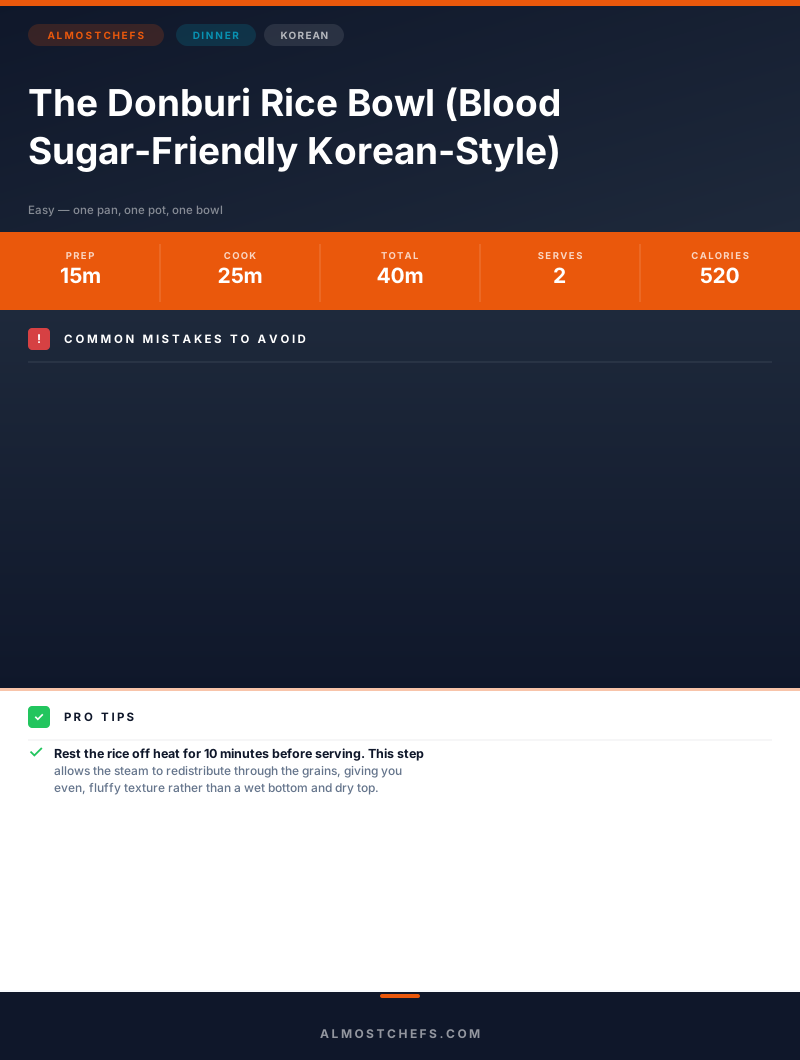
Before we start, read this. These are the 4 reasons your the donburi rice bowl (blood sugar-friendly korean-style) will fail:
- 1
Using the wrong rice: Short-grain white rice is not optional here. Its starch structure produces a slightly sticky, cohesive base that holds the glaze properly. Long-grain rice — jasmine, basmati — repels the sauce rather than absorbing it. The bowl falls apart. Use short-grain.
- 2
Overcooking the egg: The soft-boiled egg is not a garnish. Its runny yolk is the secondary sauce — it breaks into the rice and glaze and creates a richer, creamier base. A hard-boiled egg adds nothing. Six minutes at a rolling boil, then into ice water immediately. Not seven. Not eight.
- 3
Crowding the pan during protein cooking: The chicken (or beef) must caramelize, not steam. Crowding the pan drops the surface temperature below the Maillard threshold and the meat stews in its own liquid. Cook in a single layer, in batches if necessary, and you get golden-edged pieces that hold their texture under the glaze.
- 4
Adding the glaze too early: The soy-mirin glaze reduces quickly. Add it to undercooked protein and it scorches before the meat finishes. Fully cook the protein first, then pour in the glaze and reduce for 60-90 seconds. That's the entire window.
🛠️ Core Equipment
- Heavy-bottomed skillet or carbon steel panYou need sustained, even surface heat to caramelize the protein without scorching the glaze. A thin non-stick pan can't generate or hold that heat. A [carbon steel pan](/kitchen-gear/review/carbon-steel-pan) is the ideal tool here.
- Rice cooker or heavy-bottomed saucepan with tight lidShort-grain rice needs precise steam management. A [rice cooker](/kitchen-gear/review/rice-cooker) removes all variables. If using a saucepan, the lid seal is critical — no peeking.
- Small saucepan and ice bath bowlFor the soft-boiled eggs. The ice bath stops the cook at exactly the right moment. Without it, carryover heat pushes the yolk past jammy into chalky.
- Microplane or fine graterFor grating fresh ginger directly into the glaze. Pre-minced ginger is coarser and releases less aromatic oil. The difference is measurable.
The Donburi Rice Bowl (Blood Sugar-Friendly Korean-Style)
🛒 Ingredients
- ✦1.5 cups short-grain white rice, rinsed until water runs clear
- ✦1.75 cups water
- ✦300g boneless chicken thighs, sliced into 1-inch strips
- ✦2 large eggs
- ✦3 tablespoons low-sodium soy sauce
- ✦2 tablespoons mirin
- ✦1 tablespoon rice vinegar
- ✦1 teaspoon sesame oil
- ✦1 teaspoon gochujang (Korean chili paste)
- ✦1 teaspoon fresh ginger, microplaned
- ✦2 garlic cloves, minced
- ✦1 tablespoon avocado oil
- ✦2 green onions, thinly sliced
- ✦1 teaspoon toasted sesame seeds
- ✦1/2 cup thinly sliced cucumber
- ✦Sea salt to taste
👨🍳 Instructions
01Step 1
Rinse the short-grain rice under cold water until the water runs clear, approximately 3-4 rinses. Combine with 1.75 cups cold water in a saucepan, bring to a boil, then reduce to the lowest heat, cover tightly, and cook for 15 minutes. Remove from heat and rest, lid on, for 10 minutes.
02Step 2
Bring a small saucepan of water to a rolling boil. Lower the eggs in gently and cook for exactly 6 minutes. Transfer immediately to an ice bath for 5 minutes, then peel carefully.
03Step 3
Whisk together the soy sauce, mirin, rice vinegar, sesame oil, gochujang, microplaned ginger, and minced garlic in a small bowl. Set aside.
04Step 4
Heat avocado oil in a heavy-bottomed skillet over medium-high heat until shimmering. Add chicken in a single layer — do not crowd. Cook undisturbed for 3-4 minutes until golden, then flip and cook another 2-3 minutes.
05Step 5
Pour the glaze over the cooked chicken in the pan. Toss to coat and let the sauce reduce for 60-90 seconds, stirring once, until it coats the chicken and the bottom of the pan shows a slight caramelization.
06Step 6
Divide the rice between two bowls. Arrange the glazed chicken over one half of the rice.
07Step 7
Halve the soft-boiled eggs and place them yolk-side up beside the chicken.
08Step 8
Finish with sliced cucumber, green onions, sesame seeds, and a few drops of sesame oil directly on the egg yolk.
Nutrition Per Serving
Estimates based on standard preparation. Adjustments alter macros.
🔄 Substitutions
Instead of Chicken thighs...
Use Thinly sliced beef ribeye or sirloin
The classic gyudon (beef donburi) variation. Slice beef paper-thin and cook for 90 seconds total — beef this thin overcooks immediately. The glaze is the same.
Instead of Short-grain white rice...
Use Short-grain brown rice
Lower glycemic index, higher fiber. Cook time increases to 40-45 minutes with an additional 1/4 cup water. Texture is nuttier and chewier. Recommended for the blood sugar-conscious version.
Instead of Mirin...
Use Dry sake plus 1 teaspoon honey
Mirin is essentially sweetened sake. Dry sake with honey replicates the flavor profile closely. Avoid cooking wine — the salt content throws the glaze balance off.
Instead of Gochujang...
Use White miso paste
Eliminates the heat entirely and shifts the flavor toward deeper umami. Works well for those avoiding spice. Use the same quantity.
🧊 Storage & Reheating
In the Fridge
Store rice and protein separately in airtight containers for up to 3 days. The glaze thickens significantly when cold — this is normal.
In the Freezer
Freeze the glazed protein in portions for up to 6 weeks. Rice does not freeze well in this application — cook fresh.
Reheating Rules
Reheat protein in a covered skillet over low heat with a splash of water to loosen the glaze. Reheat rice in the microwave with a damp paper towel over the bowl to restore moisture.
❓ Frequently Asked Questions
Is this actually Korean or Japanese?
Both. The donburi format is Japanese, but 덮밥 (deopbap) is the Korean parallel — rice with a seasoned topping. This recipe sits at the intersection, using Korean aromatics (gochujang, sesame oil) in a Japanese structure. The result is something that belongs to neither tradition and both simultaneously.
How do I make this lower glycemic?
Three levers: swap half the white rice for brown rice, reduce the mirin by half and replace with rice vinegar, and add fiber-rich toppings like sliced cucumber and pickled daikon. None of these changes compromise the core flavor.
Why is my glaze burning before the chicken is cooked?
The protein wasn't fully cooked before you added the glaze. The glaze reduces fast — it needs 60-90 seconds in a hot pan, not 5 minutes. Cook the chicken to completion first, then introduce the sauce.
Can I meal prep this?
Yes, with caveats. The glazed protein holds beautifully for 3 days in the fridge and actually improves as the flavors meld. Cook the eggs fresh each day — a reheated soft-boiled egg is never the same.
What's the difference between donburi and bibimbap?
Bibimbap mixes everything together — the rice, the toppings, the sauce — before eating. Donburi and deopbap keep the elements distinct until the diner breaks the egg and folds ingredients at the table. The eating experience is entirely different, even when the components are similar.
My egg is too hard. What went wrong?
Time or temperature — usually both. Six minutes requires a genuine rolling boil, not a gentle simmer. If your water was barely bubbling, add 30-60 seconds. The ice bath is also non-negotiable: without it, carryover heat continues cooking the egg for another 2-3 minutes after removal.
The Science of
The Donburi Rice Bowl (Blood Sugar-Friendly Korean-Style)
We turned everything on this page into a beautiful, flour-proof PDF cheat sheet. Print it out, stick it to your fridge, and never mess up your the donburi rice bowl (blood sugar-friendly korean-style) again.
*We'll email you the high-res PDF instantly. No spam, just perfectly cooked meals.
AlmostChefs Editorial Team
We translate the internet's most popular cooking videos into foolproof, beginner-friendly written recipes. We analyze multiple methods, test them in our kitchen, and engineer a single "Master Recipe" that gives you the best possible result with the least possible stress.