Doenjang Jjigae (Soybean Paste Stew)
Korea's everyday comfort stew — fermented soybean paste simmered with tofu, zucchini, and anchovy stock. Earthy, savory, and deeply satisfying.
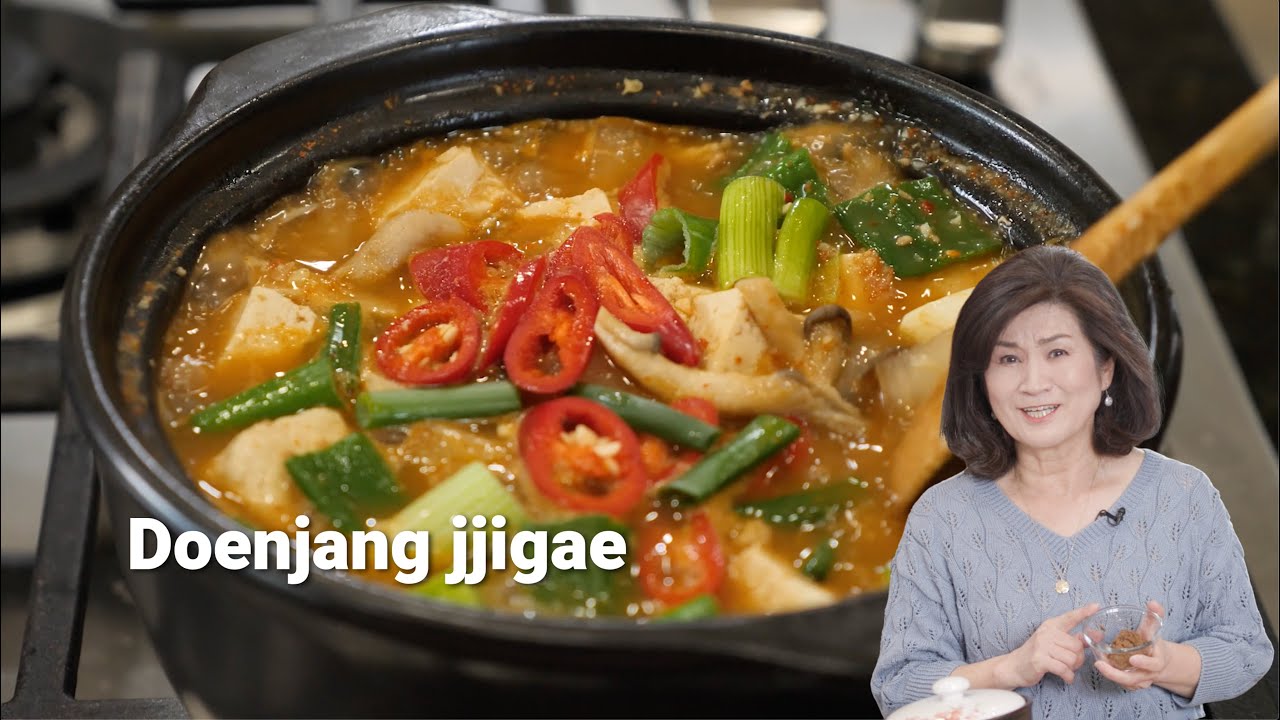
Why This Recipe Works
Doenjang jjigae does not ask for your approval. It has been feeding Korean families for over a thousand years without your input, and it will continue to do so long after every trend-chasing fusion stew has been forgotten. That longevity is not accidental — it is the result of layered fermentation science, precise vegetable sequencing, and a stock-building tradition that most Western kitchens have not even begun to understand. Let's break down exactly why this stew works, because vague reverence is useless and "it's just good" is not a recipe.
The Stock Is Not Optional
Every serious version of doenjang jjigae begins with anchovy-dashima stock, and the reason is biochemical, not cultural sentimentality. Dried anchovies (myeolchi) are loaded with inosine monophosphate (IMP), a nucleotide that functions as a glutamate amplifier. Dried dashima (kombu kelp) contributes glutamic acid directly — the same compound responsible for the foundational "fifth taste" your palate recognizes as umami. When you combine these two ingredients in a stockpot and simmer for ten minutes (no longer — extended heat degrades the delicate glutamates into bitterness), you create a stock with a synergistic umami intensity roughly eight times greater than either ingredient could deliver alone. This is not folklore. This is the Umami Synergy Effect, documented in food science literature, and doenjang jjigae has been exploiting it since before the term existed.
Remove the anchovy guts before they go in the pot. This is non-negotiable. The digestive organs contain bile compounds that turn bitter under heat. Pinch the belly, pull the dark strip out. Ten seconds of work. Do it.
Strain the finished stock through a fine-mesh strainer and discard the solids. You want a clean, transparent base — not cloudy fish water.
Doenjang: The Paste That Does Everything
Doenjang is not miso. Treat it like miso and you will produce an inferior, timid stew that tastes like it apologized for existing. Korean doenjang is fermented from meju blocks — compressed, dried soybeans that undergo wild fermentation from ambient microbes over months or years. The result is chunky, assertive, and aggressively funky in ways that smooth Japanese miso, with its controlled koji fermentation, simply is not. Traditionally fermented (전통) doenjang contains a complex microbial profile including Bacillus subtilis strains that generate pyrazines — the same family of compounds responsible for the deep, roasted, almost nutty notes you detect underneath the salt. Commercial doenjang shortcuts this process and shortcuts the flavor with it. Buy the real thing from a Korean grocer. The difference is not subtle.
Two tablespoons dissolved into your hot stock will transform the liquid immediately. Whisk it — or use a spoon and aggressive stirring — until the paste is distributed. It does not need to be perfectly smooth. Small chunks of paste will continue dissolving as the stew simmers.
Vegetable Sequencing Is Load-Bearing Architecture
This is where most amateur attempts at doenjang jjigae fail. The vegetables are not interchangeable, and they are not added simultaneously. They go in by density and cook time, and that sequence is structural.
Potato goes in first. Diced Korean potato (or any waxy variety) takes longer to cook than zucchini or tofu, and it does something else: it releases starch slowly into the broth as it softens, thickening the stew from the inside without any added flour, cornstarch, or dairy. This produces the characteristic body of proper doenjang jjigae — not thin soup, not heavy gravy, but a broth with just enough viscosity to cling to the rice beneath it.
Onion goes in with the potato. Onion contributes fructooligosaccharides that caramelize even at low simmer temperatures, adding a background sweetness that tempers the paste's salinity.
Zucchini, tofu, garlic, and gochugaru come next, after the potato has had five minutes of solo cooking time. Zucchini is a moisture-dense vegetable — it releases water as it cooks, slightly diluting and brightening the broth. Garlic, added here rather than at the start, retains more of its volatile allicin compounds. Allicin is heat-unstable; early addition cooks it into sweetness. Late addition keeps an edge of sharpness that doenjang jjigae needs.
Tofu — firm tofu, always — is not just a protein filler. It is a sponge engineered by its own porous structure to absorb the surrounding liquid. Every cube absorbs the anchovy-doenjang broth and becomes a concentrated delivery mechanism for the stew's flavor. Do not stir aggressively. The stockpot should do most of the work via gentle convection. Tofu crumbles are a sign of impatience.
Chili peppers and green onions finish the stew in the final two minutes. They contribute fresh, volatile aromatics — compounds that would evaporate entirely if added at the start. Their presence at the end is what gives doenjang jjigae its characteristic dual-register aroma: deep, fermented background with a bright, sharp top note.
The Optional Drop of Sesame Oil Is Not Really Optional
A single teaspoon of sesame oil added off-heat does not taste like sesame oil. It acts as a flavor bridge — its toasted nuttiness connects the earthiness of the doenjang to the mineral quality of the stock, creating a coherent aromatic whole. Omit it and the stew is good. Add it and the stew clicks into focus. Make your own decision, but understand what you are choosing.
Why the Leftovers Are Better
Doenjang jjigae improves overnight because fermentation does not stop when cooking ends. The residual microbial activity in the paste, combined with the extended contact time between the vegetables and broth, continues to develop flavor through the night. The potato fully hydrates. The tofu absorbs more liquid. The glutamates in the stock bind more completely with the proteins in the doenjang. This is not a myth — it is ongoing enzymatic activity, and it is the reason Korean home cooks make this stew in larger quantities than a single meal requires. Refrigerate, reheat gently to a bubble, and eat better the second time.
This stew is not complicated. It is precise. Precision is not the same as difficulty — it is just paying attention to what is actually happening in the pot.
Doenjang Jjigae (Soybean Paste Stew)
🛒 Ingredients
- ✦2 tablespoons doenjang (Korean fermented soybean paste)
- ✦1/2 tablespoon gochugaru (Korean red pepper flakes)
- ✦1 small zucchini (hobak), diced
- ✦1/2 block firm tofu, cubed
- ✦1 small onion, diced
- ✦2 cloves garlic, minced
- ✦1 small potato, diced
- ✦1 Korean green chili pepper, sliced
- ✦1 red chili pepper, sliced
- ✦2 green onions, sliced
- ✦4 dried anchovies (large, guts removed)
- ✦1 piece (4 inch) dried dashima (kelp)
- ✦2 cups water
- ✦1 teaspoon sesame oil (optional, for finishing)
👨🍳 Instructions
01Step 1
Make anchovy-dashima stock: simmer dried anchovies and kelp in 2 cups water for 10 minutes. Strain and discard solids.
02Step 2
Add doenjang paste to the stock. Whisk to dissolve — it doesn't need to be perfectly smooth.
03Step 3
Add potato and onion. Bring to a boil, then reduce heat and simmer for 5 minutes until potato starts to soften.
04Step 4
Add zucchini, tofu, garlic, and gochugaru. Simmer for another 8-10 minutes until all vegetables are tender.
05Step 5
Add sliced chili peppers and green onions. Cook for 2 more minutes.
06Step 6
Drizzle with sesame oil if desired. Serve bubbling in the pot with steamed rice.
Nutrition Per Serving
Estimates based on standard preparation. Adjustments alter macros.
🔄 Substitutions
Instead of Doenjang...
Use Japanese miso (red/aka miso)
Similar fermented soybean flavor but milder and less chunky — use 1.5x the amount
Instead of Anchovy-dashima stock...
Use Dried shiitake soaking liquid
For vegetarian — soak 4-5 dried shiitake for 30 minutes
Instead of Potato...
Use Sweet potato or kabocha squash
Adds natural sweetness that balances the salty paste
🧊 Storage & Reheating
In the Fridge
Store for up to 3 days. Flavors improve overnight.
In the Freezer
Freeze without tofu for up to 1 month. Tofu texture changes after freezing.
Reheating Rules
Reheat in a pot over medium heat until bubbling. Add a splash of water if too thick.
❓ Frequently Asked Questions
What is the difference between doenjang and miso?
Both are fermented soybean pastes, but doenjang is chunkier, funkier, and more assertive than Japanese miso. Doenjang is fermented with meju (soybean blocks) and has a deeper, earthier flavor. Miso is smoother and often includes rice or barley koji.
Why is doenjang jjigae considered Korea's soul food?
It's the dish every Korean grandmother makes. It uses pantry staples (doenjang, tofu, vegetables), costs almost nothing, and has been eaten daily in Korean homes for centuries. The fermented soybean paste provides complete protein and umami — it sustained Korean families through lean times.

The Science of
Doenjang Jjigae (Soybean Paste Stew)
We turned everything on this page into a beautiful, flour-proof PDF cheat sheet. Print it out, stick it to your fridge, and never mess up your doenjang jjigae (soybean paste stew) again.
*We'll email you the high-res PDF instantly. No spam, just perfectly cooked meals.
AlmostChefs Editorial Team
We translate the internet's most popular cooking videos into foolproof, beginner-friendly written recipes. We analyze multiple methods, test them in our kitchen, and engineer a single "Master Recipe" that gives you the best possible result with the least possible stress.