Fudgy Chocolate Brownies (The Science Behind the Perfect Crumb)
A rich, fudgy homemade brownie built on pantry staples and one key technique: blooming the cocoa in hot coffee. We broke down the most common brownie failures and engineered a method that delivers a dense, glossy-topped square every single time.
“Most brownie recipes fail at the same place: the baker treats it like a cake. Brownies are not cake. They are a separate category of baked good governed by fat-to-flour ratio, egg temperature, and the critical window between underdone fudge and overdone crumb. Get those three right and you never need another brownie recipe.”
Why This Recipe Works
Brownies exist in a category that baking science hasn't fully agreed to name. They are not cake — the structure is wrong, the fat ratio is wrong, the gluten development is intentionally suppressed. They are not fudge — they are baked, they have flour, they hold a square shape. They occupy a deliberate middle ground, and the entire technique is designed to keep them there.
Most brownie failures happen because the baker treats them like a forgiving baked good. They are not. They are unforgiving in specific ways that are easy to understand once you know what each ingredient is doing.
Fat Does the Heavy Lifting
This recipe uses butter as both the fat and the primary liquid. When you melt the butter and whisk in the sugar, you are not creaming — you are dissolving. The sugar granules partially dissolve in the warm fat and water content of the butter, creating a dense, syrupy base that will later produce that lacquered top crust everyone associates with a good brownie.
The eggs then emulsify into that fat base. This is the most critical step and the one people rush. Add cold eggs to warm butter and the fat seizes — you get greasy, separated batter that bakes into a dull, crumbly square. Room temperature eggs add gradually, each one fully incorporated before the next goes in, building an emulsion that traps air and creates the glossy surface that signals a properly structured brownie batter.
Cocoa vs. Melted Chocolate
This recipe uses cocoa powder rather than melted chocolate for a specific reason: control. Melted chocolate introduces cocoa butter and milk solids that change the fat ratio unpredictably depending on brand and cacao percentage. Cocoa powder is pure cocoa solids — you get consistent, intense chocolate flavor without altering the fat balance.
The hot water (or ideally, strong coffee) blooms the cocoa. Cocoa powder's flavor compounds are oil-soluble and heat-soluble — adding a hot liquid releases them more fully than simply folding dry cocoa into batter. This is why box mix brownies taste flat compared to from-scratch ones. The mix never blooms the cocoa.
Coffee is the upgrade move here. A quarter cup of strong brewed coffee at this quantity does not make the brownies taste like coffee. It amplifies the bitter, roasted compounds in the cocoa through flavor synergy. The result tastes more intensely chocolate than cocoa alone can deliver.
The Flour Minimum
One cup of flour for 16 brownies. That is a low ratio, and it is intentional. Flour builds structure through gluten, and structure is the enemy of fudginess. The less flour you develop, the denser and more yielding the crumb. This is also why you fold — not whisk, not stir vigorously — after the flour goes in. The moment the last white streak disappears, you stop. Every rotation of the spatula after that point builds gluten you do not want.
The chocolate chips go in last, folded gently, because they add pockets of melted richness throughout the interior. When you bite into a finished square and hit a chip that has melted into the surrounding crumb, that is not an accident — it is the payoff for adding them at the end rather than mixing them in with the batter where they would melt and homogenize.
The Bake Window
The toothpick test is widely misapplied to brownies. A clean toothpick means you overbaked by five minutes. What you want is moist crumbs — actual clinging crumbs, not wet smears of raw batter. The center will continue to firm up from residual heat for the first 15 minutes out of the oven. A good baking pan with even heat distribution makes hitting this window consistently possible. A thin pan with hot spots turns the bottom to a crust before the center sets.
Pull at the moist-crumb stage. Cool the full hour. Cut with a clean blade. That is the entire technique.
Where Beginners Mess This Up
Before we start, read this. These are the 4 reasons your fudgy chocolate brownies (the science behind the perfect crumb) will fail:
- 1
Using cold eggs: Cold eggs shock the warm butter mixture and cause it to seize into greasy clumps. Room temperature eggs emulsify smoothly into the fat, creating the glossy, shiny top crust that separates a great brownie from a dull one. Pull your eggs out 30 minutes before you start.
- 2
Overmixing after adding flour: Brownies have a low flour ratio for a reason — they are not supposed to develop gluten. Every extra stir after the flour goes in builds structure you don't want. Fold until the last flour streak disappears, then stop. Overmixed brownies bake up cakey and springy. That is not what you came here for.
- 3
Pulling them too early or too late: The toothpick test is misapplied constantly. For brownies, you want moist crumbs clinging to the toothpick — not wet batter, not a clean toothpick. Clean means you overshot by 5 minutes. The center will continue to set from residual heat after you pull the pan. Trust the crumb, not the clock.
- 4
Cutting before they're fully cool: Hot brownies are structurally liquid in the center. Cutting them at 20 minutes produces a smeared, gummy disaster. The full hour of cooling is the final baking step — the fudgy interior needs that time to firm into a sliceable texture. There is no shortcut.
The Video Reference Library
Want to see it in action? Here are the exact videos we analyzed and combined to build this foolproof recipe translation:
The source video for this method. Clear technique on the egg incorporation step and how to read the toothpick for the moist-crumb window.
🛠️ Core Equipment
- 9x9 inch metal baking panMetal conducts heat faster than glass, giving you a properly set edge and bottom without overcooking the center. Glass pans run hotter and slower — a recipe calibrated for metal will overbake in glass.
- Parchment paperLining the pan with overhanging edges lets you lift the entire slab out cleanly before cutting. Cutting in the pan damages the corners and compresses the edges. One sheet of parchment solves all of this.
- Fine-mesh sieveSifting the cocoa powder is not optional. Cocoa clumps aggressively and those clumps survive mixing, leaving bitter dry pockets in the finished brownie. Thirty seconds of sifting eliminates the problem entirely.
- Heavy-bottomed saucepanFor melting the butter evenly without scorching. A thin pan creates hot spots at the bottom that can brown the butter before you intend to — which changes the flavor profile entirely.
Fudgy Chocolate Brownies (The Science Behind the Perfect Crumb)
🛒 Ingredients
- ✦1 cup unsalted butter
- ✦1.75 cups granulated sugar
- ✦3 large eggs, room temperature
- ✦2 teaspoons vanilla extract
- ✦0.75 cup unsweetened cocoa powder
- ✦1 cup all-purpose flour
- ✦0.5 teaspoon baking powder
- ✦0.25 teaspoon fine sea salt
- ✦0.75 cup semi-sweet chocolate chips
- ✦0.25 cup hot water or strong brewed coffee
👨🍳 Instructions
01Step 1
Preheat your oven to 350°F and line a 9x9 inch baking pan with parchment paper, allowing the edges to hang over on two sides for easy removal.
02Step 2
Melt the butter over low heat in a large heavy-bottomed saucepan. Remove from heat and let it cool for 2-3 minutes — warm but not hot.
03Step 3
Whisk the granulated sugar into the warm melted butter for about 1 minute until fully combined and slightly grainy.
04Step 4
Add the room-temperature eggs one at a time, whisking thoroughly after each addition. The mixture should look smooth and glossy after all three eggs are in.
05Step 5
Stir in the vanilla extract until fully incorporated.
06Step 6
Pour in the hot water or strong brewed coffee and stir to combine. The coffee amplifies the cocoa without adding coffee flavor at this quantity.
07Step 7
Sift the cocoa powder, flour, baking powder, and sea salt together directly into the wet mixture.
08Step 8
Fold the dry ingredients into the wet using a spatula. Stir until the last flour streak disappears, then stop immediately. Do not overmix.
09Step 9
Fold in the chocolate chips until evenly distributed.
10Step 10
Transfer the batter to the prepared pan and spread into an even layer. The batter will be thick — use the spatula to push it into the corners.
11Step 11
Bake for 28-32 minutes, until a toothpick inserted in the center comes out with a few moist crumbs — not wet batter, not clean.
12Step 12
Remove from the oven and cool completely in the pan for 45 minutes to 1 hour. Do not cut early.
13Step 13
Lift the slab out using the parchment overhang and transfer to a cutting board.
14Step 14
Cut into 16 squares with a sharp knife, wiping the blade clean between each cut for straight edges.
15Step 15
Serve at room temperature or slightly warm with vanilla ice cream or a cold glass of milk.
Nutrition Per Serving
Estimates based on standard preparation. Adjustments alter macros.
🔄 Substitutions
Instead of Granulated sugar...
Use Coconut sugar
Adds subtle caramel depth and has a lower glycemic index. Swap 1:1 by weight. The brownies will be slightly darker in color.
Instead of Unsalted butter...
Use Coconut oil or avocado oil
Produces equally fudgy results. Coconut oil adds a faint tropical note; avocado oil is neutral. Use refined coconut oil if you want no coconut flavor.
Instead of All-purpose flour...
Use Whole wheat pastry flour
Adds fiber and a slightly nutty undertone without the heaviness of regular whole wheat. The crumb stays tender. Swap 1:1.
Instead of Semi-sweet chocolate chips...
Use Dark chocolate chips (70% cacao or higher)
More intense chocolate flavor with less sweetness. Higher cacao content also increases antioxidant polyphenols. The brownie will taste more bittersweet — adjust sugar up by 2 tablespoons if needed.
🧊 Storage & Reheating
In the Fridge
Store in an airtight container at room temperature for up to 4 days. Refrigerating brownies dries them out — keep them on the counter.
In the Freezer
Freeze individual squares wrapped tightly in plastic wrap, then stored in a zip-lock bag, for up to 3 months. Thaw at room temperature for 1 hour.
Reheating Rules
Microwave a single square for 15-20 seconds to restore the warm, fudgy center. Any longer and the edges turn rubbery.
❓ Frequently Asked Questions
Why do my brownies come out cakey instead of fudgy?
Three possible causes: too much flour, overmixing, or overbaking. Fudgy brownies live in a narrow window — lower flour ratio, minimal mixing after the flour goes in, and pulled at the moist-crumb stage. If your brownies are consistently cakey, reduce the flour by 2 tablespoons and pull 3 minutes earlier.
What does the coffee actually do?
At a quarter cup, brewed coffee doesn't make the brownies taste like coffee. It makes them taste more intensely like chocolate by enhancing the bitter, roasted compounds in the cocoa. The coffee amplifies rather than competes. If you skip it, use hot water — you need the liquid, and cold water can seize the butter.
Why do some brownie recipes have more eggs than others?
Eggs control texture. More whole eggs push brownies toward cakey (more structure from egg whites). More yolks push toward fudgy (more fat, more emulsification). This recipe uses three whole eggs — a middle path that delivers a dense crumb with a set center. If you want more fudge, swap one whole egg for two yolks.
Can I double this recipe?
Yes, but use a 9x13 pan rather than two 9x9 pans. The batter depth will be similar and the bake time will extend by 5-8 minutes. Start checking at 33 minutes with the toothpick test.
Why does the shiny top crust disappear sometimes?
The glossy top crust is the result of dissolved sugar rising to the surface during baking and recrystallizing. It only happens when the eggs and butter are properly emulsified and the batter is not overmixed. If your crust is matte, the eggs were too cold or the mixing was too aggressive.
Can I use a glass baking dish instead of metal?
You can, but increase the oven temperature by 25°F and extend the bake time by 5 minutes. Glass retains heat differently than metal — it heats up slower but holds heat longer, which changes how the edges and bottom set relative to the center.
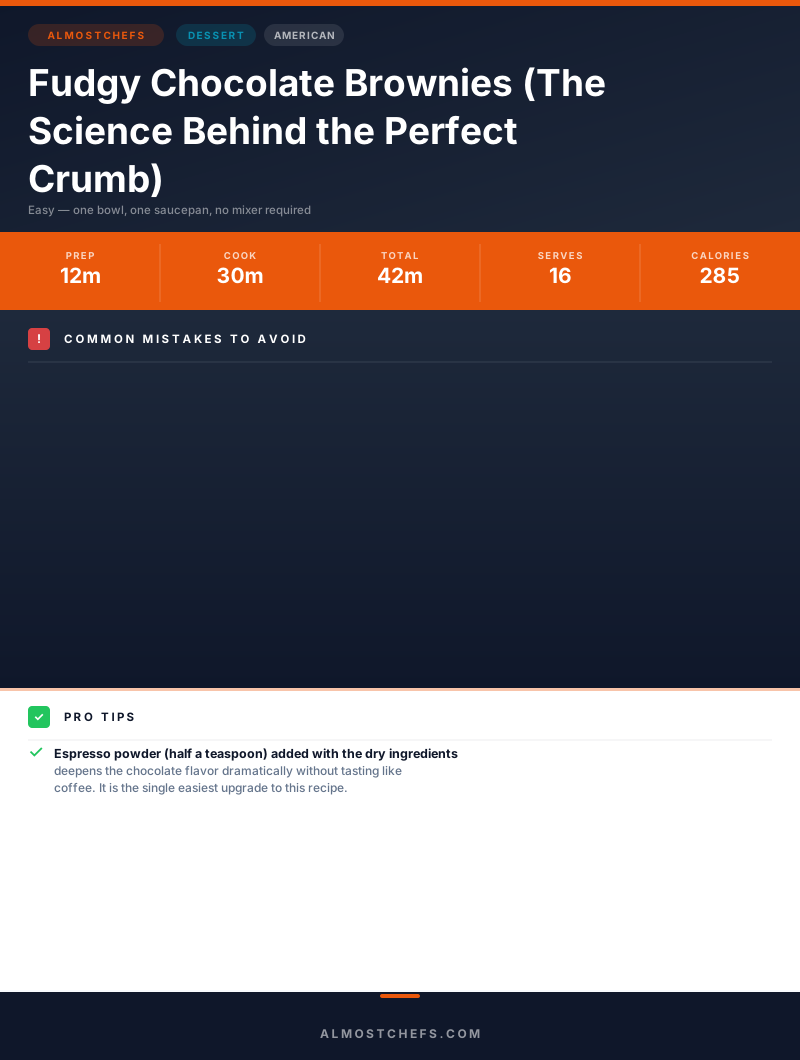
The Science of
Fudgy Chocolate Brownies (The Science Behind the Perfect Crumb)
We turned everything on this page into a beautiful, flour-proof PDF cheat sheet. Print it out, stick it to your fridge, and never mess up your fudgy chocolate brownies (the science behind the perfect crumb) again.
*We'll email you the high-res PDF instantly. No spam, just perfectly cooked meals.
AlmostChefs Editorial Team
We translate the internet's most popular cooking videos into foolproof, beginner-friendly written recipes. We analyze multiple methods, test them in our kitchen, and engineer a single "Master Recipe" that gives you the best possible result with the least possible stress.