Foolproof Dal (The 40-Minute Comfort Bowl That Fixes Everything)
Red lentils simmered in warm spices, finished with a crackling ghee tempering of mustard seeds and curry leaves. We stripped this down to the essential technique so you get deeply flavorful, creamy dal every time — vegan, gluten-free, and ready in 40 minutes.
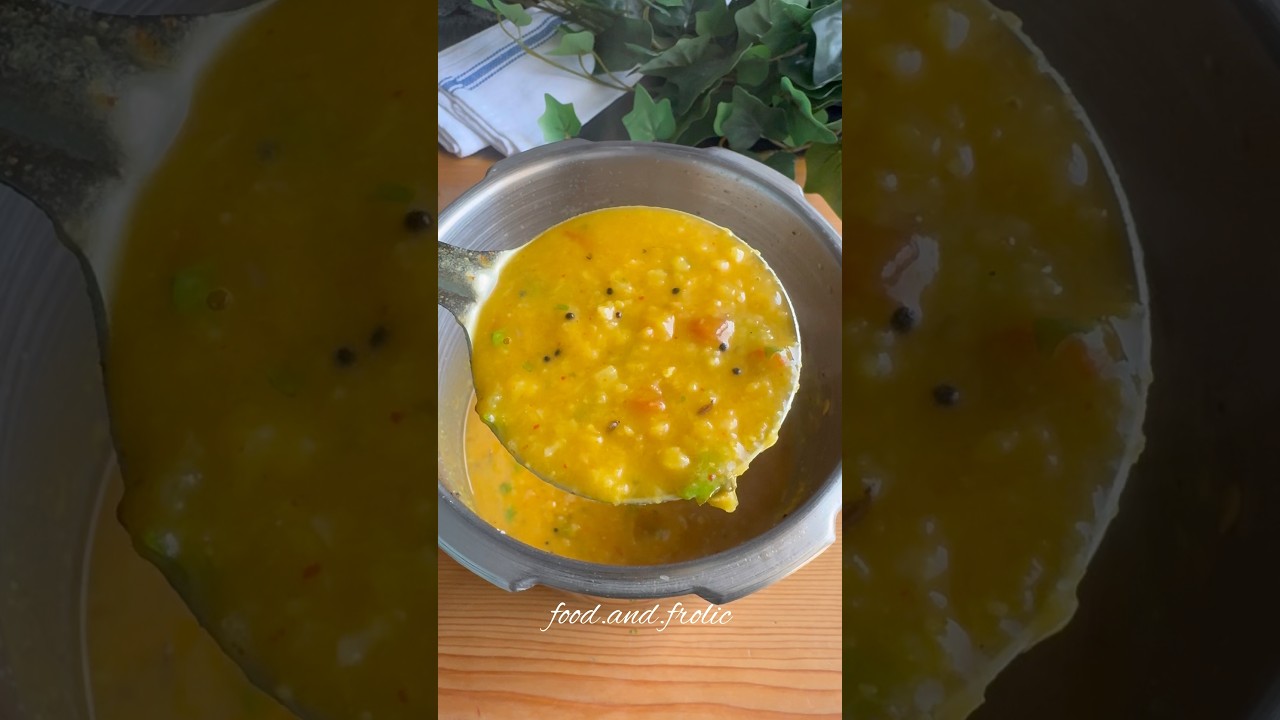
“Dal is proof that the most satisfying food on earth doesn't require complexity. Red lentils, onion, garlic, ginger, five spices, and a crackling finish of hot ghee poured over the top. That's the whole formula. The reason most homemade dal tastes flat isn't bad ingredients — it's skipping the tempering, or rushing the onions, or treating the final seasoning like an afterthought. Fix those three things and you have a dish that makes people ask for the recipe after their second bowl.”
Why This Recipe Works
Dal is not a complicated dish. That's exactly what makes it unforgiving. When a recipe has seven ingredients and four steps, every one of them has to carry weight. There's no complexity to hide behind, no sauce to mask a skipped step. You either cook the onions properly or you don't. You either bloom the spices or you don't. The dish tells you immediately which choice you made.
The Lentil Problem
Red lentils are one of the fastest-cooking legumes on the planet — no soaking required, fully broken down in under 20 minutes. The downside of that speed is that the margin between perfectly creamy and gluey mush is narrow. The key is starting with fully rinsed lentils and keeping the simmer genuinely gentle after the initial boil.
Rinsing removes surface starch. Unrinsed lentils dump that starch directly into your broth in the first five minutes, and it creates a foam and a gluey consistency that no amount of seasoning can fix. Thirty seconds under cold water in a fine-mesh sieve is all it takes. It's the kind of step that seems cosmetic until you skip it once and understand why it isn't.
The Onion Foundation
The onions are the structural flavor of the dal. Everything else — the spices, the broth, the tempering — builds on top of them. Undercooked onions taste raw and sharp. They contribute a sulfurous edge that cuts through the warming comfort the dish is supposed to deliver.
Six minutes over medium-high heat in a heavy-bottomed pot is the number. Not four. Not five. Six, with frequent stirring, until each piece is fully translucent and has released its sharp raw edge into the oil. The residual sweetness of properly cooked onion is what makes the dal taste round and complete rather than aggressive.
Blooming the Spices
Ground turmeric, cumin, and coriander go into the pot before the liquid — not after. This is the blooming step, and it matters. Fat-soluble flavor compounds in ground spices activate in oil at heat. The same spice added directly to water tastes dusty and flat by comparison. You stir the spices into the onion-carrot mixture for a full minute, letting them coat everything and open up in the coconut oil before any broth hits the pan. This step doubles the perceived intensity of the spices without using more of them.
The Tempering
This is the most important sixty seconds in the recipe. The tempering — mustard seeds and curry leaves crackled in hot ghee — is the finishing layer that transforms adequate dal into the version people text you about. It works because hot fat carries aromatic compounds in a way that simmered broth cannot. When you pour it over the finished dal, the heat from the ghee continues extracting flavor from the curry leaves for another thirty seconds as it sits on top.
Two rules: the ghee must be genuinely hot before the seeds go in, and you add the curry leaves the moment the seeds start popping — not before, not three minutes after. The seeds signal the temperature. The leaves need that exact heat window to sizzle, darken, and become fragrant without burning. Get both right and you'll be pouring this tempering over everything you cook for the rest of the week.
The Lime at the End
Acid is the last flavor tool in dal, and most home cooks skip it. A squeeze of fresh lime juice at the table does what salt cannot: it brightens the spices, cuts through the richness of the ghee, and sharpens every other flavor in the bowl. It doesn't make the dal taste like lime. It makes it taste more like itself. Squeeze generously.
Dal doesn't require skill. It requires attention to a handful of steps that are easy to rush and impossible to recover from once skipped. Pay attention to the onions. Bloom the spices. Get the tempering hot. Squeeze the lime. That's the entire recipe.
Where Beginners Mess This Up
Before we start, read this. These are the 4 reasons your foolproof dal (the 40-minute comfort bowl that fixes everything) will fail:
- 1
Skipping the rinse: Red lentils are coated in surface starch and dust that turns your broth cloudy and gummy before the lentils even start cooking. Rinse them under cold water until the water runs mostly clear. Thirty seconds of rinsing prevents a full pot of murky, gluey dal.
- 2
Undercooking the onions: Five minutes feels like enough. It isn't. The onions need to be fully soft and beginning to turn translucent — not just wilted. Undercooked onions stay sharp and acrid, and that raw bite carries through the entire dish no matter how long you simmer. Give them six full minutes over medium-high heat.
- 3
Rushing the tempering: The tempering — mustard seeds and curry leaves crackled in hot ghee — is not a garnish. It's the entire flavor finish. You need the ghee genuinely hot before the seeds go in, and you need to wait for the seeds to pop before the curry leaves follow. Pour it over the dal the moment the leaves sizzle and darken. A rushed tempering produces bland oil on top of lentils. A proper one produces aromatic magic.
- 4
Under-seasoning at the end: Lentils absorb salt aggressively during cooking. What tastes adequately seasoned at 10 minutes will taste flat at 25. Always taste and re-season at the very end, after the tempering is in. The lime juice also sharpens everything — don't skip it.
The Video Reference Library
Want to see it in action? Here are the exact videos we analyzed and combined to build this foolproof recipe translation:
The source video for this technique. Clear demonstration of the tempering sequence and the visual cues for when lentils are properly broken down into a creamy consistency.
🛠️ Core Equipment
- Large heavy-bottomed potEven heat distribution keeps the lentils from scorching at the bottom while the top simmers. A thin pot creates hot spots that burn the onions before the center cooks through.
- Fine-mesh sieveFor rinsing the lentils properly. A colander with large holes lets the lentils through. You need a fine mesh to drain them fast without losing half into the sink.
- Small skilletThe tempering happens separately in a small pan so you can control the heat precisely. Doing it in the main pot risks burning the spices into the finished dal.
Foolproof Dal (The 40-Minute Comfort Bowl That Fixes Everything)
🛒 Ingredients
- ✦1 cup red lentils (masoor dal), rinsed thoroughly
- ✦3 cups vegetable broth or water
- ✦2 medium yellow onions, finely diced
- ✦3 cloves garlic, minced
- ✦1 tablespoon fresh ginger, finely grated
- ✦2 medium carrots, diced into small cubes
- ✦1 medium tomato, chopped
- ✦2 teaspoons ground turmeric
- ✦1 teaspoon ground cumin
- ✦1 teaspoon ground coriander
- ✦1/2 teaspoon cayenne pepper
- ✦1 tablespoon coconut oil
- ✦1 tablespoon ghee or additional coconut oil
- ✦1 teaspoon mustard seeds
- ✦8-10 fresh curry leaves
- ✦1/2 teaspoon sea salt, or to taste
- ✦1/4 teaspoon black pepper
- ✦2 tablespoons fresh cilantro, chopped
- ✦1 lime, cut into wedges
👨🍳 Instructions
01Step 1
Rinse the red lentils under cool running water until the water runs mostly clear. Drain thoroughly in a fine-mesh sieve and set aside.
02Step 2
Heat 1 tablespoon of coconut oil in a large heavy-bottomed pot over medium-high heat until shimmering, about 1 minute.
03Step 3
Add the diced onions and sauté, stirring frequently, until fully soft and translucent — about 5-6 minutes. Do not rush this step.
04Step 4
Stir in the minced garlic and grated ginger. Cook until fragrant, about 1-2 minutes, stirring constantly to prevent burning.
05Step 5
Add the diced carrots and chopped tomato. Sprinkle in the turmeric, cumin, coriander, and cayenne pepper. Stir constantly for 1 minute to coat everything in the spices.
06Step 6
Pour in the vegetable broth and add the rinsed lentils. Stir well to combine.
07Step 7
Bring to a rolling boil over medium-high heat, then immediately reduce to medium-low. Cover with a lid and simmer for 15-18 minutes, stirring occasionally, until the lentils have completely broken down into a creamy consistency.
08Step 8
Taste the dal and season with sea salt and black pepper. Adjust to your preference — lentils absorb salt heavily, so be generous.
09Step 9
Prepare the tempering: heat 1 tablespoon of ghee in a small skillet over medium heat until hot and shimmering.
10Step 10
Add the mustard seeds to the hot ghee and cook until they begin to pop and crackle, about 30-45 seconds.
11Step 11
Immediately add the fresh curry leaves. Let them sizzle and darken for 20-30 seconds. The leaves should crisp slightly and smell intensely fragrant.
12Step 12
Pour the entire tempering — ghee, seeds, and leaves — directly over the finished dal. Stir to distribute evenly.
13Step 13
Ladle into bowls, garnish with fresh cilantro, and serve with lime wedges for squeezing. Accompany with rice or flatbread.
Nutrition Per Serving
Estimates based on standard preparation. Adjustments alter macros.
🔄 Substitutions
Instead of Red lentils...
Use Yellow lentils or split peas
Slightly earthier flavor with yellow lentils, virtually identical texture. Both cook to the same creaminess. Cook time may extend by 5 minutes for yellow lentils.
Instead of Ghee...
Use Extra virgin olive oil
Lighter finish with fruity notes. Reduces saturated fat content significantly. The tempering still works — the flavor profile shifts but doesn't suffer badly.
Instead of Vegetable broth...
Use Low-sodium chicken broth or bone broth
Adds depth of umami flavor and richer mouthfeel. Obviously moves this dish out of vegan territory, so substitute only if that isn't a concern.
Instead of Coconut oil...
Use Avocado oil
Cleaner taste without coconut notes. Higher smoke point prevents oxidation at medium-high heat. No functional difference in the recipe.
🧊 Storage & Reheating
In the Fridge
Store in an airtight container for up to 4 days. Dal actually improves overnight as the spices continue to meld.
In the Freezer
Freeze in individual portions for up to 3 months. Thaw overnight in the refrigerator before reheating.
Reheating Rules
Add 2-3 tablespoons of water or broth before reheating — dal thickens considerably when cold. Warm over low heat, stirring frequently, until it returns to a pourable consistency. Microwave works but tends to heat unevenly; stir halfway through.
❓ Frequently Asked Questions
Why is my dal grainy instead of creamy?
The lentils didn't cook long enough. Red lentils should dissolve almost completely into the broth by the 18-minute mark. If you're seeing distinct lentil shapes, cook uncovered for another 5 minutes, stirring to help them break down. Old lentils (sitting in your pantry for more than a year) also take longer to soften.
Can I make this without curry leaves?
You can, but the tempering won't be the same. Curry leaves contribute a unique flavor that has no real substitute — lime zest and bay leaf is the closest approximation, but it's a different dish. If you're serious about dal, source fresh curry leaves. They freeze well for months.
Is this actually vegan?
The base recipe is. The ghee in the tempering is the only non-vegan ingredient. Substitute coconut oil or a neutral vegetable oil for a fully vegan version. The tempering still crackles and works the same way.
What do I serve this with?
Basmati rice is the classic pairing — the dal soaks into the rice and each bite has both. Roti or naan work equally well for scooping. For a lower-carb option, serve over cauliflower rice or with a simple cucumber salad on the side.
Why does my dal taste flat even after seasoning?
Three likely culprits: the onions were undercooked, the spices weren't bloomed in oil long enough, or the tempering was rushed. The tempering is where most of the top-note flavor comes from. If the ghee wasn't hot enough when the mustard seeds went in, or the curry leaves didn't fully sizzle, the tempering underperforms and the whole dish tastes one-dimensional.
Can I double the recipe?
Yes, and it's worth doing. Dal stores and freezes perfectly, and the cook time only increases by about 5 minutes. The tempering quantity should double proportionally — you want enough ghee to coat the entire surface of the finished dal when poured over.

The Science of
Foolproof Dal (The 40-Minute Comfort Bowl That Fixes Everything)
We turned everything on this page into a beautiful, flour-proof PDF cheat sheet. Print it out, stick it to your fridge, and never mess up your foolproof dal (the 40-minute comfort bowl that fixes everything) again.
*We'll email you the high-res PDF instantly. No spam, just perfectly cooked meals.
AlmostChefs Editorial Team
We translate the internet's most popular cooking videos into foolproof, beginner-friendly written recipes. We analyze multiple methods, test them in our kitchen, and engineer a single "Master Recipe" that gives you the best possible result with the least possible stress.