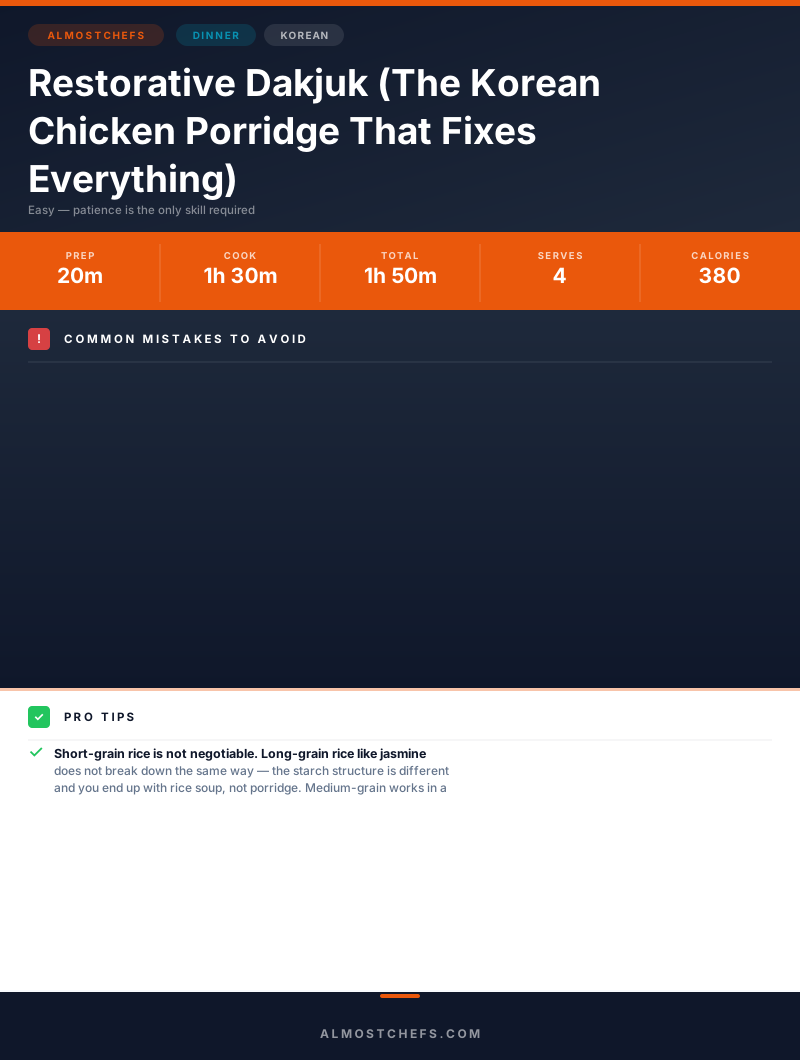
Restorative Dakjuk (The Korean Chicken Porridge That Fixes Everything)
A slow-cooked Korean chicken rice porridge that breaks down into pure, silky comfort. Whole chicken simmered until the collagen releases, then combined with rice cooked to a creamy, barely-there texture. We mapped the technique failures that turn dakjuk from restorative to rubbery so you don't have to.

“Dakjuk is what Korean home cooks make when someone gets sick, comes home from the hospital, or just needs to be put back together. There is no flash here — just whole chicken, white rice, and time. The technique is ancient, and the failures are modern: people rush the simmer, use cold-cooked rice, and skip the sesame oil finish. Those three decisions separate a bowl of watery chicken soup with rice floating in it from one of the most comforting things you can eat.”
Why This Recipe Works
Dakjuk is the dish Korean households make when they need to mean it. Not the most impressive dish in the cuisine, not the flashiest, not the one anyone posts on social media. The one that gets made when someone is sick, exhausted, or needs to be put back together with something that costs almost nothing and takes almost no skill — just time, and the willingness to pay attention.
The Collagen Problem
The reason dakjuk works as restorative food is not sentimental. It is structural. Bone-in chicken contains significant amounts of collagen — the connective tissue that surrounds joints and bones. At sustained low heat over 60 to 90 minutes, this collagen hydrolyzes into gelatin, which dissolves into the broth and transforms a thin liquid into something with body and weight. You can feel the difference on your lips: collagen-rich broth coats them slightly, the way a good stock does. Broth from a rushed boil tastes flat by comparison.
This is why you start with cold water and why a hard boil destroys the result. Cold water draws the gelatin out gradually. High heat seizes the proteins before the collagen has time to release, producing a murky, thin liquid with fibrous meat. Low and slow is not a stylistic preference — it is the mechanism.
Why Raw Rice, Why Soaked
The porridge texture in dakjuk comes from raw short-grain rice cooked directly in the broth, not from cooked rice added afterward. When raw short-grain rice simmers for 25-35 minutes in liquid, the starch granules swell, rupture, and partially dissolve into the surrounding broth. This is the thickening mechanism — not added starch, not a roux, not cream. The rice destroys itself in the most useful way possible.
Soaking the rice for 30 minutes before it goes into the pot accelerates this process and produces a more uniform result. The pre-hydrated grains begin breaking down almost immediately once they hit the hot broth, rather than spending the first 10 minutes rehydrating from dry. If you skip the soak, add 5-10 minutes to the cooking time.
Short-grain matters because of starch composition. Short-grain rice has a higher amylopectin content than long-grain varieties, which means it breaks down to a much creamier consistency under heat. Long-grain jasmine or basmati holds its shape by design — that property, excellent for steamed rice, is the wrong property for porridge.
The Finish Is Not Optional
Dakjuk is intentionally underseasoned during cooking. The broth is kept mild so the dish can be adjusted at the table, a characteristic of Korean recovery food — you don't want aggressive seasoning when someone is genuinely ill. But this means the finish is load-bearing.
Sesame oil is not a garnish here. Added in the last five minutes and drizzled again into each bowl, it provides the aromatic richness that defines the dish. The heat of the porridge volatilizes the toasted sesame compounds and they hit the nose before the first bite — this is the sensory signal that communicates "someone cooked this with care." Soy sauce adds umami and salt. White pepper adds subtle heat without the sharp edge of black pepper. Green onions add freshness and contrast.
Skip any of these and you have technically correct porridge. Include them and you have dakjuk.
Why This Dish Is Worth Understanding
Korean juk is an entire genre of cooking. Abalone juk. Pumpkin juk. Pine nut juk. Mushroom juk. But chicken is the default for a reason — it produces the most complete, balanced flavor with the least technique. If you understand how dakjuk works, you understand how all juk works. The rice behaves the same way regardless of what protein or vegetable you add. The finish follows the same logic. The consistency test is identical.
This is one of those foundational recipes that doesn't look like much until you understand what it's doing. Then it looks like everything.
Where Beginners Mess This Up
Before we start, read this. These are the 4 reasons your restorative dakjuk (the korean chicken porridge that fixes everything) will fail:
- 1
Rushing the simmer: Dakjuk needs a long, low simmer — 60 to 90 minutes minimum — for the chicken collagen to fully release into the broth. A hard boil turns the meat fibrous and the broth murky. Low and slow builds the silky, body-coating texture that defines good dakjuk. If your broth isn't slightly glossy at the end, you pulled it too early.
- 2
Using pre-cooked rice: Raw, soaked rice is not optional. When raw rice simmers in chicken broth for an extended period, the starch granules swell and partially dissolve, thickening the broth from the inside. Pre-cooked rice just sits in the liquid and turns gummy. Soak your raw short-grain rice for 30 minutes before it goes into the pot.
- 3
Under-seasoning at the finish: Dakjuk tastes like nothing without seasoning. The base broth is intentionally mild — that's a feature, not a bug. The seasoning happens at the table: sesame oil, soy sauce, salt, and white pepper. Skipping the sesame oil finish is the most common mistake. It is the aromatic bridge that turns bland porridge into something that smells like a Korean grandmother's kitchen.
- 4
Shredding the chicken too early: Pull the chicken from the broth once it's cooked through, let it cool enough to handle, then shred by hand and return it at the end. Adding it back too early means it overcooks to a dry, stringy texture during the final porridge thickening phase. Last five minutes only.
🛠️ Core Equipment
- Heavy-bottomed pot or Dutch ovenEven heat distribution is critical for the long low simmer. A thin pot scorches the bottom and causes the rice to stick and burn before it has time to break down properly. A [Dutch oven](/kitchen-gear/review/dutch-oven) is ideal.
- Fine-mesh skimmer or ladleThe first 15 minutes of simmering will produce grey foam from the chicken proteins. Skim it off diligently — this is what determines whether your final broth is clear and silky or cloudy and off-tasting.
- Kitchen tongs and two forksFor pulling the whole chicken pieces out of the hot broth and shredding by hand. Hand-shredding produces irregular, textural pieces that hold up better than knife-cut chicken in porridge.
Restorative Dakjuk (The Korean Chicken Porridge That Fixes Everything)
🛒 Ingredients
- ✦1 whole chicken (about 3.5 pounds), cut into pieces, or equivalent bone-in thighs and drumsticks
- ✦1 cup short-grain white rice, soaked in cold water for 30 minutes and drained
- ✦8 cups cold water
- ✦1 tablespoon sesame oil, plus more to finish
- ✦2 tablespoons soy sauce, to taste
- ✦4 garlic cloves, smashed
- ✦1 inch fresh ginger, peeled and sliced
- ✦1 teaspoon kosher salt, plus more to taste
- ✦1/2 teaspoon white pepper
- ✦3 green onions, thinly sliced, for garnish
- ✦1 tablespoon toasted sesame seeds, for garnish
- ✦1 sheet gim (roasted seaweed), torn, optional
- ✦Soy sauce and sesame oil at the table for individual seasoning
👨🍳 Instructions
01Step 1
Place the chicken pieces in a heavy-bottomed pot with the cold water, smashed garlic, and ginger. Bring to a boil over high heat.
02Step 2
Once boiling, reduce heat to medium-low. Skim the grey foam that rises to the surface for the first 10-15 minutes until the broth runs mostly clear.
03Step 3
Partially cover the pot and simmer on low for 45-60 minutes until the chicken is fully cooked and beginning to fall off the bone.
04Step 4
Remove the chicken pieces with tongs and set aside to cool. Discard the garlic and ginger. Keep the broth at a gentle simmer.
05Step 5
Add the drained soaked rice to the simmering broth. Stir to prevent sticking and bring back to a low simmer.
06Step 6
Cook uncovered, stirring every 5 minutes, for 25-35 minutes until the rice has fully broken down and the porridge has thickened to a creamy, flowing consistency.
07Step 7
While the rice cooks, shred the cooled chicken by hand, discarding skin and bones. Keep the pieces roughly 1-2 inches long.
08Step 8
In the last 5 minutes, stir in the shredded chicken and 1 tablespoon sesame oil. Season with salt, white pepper, and soy sauce.
09Step 9
Ladle into bowls and top with sliced green onions, sesame seeds, and torn gim if using. Serve with extra soy sauce and sesame oil at the table.
Nutrition Per Serving
Estimates based on standard preparation. Adjustments alter macros.
🔄 Substitutions
Instead of Whole chicken...
Use Bone-in chicken thighs and drumsticks
Darker cuts produce a richer, more gelatinous broth than breast-heavy birds. Using drumsticks only is a legitimate shortcut — maximum collagen, minimum hassle.
Instead of Short-grain white rice...
Use Sweet (glutinous) rice
Makes the porridge stickier and slightly denser. Common in the Jeonnam region of Korea. Reduce cook time by 5 minutes as glutinous rice breaks down faster.
Instead of Soy sauce...
Use Soup soy sauce (guk-ganjang)
Traditional Korean soup soy sauce is saltier and lighter in color than regular soy. It seasons without darkening the porridge. Preferred in authentic preparations — use two-thirds the quantity.
Instead of Sesame oil...
Use Perilla oil
A less common but distinctly Korean alternative. Earthy, slightly grassy flavor profile. Harder to find outside of Korean grocery stores but worth seeking out.
🧊 Storage & Reheating
In the Fridge
Store in an airtight container for up to 3 days. The porridge will thicken considerably — this is normal.
In the Freezer
Freeze in individual portions for up to 1 month. The texture becomes slightly grainier after freezing but remains palatable. Add chicken broth when reheating to restore consistency.
Reheating Rules
Reheat in a small pot over low heat with 2-4 tablespoons of water or broth per cup of porridge, stirring frequently. Do not rush it — high heat scorches the bottom. Microwave works in a pinch but requires a splash of liquid and a cover.
❓ Frequently Asked Questions
What is the difference between dakjuk and juk?
Juk is the broad Korean term for all rice porridges. Dakjuk (닭죽) specifically refers to chicken rice porridge. Other common variations include jeonbokjuk (abalone), hobakjuk (pumpkin), and yachaejuk (vegetable). The cooking technique is the same across most juk — the protein or flavoring ingredient is what changes.
Can I use a rice cooker to make dakjuk?
Many modern rice cookers have a porridge setting and work reasonably well, but you lose the ability to stir and monitor the consistency in real time. The broth also needs to be made separately and added in — you cannot simmer a whole chicken in a rice cooker. For best results, use the stovetop method.
Why is my dakjuk watery instead of creamy?
Either the rice-to-liquid ratio was off, or you didn't cook it long enough for the starch to fully dissolve. Short-grain rice needs 25-35 minutes of active simmering to break down properly. If it still looks thin, keep simmering uncovered — the starch will release. Do not add more rice to fix it.
Is dakjuk actually good for gut health?
Yes, clinically. Overcooked starch forms a broken-down matrix that is significantly easier for digestive enzymes to process than intact cooked rice. The long simmering also pre-gelatinizes the starch, effectively doing some digestive work before the food enters your stomach. It's why dakjuk has been prescribed as hospital food and recovery food in Korea for generations.
Can I make this with rotisserie chicken to save time?
You can make a shortened version — shred the rotisserie chicken and simmer it in store-bought chicken broth with the soaked rice. It takes about 30 minutes and tastes decent. What you lose is the collagen-rich, glossy broth that makes authentic dakjuk feel genuinely restorative. The shortcut version is soup with porridge texture. The real version is something else entirely.
How do I know when the porridge is done?
Draw a spoon through the center of the pot. If the channel closes slowly over 2-3 seconds, the consistency is right. If it snaps shut immediately, it's too thick — add a splash of water. If it runs immediately like water, keep cooking. The finished porridge should flow, not pour.
The Science of
Restorative Dakjuk (The Korean Chicken Porridge That Fixes Everything)
We turned everything on this page into a beautiful, flour-proof PDF cheat sheet. Print it out, stick it to your fridge, and never mess up your restorative dakjuk (the korean chicken porridge that fixes everything) again.
*We'll email you the high-res PDF instantly. No spam, just perfectly cooked meals.
AlmostChefs Editorial Team
We translate the internet's most popular cooking videos into foolproof, beginner-friendly written recipes. We analyze multiple methods, test them in our kitchen, and engineer a single "Master Recipe" that gives you the best possible result with the least possible stress.