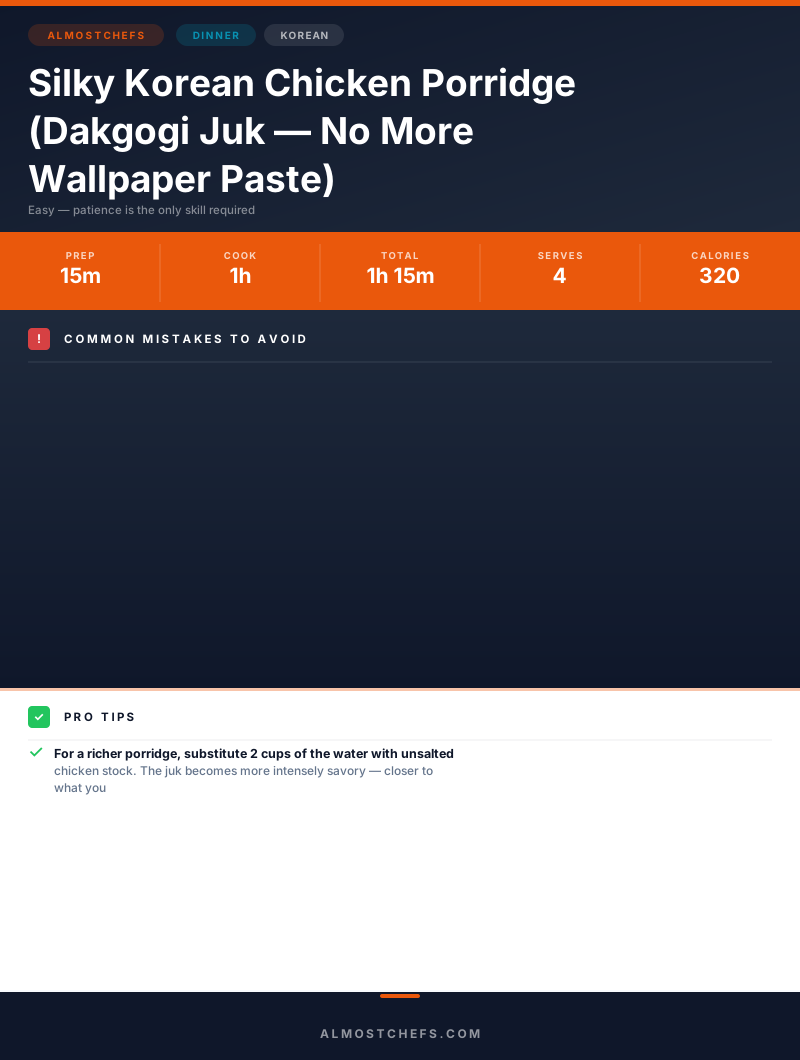
Silky Korean Chicken Porridge (Dakgogi Juk — No More Wallpaper Paste)
A deeply restorative Korean rice porridge simmered low and slow with shredded chicken, toasted sesame oil, and subtle aromatics until each grain dissolves into a silky, gut-healing bowl. We broke down the technique to fix the two reasons most homemade juk ends up gluey instead of creamy.

“Juk has one job: make you feel held together when everything else is falling apart. Sick, hungover, post-surgery, January. The problem is that most homemade versions end up either gummy cement or thin chicken-flavored water with rice floating in it, and people blame the recipe instead of two fixable mistakes: using the wrong rice-to-water ratio and stirring too aggressively. Fix those two things and you get the real thing — a bowl that's somehow both light and deeply satisfying.”
Why This Recipe Works
Dakgogi juk is the dish Korean mothers make when the calendar says winter, when someone's running a fever, when a rough week finally ends on a Friday night. It is not impressive. It is not supposed to be. Its entire value proposition is the opposite of impressive: quiet, sustaining, effortlessly warm. The problem is that the line between silky porridge and wallpaper paste is thinner than most people realize, and almost every failure comes from the same two errors made in the same two minutes.
The Rice Foundation
Short-grain white rice is not a preference — it is a specification. The amylopectin content of short-grain rice is substantially higher than long-grain varieties, and amylopectin is the branched starch molecule responsible for the creamy, flowing texture that defines proper juk. When short-grain rice slowly hydrates in hot liquid, these starch molecules dissolve out of the grain and into the broth in a controlled way, thickening it uniformly. Long-grain rice, with its higher amylose content, stays stubbornly separate. You end up with rice floating in thin liquid rather than a unified porridge.
Rinse the rice thoroughly before soaking. Surface starch — the chalky powder that clouds the rinse water — dissolves too quickly during cooking and produces gummy clumps rather than even creaminess. Three or four rinses under cold water until the water runs nearly clear removes the excess without stripping the starch the porridge actually needs.
Low and Slow, Not Low and Fast
The heat management conversation in juk is simple: if you can hear it boiling aggressively, turn it down. A rolling boil beats the rice grains against each other, causing mechanical disintegration before the starch has properly hydrated. The result is the same gummy, pasty texture that makes people decide juk isn't worth making at home. What you want is a lazy, almost reluctant simmer — small bubbles breaking the surface every few seconds, not a churning, steaming pot.
A Dutch oven or other heavy-bottomed pot is essential here. Thin-walled pots create hot spots at the base that scorch the bottom layer while the top is still watery. Scorched rice starch is bitter and ruins the whole batch. Even heat from thick walls means the entire volume of juk cooks at the same rate.
The Chicken Question
Bone-in, skin-on thighs are the correct cut for two reasons. First, the collagen in the bones and connective tissue dissolves into the poaching liquid, adding body to the broth that becomes the cooking liquid for the rice. Second, thigh meat shreds into soft, fibrous pieces that distribute through the porridge naturally — breast meat, by contrast, shreds into dry, stringy clumps that sit on top rather than integrating.
Poach the chicken in cold water, not boiling. Starting cold draws soluble proteins and flavor compounds into the liquid gradually, producing a clean, clear broth. Dropping cold chicken into boiling water seizes the exterior proteins immediately, trapping the flavor inside the meat while giving you cloudy, slightly bitter broth.
The Sesame Oil Rule
There is one inviolable rule in dakgogi juk and it is this: sesame oil goes in at the end, off heat. Not during cooking. Not five minutes before serving while the burner is still on. Off heat, into the finished porridge, in a pour generous enough that you briefly wonder if you've used too much (you haven't). The aromatic compounds in toasted sesame oil — the ones that smell like roasted nuts and warmth — have a boiling point well below cooking temperature. Any heat burns them off in seconds. Off heat is what keeps them in the bowl, which is the only place they are useful.
This is the difference between juk that tastes like hot rice and juk that tastes like the reason the dish exists in the first place.
Where Beginners Mess This Up
Before we start, read this. These are the 4 reasons your silky korean chicken porridge (dakgogi juk — no more wallpaper paste) will fail:
- 1
Using long-grain or aged rice: Dakgogi juk requires short-grain white rice. The high starch content of short-grain rice is exactly what creates that silky, slightly thickened texture. Long-grain rice stays separate and chalky — you end up with watery rice soup, not porridge. Jasmine rice and basmati are the two most common mistakes.
- 2
Wrong rice-to-water ratio: The standard ratio is 1 cup dry rice to 8-10 cups liquid. Most people underestimate this and use 5-6 cups, which produces thick glue. The porridge will look thin at 45 minutes and correct itself in the final 15 as the starches fully hydrate. Trust the ratio.
- 3
Stirring constantly like risotto: Juk is not risotto. Constant stirring breaks the rice grains mechanically before the starch has properly hydrated, releasing too much surface starch at once and creating gumminess. Stir once every 5-7 minutes. Let the heat do the work.
- 4
Skipping the toasted sesame oil finish: Sesame oil added during cooking burns off and contributes almost nothing. It must go in at the very end, off heat, in a generous pour. This is where 30% of the dish's flavor comes from. It is not optional and it is not a garnish — it is a structural ingredient.
🛠️ Core Equipment
- Heavy-bottomed pot or Dutch ovenConsistent, even heat prevents scorching at the bottom before the rice has released enough starch to protect itself. A [Dutch oven](/kitchen-gear/review/dutch-oven) is ideal — thin pots create hot spots that burn the bottom while the top layer is still watery.
- Fine-mesh sieve or colanderFor washing the rice before cooking. Rinsing removes excess surface starch that would otherwise cause gluey, over-thickened porridge. Rinse until the water runs nearly clear — typically 3-4 rinses.
- Two forks or bear-claw meat shreddersFor shredding the poached chicken directly into the porridge. The texture should be fibrous and soft — not chopped. Shredded meat disperses evenly through the bowl. [Bear-claw shredders](/kitchen-gear/review/meat-shredders) do this in 30 seconds; two forks take 90.
Silky Korean Chicken Porridge (Dakgogi Juk — No More Wallpaper Paste)
🛒 Ingredients
- ✦1 cup short-grain white rice, rinsed until water runs clear
- ✦2 bone-in, skin-on chicken thighs (about 1 pound)
- ✦9 cups water, divided
- ✦1 tablespoon toasted sesame oil, plus more for serving
- ✦1 tablespoon soup soy sauce (guk ganjang) or light soy sauce
- ✦4 garlic cloves, minced
- ✦1 teaspoon fresh ginger, finely grated
- ✦1 teaspoon fine sea salt, plus more to taste
- ✦1/4 teaspoon white pepper
- ✦3 green onions, thinly sliced (green and white parts separated)
- ✦1 teaspoon toasted sesame seeds, for serving
- ✦Kimchi, for serving (optional but traditional)
👨🍳 Instructions
01Step 1
Place the rinsed rice in a bowl with 1 cup of cold water and soak for 30 minutes. Drain before using.
02Step 2
Add the chicken thighs to a medium pot with 8 cups of cold water, the white parts of the green onions, ginger, and 2 of the garlic cloves. Bring to a boil over high heat, skim any foam, then reduce to a gentle simmer. Cook uncovered for 25 minutes.
03Step 3
Remove the chicken thighs and set aside to cool. Strain the broth and discard the aromatics. You should have about 7 cups of broth — add water if needed to reach that amount.
04Step 4
Return the strained broth to the pot over medium heat. Add the drained soaked rice and remaining 2 minced garlic cloves. Bring to a gentle boil, then reduce heat to medium-low.
05Step 5
Cook uncovered, stirring gently every 5-7 minutes, for 40-50 minutes until the rice grains have fully bloomed and the porridge has a creamy, flowing consistency.
06Step 6
While the porridge cooks, shred the cooled chicken into bite-sized pieces, discarding the skin and bones.
07Step 7
Stir in the shredded chicken, soup soy sauce, salt, and white pepper. Taste and adjust seasoning.
08Step 8
Remove from heat. Add the sesame oil in a single generous pour and stir once to incorporate. Do not continue cooking after adding the sesame oil.
09Step 9
Ladle into bowls. Top with sliced green onion greens, sesame seeds, and an additional drizzle of sesame oil. Serve immediately with kimchi alongside.
Nutrition Per Serving
Estimates based on standard preparation. Adjustments alter macros.
🔄 Substitutions
Instead of Chicken thighs...
Use Whole chicken breast
Works but produces drier, less flavorful shredded meat. If using breast, reduce poaching time to 18 minutes to prevent the meat from going chalky. The broth will also be less rich.
Instead of Short-grain white rice...
Use Sushi rice or medium-grain white rice
Both have comparable starch content and produce nearly identical results. Do not use jasmine, basmati, or any parboiled rice — the starch profiles are wrong for juk.
Instead of Soup soy sauce (guk ganjang)...
Use Light soy sauce or low-sodium tamari
Use 20% less than the recipe calls for — regular soy sauce is saltier. The flavor will be slightly less nuanced but still good.
Instead of Toasted sesame oil...
Use There is no substitute
Untoasted sesame oil lacks the roasted nuttiness. Neutral oils do nothing. If you don't have toasted sesame oil, simply omit the fat finish and add an extra pinch of salt — do not replace it with something else.
🧊 Storage & Reheating
In the Fridge
Store in an airtight container for up to 3 days. The porridge will thicken considerably — this is normal.
In the Freezer
Freeze in individual portions for up to 1 month. Thaw overnight in the fridge. The texture softens slightly after freezing but remains perfectly acceptable.
Reheating Rules
Add 3-4 tablespoons of water or broth per cup of porridge. Reheat over low heat, stirring frequently, until it returns to the original creamy consistency. Finish with a fresh drizzle of sesame oil before serving.
❓ Frequently Asked Questions
Why is my juk gluey and thick instead of silky?
Two likely causes: not enough water, or stirring too aggressively. Use a 1:8-10 rice-to-water ratio and stir only once every 5-7 minutes. Constant stirring breaks grains before starch hydration is complete, releasing surface starch in a way that creates gumminess rather than creaminess.
Can I use leftover cooked rice instead of raw rice?
Yes, with adjustments. Cooked rice breaks down much faster — reduce the simmering time to 20-25 minutes and start with only 6 cups of liquid. The texture won't be quite as silky since pre-cooked rice has already released most of its starch, but the result is still good and significantly faster.
What does 'creamy flowing consistency' actually mean — how do I know it's done?
Lift your spoon and let the juk fall back into the pot. It should flow off the spoon in a thick, even ribbon and settle flat in about 3 seconds. If it falls in chunks, it needs more time. If it pours like water, the heat was too high and you've broken down the starch — keep cooking on low until it thickens back up.
Is dakgogi juk actually good for gut health?
Yes, meaningfully so. The slow-cooked rice releases resistant starch and beta-glucans that feed beneficial gut bacteria. The collagen from the bone-in chicken thighs supports the gut lining. And the low-fiber, low-fat, easy-to-digest format gives an irritated digestive system a genuine rest. It's why Korean mothers have been serving this to sick family members for generations.
What is the difference between juk and congee?
They are the same dish from different culinary traditions. Juk (죽) is the Korean version, congee is the broader pan-Asian term. Korean juk tends to use less rice relative to water and is often seasoned more minimally than Chinese congee, letting the ingredient itself — chicken, abalone, pumpkin — carry the flavor. The technique is essentially identical.
Should I add sesame oil during cooking or only at the end?
Only at the very end, off heat. Sesame oil's complex roasted flavor comes from volatile aromatic compounds that evaporate immediately at cooking temperatures. Adding it during cooking is like adding fresh herbs to a 90-minute braise — the flavor is gone before it matters. Stir in at the end and serve immediately.
The Science of
Silky Korean Chicken Porridge (Dakgogi Juk — No More Wallpaper Paste)
We turned everything on this page into a beautiful, flour-proof PDF cheat sheet. Print it out, stick it to your fridge, and never mess up your silky korean chicken porridge (dakgogi juk — no more wallpaper paste) again.
*We'll email you the high-res PDF instantly. No spam, just perfectly cooked meals.
AlmostChefs Editorial Team
We translate the internet's most popular cooking videos into foolproof, beginner-friendly written recipes. We analyze multiple methods, test them in our kitchen, and engineer a single "Master Recipe" that gives you the best possible result with the least possible stress.