Better Than Takeout Korean Chicken Rice Bowl (Done in 30 Minutes)
A savory, glossy Korean chicken rice bowl built on a soy-ginger sauce that coats every grain. We broke down the technique behind restaurant-quality dakgogi deopbap — the sauce reduction, the chicken sear, and why your rice matters more than you think.

“Deopbap means one thing: something so good it gets poured directly over rice and eaten without ceremony. Dakgogi deopbap — chicken over rice — is the Korean weeknight answer to every slow, complicated dinner recipe on the internet. The sauce is the whole game. Get the reduction right and it turns glossy, sticky, and deeply savory in under five minutes. Get it wrong and you have wet chicken sitting in pale soy water. This recipe closes that gap.”
Why This Recipe Works
Deopbap is Korean pragmatism at its finest. You have leftover rice. You have protein. You have a pan and twenty minutes. The result, when executed correctly, is not a compromise — it is dinner with intentionality.
Dakgogi deopbap works because it respects a simple hierarchy: the sauce is the dish. The chicken is the vehicle. The rice is the foundation. Every technique decision flows from that hierarchy.
The Sauce Is a Reduction, Not a Marinade
The four-ingredient Korean sauce base — soy, mirin, gochujang, sesame oil — reads like a simple pantry dump. It is not. Each element plays a structural role in the reduction. Soy sauce carries the sodium backbone and the glutamates that make the sauce taste savory in the back of the throat rather than just salty on the tip of the tongue. Mirin provides sugars that caramelize during reduction and contribute to the gloss. Gochujang adds body — it's a paste, not a liquid, and it thickens the sauce without cornstarch. Sesame oil, added before cooking rather than after, develops a rounder, more integrated nuttiness than a raw finish would.
The honey is the underrated player. It bridges salty and spicy in a way that no other sweetener does quite as efficiently, and it accelerates the Maillard reaction on the chicken's surface during the final reduction phase. At full simmer, the sauce should bubble actively and visibly thicken within three minutes. If it's not doing that, your heat is too low.
Why the Sear Matters
The sauce can only be as complex as what it's deglazing. When chicken sears properly in a carbon steel skillet, it leaves a thin layer of browned proteins and sugars — fond — on the cooking surface. The moment the sauce hits that surface, it picks up all of that flavor and carries it into every bite.
Crowding the pan is the single easiest way to eliminate this benefit. When too much protein enters a hot pan at once, the surface temperature drops below the Maillard threshold (approximately 280°F) and the chicken steams instead of sears. You end up with gray, waterlogged pieces floating in pale sauce. One layer, high heat, no movement for the first two minutes.
The Rice Equation
Short-grain white rice has a specific starch structure — higher amylopectin content than long-grain varieties — that makes each grain slightly sticky and cohesive. When the sauce pools around the rice in the bowl, the grains absorb it at their edges without collapsing into mush. Long-grain rice, by contrast, stays too individual. The sauce runs underneath and sits separately at the bottom of the bowl. The eating experience is completely different.
Day-old rice performs better than freshly cooked rice for one reason: residual surface moisture. Freshly cooked rice is still releasing steam. Under a hot sauce, that moisture prevents the sauce from adhering properly and softens the outer layer of each grain into a paste. Rice that has cooled for thirty minutes — or overnight in the fridge — has shed that surface moisture and accepts the sauce cleanly.
The Egg Finish
This is optional in the recipe and mandatory in practice. A fried egg with a fully runny yolk, placed directly on top of the sauced chicken, creates a second sauce at the moment of eating. When the yolk breaks over the rice, it emulsifies slightly with the soy-ginger reduction to produce something richer, more rounded, and fundamentally more satisfying than either component alone. It is not garnish. It is architecture.
Deopbap is not a recipe you make when you're trying to impress. It's a recipe you make when you understand that thirty minutes of good technique produces something better than two hours of complicated ones.
Where Beginners Mess This Up
Before we start, read this. These are the 4 reasons your better than takeout korean chicken rice bowl (done in 30 minutes) will fail:
- 1
Not drying the chicken before searing: Surface moisture on chicken kills any chance of browning. The Maillard reaction requires direct contact between protein and hot metal — steam from wet chicken creates a barrier that poaches the meat instead. Pat the chicken completely dry with paper towels before it touches the pan. This is non-negotiable.
- 2
Adding the sauce too early: The chicken needs to develop a sear first. If you pour the sauce in before the meat has color, you've already switched from searing to braising. Brown the chicken first, then deglaze with sauce. The fond on the bottom of the pan is flavor — the sauce picks it up.
- 3
Rushing the sauce reduction: The sauce needs to reduce by roughly half before it reaches the right glaze consistency. Too much liquid and it runs off the chicken into a thin puddle under the rice. Give it two to three minutes of active simmering after adding the chicken back in.
- 4
Using day-of cooked rice: Freshly cooked rice has too much surface moisture and compacts under the sauce. Day-old rice — or rice cooled uncovered for at least 30 minutes — holds its structure and absorbs the sauce from above without turning to paste at the bottom.
🛠️ Core Equipment
- Carbon steel or cast iron skilletRetains heat through temperature drops when cold chicken hits the pan. Stainless works but requires more oil. Non-stick prevents the fond development that makes the sauce complex — avoid it.
- Rice cooker or heavy saucepan with lidConsistent, even rice is the foundation of the entire bowl. A [rice cooker](/kitchen-gear/review/rice-cooker) eliminates the guesswork entirely and frees your attention for the sauce.
- Small mixing bowl for the sauceMix soy, mirin, sesame oil, and aromatics before the chicken goes in. You cannot measure ingredients while monitoring a hot reduction — do the prep work ahead.
- Sharp chef's knifeUniform chicken pieces cook evenly. Irregular cuts mean some pieces are overcooked before others are done. A [sharp knife](/kitchen-gear/review/chefs-knife) makes consistent slicing fast.
Better Than Takeout Korean Chicken Rice Bowl (Done in 30 Minutes)
🛒 Ingredients
- ✦2 boneless, skinless chicken thighs (about 10 oz total), sliced into bite-sized pieces
- ✦1.5 cups short-grain white rice, cooked and cooled
- ✦3 tablespoons soy sauce
- ✦2 tablespoons mirin
- ✦1 tablespoon gochujang
- ✦1 tablespoon sesame oil
- ✦1 tablespoon honey
- ✦3 garlic cloves, minced
- ✦1 teaspoon fresh ginger, grated
- ✦1 tablespoon neutral oil (avocado or vegetable)
- ✦2 green onions, thinly sliced
- ✦1 teaspoon sesame seeds
- ✦2 eggs (optional, for fried egg finish)
- ✦Salt and white pepper to taste
👨🍳 Instructions
01Step 1
Whisk together soy sauce, mirin, gochujang, sesame oil, honey, garlic, and ginger in a small bowl. Set aside.
02Step 2
Pat chicken pieces completely dry with paper towels. Season lightly with salt and white pepper.
03Step 3
Heat neutral oil in a carbon steel or cast iron skillet over high heat until shimmering. Add chicken in a single layer — do not crowd the pan.
04Step 4
Sear without moving for 2-3 minutes until the bottom is golden brown. Flip and sear the other side for 1-2 minutes.
05Step 5
Reduce heat to medium. Pour the sauce over the chicken and stir to coat. Simmer for 3-4 minutes, stirring occasionally, until the sauce thickens and clings to the chicken in a glossy layer.
06Step 6
While the sauce reduces, fry eggs in a separate pan to your preference if using — runny yolk is traditional.
07Step 7
Divide cooked rice between two bowls. Spoon the sauced chicken generously over the rice, letting some sauce pool around the edges.
08Step 8
Top with fried egg if using, green onions, and sesame seeds. Serve immediately.
Nutrition Per Serving
Estimates based on standard preparation. Adjustments alter macros.
🔄 Substitutions
Instead of Chicken thighs...
Use Thinly sliced pork belly or pork shoulder
Common variation in Korean home cooking. Reduce searing time slightly — pork belly renders fast at high heat. Do not use lean pork loin; it dries out.
Instead of Gochujang...
Use Doenjang (Korean fermented soybean paste)
Shifts the flavor from spicy-sweet to savory-funky. Use half the amount — doenjang is more intense and saltier than gochujang. Different dish, but equally good.
Instead of Mirin...
Use Dry sake plus 1 teaspoon sugar
Mirin is essentially sweetened sake. The substitution replicates the chemistry closely. Avoid 'aji-mirin' products — they're corn syrup with flavoring.
Instead of Short-grain white rice...
Use Medium-grain or sushi rice
Both have the necessary starch profile to hold together under the sauce. Long-grain rice (jasmine, basmati) stays too separate and the sauce runs off instead of coating.
🧊 Storage & Reheating
In the Fridge
Store chicken and rice separately in airtight containers for up to 3 days. Combined, the rice absorbs the sauce overnight and loses its texture.
In the Freezer
Freeze the sauced chicken only — not the rice — for up to 1 month. Thaw overnight in the fridge and reheat in a pan with a splash of water.
Reheating Rules
Reheat chicken in a skillet over medium heat with a tablespoon of water to loosen the sauce. Cook fresh rice for best results — reheated rice works but day-two texture is noticeably softer.
❓ Frequently Asked Questions
What does deopbap mean?
Deopbap (덮밥) literally translates to 'covered rice' — any dish where a topping is spooned directly over a bowl of rice. It's a format, not a specific dish. Dakgogi deopbap simply means chicken-topped rice.
Can I use chicken breast instead of thighs?
You can, but you need to be precise. Breast overcooks quickly at high heat — pull it off the pan the moment it's cooked through (internal temp 165°F) and don't let it sit in the simmering sauce longer than necessary. Thighs forgive a minute or two of extra heat; breast does not.
Why is my sauce not thickening?
Either the heat is too low or you have too much liquid. Turn the heat to medium-high and let it reduce actively — it should be visibly bubbling, not just steaming. If it's been more than 5 minutes and it's still thin, add a slurry of 1 teaspoon cornstarch mixed with 1 tablespoon cold water.
Is this dish spicy?
At one tablespoon of gochujang, it's mild — more fruity and savory than hot. The honey balances the heat considerably. If you want no spice at all, replace the gochujang with an equal amount of doenjang or just increase the soy sauce by half a tablespoon.
Can I add vegetables?
Yes — spinach, zucchini, and mushrooms all work well. Add them to the pan after the chicken is seared and before the sauce goes in. They need about 2 minutes to soften. Avoid water-heavy vegetables like cucumber or tomato — they dilute the sauce.
Do I need to use a fried egg on top?
No, but you should. The runny yolk breaks over the rice and mixes with the soy-ginger sauce to create a second sauce layer at the bottom of the bowl. It is arguably the best bite in the dish. Soft-boiled works equally well if frying feels fussy.
The Science of
Better Than Takeout Korean Chicken Rice Bowl (Done in 30 Minutes)
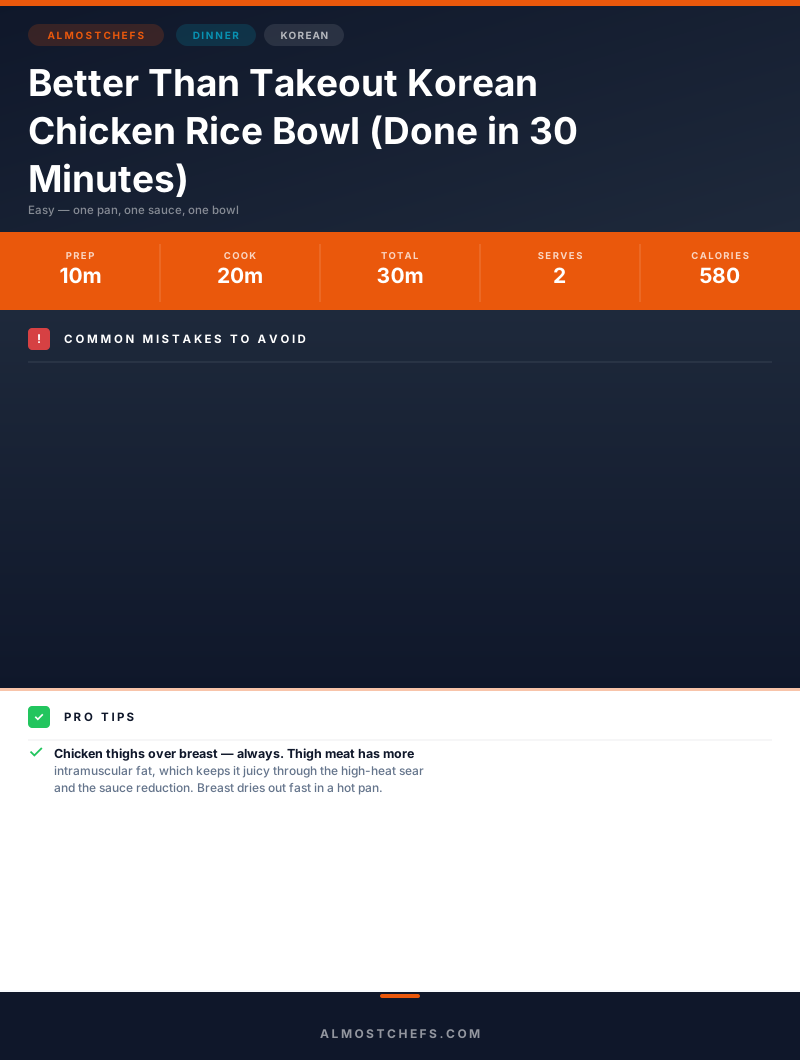
We turned everything on this page into a beautiful, flour-proof PDF cheat sheet. Print it out, stick it to your fridge, and never mess up your better than takeout korean chicken rice bowl (done in 30 minutes) again.
*We'll email you the high-res PDF instantly. No spam, just perfectly cooked meals.
AlmostChefs Editorial Team
We translate the internet's most popular cooking videos into foolproof, beginner-friendly written recipes. We analyze multiple methods, test them in our kitchen, and engineer a single "Master Recipe" that gives you the best possible result with the least possible stress.