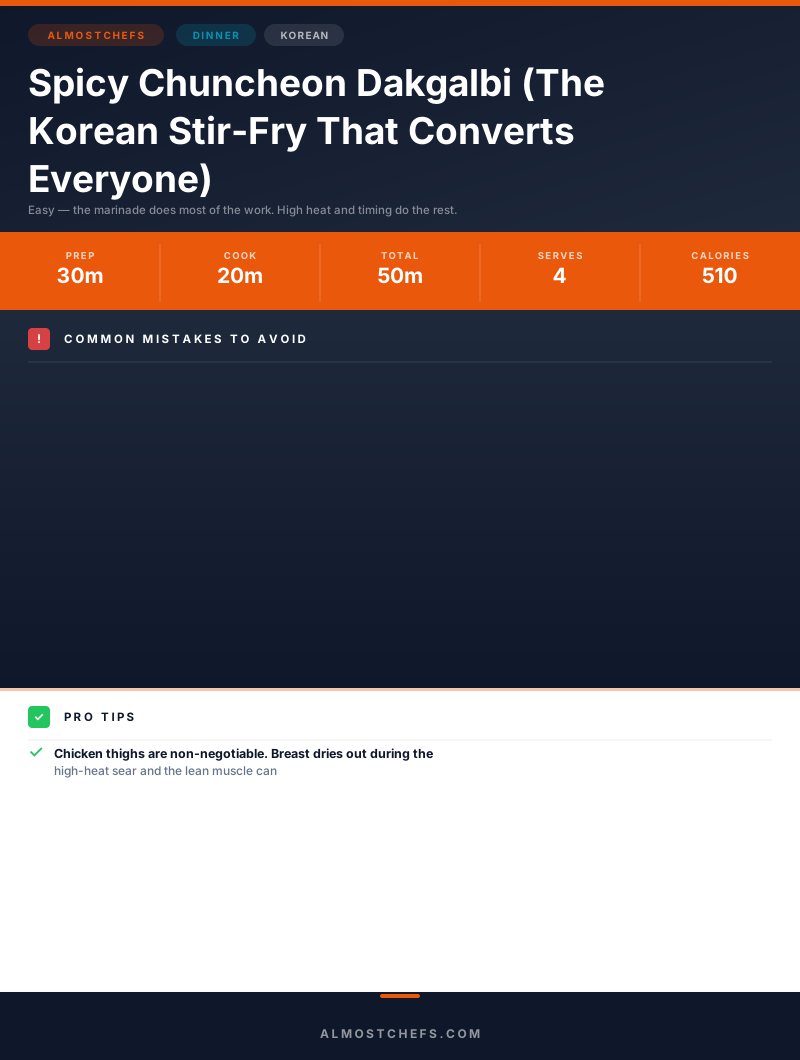
Spicy Chuncheon Dakgalbi (The Korean Stir-Fry That Converts Everyone)
A fiery, gochujang-marinated stir-fried chicken dish from Chuncheon, Korea — built on charred cabbage, chewy rice cakes, and a sauce that reduces into a lacquered, deeply spiced glaze. We broke down the iron griddle technique so you can replicate it in a home skillet without losing the caramelized crust.

“Dakgalbi is street food that became a national obsession because it solves a problem every home cook has: chicken that tastes like nothing. Gochujang, gochugaru, soy sauce, and sesame oil fuse into a marinade that penetrates fast, caramelizes faster, and builds a blistered, spiced crust that no amount of table sauce can replicate. The city of Chuncheon built an entire district around this dish. There's a reason.”
Why This Recipe Works
Dakgalbi bokkeum is what happens when a city decides that cheap chicken and fiery fermented paste deserve serious culinary attention. Chuncheon did exactly that, and the result is one of the most technically efficient spicy dishes in Korean cooking — a stir-fry where the marinade, the heat, and the timing are all load-bearing elements. Pull any one of them and the dish falls apart.
The Gochujang Architecture
Most Western cooks treat gochujang as a condiment — something to dip or drizzle. That framing misses everything interesting about it. Gochujang is a fermented paste made from red chili, glutinous rice, and soybean — a slow-aged product with genuine umami depth sitting underneath its heat. When it hits a screaming-hot cast iron skillet, the natural sugars in the rice begin caramelizing within seconds. The paste goes from brick-red to mahogany. The proteins in the soybean undergo Maillard reactions. The capsaicin compounds bloom and intensify.
This is why you cannot cook dakgalbi over medium heat. At medium, the gochujang sweats and pools. At high heat, it transforms.
The gochugaru (coarse red pepper flakes) serves a different function than the paste. Where gochujang provides fermented body and moderate heat, gochugaru delivers clean, bright pepper flavor with faster-hitting spice. Together they build a layered heat profile — the paste hits first, deep and warming; the flakes arrive sharper and linger longer.
The Chicken Cut Decision
Chicken thigh is not a preference here — it's structural. Thigh meat has a fat content of roughly 8-9%, versus breast's 1-2%. That fat does three things during the high-heat stir-fry: it conducts heat into the center of each slice, it bastes the muscle fibers from inside while they cook, and it enriches the marinade as it renders, concentrating the gochujang flavor directly in the pan.
Breast meat at high heat stalls at 165°F and then dries out immediately. Thigh meat at the same temperature still has moisture in reserve — the fat hasn't fully rendered, the fibers are still lubricated. You can push thigh meat a few degrees past done without the dish failing. Breast gives you a very narrow window. When you're managing a hot skillet, vegetables, and rice cakes simultaneously, you don't want a narrow window.
Slice to 1cm. Not thicker. The gochujang marinade cannot penetrate beyond 3-4mm in a 30-minute window — thick slices have an uncoated interior, which means uneven flavor and cooking time.
The Tteok Problem (That Isn't a Problem)
Tteok intimidates cooks who haven't worked with it. It looks like it would cook quickly; it doesn't. It looks like it should be soft; it's dense. The soaking step is mandatory — 20 minutes in cold water softens the exterior enough that the inside can finish cooking under skillet heat without requiring 15 minutes in the pan, which would mean either burnt chicken or undercooked rice cakes.
The second rule: dry the tteok before it hits the pan. Wet rice cakes create steam, which drops the pan temperature and prevents the char that makes them worth eating. You want blistered, slightly blackened edges — that char is what creates textural contrast against the tender chicken and wilted cabbage.
The Vegetables as Architecture
Cabbage and sweet potato aren't filler. Cabbage wilts and chars at its leaf edges, contributing a slight bitter note that cuts the gochujang's sweetness and prevents the dish from reading as one-dimensional. Sweet potato adds starchy body and a natural sweetness that amplifies the fermented paste's complexity rather than competing with it.
The sequencing matters. Sweet potato goes in first — it needs the most time and highest heat for caramelization. Chicken and cabbage go in together. Tteok and scallions arrive last, needing only minutes. If everything goes in simultaneously, you get an even-textured mush. Staged cooking gives you a dish with actual range.
This is Chuncheon's real contribution: a proof of concept that spicy chicken, given proper technique, is not a simple thing.
Where Beginners Mess This Up
Before we start, read this. These are the 4 reasons your spicy chuncheon dakgalbi (the korean stir-fry that converts everyone) will fail:
- 1
Crowding the pan: Dakgalbi needs direct contact with a screaming-hot surface. Pile too much chicken in at once and you drop the pan temperature instantly — the marinade steams instead of sears, and you get grey, soggy chicken swimming in liquid. Work in two batches or use a 12-inch skillet minimum. The char is the dish.
- 2
Under-marinating and over-compensating with sauce: A 15-minute marinade produces surface flavor only. The gochujang paste needs at least 30 minutes — ideally 2 hours — to penetrate the muscle fibers and begin breaking down the proteins. Pouring extra sauce into the pan to compensate just creates a steaming swamp. Marinate properly and you won't need the rescue sauce.
- 3
Burning the gochujang before the chicken is cooked: Gochujang has significant sugar content and chars fast over high heat. If your chicken pieces are too thick (over 1cm), the exterior blackens and turns bitter before the center is safe to eat. Slice thin, cook hot, and keep things moving. The window between perfect caramelization and acrid burnt sugar is about 90 seconds.
- 4
Skipping the rice cakes: Tteok (cylinder rice cakes) are not optional garnish. They absorb the spiced marinade, take on char at the edges, and provide a chewy textural counterpoint to the chicken that makes every bite feel complete. Leaving them out makes the dish taste unfinished, like a chili without beans.
🛠️ Core Equipment
- 12-inch cast iron skillet or flat iron griddleDakgalbi originates from iron griddle cooking. Cast iron retains heat under a cold protein load — when you add marinated chicken, the pan temperature barely drops. A thin stainless or nonstick skillet can't hold that heat and will steam instead of sear.
- Sharp chef's knifeYou need clean, even 1cm slices of chicken thigh. Ragged, uneven cuts cook at different rates — thin ends burn while thick centers lag. A sharp knife is not optional equipment here.
- Large mixing bowlThe marinade needs to coat every surface of the chicken and vegetables uniformly. A bowl that's too small means half the chicken gets no contact with the gochujang paste. Use the biggest bowl you own and toss aggressively.
Spicy Chuncheon Dakgalbi (The Korean Stir-Fry That Converts Everyone)
🛒 Ingredients
- ✦1.5 pounds boneless, skinless chicken thighs, sliced 1cm thick
- ✦8 oz cylindrical tteok (Korean rice cakes), soaked in cold water for 20 minutes
- ✦3 cups green cabbage, roughly torn into 2-inch pieces
- ✦1 large sweet potato, peeled and sliced thin (about 1/4 inch)
- ✦4 scallions, cut into 2-inch segments
- ✦3 tablespoons gochujang (Korean red pepper paste)
- ✦1.5 tablespoons gochugaru (Korean red pepper flakes)
- ✦2.5 tablespoons soy sauce
- ✦1 tablespoon sesame oil
- ✦1 tablespoon rice wine (mirin or cheongju)
- ✦2 teaspoons sugar
- ✦1 tablespoon ginger-garlic paste
- ✦1 teaspoon freshly ground black pepper
- ✦2 tablespoons neutral oil for cooking
- ✦Toasted sesame seeds for finishing
- ✦Perilla leaves or shredded nori for serving (optional)
👨🍳 Instructions
01Step 1
Soak the tteok in cold water for 20 minutes to soften, then drain and pat dry.
02Step 2
Whisk together gochujang, gochugaru, soy sauce, sesame oil, rice wine, sugar, ginger-garlic paste, and black pepper into a smooth marinade.
03Step 3
Toss the chicken slices with two-thirds of the marinade until every piece is evenly coated. Marinate for at least 30 minutes at room temperature, or up to 2 hours in the fridge.
04Step 4
Toss the sweet potato slices and drained tteok with the reserved marinade.
05Step 5
Heat a [cast iron skillet](/kitchen-gear/review/cast-iron-skillet) over high heat until smoking — about 3-4 minutes. Add 1 tablespoon neutral oil.
06Step 6
Cook the sweet potato slices first, 2-3 minutes per side, until lightly charred and just tender. Remove and set aside.
07Step 7
Add remaining oil. Working in batches if needed, add the marinated chicken in a single layer. Do not stir for 2 minutes — let it sear and develop a crust.
08Step 8
Flip the chicken and add the cabbage. Stir-fry together for 2-3 minutes until the cabbage wilts and begins to char at the edges.
09Step 9
Add the tteok and scallions. Toss everything together and cook for 3-4 minutes, pressing the rice cakes against the hot surface to char them. They should blister and brown.
10Step 10
Return the sweet potato to the pan. Toss once to combine, cook 1 final minute, then remove from heat.
11Step 11
Finish with toasted sesame seeds and perilla leaves or shredded nori. Serve immediately over steamed rice.
Nutrition Per Serving
Estimates based on standard preparation. Adjustments alter macros.
🔄 Substitutions
Instead of Gochujang...
Use Doenjang + gochugaru mixed 1:2
Doenjang (fermented soybean paste) provides umami depth while extra gochugaru delivers heat. The result is earthier and less sweet than gochujang — closer to the older, pre-commercial versions of the dish.
Instead of Tteok (rice cakes)...
Use Thick-cut udon noodles, par-cooked 1 minute
Completely different texture but the noodles absorb the marinade well. Don't soak them — just toss directly with marinade and add to the pan in the last 2 minutes.
Instead of Chicken thighs...
Use Pork belly, sliced thin
Traditional in some regions. Pork belly renders its fat into the pan during cooking, which concentrates the gochujang sauce beautifully. Reduce cooking time by 1 minute — pork belly slices thin.
Instead of Sweet potato...
Use Kabocha squash or zucchini
Kabocha holds its shape better under high heat. Zucchini is softer and cooks faster — add it with the cabbage, not at the beginning.
🧊 Storage & Reheating
In the Fridge
Store leftovers in an airtight container for up to 2 days. The tteok firms up overnight but returns to texture when reheated.
In the Freezer
Freeze marinated raw chicken (without tteok or vegetables) for up to 1 month. Thaw overnight and cook from fresh. Do not freeze cooked tteok — the texture degrades completely.
Reheating Rules
Reheat in a hot dry skillet for 3-4 minutes, tossing frequently. Add a splash of water if the marinade sticks. Microwaving turns the tteok into a rubber eraser — avoid it.
❓ Frequently Asked Questions
What is the difference between dakgalbi and dakgalbi bokkeum?
Dakgalbi literally means 'chicken ribs' (a somewhat whimsical name — chicken doesn't have ribs in the beef sense). Bokkeum means 'stir-fry.' Dakgalbi bokkeum specifies the cooking method: stir-fried, as opposed to the iron griddle tableside version you'd eat in a Chuncheon restaurant. The marinade is identical — only the format changes.
Why is this dish associated with Chuncheon?
Dakgalbi as a commercial dish originated in Chuncheon in the 1960s. The city had a high concentration of chicken farms and a large military presence (the U.S. military base at Camp Page). Local vendors adapted regional spicy seasonings to cheap chicken cuts. By the 1980s, Chuncheon had a dedicated 'Dakgalbi Street' with over 30 restaurants. The city now holds an annual Dakgalbi festival.
Can I make this less spicy without losing flavor?
Yes. Gochujang provides fermented umami depth that's separate from its heat. Cut gochugaru to 1 teaspoon (or eliminate it entirely) and reduce gochujang to 2 tablespoons. The dish loses intensity but keeps complexity. Adding a teaspoon of fish sauce or a tablespoon of doenjang compensates for the umami reduction.
My rice cakes are still hard after cooking. What went wrong?
Either they weren't soaked long enough (minimum 20 minutes in cold water), or they didn't get enough direct heat contact. Press them flat against the skillet surface rather than tossing constantly. They need 3-4 minutes of sustained contact to cook through and char properly.
Is this dish actually anti-inflammatory?
Gochujang and gochugaru both contain capsaicin, which has documented anti-inflammatory properties. Ginger and garlic in the marinade contribute gingerols and allicin respectively — both with credible anti-inflammatory evidence. No single dish reverses systemic inflammation, but this one stacks several compounds with genuine research behind them.
Do I need to rinse the chicken before marinating?
No. Rinsing raw chicken spreads bacteria to your sink without meaningfully reducing surface contamination — the USDA explicitly advises against it. Pat the chicken dry with paper towels instead. Dry chicken browns; wet chicken steams.
The Science of
Spicy Chuncheon Dakgalbi (The Korean Stir-Fry That Converts Everyone)
We turned everything on this page into a beautiful, flour-proof PDF cheat sheet. Print it out, stick it to your fridge, and never mess up your spicy chuncheon dakgalbi (the korean stir-fry that converts everyone) again.
*We'll email you the high-res PDF instantly. No spam, just perfectly cooked meals.
AlmostChefs Editorial Team
We translate the internet's most popular cooking videos into foolproof, beginner-friendly written recipes. We analyze multiple methods, test them in our kitchen, and engineer a single "Master Recipe" that gives you the best possible result with the least possible stress.