Dakbal Bokkeum (The Korean Spicy Chicken Feet That Convert Skeptics)
Bone-in chicken feet stir-fried in a furiously spiced gochujang sauce until the collagen renders into sticky, lip-coating silk. The texture is the whole point — and once you understand the prep, it clicks immediately.

“Dakbal is the dish that separates people who eat for texture from people who eat only for convenience. Chicken feet are almost entirely collagen and skin — there is almost no meat, and that is the entire point. Cooked properly, they become sticky, gelatinous, intensely savory vehicles for one of the most aggressive spice pastes in Korean cooking. The skeptics who try one piece never stop at one piece.”
Why This Recipe Works
Dakbal exists at the intersection of poverty food and obsession food — the category of dishes that started as cheap offcuts and became cult items because the people eating them discovered something the squeamish were missing. Chicken feet are almost entirely collagen and skin. There is barely any muscle tissue. This is not a limitation. It is the point.
Collagen, when cooked long enough under moist heat, converts to gelatin. Gelatin is what makes a proper stock coat the back of a spoon. In dakbal, that same gelatin stays inside the skin of the foot, creating a sticky, unctuous texture that no amount of boneless chicken breast can replicate. The feet become edible delivery systems for one of the most aggressive spice pastes in Korean cooking — and the fat in the collagen-rich skin carries those flavors in a way that lean meat physically cannot.
The Prep Is the Dish
Most home cooks fail at dakbal in the first 15 minutes, before the heat is even on. The blanching step is not a formality. Raw chicken feet carry surface compounds — lipid oxidation products from storage, residual keratin from the outer skin layer — that produce a distinct off-smell when cooked. Blanching in acidulated water for 10 minutes, then scrubbing each foot individually under cold water, removes these compounds entirely. Skip it and the finished dish has a background note that no amount of gochujang can mask.
Trimming the nails is equally non-negotiable and equally skipped by people who don't know why it matters. The nail sheath is a bacterial harbor and a textural anomaly that no sauce can rehabilitate. Use kitchen shears and work methodically through every foot before doing anything else.
Pressure and Patience
The extended cook — 20 minutes at pressure or 75-90 minutes at a simmer — converts the collagen. This is not optional and cannot be shortened. Undercooked chicken feet have the texture of rubber bands wrapped around cartilage. Properly cooked chicken feet yield under slight pressure, with skin that pulls back slightly from the joints and a sticky resistance that signals fully mobile gelatin.
The test is simple: press a cooked foot with a chopstick. It should give immediately, with no springback. If it resists, cook longer. There is no downside to cooking chicken feet past the minimum threshold — they do not fall apart the way muscle meat does, because there is no muscle to overcook.
The Sauce Architecture
The sauce is built from two fermented anchors: gochujang for heat and sweetness, doenjang for earthiness and umami depth. This combination is characteristic of Korean braised and stir-fried offal dishes — the doenjang adds a complexity that gochujang alone cannot provide, and the two fermented pastes together create a rounded, layered heat rather than a flat burning sensation.
The honey (or oligodang) is not there for sweetness. It is there for the Maillard gloss — as the sauce reduces in the carbon steel wok, the sugars caramelize onto the exterior of each foot, creating a sticky lacquer that looks like restaurant-quality Korean barbecue. Without a sweetener, the sauce stays wet and flat on the surface rather than adhering and caramelizing.
Gochujang burns. This is the most important sentence in the recipe. Keep the heat at medium from the moment the feet and sauce meet in the pan. Keep the tongs moving. The sauce is ready when it transitions from wet and shiny to thick and sticky — roughly 8-10 minutes of active attention. Walk away for 30 seconds and you will smell the difference before you see it.
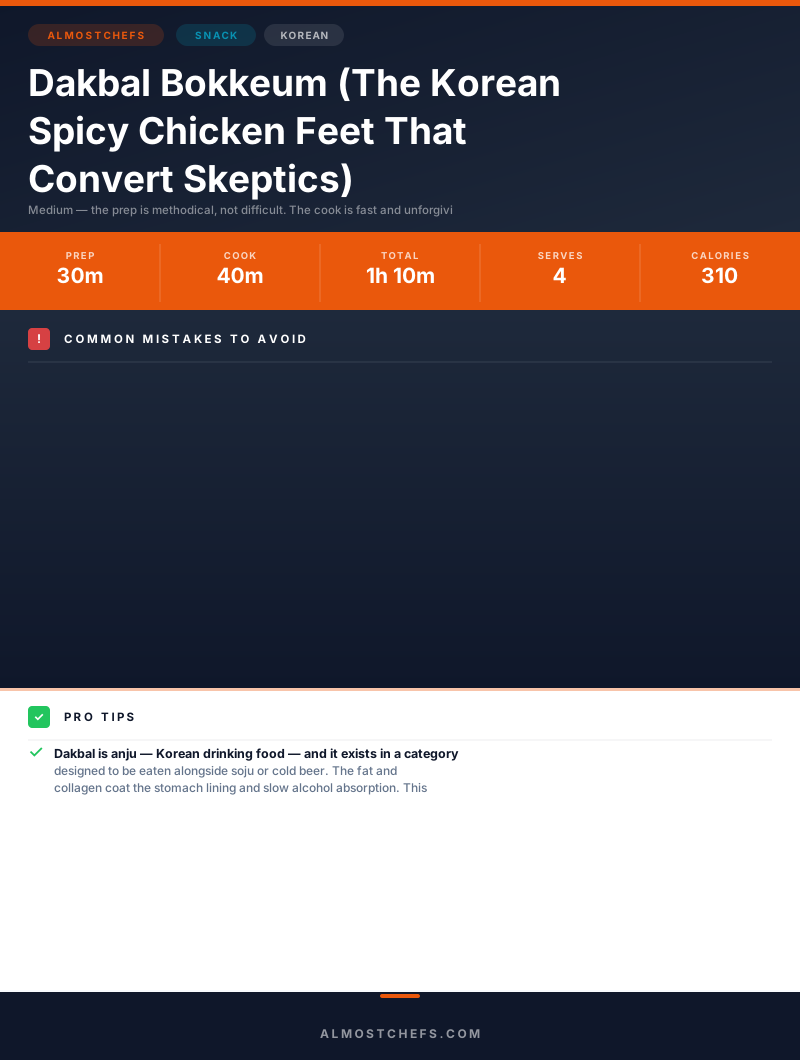
Dakbal is anju — food engineered to be eaten alongside alcohol. The fat and collagen slow gastric emptying and coat the stomach lining. The heat makes you drink. The stickiness makes you reach for another. This is not accidental design. It is centuries of Korean food culture understanding exactly what it was doing.
Where Beginners Mess This Up
Before we start, read this. These are the 4 reasons your dakbal bokkeum (the korean spicy chicken feet that convert skeptics) will fail:
- 1
Skipping the blanching and cleaning step: Raw chicken feet carry surface odor compounds and residual keratin from the outer skin that will dominate the final dish if not removed. Blanching in acidulated water for 10 minutes, then scrubbing each foot individually, is non-negotiable. Restaurants that cut this corner produce dakbal that smells wrong before it hits the table.
- 2
Not trimming the nails: Every nail must be clipped before cooking. This is not optional for aesthetic reasons — the nail sheath traps bacteria and creates an unpleasant texture that no amount of sauce can fix. Use kitchen shears. Do all of them before you do anything else.
- 3
Undercooking the feet before stir-frying: Chicken feet need to be pressure-cooked or simmered until the collagen is fully mobile — soft, yielding, pulling back slightly from the joints. If the feet go into the stir-fry pan underdone, the sauce coats a rubber exterior instead of penetrating into the gelatin. The difference in the eating experience is enormous.
- 4
Cooking the sauce over too-high heat without watching it: Gochujang burns faster than almost any other Korean ingredient. Once the paste hits the pan, the heat must be medium and you must stir continuously. Scorched gochujang turns from complex-spicy to acrid-bitter in under 30 seconds. Once it burns, the dish is ruined — the flavor cannot be recovered.
🛠️ Core Equipment
- Pressure cooker or large stockpotChicken feet require extended cooking to convert the collagen. A pressure cooker does it in 20 minutes. A stockpot takes 60-90 minutes. Either works — just don't rush it with high heat and insufficient time.
- Kitchen shearsFor trimming the nails cleanly before blanching. A knife works but shears give you the control needed to clip close to the knuckle without slipping.
- Heavy carbon steel or cast iron wokThe stir-fry phase requires intense, even heat across a wide surface. A thin pan creates cold spots where the sauce pools and burns unevenly. A [carbon steel wok](/kitchen-gear/review/carbon-steel-wok) gives you the heat retention and sloped sides to keep the feet moving.
- TongsChicken feet have an irregular geometry that makes spatulas nearly useless during the stir-fry. Tongs let you flip and coat each foot individually, ensuring every surface gets sauced.
Dakbal Bokkeum (The Korean Spicy Chicken Feet That Convert Skeptics)
🛒 Ingredients
- ✦2.2 pounds chicken feet, nails trimmed
- ✦2 tablespoons rice vinegar (for blanching water)
- ✦3 tablespoons gochujang (Korean chili paste)
- ✦1.5 tablespoons gochugaru (Korean chili flakes)
- ✦2 tablespoons soy sauce
- ✦1 tablespoon doenjang (Korean soybean paste)
- ✦1 tablespoon sesame oil
- ✦1 tablespoon honey or oligodang (Korean rice syrup)
- ✦5 garlic cloves, minced
- ✦1 teaspoon fresh ginger, grated
- ✦2 green onions, cut into 2-inch pieces
- ✦1/2 medium onion, roughly sliced
- ✦2 tablespoons neutral oil (for stir-frying)
- ✦1 tablespoon toasted sesame seeds, to finish
- ✦1 teaspoon sesame oil, to finish
- ✦Sliced green onion, to garnish
👨🍳 Instructions
01Step 1
Clip the nails from each chicken foot using kitchen shears, cutting as close to the first knuckle as possible. Rinse thoroughly under cold water.
02Step 2
Bring a large pot of water to a boil with 2 tablespoons rice vinegar. Add the chicken feet and blanch for 10 minutes. Drain, rinse under cold water, and scrub each foot to remove any yellowed outer skin.
03Step 3
Return the cleaned feet to a pressure cooker with enough fresh water to cover. Cook at high pressure for 20 minutes, then release pressure naturally. Alternatively, simmer in a covered stockpot for 75-90 minutes until the collagen is fully soft and the skin pulls back from the joints.
04Step 4
Drain the cooked feet and pat dry thoroughly. Set aside.
05Step 5
Combine gochujang, gochugaru, soy sauce, doenjang, honey, minced garlic, and grated ginger in a bowl. Mix until fully integrated.
06Step 6
Heat neutral oil in a wok or heavy pan over medium heat. Add the sliced onion and cook for 3-4 minutes until softened and slightly translucent.
07Step 7
Add the cooked chicken feet to the pan. Pour the sauce over and toss to coat using tongs, ensuring every foot is covered.
08Step 8
Continue stir-frying over medium heat for 8-10 minutes, turning frequently, until the sauce thickens and caramelizes onto the feet. Add the green onion pieces in the last 2 minutes.
09Step 9
Remove from heat. Drizzle with sesame oil, scatter toasted sesame seeds, and garnish with sliced green onion. Serve immediately.
Nutrition Per Serving
Estimates based on standard preparation. Adjustments alter macros.
🔄 Substitutions
Instead of Gochujang...
Use Doubanjiang (Chinese fermented chili bean paste)
Changes the flavor profile toward Chinese rather than Korean, but the fermented heat works similarly. Use 20% less as doubanjiang is saltier.
Instead of Doenjang...
Use White miso
Acceptable substitute that maintains the fermented depth. White miso is milder and less pungent — you may want to add a touch more to compensate.
Instead of Oligodang (rice syrup)...
Use Honey or corn syrup
Honey adds flavor; corn syrup is neutral. Either gives you the sticky gloss the sauce needs. Avoid agave — it thins the sauce rather than thickening it.
Instead of Chicken feet...
Use Chicken wings (flat sections only)
A dramatically different eating experience — more meat, less collagen — but the sauce works beautifully on wings. Skip the extended pressure cooking; 15 minutes in the pressure cooker is enough.
🧊 Storage & Reheating
In the Fridge
Store in an airtight container for up to 2 days. The collagen sets firmly when cold — this is normal and not a sign of spoilage.
In the Freezer
Freeze cooked, unsauced feet for up to 1 month. Sauce and stir-fry from frozen for a better result than freezing the finished dish.
Reheating Rules
Reheat in a covered pan over low heat with 2 tablespoons of water. The collagen needs gentle, moist heat to return to the right texture. Microwave reheating makes the skin rubbery.
❓ Frequently Asked Questions
Do chicken feet actually have any meat?
Almost none in the conventional sense. The eating experience is about skin, collagen, cartilage, and the small tendons around the joints. You gnaw the skin and cartilage off the bones — it's more of a textural experience than a protein-forward one. That's not a bug. That's the whole dish.
How spicy is dakbal bokkeum?
Genuinely hot. This is one of the spicier preparations in Korean street food. If you have low heat tolerance, halve the gochugaru and reduce the gochujang by one tablespoon. You'll lose some complexity but keep the flavor architecture intact.
Can I make this without a pressure cooker?
Yes. Simmer the blanched feet in a covered pot for 75-90 minutes until fully tender. The result is identical — it just takes longer. Check the water level periodically and top up if needed.
Why does my sauce taste bitter?
The gochujang scorched. This happens fast at high heat — under 30 seconds of inattention can ruin the sauce. If it happens, there is no recovery. Start the sauce again in a clean pan, keep the heat at medium, and stir constantly from the moment the paste hits the pan.
Where do I buy chicken feet?
Korean grocery stores, Chinese supermarkets, and many Latin American carnicerias carry them fresh or frozen. If you can't find them locally, ask a butcher who breaks down whole chickens — they often discard feet that they'll sell you cheaply.
Is dakbal bokkeum the same as dakbal jjim?
No. Bokkeum is stir-fried — high heat, reduced sauce, caramelized exterior. Jjim is braised — low heat, more liquid, softer texture. Both use similar spice profiles but the eating experience is different. Bokkeum has more char and chew; jjim is softer and more sauce-forward.
The Science of
Dakbal Bokkeum (The Korean Spicy Chicken Feet That Convert Skeptics)
We turned everything on this page into a beautiful, flour-proof PDF cheat sheet. Print it out, stick it to your fridge, and never mess up your dakbal bokkeum (the korean spicy chicken feet that convert skeptics) again.
*We'll email you the high-res PDF instantly. No spam, just perfectly cooked meals.
AlmostChefs Editorial Team
We translate the internet's most popular cooking videos into foolproof, beginner-friendly written recipes. We analyze multiple methods, test them in our kitchen, and engineer a single "Master Recipe" that gives you the best possible result with the least possible stress.