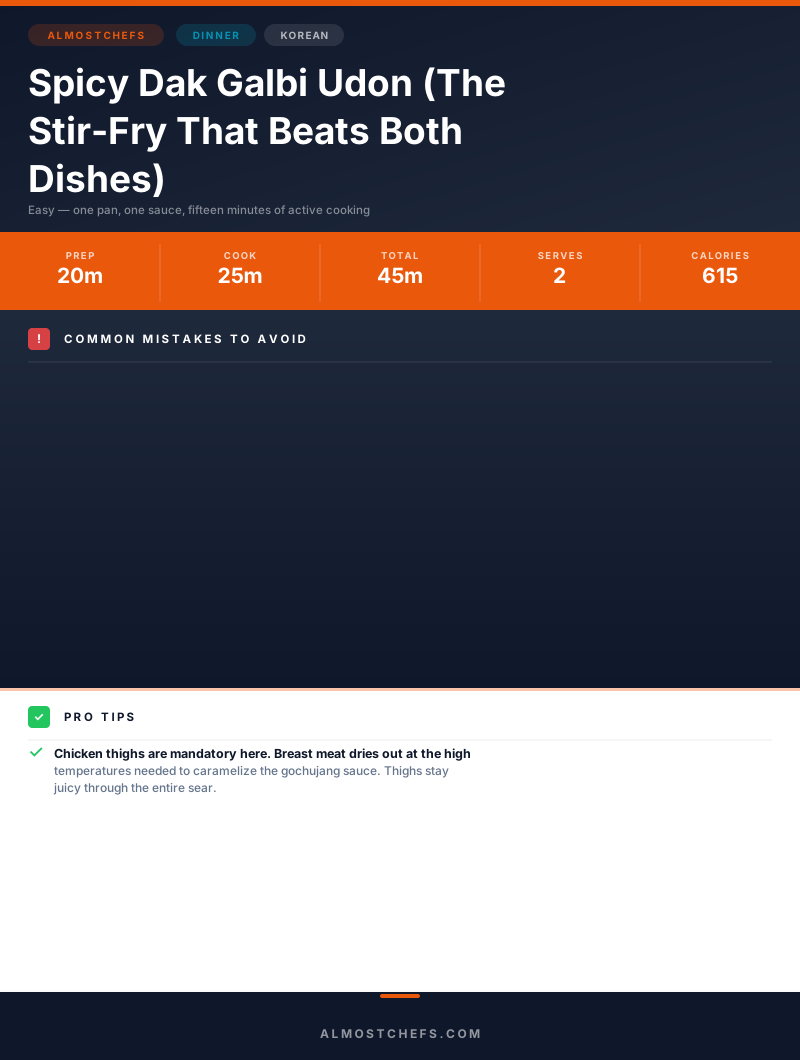
Spicy Dak Galbi Udon (The Stir-Fry That Beats Both Dishes)
Thick udon noodles tossed in gochujang-marinated chicken with charred cabbage and chewy rice cake — Korean dakgalbi rebuilt around noodles instead of rice. We reverse-engineered the sauce ratio to get that glossy, clingy coat without drowning the noodles.

“Dak galbi is already one of the most aggressively flavorful dishes in the Korean repertoire — spicy, sweet, slightly smoky, and built around the kind of caramelization that only comes from high heat and a cast iron griddle. The question is why it took this long to put udon noodles in it. Rice absorbs the sauce. Noodles wear it. The thick, chewy strands of udon cling to every bit of gochujang glaze in a way that rice simply cannot. This is that dish.”
Why This Recipe Works
Dakgalbi was invented in Chuncheon, South Korea, in the 1960s as cheap street food — chicken thighs marinated in gochujang and grilled on a communal iron griddle, scraped and folded with cabbage and rice cakes until the sauce reduced to a glaze. The dish survived because the flavor ratio is nearly perfect: spicy, sweet, fermented, and smoky in proportions that hit every register simultaneously.
The udon version is a modern Seoul variant that appears constantly in Korean food halls and convenience store riffs. It is not a compromise. It is an upgrade.
Why Udon Specifically
Rice is passive. It sits under the sauce and absorbs it. Udon is active — the thick, glutinous strands coat themselves in the gochujang glaze and carry it uniformly through every bite. The chew of udon also creates textural contrast with the tender chicken in a way that rice, which simply yields, cannot. The dish becomes more interesting to eat.
The physics matter too. Udon has a higher surface-area-to-volume ratio than a scoop of rice. When you toss noodles in a hot wok with reduced sauce, more sauce makes contact with more noodle surface. The result is the kind of uniform coating that requires twice as much sauce to achieve with rice. You get more flavor per gram of protein. That's not nothing.
The Gochujang Caramelization Problem
Every dakgalbi recipe tells you to cook on high heat. Most don't explain why, and the omission causes the single most common failure: a wet, stew-like dish with pale chicken floating in red liquid instead of a charred, glossy stir-fry.
Gochujang contains significant sugar (roughly 8% by weight in commercial brands) along with fermented soybean solids and chili paste. At high heat, those sugars undergo the Maillard reaction simultaneously with the soy sauce's amino acids, producing a complex glaze with bitter-sweet depth. Below 375°F — the temperature a cold, crowded pan drops to the moment the chicken hits it — that reaction doesn't happen. You get poaching, not searing. The dish tastes raw and flat no matter how long you cook it.
This is why a carbon steel wok or cast iron skillet is not optional here. Both materials hold temperature through thermal shock. A stainless pan or nonstick drops 80-100°F the moment the cold chicken hits it and never fully recovers on a home burner. The char you're looking for — those almost-burnt edges on the chicken that carry the deepest flavor in the dish — requires sustained high heat throughout the entire sear.
The Tteok Question
Korean rice cakes (tteok) are the sleeper ingredient here. Their flavor contribution is minimal — they are essentially neutral, slightly sweet starch cylinders. Their textural contribution is enormous. Every bite that includes a piece of tteok has a different chew than the udon, a different density than the chicken. It prevents the dish from becoming texturally monotonous, which is the long-cook danger in any single-pan noodle dish.
If you can't find tteok, the dish works fine without it. But they're available at every Korean grocery and most pan-Asian supermarkets, they keep for weeks in the refrigerator, and they repay the effort of sourcing them in every application: tteokbokki, tteokguk, and now this.
The Anti-Inflammatory Stack
The health_focus designation here isn't marketing. Gochugaru and gochujang are both concentrated sources of capsaicin, which inhibits the NF-κB signaling pathway — one of the primary molecular mechanisms of inflammatory response. Garlic's allicin compounds have been studied for cyclooxygenase inhibition (the same pathway targeted by ibuprofen). Fresh ginger's gingerols show IL-6 suppression in tissue culture studies.
None of this turns dinner into medicine. But it does mean that the most flavorful version of this dish — aggressively spiced, built on fresh garlic and ginger rather than pre-made pastes — is also the most nutritionally purposeful one. Cook it right and the food does two jobs simultaneously.
Where Beginners Mess This Up
Before we start, read this. These are the 4 reasons your spicy dak galbi udon (the stir-fry that beats both dishes) will fail:
- 1
Adding the udon too early: Udon needs less time in the pan than you think. Add it in the final four minutes of cooking only. If it hits the pan while the chicken is still raw, the noodles over-cook into a sticky, broken mass by the time the protein is done. Cook the chicken completely first, then fold in the noodles.
- 2
Skipping the high-heat sear: Dakgalbi sauce is built on caramelization, not just heat. The gochujang and soy need to hit a properly hot, dry pan to go from raw paste to glossy glaze. If the pan isn't smoking before the chicken goes in, you're braising in red sauce instead of searing. The flavor gap is enormous.
- 3
Using refrigerator-cold udon straight from the package: Chilled vacuum-packed udon noodles seize into a solid block the moment they touch the hot pan, dropping the temperature and creating steam instead of sear. Separate them in a bowl of warm water for two minutes before they hit the wok. They'll loosen into individual strands and cook evenly.
- 4
Under-seasoning the marinade: Chicken thighs can handle more seasoning than you expect. The sauce should taste aggressively salty and spicy before cooking — it will mellow significantly once the protein releases its moisture. If the raw marinade tastes balanced, the finished dish will taste flat.
🛠️ Core Equipment
- Carbon steel wok or cast iron skilletHigh heat retention is non-negotiable for dakgalbi. The surface needs to stay above 400°F even after the cold chicken hits it. Nonstick pans can't handle the temperature and thin stainless drops too fast.
- TongsFor tossing the noodles without breaking them. Chopsticks work but require more technique. Tongs give you control over the fold-and-coat motion that distributes the sauce evenly.
- Mixing bowlFor marinating the chicken and for loosening the udon noodles in warm water before cooking. Both steps happen simultaneously, so you need two separate bowls.
- Microplane or fine graterFor the fresh ginger in the marinade. Pre-grated ginger paste loses its bright heat within hours. Freshly grated ginger is a completely different ingredient.
Spicy Dak Galbi Udon (The Stir-Fry That Beats Both Dishes)
🛒 Ingredients
- ✦12 oz boneless skinless chicken thighs, cut into 1-inch pieces
- ✦2 portions fresh or vacuum-packed udon noodles (about 14 oz total)
- ✦2 cups green cabbage, roughly chopped
- ✦4 oz tteok (Korean rice cake cylinders), halved lengthwise
- ✦3 tablespoons gochujang
- ✦1 tablespoon gochugaru (Korean chili flakes)
- ✦2 tablespoons soy sauce
- ✦1 tablespoon brown sugar
- ✦1 tablespoon toasted sesame oil
- ✦1 tablespoon neutral oil (avocado or grapeseed)
- ✦4 garlic cloves, minced
- ✦1 teaspoon fresh ginger, grated on a microplane
- ✦3 green onions, cut into 2-inch segments
- ✦1 tablespoon sesame seeds, toasted
- ✦Salt to taste
👨🍳 Instructions
01Step 1
Combine gochujang, gochugaru, soy sauce, brown sugar, sesame oil, minced garlic, and grated ginger in a bowl. Mix until smooth.
02Step 2
Add the chicken pieces to the marinade. Toss well to coat every piece. Let sit for at least 15 minutes at room temperature.
03Step 3
If using vacuum-packed udon, separate the noodles in a bowl of warm water for 2 minutes. Drain and set aside.
04Step 4
If using tteok, soak in cold water for 10 minutes to soften, then drain.
05Step 5
Heat a carbon steel wok or cast iron skillet over high heat until smoking. Add the neutral oil and swirl to coat.
06Step 6
Add the marinated chicken in a single layer. Do not stir for 90 seconds — let it sear. Then toss and cook for another 4-5 minutes until cooked through and caramelized at the edges.
07Step 7
Add the cabbage and tteok. Toss everything together and stir-fry for 3 minutes until the cabbage softens slightly and the tteok has color.
08Step 8
Add the drained udon noodles. Toss vigorously with tongs for 3-4 minutes until the noodles are fully coated in sauce and heated through.
09Step 9
Add the green onions in the final 30 seconds, toss once, then remove from heat.
10Step 10
Plate immediately. Finish with toasted sesame seeds and an optional drizzle of sesame oil.
Nutrition Per Serving
Estimates based on standard preparation. Adjustments alter macros.
🔄 Substitutions
Instead of Chicken thighs...
Use Pork belly or tofu
Pork belly needs 2-3 extra minutes to render the fat before the sauce goes in. Extra-firm tofu should be pressed dry and pan-fried until crispy before marinating — skip the raw marinade stage entirely.
Instead of Gochujang...
Use Doenjang (Korean fermented soybean paste) plus sambal oelek
Completely different flavor profile — earthier and less sweet. Use 1.5 tablespoons doenjang plus 1 tablespoon sambal. Not a perfect swap but a credible alternative.
Instead of Tteok (rice cakes)...
Use Thick-cut fish cake (eomuk) or skip entirely
Fish cake adds umami and holds its shape well. Omitting the tteok is fine — the dish works without it. Do not substitute with mochi or glutinous rice cake, which dissolve at high heat.
Instead of Udon noodles...
Use Thick somen or fresh ramen noodles
The thickness matters. Thin noodles snap under the tossing and don't carry the sauce the same way. If substituting, look for the thickest noodle you can find.
🧊 Storage & Reheating
In the Fridge
Store in an airtight container for up to 2 days. The noodles will absorb the remaining sauce overnight and the flavors deepen significantly.
In the Freezer
Not recommended. Udon noodles become grainy and mealy after freezing and thawing.
Reheating Rules
Add 2-3 tablespoons of water to the container, cover loosely, and microwave on medium power for 90 seconds. Toss once halfway through. High power dries out the chicken.
❓ Frequently Asked Questions
Why is my sauce burning before the chicken is cooked through?
The sugar in the gochujang caramelizes fast at high heat. If the sauce is burning before the protein is done, your heat is too high or your pieces are too large. Cut the chicken smaller (3/4-inch pieces) and reduce to medium-high after the initial sear.
Can I make this less spicy?
Reduce the gochugaru first — it provides raw chili heat without the fermented complexity. You can cut it to half a teaspoon without losing the dish's identity. Reducing the gochujang changes the sauce more fundamentally.
What's the difference between this and regular dakgalbi?
Traditional dakgalbi is cooked on a round cast iron griddle and served with steamed rice or wrapped in perilla leaves. This version uses the same sauce architecture but swaps in udon noodles, which absorb the sauce differently — more cling, more chew, different texture profile throughout.
My udon stuck together in the pan. What happened?
Two likely causes: the noodles went in cold and seized on contact, or you didn't add enough water to help them loosen. Always warm the noodles first and keep 1/4 cup of water nearby to splash in if the pan runs dry.
Is this actually anti-inflammatory?
Capsaicin (from the gochugaru and gochujang), allicin (from the garlic), and gingerol (from the ginger) all have documented anti-inflammatory effects in human studies. No single meal is a treatment, but this dish stacks multiple evidence-based ingredients in meaningful quantities.
Can I add vegetables beyond cabbage?
Yes. Thinly sliced sweet potato, mushrooms (shiitake or king oyster), or perilla leaves all work well. Add denser vegetables (sweet potato) with the chicken. Add mushrooms with the cabbage. Add perilla as a finishing herb off heat.
The Science of
Spicy Dak Galbi Udon (The Stir-Fry That Beats Both Dishes)
We turned everything on this page into a beautiful, flour-proof PDF cheat sheet. Print it out, stick it to your fridge, and never mess up your spicy dak galbi udon (the stir-fry that beats both dishes) again.
*We'll email you the high-res PDF instantly. No spam, just perfectly cooked meals.
AlmostChefs Editorial Team
We translate the internet's most popular cooking videos into foolproof, beginner-friendly written recipes. We analyze multiple methods, test them in our kitchen, and engineer a single "Master Recipe" that gives you the best possible result with the least possible stress.