Dak Bokkeum Tang (The Korean Braised Chicken That Fixes Itself)
A fiery, deeply savory Korean braised chicken with potatoes simmered in gochujang and gochugaru sauce. Built from a whole chicken, seasoned in stages, and finished with a sauce so rich you'll want to stir rice directly into the pot.

“Most Korean home cooks have made this dish more times than they can count. One whole chicken, a handful of pantry staples, and 25 minutes. The trick isn't the ingredient list — it's the sequence. Soy sauce first to build a base. Sugar next to balance the heat. Gochujang and gochugaru in after, so they cook into the sauce instead of sitting on top of it. Get the order right and the dish corrects itself. Get it wrong and you have spicy soup with chicken floating in it.”
Why This Recipe Works
Dak bokkeum tang is one of those Korean dishes that looks simple until you make it wrong, and then suddenly every step has a reason.
The name has shifted over the years — dakdoritang was the common term for generations, but concerns about the Japanese origin of "dori" (possibly from tori, bird) pushed the name toward dak bokkeum tang, which translates roughly as stir-fried chicken stew. Whatever you call it, the dish hasn't changed: one pot, whole chicken, a gochujang-based sauce, potatoes, and a broth that ends up thick enough to coat a spoon.
The Soy-First Technique
Most braise recipes tell you to build your sauce in a bowl and pour it over the protein. This recipe does the opposite. The chicken goes into a hot, oiled 궁중팬 (wide Korean skillet) with garlic, then soy sauce goes in directly — no water, no buffer. For two to three minutes, the chicken essentially stir-fries in straight soy sauce, which reduces quickly against the hot metal and drives seasoning into the surface of the meat.
This matters because liquid dilutes everything. Once water enters the pan, soy sauce becomes one component of many. By letting it reduce directly onto the chicken first, you lock in a savory base that persists through the rest of the cook. It's the difference between chicken that tastes like it was cooked in sauce and chicken that has actually absorbed it.
The Sauce Sequence
The chili components — gochugaru and gochujang — go in after the sugar and mirin, not before. This is deliberate. Sugar dissolves better in already-hot liquid than in the presence of thick paste, and mirin needs a moment to cook off its alcohol before the heavier flavors layer on. Gochujang dropped onto a dry, hot surface can scorch in seconds. Added into moving liquid after everything else, it dissolves evenly and melds into the sauce without any bitter edges.
Oyster sauce is the sleeper ingredient here. It adds a layer of deep, almost savory sweetness that rounds off the sharpness of the raw chili. You won't identify it by taste — it just makes everything else taste more complete.
The Potato as Timer
The potato isn't decoration. Korean home cooks treat it as the doneness signal for the whole dish: when the potato is tender but still has slight bite, the chicken is done. The potato also releases starch as it cooks, thickening the sauce naturally into the glossy, clingy consistency that defines the dish. Pull the potato early and you get watery sauce and potentially undercooked chicken. Overcook it and it collapses into the broth, turning the sauce starchy and heavy.
Large chunks are non-negotiable. Small pieces dissolve before the chicken finishes cooking.
Reading the Oil
The clearest visual cue that the dish is ready isn't the color of the sauce or the internal temperature of the chicken — it's the fat. As the water content of the sauce reduces, rendered chicken fat rises visibly to the surface in slicks. When you start seeing oil pool at the top, the liquid has reduced to where it needs to be and the dish is finished. No thermometer required.
The Overnight Argument
Dak bokkeum tang eaten immediately after cooking is very good. Dak bokkeum tang eaten the next day is better by a measurable margin. The gochujang and soy sauce continue to penetrate the chicken overnight, the potatoes firm up slightly in the cold sauce, and the fat redistributes evenly. If you're cooking for guests, make this the evening before and reheat gently with a splash of water. No one will know the difference in effort. Everyone will notice the difference in depth.
Where Beginners Mess This Up
Before we start, read this. These are the 4 reasons your dak bokkeum tang (the korean braised chicken that fixes itself) will fail:
- 1
Adding all the sauce ingredients at once: Gochujang and gochugaru need to bloom into fat and liquid — they don't dissolve evenly if you dump everything in together. The soy sauce goes in first to coat the chicken, then the liquids, then the chili components. Layering them in stages is what builds depth instead of flat, one-note heat.
- 2
Tasting before the chicken is cooked: Raw chicken suppresses saltiness. A sauce that tastes perfect when the chicken is raw will taste significantly saltier once the bird is fully cooked and the umami compounds have released into the broth. Wait until the chicken shows white flesh when cut before you adjust seasoning.
- 3
Using too much water: 300cc is the ceiling — barely enough to come up the sides of the chicken. Onions and potatoes release moisture as they cook. Too much water at the start means watery sauce at the end. Dak bokkeum tang is supposed to be jjagag — glossy and reduced, not soupy.
- 4
Rushing the potato: The potato isn't a side character. It's the doneness timer. When the potato is fully cooked but still has slight resistance, the chicken is done. The potato starch also thickens the sauce naturally — if you pull the dish early, you lose both the texture indicator and the body it adds.
The Video Reference Library
Want to see it in action? Here are the exact videos we analyzed and combined to build this foolproof recipe translation:
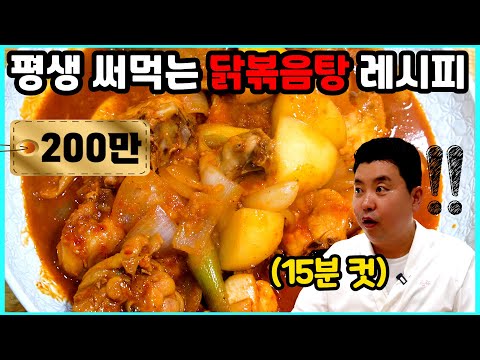
🛠️ Core Equipment
- 궁중팬 (wide Korean pan) or large heavy skilletThe wide surface area lets you sear the chicken in a single layer before adding liquid. A small pan crowds the meat and steams it instead of browning it. A [cast iron skillet](/kitchen-gear/review/cast-iron-skillet) works just as well.
- Tight-fitting lidOnce the liquid is in and the vegetables are added, you need to trap steam to cook the potatoes through. Without a lid the sauce reduces too fast before the potato is done.
- Long wooden spoon or spatulaYou're moving a whole chicken in a hot, sticky sauce. A long handle keeps your hands away from the spatter. Critical for the early soy-sauce stir-fry stage when the pan is driest and hottest.
Dak Bokkeum Tang (The Korean Braised Chicken That Fixes Itself)
🛒 Ingredients
- ✦1 whole chicken, cut into pieces (about 3.5 pounds)
- ✦1 tablespoon cooking oil
- ✦2 tablespoons garlic, minced (divided — 1 tbsp early, 1 tbsp late)
- ✦6 tablespoons soy sauce (ganjang)
- ✦300cc (1¼ cups) water
- ✦4 tablespoons sugar
- ✦3 tablespoons mirin (cooking wine)
- ✦4 tablespoons gochugaru (Korean red pepper flakes)
- ✦2 tablespoons oyster sauce
- ✦3 tablespoons gochujang (Korean red pepper paste)
- ✦2 medium potatoes, cut into large chunks
- ✦½ large onion, cut into chunks
- ✦3 stalks green onion (scallions), cut into 2-inch pieces
- ✦2–3 cheongyang chili peppers, split lengthwise (optional, for extra heat)
- ✦1 tablespoon black pepper
👨🍳 Instructions
01Step 1
Heat a wide, heavy pan over medium-high heat. Add the cooking oil and swirl to coat.
02Step 2
Add the chicken pieces and 1 tablespoon of garlic. Stir-fry together for 3–4 minutes until the chicken is lightly colored on the outside.
03Step 3
Pour in the soy sauce and continue stir-frying until the chicken absorbs the color and the soy sauce coats every surface, about 2 minutes.
04Step 4
Add 300cc of water — just enough to barely come up the sides of the chicken. Do not submerge.
05Step 5
Stir in the sugar and let it dissolve completely into the simmering liquid, about 1 minute.
06Step 6
Add the mirin, gochugaru, oyster sauce, and gochujang in that order, stirring each in before adding the next.
07Step 7
Bring the pot to a boil and let the sauce cook together for 1–2 minutes. Do not taste yet — the chicken is still raw.
08Step 8
Add the potato chunks and onion. Stir to coat everything in the sauce.
09Step 9
Reduce heat to medium-low, cover, and simmer for about 15 minutes, or until the potatoes are tender with slight resistance when pierced.
10Step 10
Uncover and taste the sauce. Add soy sauce if too sweet, gochugaru if you want more heat. The sauce should taste slightly more intense than you'd want — it mellows when served over rice.
11Step 11
Add the green onion pieces, cheongyang chili peppers (if using), and black pepper. Stir through.
12Step 12
Add the remaining 1 tablespoon of garlic if you want a stronger garlic finish.
13Step 13
Continue simmering uncovered for 3–5 minutes until the sauce reduces to a glossy, slightly thickened consistency and you can see oil rising to the surface.
14Step 14
Serve hot over steamed rice. Mix the sauce into the rice directly in the bowl for the full effect.
Nutrition Per Serving
Estimates based on standard preparation. Adjustments alter macros.
🔄 Substitutions
Instead of Mirin...
Use Corn syrup (mulyeot)
Corn syrup gives a shinier glaze and pure sweetness. Mirin adds fermented depth. Either works — the creator specifically chose mirin over corn syrup for complexity, but the difference is subtle in the finished dish.
Instead of Cheongyang chili peppers...
Use Jalapeño or serrano peppers
Cheongyang runs hotter and has a clean, fresh bite. Jalapeño is milder with a grassy flavor. Serrano is the closer heat match. Either works as an optional spice layer.
Instead of Whole chicken...
Use Bone-in chicken thighs
More forgiving than breast-heavy cuts. Thighs stay juicy even if you overshoot the cook time slightly. Use the same quantity by weight.
Instead of Oyster sauce...
Use Fish sauce (1 tablespoon, not 2)
Fish sauce is significantly saltier and more pungent. Reduce the quantity and adjust the soy sauce downward to compensate. The umami depth will be similar.
🧊 Storage & Reheating
In the Fridge
Store in an airtight container for up to 3 days. The sauce thickens considerably when cold — this is normal and actually improves the texture when reheated.
In the Freezer
Freeze in portions for up to 2 months. The potato texture changes slightly after freezing but the sauce and chicken hold up well.
Reheating Rules
Add 2–3 tablespoons of water to the container before reheating. Cover and reheat over low heat, stirring occasionally. The sauce will loosen back to its original consistency as it warms.
❓ Frequently Asked Questions
What's the difference between dak bokkeum tang and dakdoritang?
They're the same dish. Dakdoritang was the traditional name, but 'dori' may have roots in Japanese (tori, meaning bird), which prompted a push to rename the dish. Dak bokkeum tang — literally 'stir-fried chicken stew' — is now the preferred term in most Korean households and restaurants.
Why does soy sauce go in before the water?
When you stir-fry the chicken in soy sauce without any water, the soy sauce reduces rapidly and coats the surface of the meat directly. This creates a concentrated flavor layer that stays with the chicken even after liquid is added. If you add everything at once, the soy sauce just dilutes into the water and the chicken never absorbs it properly.
My sauce turned out watery. What went wrong?
Two likely causes: too much water at the start, or the lid was left on too long at the end. The sauce needs the final few minutes uncovered to reduce and tighten. Also check that you used the full amount of gochujang — it acts as a natural thickener in addition to providing flavor.
Can I make this without a whole chicken?
Yes. Bone-in thighs are the most common substitute and arguably better for this dish — more forgiving over heat and extremely juicy. Boneless thighs work too but cook faster; start checking at the 10-minute mark. Avoid boneless breast as the primary cut — it dries out before the sauce has time to develop.
How spicy is this dish?
At the quantities listed, it's moderately spicy — enough to notice clearly but not so hot it dominates. The oyster sauce, sugar, and gochujang together round out the heat into something balanced. For a milder version, halve the gochugaru. For serious heat, add cheongyang peppers and an extra tablespoon of gochugaru.
Can I add other vegetables?
Yes, but stick to vegetables that can handle 15 minutes of simmering. Carrot, daikon, mushrooms, and zucchini all work well. Zucchini goes in the last 5 minutes only — it collapses fast. Avoid leafy greens, which turn to mush, and vegetables with very high water content, which will dilute the sauce.
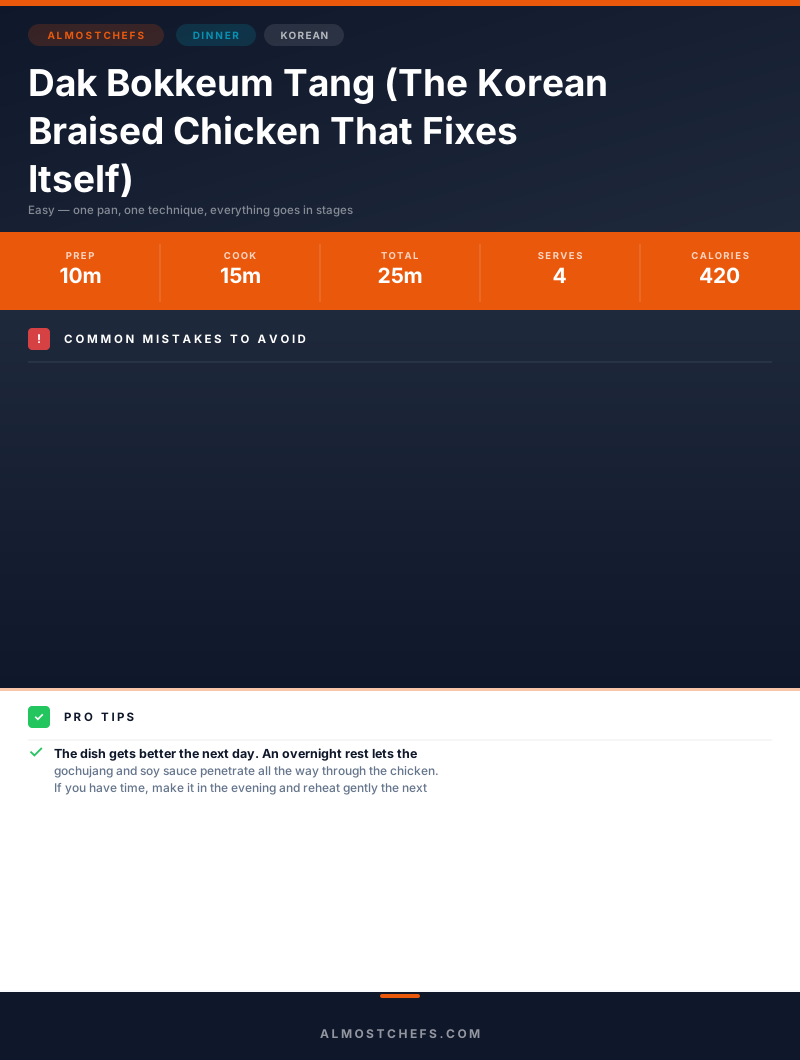
The Science of
Dak Bokkeum Tang (The Korean Braised Chicken That Fixes Itself)
We turned everything on this page into a beautiful, flour-proof PDF cheat sheet. Print it out, stick it to your fridge, and never mess up your dak bokkeum tang (the korean braised chicken that fixes itself) again.
*We'll email you the high-res PDF instantly. No spam, just perfectly cooked meals.
AlmostChefs Editorial Team
We translate the internet's most popular cooking videos into foolproof, beginner-friendly written recipes. We analyze multiple methods, test them in our kitchen, and engineer a single "Master Recipe" that gives you the best possible result with the least possible stress.