Daepae Duruchigi (Thin Pork Stir-Fry)
Paper-thin pork belly slices stir-fried in a fiery gochujang sauce with kimchi and vegetables. Korea's fastest, most satisfying pork dish.
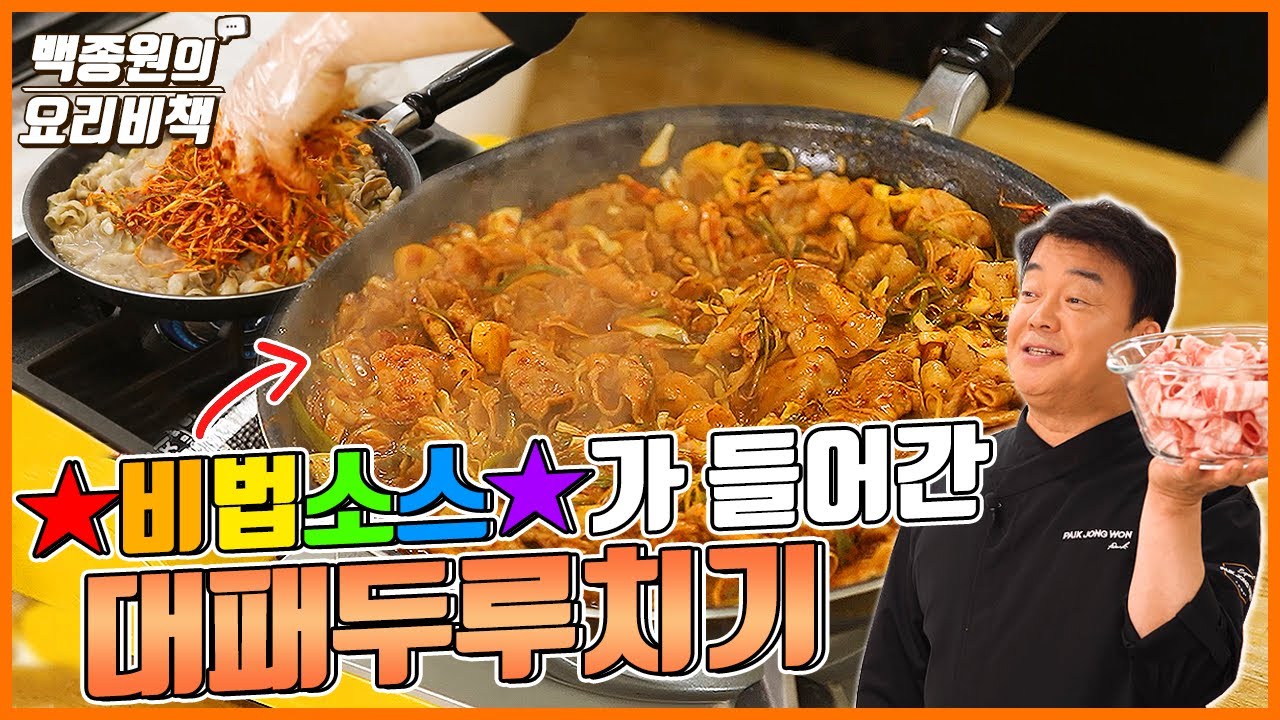
Why This Recipe Works
Most pork stir-fry recipes fail because they are written by people who have never stood next to a screaming-hot wok at 11pm on a Tuesday with nothing but a frozen pack and a jar of gochujang. Daepae duruchigi does not care about your mise en place. It does not reward patience or finesse. It rewards physics — specifically, the physics of heat transfer, fat rendering, and Maillard browning at temperatures most home cooks are too timid to reach.
The name is the first clue. Daepae (대패) is the Korean word for a wood planer — the industrial tool that shaves timber down to a uniform, paper-thin sheet in a single pass. That is not poetic license. That is a literal description of the cut. Pork belly sliced at approximately 1mm thickness on an industrial slicer behaves completely differently than the thick, braising-ready slabs you see everywhere else. The physics change entirely. Surface area relative to mass increases by an order of magnitude. Fat content — which in a thick slice acts as insulation, slowing interior heat penetration — now becomes the primary driver of browning because the fat has nowhere to hide. On contact with a properly preheated wok, each translucent sheet of pork belly renders its fat in under 90 seconds, crisps at the edges, and develops caramelized fond on the surface before the interior has any opportunity to toughen.
This is not an accident. It is the engineered efficiency of a cuisine built around high heat, minimal equipment, and maximum flavor extraction in minimum time.
The sauce is a controlled detonation. Mix gochujang, gochugaru, soy sauce, mirin, sugar, and minced garlic in a small bowl before the pan is even on the flame. This matters. You do not want to be measuring paste while the pork is already in the pan — the window between perfect sear and scorched disaster is roughly 30 seconds. Gochujang is fermented, dense with complex sugars and glutamates. Gochugaru brings a different kind of heat: fruitier, smokier, less sharp than pure capsaicin compounds. Combined with mirin and sugar, the sauce is primed to caramelize the instant it hits residual pork fat in a 500°F pan. The sugar content reaches its caramelization threshold — approximately 160°C — in under 30 seconds at high heat. Any longer and it crosses from caramelized to carbonized. Baek Jong Won's instruction to toss aggressively for 30 seconds after adding the sauce is not stylistic showmanship. It is mandatory temperature management.
Aged kimchi is not optional, and fresh kimchi is not a substitute. Fermentation produces lactic acid. Lactic acid cuts through fat. Pork belly, even thinly sliced, carries a significant fat load — 32 grams per serving — and without an acidic counterweight, the dish reads as heavy and one-dimensional. Aged kimchi, sour and funky, does the same structural work in Korean cooking that a squeeze of lemon does in French cooking or tamarind does in Tamil cooking. If you use fresh kimchi, you must compensate with rice vinegar. This is not preference. It is basic fat-acid balance.
Heat is the non-negotiable variable. A large pan or wok preheated until it smokes is the only tool that delivers the correct outcome. Cast iron and carbon steel retain heat better than stainless under protein load — adding cold pork to a pan drops the surface temperature instantly, and a low-retention pan never recovers. The pork steams instead of searing. The fat renders slowly instead of crisping. The sauce, when added, simmers instead of caramelizing. The result is technically edible and experientially forgettable. Do not crowd the pan. If you have more than 10oz of pork, work in batches. Crowding is the single most common reason stir-fry at home tastes like stir-fry at home instead of stir-fry at a restaurant.
The sesame oil goes in last. Always. Sesame oil's primary aromatic compounds — pyrazines and furans, the nutty, toasted fragrance that defines the dish's finish — are volatile at high heat. Adding sesame oil to a smoking pan destroys the flavor before it reaches the plate. It is a finishing agent, not a cooking fat. One tablespoon tossed in at the end, over residual heat, is enough.
Speed is the thesis of this dish. Twenty minutes start to finish — 10 of which are prep — is not a marketing claim. It is structural. The entire technique depends on extreme heat applied for an extremely short duration. A 10-minute duruchigi cooked correctly is better than a 30-minute duruchigi cooked cautiously. The moment you turn the heat down to feel more comfortable, you have made a different dish. A worse one.
Korea's Weeknight Logic
Duruchigi is what Korean home cooks actually eat when there is no time and the hunger is real. Not bibimbap. Not galbi. Those require planning. Duruchigi requires a frozen pack of daepae samgyeopsal, a tablespoon of gochujang, and the willingness to put a pan on maximum heat and trust the process. Baek Jong Won's 3.1-million-view recipe exists because it codifies something Korean cooks already know intuitively: the best weeknight food is not simplified fine dining. It is its own discipline — fast, loud, intensely flavored, and eaten immediately off the pan. That is not a compromise. That is the point.
Wrap leftovers in crisp lettuce with a spoonful of rice for ssam. The temperature contrast between cold lettuce, hot spicy pork, and sticky rice is the kind of combination that makes you question every other eating decision you have made this week.
Daepae Duruchigi (Thin Pork Stir-Fry)
🛒 Ingredients
- ✦10 oz thinly sliced pork belly (daepae samgyeopsal)
- ✦1/2 cup aged kimchi, chopped
- ✦1 tablespoon gochujang (Korean red pepper paste)
- ✦1 tablespoon gochugaru (Korean red pepper flakes)
- ✦1 tablespoon soy sauce
- ✦1 tablespoon mirin
- ✦1 teaspoon sugar
- ✦2 cloves garlic, minced
- ✦1/2 onion, sliced
- ✦2 green onions, cut into 2-inch pieces
- ✦1 tablespoon sesame oil
- ✦Sesame seeds for garnish
👨🍳 Instructions
01Step 1
Mix gochujang, gochugaru, soy sauce, mirin, sugar, and garlic in a small bowl to make the sauce.
02Step 2
Heat a large pan or wok over high heat until smoking. Add pork belly slices in a single layer — do not overcrowd.
03Step 3
Sear pork for 1-2 minutes until the edges crisp and the fat renders. Flip once.
04Step 4
Push pork to one side. Add onion and kimchi to the empty side. Stir-fry for 1 minute.
05Step 5
Pour the sauce over everything. Toss aggressively for 30 seconds until the pork is coated and the sauce caramelizes.
06Step 6
Add green onions and sesame oil. Toss once more. Plate immediately, garnish with sesame seeds.
Nutrition Per Serving
Estimates based on standard preparation. Adjustments alter macros.
🔄 Substitutions
Instead of Thin pork belly...
Use Pork shoulder, thinly sliced
Less fatty, still delicious — the sauce carries the flavor
Instead of Aged kimchi...
Use Fresh kimchi + 1 teaspoon rice vinegar
Adding vinegar mimics the sourness of aged kimchi
🧊 Storage & Reheating
In the Fridge
Store for 1-2 days. Best fresh — the thin pork dries out quickly.
In the Freezer
Not recommended.
Reheating Rules
Reheat in a hot pan — microwave makes it soggy.
❓ Frequently Asked Questions
What is daepae samgyeopsal?
Daepae (대패) means 'wood planer' in Korean. Daepae samgyeopsal is pork belly shaved paper-thin — about 1mm — so it cooks almost instantly on high heat. It's sold frozen in Korean markets and is the key to this dish's speed and crispy edges.
Can I use regular thick-sliced pork belly?
You can, but it changes the dish entirely. The magic of duruchigi is the thin slices that crisp up in seconds and soak up sauce on both sides. Thick slices need longer cooking and won't have the same surface-area-to-sauce ratio.

The Science of
Daepae Duruchigi (Thin Pork Stir-Fry)
We turned everything on this page into a beautiful, flour-proof PDF cheat sheet. Print it out, stick it to your fridge, and never mess up your daepae duruchigi (thin pork stir-fry) again.
*We'll email you the high-res PDF instantly. No spam, just perfectly cooked meals.
AlmostChefs Editorial Team
We translate the internet's most popular cooking videos into foolproof, beginner-friendly written recipes. We analyze multiple methods, test them in our kitchen, and engineer a single "Master Recipe" that gives you the best possible result with the least possible stress.