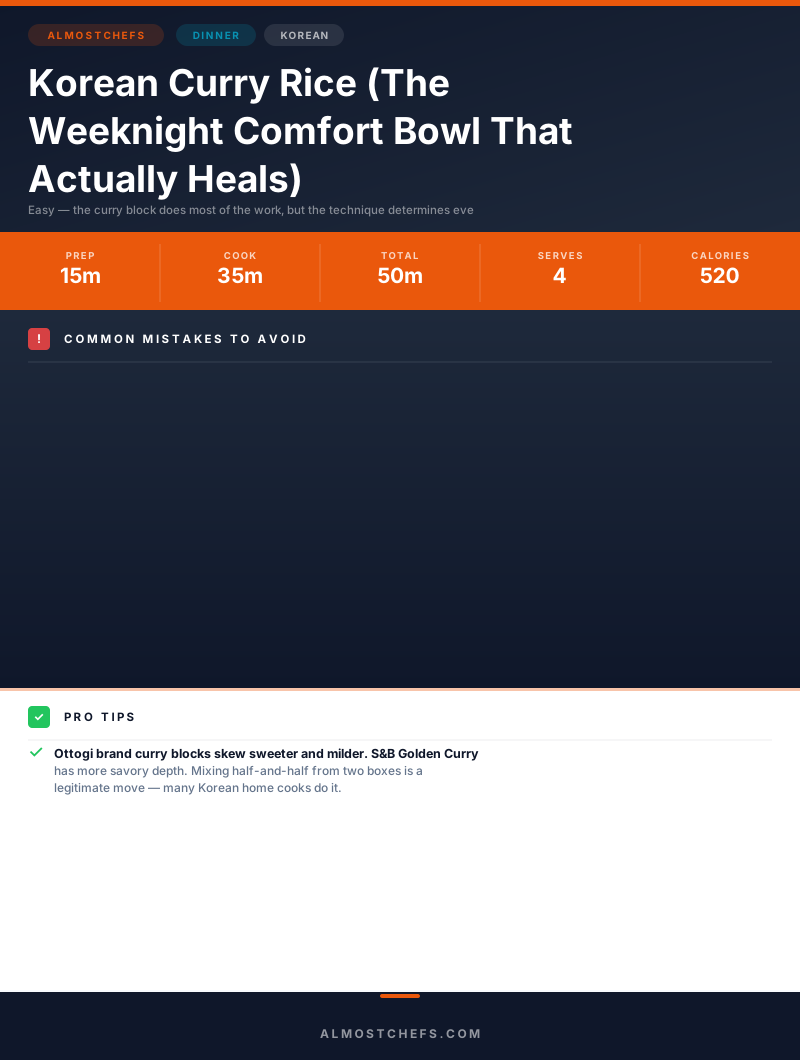
Korean Curry Rice (The Weeknight Comfort Bowl That Actually Heals)
A rich, glossy Japanese-style curry served over steamed white rice — the way Korean home cooks have made it for decades. We break down the roux technique, the vegetable cut sizes, and why Korean curry blocks behave differently than Indian spice blends, so you stop ending up with watery, flavorless results.

“Korean curry rice is one of the most underestimated weeknight dishes on earth. It looks simple — blocks from a box, some vegetables, rice. It is simple. But there's a reason some bowls taste deeply savory and glossy and satisfying, and others taste like hot, starchy water with food coloring. The difference isn't the brand of curry block. It's everything you do before the block goes in.”
Why This Recipe Works
Korean curry rice — 카레라이스 — sits at a peculiar intersection of cultures: Japanese technique, Indian spice lineage, Korean home kitchen sensibility. It arrived in Korea through Japanese colonization in the early 20th century, was adopted wholesale, and then quietly evolved. What emerged is something distinct: thicker than Japanese curry, often with a touch of heat, occasionally spiked with fish sauce or gochujang, and treated not as an exotic dish but as the most reliable weeknight dinner in the Korean repertoire.
The block system is the key innovation. Someone in the mid-20th century figured out how to package a pre-made roux — fat, starch, spice — into a compressed tablet that dissolves into any hot liquid and immediately produces a thick, glossy sauce. It's not cheating. It's engineering. The question isn't whether to use the blocks. It's whether you understand what the blocks need from you before they go in.
The Browning Foundation
Curry blocks contain no Maillard-reaction products. They can't — they're made cold and compressed. Every bit of deep, roasted, savory flavor in this dish has to come from what you do before the blocks dissolve. This means searing the protein until you get visible golden-brown crust on at least two sides. It means cooking the onions until they soften and their edges start to caramelize. It means giving the carrots and potatoes two minutes of direct contact with the fat at the bottom of the Dutch oven before the water goes in.
Skipping the sear and going straight to liquid produces curry that tastes like the box smells — flat, one-dimensional, and vaguely medicinal. The sear is where you build the foundation the blocks have no ability to provide.
The Apple Variable
Grated apple is the ingredient that separates Korean home-cook curry from every other version. It does three things simultaneously: the natural sugars balance the spice and salt without making the dish sweet, the pectin contributes to the sauce's characteristic glossy body, and the mild acidity cuts through the fat in the roux blocks. It also carries measurable anti-inflammatory compounds — quercetin and catechins — that align with the health focus this dish deserves more credit for.
Half a grated Granny Smith, stirred in two minutes before the blocks dissolve. That's it. That's the move that makes people ask you for the recipe.
The Block Dissolution Problem
The roux in a curry block is stabilized fat and starch. When it hits actively boiling water, the outer surface of the block cooks instantly, creating a sealed layer that prevents the interior from dissolving evenly. You get clumps — waxy, partially dissolved masses that never fully incorporate no matter how hard you stir. The fix is elemental: pull the pot off the heat for thirty seconds before the blocks go in. The liquid should be hot but not turbulent. Break each block into smaller pieces. Stir continuously as they melt. Then and only then return to low heat.
The wooden spoon matters here too. Silicone works. Metal does not — it retains heat and creates localized hot spots against the pot surface that cook the roux before it has a chance to distribute.
The Rice Relationship
This dish is a delivery mechanism for rice. The curry-to-rice ratio should be aggressive — more curry than you think, pooling around a substantial mound of short-grain white rice. Short-grain is non-negotiable for texture: its higher starch content makes it slightly sticky, which means it holds together in a mound and absorbs curry from below rather than letting it wash the rice apart. Long-grain rice produces a flat, separated, sad plate.
A rice cooker gives you perfectly cooked rice with zero attention while you work the curry. This matters: the curry requires active management during the final simmer. Divided attention produces overcooked rice or lumpy curry. Automate the rice. Focus on the sauce.
Why Day Two Is the Point
Potato starch migrates into the surrounding liquid overnight. By the next day, the curry has thickened from glossy to near-solid, the spices have bloomed further into the sauce, and the meat has continued absorbing flavor from every direction. Reheat it gently with a splash of water and you have a fundamentally better dish than what came off the stove the night before. Make a large batch deliberately. This is a dish that rewards the refrigerator.
Where Beginners Mess This Up
Before we start, read this. These are the 4 reasons your korean curry rice (the weeknight comfort bowl that actually heals) will fail:
- 1
Cutting vegetables too small: Potatoes and carrots cut into tiny pieces dissolve into the curry during the long simmer, turning it gritty and uneven. Cut everything into substantial chunks — 1.5 to 2 inch pieces. They should hold their shape through 20 minutes of simmering and still push back when you bite them.
- 2
Adding the curry block to boiling liquid: If you drop the blocks into actively boiling water, they seize and clump instead of dissolving smoothly. Remove the pot from heat or reduce to a bare simmer first, break the blocks into smaller pieces, and stir continuously as they melt. Rushing this step produces lumpy curry every time.
- 3
Not browning the meat first: Pale, steamed-in-liquid meat has no Maillard flavor. Sear your protein in a hot pan until you get visible browning on at least two sides before the vegetables go in. That crust is the backbone of the entire dish's savory depth.
- 4
Using the wrong water ratio: Each curry block brand specifies a water amount on the packaging for a reason. Too much water and the curry never thickens — it stays thin and sharp. Too little and it scorches before the vegetables cook through. Read the box, follow the ratio, adjust only after the blocks dissolve.
🛠️ Core Equipment
- Heavy-bottomed wide pot or Dutch ovenEven heat distribution prevents scorching during the long simmer. A [Dutch oven](/kitchen-gear/review/dutch-oven) is ideal — wide enough to sear meat in a single layer, thick enough to maintain steady low heat once the blocks dissolve.
- Sharp chef's knifeUniform vegetable chunks cook evenly. Ragged, inconsistent cuts mean some pieces are mush before others are cooked through. A [sharp chef's knife](/kitchen-gear/review/chefs-knife) makes consistent 1.5-inch cuts fast and safe.
- Wooden spoon or silicone spatulaFor dissolving the curry blocks without scratching the pot surface. Metal utensils on a hot roux can create metallic off-flavors in the finished curry.
- Rice cooker or covered saucepanCurry rice lives and dies on the rice. A [rice cooker](/kitchen-gear/review/rice-cooker) produces consistent, fluffy short-grain results without active management — freeing you to focus on the curry.
Korean Curry Rice (The Weeknight Comfort Bowl That Actually Heals)
🛒 Ingredients
- ✦1.5 pounds boneless chicken thighs, cut into 1.5-inch pieces (or beef chuck, or pork shoulder)
- ✦1 box Korean curry blocks (S&B Golden Curry or Ottogi brand — 100g, medium heat recommended)
- ✦3 cups short-grain white rice, cooked
- ✦2 medium yellow onions, cut into 1-inch wedges
- ✦2 medium russet potatoes, peeled and cut into 1.5-inch chunks
- ✦2 large carrots, peeled and cut into 1.5-inch pieces on the bias
- ✦3.5 cups water (or follow the block packaging ratio)
- ✦1 tablespoon neutral oil (avocado or grapeseed)
- ✦1 tablespoon soy sauce
- ✦1 teaspoon fish sauce (optional, adds depth)
- ✦1 Granny Smith apple, peeled and grated (about 1/2 cup)
- ✦Salt and freshly ground black pepper to taste
👨🍳 Instructions
01Step 1
Heat the oil in a heavy-bottomed pot over medium-high heat. Season the chicken pieces with salt and pepper, then sear in a single layer without moving for 3-4 minutes until golden brown on one side. Flip and sear 2 more minutes. Remove and set aside.
02Step 2
In the same pot, add the onion wedges and cook over medium heat for 5-6 minutes, stirring occasionally, until softened and the edges begin to turn translucent.
03Step 3
Add the potatoes and carrots. Stir to coat in the oil and onion mixture. Cook for 2 minutes.
04Step 4
Return the seared chicken to the pot. Add 3.5 cups of water (or follow the block packaging measurement). Bring to a boil, then reduce to a steady simmer.
05Step 5
Simmer uncovered for 15-20 minutes, until the potatoes are just fork-tender. Skim any foam from the surface during the first few minutes.
06Step 6
Stir in the grated apple, soy sauce, and fish sauce. Simmer 2 more minutes.
07Step 7
Reduce heat to low. Remove the pot from the burner for 30 seconds. Break the curry blocks into individual cubes and add to the pot. Stir continuously until fully dissolved — about 2-3 minutes — before returning to low heat.
08Step 8
Simmer on low heat for 5-7 minutes, stirring frequently, until the curry thickens to a glossy, coating consistency. It should coat the back of a spoon.
09Step 9
Taste and adjust — more soy sauce for salt, more grated apple for sweetness, a splash of water if too thick.
10Step 10
Serve immediately over cooked short-grain rice. The curry should pool around the rice mound and be thick enough not to flood the entire plate.
Nutrition Per Serving
Estimates based on standard preparation. Adjustments alter macros.
🔄 Substitutions
Instead of Chicken thighs...
Use Firm tofu or chickpeas
Press tofu dry for 20 minutes and pan-fry until golden before adding. Chickpeas can go in directly. Both absorb the curry flavor well during the simmer phase.
Instead of Russet potatoes...
Use Kabocha squash or sweet potato
Lower glycemic index option that also supports the anti-inflammatory angle. Kabocha cooks faster — check at 12 minutes instead of 15-20.
Instead of Short-grain white rice...
Use Brown short-grain rice or barley
Better for blood sugar response. Brown rice takes 45 minutes — start it before you begin the curry. Barley adds a pleasant chew and significant fiber.
Instead of Fish sauce...
Use Soy sauce or omit entirely
Fish sauce adds umami without fishiness. Replacing with soy sauce is seamless. Omitting entirely produces a slightly flatter savory profile but is still excellent.
🧊 Storage & Reheating
In the Fridge
Store curry and rice separately in airtight containers for up to 4 days. The curry thickens considerably when cold — this is expected.
In the Freezer
Freeze curry (without rice) in portions for up to 2 months. Potatoes can turn grainy after freezing — acceptable in a thick sauce context but worth noting.
Reheating Rules
Reheat curry in a saucepan over low heat with 2-3 tablespoons of water per serving, stirring gently. Microwave works but stir every 60 seconds to prevent hot spots.
❓ Frequently Asked Questions
Why is my curry so thin and watery?
Either too much water or the blocks weren't fully dissolved before simmering resumed. Check your block packaging for the exact water ratio — most people add 20-30% more water than called for. Also confirm the blocks dissolved completely before the final simmer.
Can I use curry powder instead of curry blocks?
You can, but the result is a fundamentally different dish. Korean 카레라이스 relies on the pre-made roux in the blocks for its glossy, thick texture. Curry powder requires you to build your own roux from fat and starch — achievable but a different recipe entirely.
Why does my curry taste sharp and acidic?
Underdone onions. If the onions weren't softened before the liquid went in, they release sharp sulfur compounds into the sauce. Cook them until fully translucent and softening at the edges before adding the other vegetables.
Is Korean curry the same as Japanese curry?
Almost. Korean 카레라이스 was introduced through Japanese influence and uses the same block-based roux technique. Korean versions tend to be slightly spicier and sometimes incorporate gochujang or fish sauce for additional depth. The format — mild, thick, served over rice — is identical.
What's the best curry block brand for beginners?
S&B Golden Curry Medium is the most forgiving and widely available. It has enough complexity to taste good without technique, but rewards proper searing and onion cooking with noticeably better results.
How do I keep the potatoes from falling apart?
Cut them larger than you think necessary — 1.5 to 2 inch chunks — and don't overcook them before the blocks go in. They should be just fork-tender, not soft, when you add the curry. The final 5-7 minute simmer finishes them perfectly.
The Science of
Korean Curry Rice (The Weeknight Comfort Bowl That Actually Heals)
We turned everything on this page into a beautiful, flour-proof PDF cheat sheet. Print it out, stick it to your fridge, and never mess up your korean curry rice (the weeknight comfort bowl that actually heals) again.
*We'll email you the high-res PDF instantly. No spam, just perfectly cooked meals.
AlmostChefs Editorial Team
We translate the internet's most popular cooking videos into foolproof, beginner-friendly written recipes. We analyze multiple methods, test them in our kitchen, and engineer a single "Master Recipe" that gives you the best possible result with the least possible stress.