The Real Cuban Sandwich (Press It Like They Do in Miami)
A pressed Cubano with roasted pork, honey ham, Swiss cheese, dill pickles, and mustard on Cuban bread — crisped under weight until the cheese melts and the crust shatters. We broke down the most common home cook mistakes and built a foolproof technique that delivers the real thing in under 30 minutes.
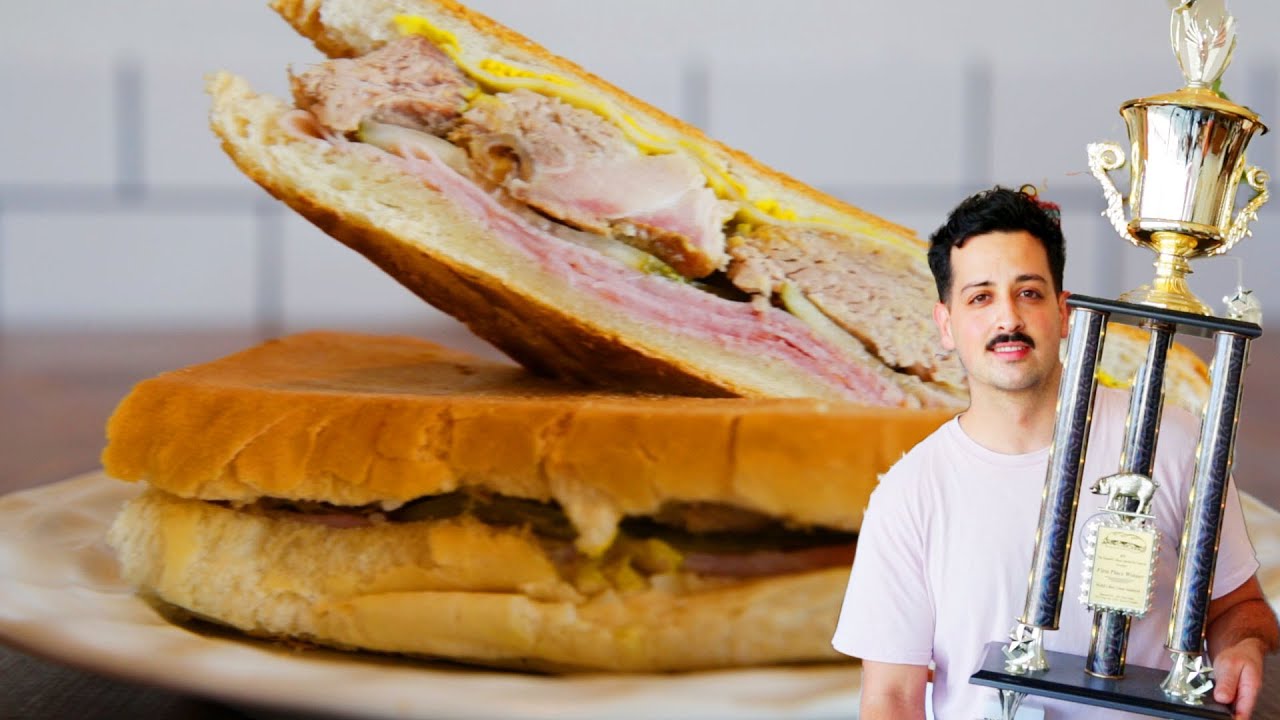
“Most homemade Cuban sandwiches fail before the pan even gets hot. The bread is wrong, the press is weak, and the cheese never fully melts because the heat was too high and the cook flipped too early. A Cubano isn't a grilled cheese with extras — it's a precision-pressed sandwich where the weight, the heat, and the layering order all matter. We tested every home method to find the one that actually delivers.”
Why This Recipe Works
The Cuban sandwich is one of the most argued-about things in American food. Tampa claims it. Miami claims it. New York has a version nobody asked for. The argument is mostly irrelevant in a home kitchen — what matters is understanding why the technique works, so you can execute it correctly regardless of what you're calling it.
The Press Is the Point
Everything about a Cubano is built around compression. The bread is soft so it yields. The cheese is Swiss because it melts at a low, even temperature. The pork is sliced thin so it compresses flat. Every ingredient choice is in service of one goal: getting this sandwich flat, hot, and cohesive under sustained pressure.
The press does three things simultaneously. First, it forces the bread into contact with the hot skillet surface across every square centimeter — no air pockets, no uneven browning. Second, it compresses the fillings into a single unified layer rather than a stack of discrete components. Third, it drives heat from the bottom up through the layers, melting the cheese from below while the top bread toasts from conductive heat through the press.
This is why a weak press produces a mediocre sandwich. If you're using just a spatula, you're getting maybe 30% of the compression you need. Use a cast iron skillet as a weight. The difference in the final product is not subtle.
Heat Management
Medium heat. This is the instruction that home cooks ignore most consistently, because medium heat feels too slow. It is not slow — it is correct. Swiss cheese melts at around 130°F. The center of a densely layered sandwich at medium heat reaches that temperature in approximately 4 minutes. At medium-high, the exterior of the bread hits 400°F in under 2 minutes and burns before the center gets warm enough to do anything.
The tell: if you hear aggressive sizzling the moment the sandwich hits the pan, the heat is too high. You should hear a gentle, steady crackle. That sound means the butter is cooking evenly and the bread is browning at the same rate the interior is warming.
The Layering Logic
Pork first, ham second, cheese third, pickles fourth. This order is not tradition for tradition's sake — it's physics. The cheese sits directly on the ham so that the heat traveling upward from the skillet melts it against the meat, turning the two proteins into a single cohesive layer. Pickles on top of the cheese means their brine drips downward into the cheese, not into the bread. Mustard on the top half only, because mustard's acidity would make the bottom bread soggy if applied before the other ingredients were stacked.
The garlic-herb butter on both interior surfaces is the sleeper element of this recipe. It doesn't taste like garlic bread — it tastes like the sandwich itself has more depth. The garlic and oregano melt into the bread during pressing and distribute through the interior, which is why sandwiches made without it taste thinner and flatter even when the meat and cheese are identical.
The Bread Problem
Cuban bread has a short shelf life and is genuinely difficult to source outside of South Florida. This is not a reason to reach for sourdough, which has a thick, resistant crust that fights compression and burns at the edges while the center stays pale. A soft hoagie roll is the correct substitute — same soft interior, same thin crust, same behavior under a press.
The bread is the structural container. Everything inside can be sourced at any grocery store. The bread is the only ingredient that requires intentional selection, and getting it right is the difference between a pressed sandwich and a Cubano.
Where Beginners Mess This Up
Before we start, read this. These are the 4 reasons your the real cuban sandwich (press it like they do in miami) will fail:
- 1
Using the wrong bread: Cuban bread has a thin, crackly crust and a soft, airy interior that compresses easily under a press. Sourdough and baguettes resist compression and don't develop the same shatter. If you can't find Cuban bread, a soft hoagie roll is closer than a baguette — it yields under pressure and toasts evenly.
- 2
Pressing too hard, too fast: Aggressive downward pressure the moment the sandwich hits the pan compresses the fillings before the cheese has started melting. Apply moderate pressure for the first two minutes to let the heat penetrate, then press firmly as the bread starts to set. Impatient pressing creates flat bread and cold cheese.
- 3
Skipping the garlic-herb butter: Plain butter produces a generic toasted surface. Garlic, oregano, and a squeeze of lime in the butter melt into the bread during pressing and become part of the sandwich's flavor — not just a cooking fat. This step takes 60 seconds and is responsible for 20% of the final taste.
- 4
Not drying the pickles: Wet pickle slices release steam inside the sandwich during pressing, which softens the bread from the inside and destroys the textural contrast you're building from the outside. Drain them thoroughly and pat dry before layering.
The Video Reference Library
Want to see it in action? Here are the exact videos we analyzed and combined to build this foolproof recipe translation:
The foundational technique video for this recipe. Clear close-ups of the pressing method, bread selection, and the exact color you're aiming for on the crust. The layering sequence shown here is authoritative.
🛠️ Core Equipment
- Cast-iron skillet or griddleCast iron holds heat evenly across the entire surface, which means uniform browning edge to edge. A thin non-stick pan has hot spots that burn the center while leaving the edges pale. Even heat is what gives you that consistent mahogany crust.
- Heavy press or second cast-iron skilletThe defining characteristic of a Cubano is compression. You need sustained downward weight — not just a spatula push — to flatten the sandwich and force the layers into contact with each other. A [cast iron skillet](/kitchen-gear/review/cast-iron-skillet) laid on top of the sandwich works perfectly.
- Sturdy wide spatulaFlipping a pressed, cheese-filled sandwich requires a spatula wide enough to support the entire surface in one motion. Narrow spatulas let the sandwich fold mid-flip and spill the filling.
- Small mixing bowlFor the garlic-herb butter. Mixing it properly before spreading ensures even distribution of flavor across the bread surface — no bites of plain bread, no bites of raw garlic.
The Real Cuban Sandwich (Press It Like They Do in Miami)
🛒 Ingredients
- ✦4 Cuban bread rolls or 1 loaf Cuban bread, cut into 4 portions
- ✦1 pound roasted pork shoulder, thinly sliced
- ✦8 ounces sliced honey ham, divided into 4 portions
- ✦8 ounces Swiss cheese, thinly sliced
- ✦1 cup dill pickle slices, drained and patted dry
- ✦4 tablespoons whole grain mustard
- ✦3 tablespoons unsalted butter, softened
- ✦2 cloves garlic, minced
- ✦1 teaspoon dried oregano
- ✦1/2 teaspoon sea salt
- ✦1/4 teaspoon cracked black pepper
- ✦2 tablespoons olive oil for pressing
- ✦1 tablespoon fresh lime juice
- ✦1/4 cup roasted red peppers, optional
👨🍳 Instructions
01Step 1
Combine the softened butter with minced garlic, dried oregano, salt, black pepper, and lime juice in a small bowl until well blended.
02Step 2
Slice each Cuban bread roll lengthwise, leaving a slight hinge at the back so the roll opens like a book.
03Step 3
Spread the garlic-herb butter mixture evenly on the interior of each bread roll, using about 3/4 tablespoon per sandwich.
04Step 4
Layer the roasted pork slices on the bottom half of each roll, dividing equally among the four sandwiches.
05Step 5
Top the pork with a portion of sliced ham, arranging it flat to ensure even coverage across the bread.
06Step 6
Place Swiss cheese slices directly over the ham. Spread the cheese to the edges — it acts as the adhesive that holds the sandwich together once melted.
07Step 7
Distribute the drained, dried dill pickle slices evenly across the cheese layer.
08Step 8
Spread approximately 1 tablespoon of whole grain mustard on the top half of each bread roll, then close the sandwich and press firmly by hand.
09Step 9
Heat olive oil in a large cast-iron skillet over medium heat until shimmering, about 2 minutes.
10Step 10
Place two sandwiches in the skillet. Set a second heavy skillet or a [cast iron press](/kitchen-gear/review/cast-iron-skillet) on top and apply firm downward pressure.
11Step 11
Toast for 4-5 minutes without moving, pressing firmly every 60 seconds, until the bottom is deep golden brown with crispy edges.
12Step 12
Flip each sandwich carefully with a wide spatula, replace the press, and cook the second side for 3-4 minutes until equally golden and the cheese is completely melted.
13Step 13
Transfer to a cutting board and repeat with the remaining two sandwiches, adding fresh olive oil to the pan.
14Step 14
Slice each sandwich diagonally and serve immediately while the crust is still crackling.
Nutrition Per Serving
Estimates based on standard preparation. Adjustments alter macros.
🔄 Substitutions
Instead of Cuban bread...
Use Whole wheat ciabatta or sprouted grain bread
Slightly nuttier flavor and denser texture, but still toasts well and holds the fillings. The crust is harder and requires more pressing time — add an extra minute per side.
Instead of Honey ham and roasted pork shoulder...
Use Roasted turkey breast and lean pork loin in equal amounts
Leaner mouthfeel but still flavorful. Reduces saturated fat without sacrificing the two-meat layering that defines the Cubano's character.
Instead of Swiss cheese...
Use Reduced-fat Swiss or aged provolone
Provolone melts slightly differently — more stringy, less creamy — but provides the same function and a sharper flavor. Avoid mozzarella, which releases too much moisture during pressing.
Instead of Unsalted butter...
Use Extra virgin olive oil mixed with fresh cilantro
More Mediterranean character with herbaceous notes. Brush onto the interior rather than spreading. Adds anti-inflammatory compounds at the cost of the butter's richness.
🧊 Storage & Reheating
In the Fridge
Store pressed sandwiches wrapped tightly in foil for up to 2 days. The crust will soften in the fridge — re-press in a dry skillet for 2-3 minutes per side to restore it.
In the Freezer
Assemble but do not press. Wrap tightly in plastic wrap and freeze for up to 1 month. Thaw overnight in the fridge and press to order.
Reheating Rules
A dry cast-iron skillet at medium heat with a press on top for 3 minutes per side is the only correct way to reheat a Cubano. Microwave turns the bread rubbery and is non-negotiable to avoid.
❓ Frequently Asked Questions
Why does my cheese not melt all the way through?
The heat is too high. High heat crisps the exterior in under 3 minutes — before the center reaches the temperature needed to melt Swiss cheese (around 130°F). Medium heat gives the press time to work. If your bread is golden but the cheese is still solid, reduce heat, add a splash of water to the pan, and cover loosely for 60 seconds to create steam.
Can I use a panini press instead of a skillet?
Yes, and it's arguably easier. Set to medium heat, press for 5-6 minutes without flipping. The advantage of a skillet is better crust control — you can adjust heat and timing per side. Panini presses apply even pressure but can produce an overly uniform result.
What's the correct layering order?
Bottom to top: pork, ham, cheese, pickles. The cheese goes directly on the ham so it melts against the meat during pressing. Pickles sit on top of the cheese so their brine doesn't soak into the bread from below. Mustard goes on the top half only — this is traditional and correct.
Is yellow mustard or whole grain mustard more authentic?
Original Tampa-style Cubanos use yellow mustard. Miami-style often uses whole grain or Dijon. Both are defensible. Yellow mustard is sharper and more assertive. Whole grain adds texture and a more complex tang. This recipe uses whole grain — swap freely based on preference.
Why is my sandwich not getting flat enough?
You need more weight. A hand pressing down on a spatula is not enough. Use a second cast-iron skillet, a foil-wrapped brick, or a dedicated sandwich press. The goal is sustained, even weight across the entire surface for several minutes — not intermittent pressing.
Can I make these ahead for a party?
Assemble up to 4 hours ahead, wrap individually in plastic wrap, and refrigerate. Press to order in batches. Do not pre-press and hold — the crust will not survive more than 10 minutes without losing its snap.
The Science of
The Real Cuban Sandwich (Press It Like They Do in Miami)
We turned everything on this page into a beautiful, flour-proof PDF cheat sheet. Print it out, stick it to your fridge, and never mess up your the real cuban sandwich (press it like they do in miami) again.
*We'll email you the high-res PDF instantly. No spam, just perfectly cooked meals.
AlmostChefs Editorial Team
We translate the internet's most popular cooking videos into foolproof, beginner-friendly written recipes. We analyze multiple methods, test them in our kitchen, and engineer a single "Master Recipe" that gives you the best possible result with the least possible stress.