Crispy Tofu & Chickpea Curry (38g Plant Protein, No Compromise)
A vibrant coconut-tomato curry with golden-fried tofu and crispy chickpeas delivering 38g of plant-based protein per serving. We analyzed the technique behind truly crispy tofu — not soft, not rubbery — and built a method that holds up through the simmer and still tastes better the next day.

“Most tofu curry recipes produce soft, spongy protein cubes drowning in sauce. The problem isn't the recipe — it's that nobody told you to treat tofu like steak. Press it aggressively. Fry it in batches in very hot oil. Let it develop a real crust before it goes anywhere near liquid. Do that, and you get 38g of plant protein per bowl from two ingredients that actually hold their shape, texture, and dignity through the entire simmer.”
Why This Recipe Works
Most plant-based curries fail at the protein problem. Not because legumes and tofu don't contain protein — they do, plenty of it — but because the texture and satisfaction that normally signal "this is a meal" get lost when those proteins are soft, pale, and spongy. The fix isn't a different ingredient. It's treating your tofu like a piece of protein that deserves the same respect as a seared duck breast.
The Tofu Problem Is a Water Problem
Extra-firm tofu is approximately 75% water by weight. That sounds counterintuitive given how dense the block feels, but it's the reason most pan-fried tofu ends up steaming itself into a soft, disappointing cube rather than developing a crust. The water needs to go before the tofu meets heat — and the only way to make that happen efficiently is mechanical pressure and time.
Fifteen minutes under a weighted cast iron skillet removes enough surface and subsurface moisture to allow the Maillard reaction to do its job. Below 280°F, food surfaces don't brown — they steam. With properly pressed tofu in a properly hot pan, the surface temperature reaches crust-forming territory within 30 seconds of contact. Without pressing, the released moisture keeps the surface temperature below that threshold for most of the cooking time.
This is why you also never crowd the pan. Two or three tofu cubes together are fine. Eight tofu cubes in a medium skillet create a steam environment where none of them can develop a crust. Batch frying is not optional — it is the technique.
Chickpeas Need the Same Treatment
The instinct is to dump canned chickpeas directly from the strainer into hot oil. The problem is that residual aquafaba — the starchy liquid they pack in — clings to the surface of each chickpea and turns to a paste in hot oil. The result is a coating rather than a crust: thick, slightly gummy, and structurally weak enough to dissolve in the sauce before anyone notices it was there.
Thorough drying with a cloth kitchen towel (cloth absorbs more aggressively than paper) removes this surface liquid and allows the chickpea skin to crisp directly. The resulting texture is completely different — a light, audible snap when you bite through, and structural integrity that survives 10 minutes of simmering in coconut-tomato sauce.
The Spice Architecture
Curry powder goes in dry, directly onto hot aromatics. This is called blooming, and it converts the fat-soluble flavor compounds in the spices — particularly the curcumin in turmeric and the volatile oils in cumin — into an aromatic paste that coats everything in the pan. Adding curry powder to liquid disperses it before these compounds can concentrate. Blooming first means every bite carries developed, rounded spice flavor rather than raw, slightly bitter powder.
Cumin seeds go in whole for the same reason whole spices go into biryani: they release their flavor slowly over the cooking time instead of all at once, building complexity as the sauce simmers. The combination of ground curry powder (immediate, intense) and whole cumin (slow, aromatic) creates a spice profile with both punch and depth.
The Sauce and the Simmer
Light coconut milk keeps the calorie count reasonable while still providing the fat needed to carry the fat-soluble spice compounds. The combination of coconut milk, diced tomatoes, and vegetable broth produces a sauce that's rich enough to feel satisfying but thin enough to absorb into the rice below it.
Eight to ten minutes of uncovered simmering is exactly long enough to reduce the sauce to coating consistency without drying out the tofu or chickpeas. The residual crust on both provides structural integrity against the liquid — they won't dissolve into the sauce, but they will absorb its flavor. This is the payoff for the frying step: texture that survives cooking and proteins that taste like they belong in the dish, not like they were added to hit a macro target.
At 38g of plant-based protein per bowl, this isn't a compromise meal. It's the answer to the question that every serious plant-based eater asks eventually: where's the protein, and does it actually taste like something?
Where Beginners Mess This Up
Before we start, read this. These are the 4 reasons your crispy tofu & chickpea curry (38g plant protein, no compromise) will fail:
- 1
Skipping or rushing the press: Extra-firm tofu still contains 70-80% water by weight. If you don't press it for a full 15 minutes under real weight, that water steams the tofu during frying instead of allowing a crust to form. You get pale, soft, rubbery cubes that immediately go soggy in the sauce. There is no shortcut here — pressing is the entire technique.
- 2
Crowding the pan during frying: When tofu cubes are packed together in the skillet, they steam each other. The surface temperature of the oil drops below the Maillard threshold, and instead of crisping, the exterior stews into a soft skin. Work in two or three batches with clear space between each cube.
- 3
Not drying the chickpeas: Canned chickpeas come packed in liquid. Even after draining, residual moisture on the surface turns to steam in hot oil — the same problem as unpressed tofu. Pat them thoroughly dry with a clean kitchen towel. They should look matte and feel slightly tacky before they go into the pan.
- 4
Adding spinach all at once: A full three cups of raw spinach collapses to almost nothing, but added in one dump it creates a thermal shock that temporarily floods the sauce with released water. Add it in two additions, waiting for each batch to wilt completely before adding the next. The sauce stays thick. The spinach retains more color.
The Video Reference Library
Want to see it in action? Here are the exact videos we analyzed and combined to build this foolproof recipe translation:

A focused breakdown of the press-then-fry technique that makes the difference between rubbery and genuinely crispy tofu. Covers oil temperature, batch sizing, and the visual cues for when to flip.
2. High-Protein Chickpea Curry MasterclassDetailed walkthrough of building a coconut-tomato curry base with maximum flavor layering — from toasting whole spices to finishing acid balance with lime juice.
🛠️ Core Equipment
- Large heavy-bottomed skillet ↗Essential for even heat distribution during the frying stages. A thin pan creates hot spots that burn some tofu cubes while leaving others pale. A [cast iron skillet](/kitchen-gear/review/cast-iron-skillet) or heavy stainless steel pan holds temperature between batches.
- Weighted plate setup for pressing ↗Stack a plate on top of the tofu block with a heavy [Dutch oven](/kitchen-gear/review/dutch-oven) or canned goods on top. Even pressure across the entire surface is what forces water out uniformly rather than just squeezing the corners.
- Paper towels and clean kitchen towel ↗Paper towels for the tofu post-fry to wick off any remaining oil. A cloth kitchen towel for the chickpeas — it absorbs surface moisture more aggressively than paper, which matters for achieving that light golden crust.
- Fine-mesh sieve or colander ↗For draining and rinsing the chickpeas thoroughly before the drying step. Residual aquafaba (the canning liquid) is sticky and prevents crisping.
Crispy Tofu & Chickpea Curry (38g Plant Protein, No Compromise)
🛒 Ingredients
- ✦14 oz extra-firm tofu, pressed and cubed
- ✦1 can (15 oz) chickpeas, drained and patted dry
- ✦3 tablespoons neutral oil for frying, divided
- ✦1 large yellow onion, finely diced
- ✦4 cloves garlic, minced
- ✦1 tablespoon fresh ginger, grated
- ✦2 tablespoons curry powder
- ✦1 teaspoon ground turmeric
- ✦1 teaspoon cumin seeds
- ✦1 can (14 oz) diced tomatoes
- ✦1 can (13.5 oz) light coconut milk
- ✦1 cup vegetable broth
- ✦3 cups fresh spinach, roughly chopped
- ✦1 tablespoon lime juice
- ✦1 teaspoon kosher salt
- ✦½ teaspoon black pepper
- ✦2 green onions, sliced for garnish
- ✦Fresh cilantro, chopped for garnish
👨🍳 Instructions
01Step 1
Press the tofu between paper towels under a weighted plate for 15 minutes to remove excess moisture, then cut into ¾-inch cubes.
02Step 2
Pat the drained chickpeas completely dry with a clean kitchen towel.
03Step 3
Heat 2 tablespoons of oil in a large skillet over medium-high heat until shimmering, about 2 minutes.
04Step 4
Working in batches to avoid crowding, fry the tofu cubes until golden and crispy on all sides, about 8-10 minutes total. Transfer to a paper towel-lined plate.
05Step 5
Add the remaining 1 tablespoon of oil to the same skillet and fry the chickpeas over medium-high heat, stirring occasionally, until they develop a light golden crust, about 5-7 minutes. Set aside.
06Step 6
Reduce heat to medium and add the diced onion, sautéing until softened and translucent, about 4 minutes.
07Step 7
Stir in the minced garlic and grated ginger, cooking until fragrant, about 1 minute.
08Step 8
Add the curry powder, turmeric, and cumin seeds. Stir constantly to toast the spices and coat the aromatics, about 1-2 minutes.
09Step 9
Pour in the diced tomatoes with their juices and the vegetable broth, scraping up any browned bits from the bottom of the pan.
10Step 10
Add the coconut milk and stir well to combine. Bring to a gentle simmer over medium heat.
11Step 11
Return the crispy tofu and chickpeas to the skillet, stirring gently to distribute evenly throughout the sauce.
12Step 12
Simmer uncovered for 8-10 minutes to allow flavors to meld and the sauce to thicken slightly.
13Step 13
Stir in the fresh spinach in two additions, allowing each batch to wilt completely before adding the next, about 2-3 minutes total.
14Step 14
Finish with lime juice, kosher salt, and black pepper. Taste and adjust seasoning.
15Step 15
Serve hot, garnished with sliced green onions and fresh cilantro.
Nutrition Per Serving
Estimates based on standard preparation. Adjustments alter macros.
🔄 Substitutions
Instead of Light coconut milk...
Use Full-fat coconut milk mixed with ½ cup plain Greek yogurt
Tangier, richer flavor with 5-7g additional protein per serving. Texture remains creamy but slightly denser. The yogurt curdles slightly if added to a rolling boil — stir in off heat or at a bare simmer.
Instead of 14 oz tofu...
Use 10 oz tofu + 4 oz tempeh, both pressed and cubed
Tempeh provides a nuttier, meatier texture and holds its shape more aggressively during frying and simmering. Boosts total protein to approximately 42g per serving. Press the tempeh the same way as the tofu.
Instead of Vegetable broth...
Use Vegetable broth + 2 tablespoons nutritional yeast
Adds 8g of complete plant-based protein and a savory, cheesy undertone that deepens the curry's complexity without changing the sauce consistency.
Instead of 1 can chickpeas...
Use 1 can chickpeas + ½ cup cooked lentils
Lentils contribute additional fiber and 4-5g more protein per serving. Earthier flavor and slightly softer texture. Green or brown lentils hold their shape better than red lentils, which dissolve into the sauce.
🧊 Storage & Reheating
In the Fridge
Store in an airtight container for up to 4 days. The tofu loses its crisp texture after day one but absorbs the sauce deeply — the flavor actually improves.
In the Freezer
Freeze in individual portions for up to 2 months. The tofu texture changes slightly upon thawing — becomes more porous and sponge-like, which some people prefer. Thaw overnight in the fridge.
Reheating Rules
Reheat on the stovetop over medium-low heat with a splash of vegetable broth or water to loosen the sauce. Microwave works but dries the edges — cover with a damp paper towel if using.
❓ Frequently Asked Questions
Why isn't my tofu crispy?
Almost always one of three things: insufficient pressing (not enough time or weight to remove internal moisture), a crowded pan (steam from neighboring cubes prevents crust formation), or oil that wasn't hot enough before the tofu went in. The oil should shimmer and a cube of tofu should sizzle immediately on contact.
Can I bake the tofu instead of frying it?
Yes. Toss pressed, cubed tofu in 1 tablespoon of oil and bake at 400°F for 25-30 minutes, flipping halfway. The crust is slightly less dramatic than pan-frying but it holds up in the sauce. Add the chickpeas to the same sheet pan for the last 15 minutes.
Is this recipe actually high-protein for a vegan dish?
38g per serving is genuinely high-protein by any standard — comparable to a 5-oz chicken breast. It comes from two sources: extra-firm tofu (about 10g per 3.5 oz) and chickpeas (about 15g per cup). Combined with the coconut milk and broth, the total climbs to 38g without any protein powder or supplementation.
Can I use frozen spinach?
Yes, but thaw it completely and squeeze out as much water as possible before adding it. Frozen spinach releases significant liquid during heating, which dilutes the sauce. One 10-oz frozen package equals roughly 3 cups of fresh once squeezed.
How do I make this spicier?
Add 1-2 finely diced green chilies with the aromatics, or stir in ½ teaspoon of cayenne with the curry powder. A teaspoon of gochugaru (Korean chili flakes) adds heat with subtle smokiness that works well in this sauce.
What do I serve this with?
Basmati rice is the classic pairing and absorbs the coconut-tomato sauce well. Warm naan works for a lower-carb base. For strict meal prep, the curry works on its own with just the chickpeas and tofu providing the starch load.
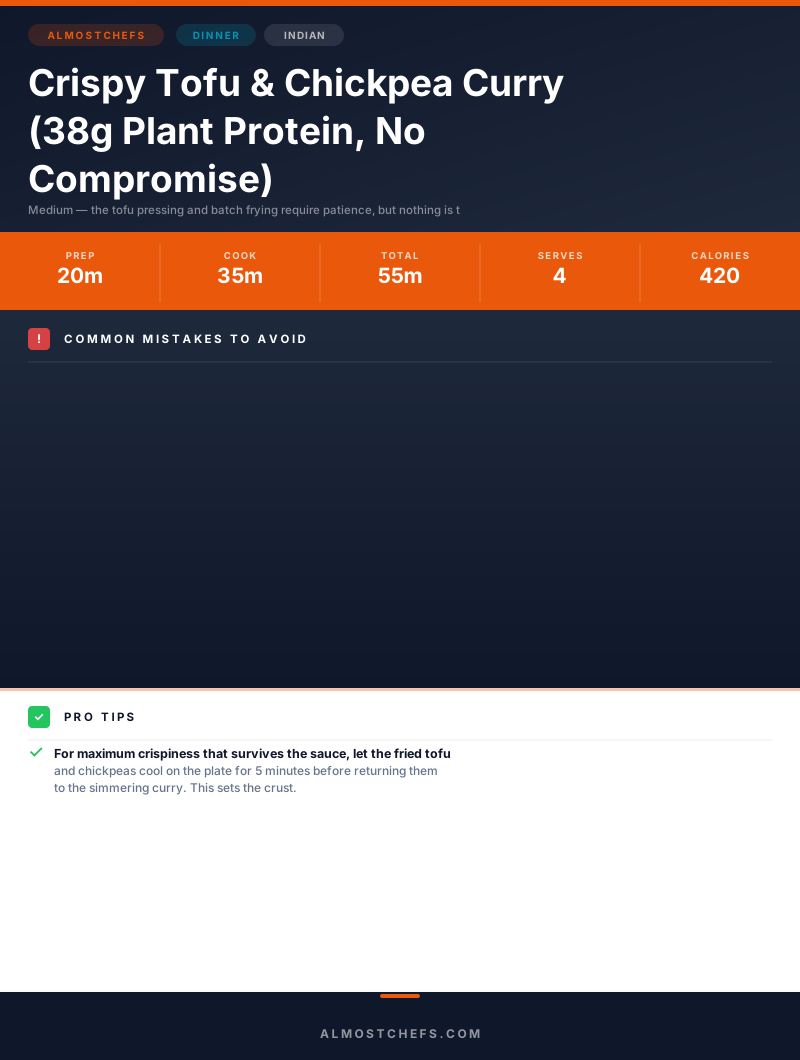
The Science of
Crispy Tofu & Chickpea Curry (38g Plant Protein, No Compromise)
We turned everything on this page into a beautiful, flour-proof PDF cheat sheet. Print it out, stick it to your fridge, and never mess up your crispy tofu & chickpea curry (38g plant protein, no compromise) again.
*We'll email you the high-res PDF instantly. No spam, just perfectly cooked meals.
AlmostChefs Editorial Team
We translate the internet's most popular cooking videos into foolproof, beginner-friendly written recipes. We analyze multiple methods, test them in our kitchen, and engineer a single "Master Recipe" that gives you the best possible result with the least possible stress.