Shatteringly Crispy Potatoes (The Fat-and-Temperature Secret)
Golden, shatteringly crisp on the outside, fluffy on the inside — these are the roasted potatoes everyone wants but most people never actually achieve. We broke down the science of surface starch, fat temperature, and pan geometry to give you one method that works every single time.
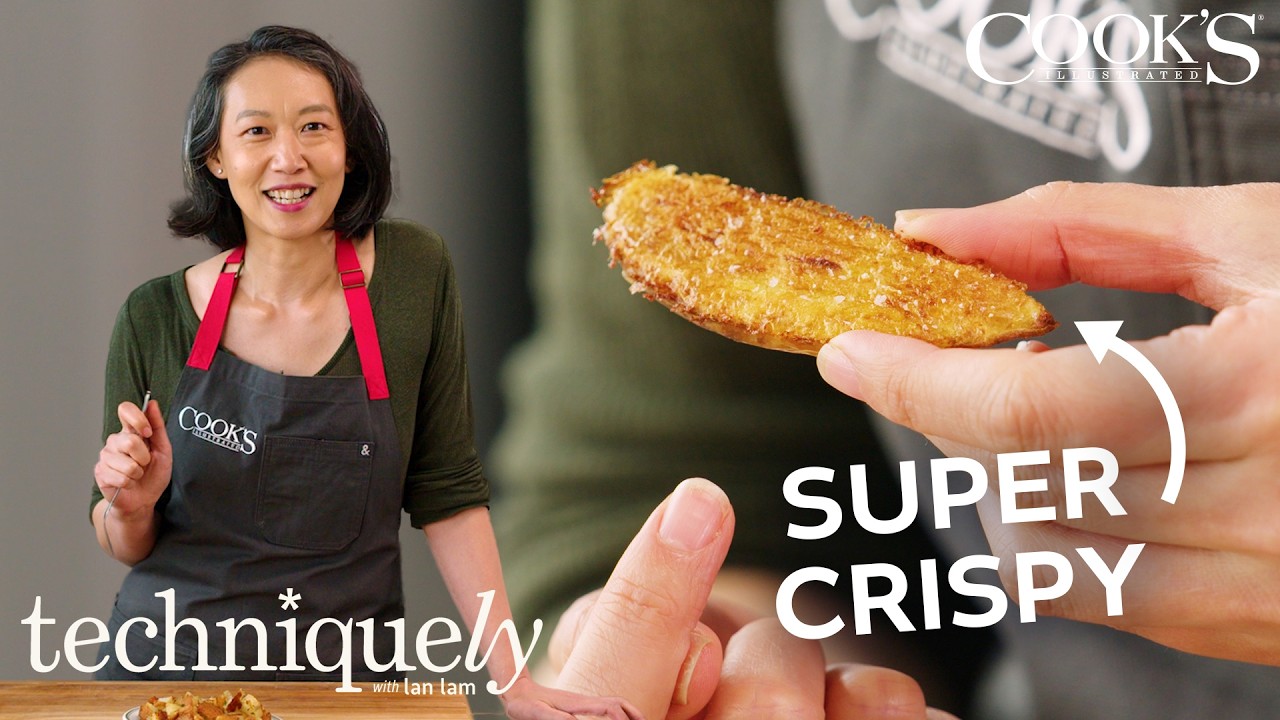
“You have roasted potatoes before. You've gotten potatoes that were soft, or pale, or vaguely crispy in exactly two spots. What you probably haven't gotten is a roasted potato that shatters when you bite into it — a potato with a crust so aggressively golden it sounds like breaking glass and an interior so fluffy it collapses into steam. That potato exists. The gap between yours and that one is almost entirely a function of fat temperature and surface starch. We fixed both.”
Why This Recipe Works
Crispy potatoes are not complicated. They are, however, unforgiving — which is why most people have eaten more mediocre roasted potatoes than transcendent ones. The gap between soft-and-pale and shatteringly golden is not a mystery. It is a sequence of physical processes that either happen correctly or don't, and understanding them removes the guesswork entirely.
The Preheated Pan Is Non-Negotiable
Most recipes tell you to toss potatoes in oil and put them on a pan. This is wrong. A cold pan filled with oiled potatoes heats up slowly and unevenly, and during that slow climb to roasting temperature, the potato surface absorbs the oil instead of frying in it. By the time the oven reaches full heat, the potato's exterior is already saturated and has no capacity to crisp. You're steaming an oily potato, not roasting one.
A preheated heavy-duty baking sheet — left in a 425°F oven for at least 20 minutes — transfers its stored heat directly into the potato surface the moment contact is made. You should hear an immediate, aggressive sizzle. That sizzle is the surface starch beginning to set into a crust before any moisture can interfere. Every second of that early contact counts. This is the single change that separates home roasted potatoes from the kind served at serious restaurants.
Surface Starch Is Your Crust Material
A raw potato has a smooth, sealed surface. Smooth surfaces don't crisp — they brown in spots and stay soft everywhere else. The parboil-and-shake technique solves this at the structural level. When you boil potato chunks until just fork-tender, then drain them and shake them aggressively in the pot, the outer layer of each piece breaks down into a shaggy, paste-like coating of partially gelatinized starch. Under high heat, this coating dehydrates rapidly and bonds into a continuous, rigid shell around the fluffy interior. The more aggressively you shake, the rougher the surface, the more surface area, the more crust.
This is why the Dutch oven matters for the parboil: you need enough headroom to shake the potatoes hard without them escaping the pot, and a wide base means they spread out and rough up their surfaces against each other instead of just bouncing in a pile. Shake for a full 15 seconds. It should look almost violent. That's correct.
Fat as Heat Conductor
Oil is not just flavor — it's the mechanism that transfers heat from the pan surface into the potato crust. A thin, even coating of fat on every potato surface ensures uniform contact with the metal below and uniform heat distribution across every exposed face. Under-oiled potatoes have inconsistent fat coverage, which means inconsistent browning. Spots with more fat go golden; spots with less fat stay pale.
The choice of fat also matters at high temperatures. Extra-virgin olive oil begins smoking around 400°F, which adds flavor complexity during the initial roasting stage but can turn bitter if the oven runs hot. Neutral oils like avocado oil handle 500°F without issue and produce a cleaner, more neutral crust. For maximum richness and the deepest possible browning, duck fat is the professional kitchen answer — its saturated fat composition conducts heat with exceptional efficiency and contributes an unmistakable savory depth.
Timing the Garlic
Garlic added at the start of a 40-minute high-heat roast becomes charcoal. Garlic added at the flip — with roughly 20 minutes remaining — caramelizes into concentrated, sweet clusters that cling to the potato surface. The difference in flavor is the difference between bitter and complex. The same principle applies to fresh herbs: add them at the very end, off heat, so their volatile aromatic compounds reach your nose instead of burning off in the oven.
The flaky sea salt finish is similarly time-sensitive. Salt pressed into a hot, tacky potato surface adheres physically — it dissolves slightly into the outer layer and integrates. Salt applied to a cooled potato sits on top and falls off with the first bite. Finish hot, serve immediately, and understand that every variable in this recipe exists for a reason.
Where Beginners Mess This Up
Before we start, read this. These are the 4 reasons your shatteringly crispy potatoes (the fat-and-temperature secret) will fail:
- 1
Putting potatoes into a cold pan: Cold fat does not crisp — it absorbs. When you add potatoes to a pan that hasn't been preheated, the surface layer soaks up oil before it has any chance to form a crust. By the time the pan reaches roasting temperature, the potatoes are already sitting in a puddle of their own absorbed fat. Preheat your pan in the oven before the potatoes ever touch it.
- 2
Skipping the parboil: Raw potatoes roasted from scratch never develop the craggly, rough surface texture that creates maximum crispiness. Parboiling until just fork-tender, then shaking them aggressively in the pot, roughens up the surface starch into a paste-like coating. That coating is what becomes your crust. Without it, you're just making pale potato wedges.
- 3
Crowding the pan: Roasting is a dry-heat method. The moment you crowd a pan, the potatoes steam each other instead of roasting. Steam is the enemy of crisp. Every piece needs at least half an inch of air around it. Use two sheet pans if necessary — there is no shame in running two pans.
- 4
Using too little fat: Crispy potatoes need fat. Not a drizzle — a coating. Every surface should be slick. Fat conducts heat directly to the potato surface, and more surface contact means more browning. Under-oiled potatoes brown in patches. Properly oiled potatoes brown everywhere.
The Video Reference Library
Want to see it in action? Here are the exact videos we analyzed and combined to build this foolproof recipe translation:
The foundational video — covers the parboil-and-shake technique with clear visual cues for when the surface starch is properly roughed up. Essential viewing before your first attempt.
Covers pan temperature and fat distribution principles that apply directly to crispy potato technique. Good supplemental context on oven rack positioning.
A deep dive into starch gelatinization and Maillard reaction temperatures for root vegetables. Answers every 'why' question the main recipe leaves open.
🛠️ Core Equipment
- Heavy-duty rimmed baking sheetThin, flimsy sheet pans warp at high oven temperatures, creating uneven contact with the oven floor and hot spots under the potatoes. A thick aluminum or stainless rimmed sheet retains heat evenly and transfers it uniformly across every potato surface.
- Large heavy-bottomed potFor the parboil. A [Dutch oven](/kitchen-gear/review/dutch-oven) or large stockpot gives you enough room to shake the parboiled potatoes vigorously without them flying across the kitchen — that shaking step is critical for building the rough, starchy surface crust.
- Metal spatula or fish turnerSilicone spatulas flex and compress. A rigid [metal spatula](/kitchen-gear/review/metal-spatula) lets you get fully under each potato and flip it in one clean motion without compressing the crust. If you press down while flipping, you undo the crust you built.
- Instant-read thermometerOptional but useful. Your oven's internal temperature and its dial setting are rarely the same number. If your oven runs cool, your potatoes will steam instead of roast. The target is a true 425°F (220°C) before anything goes in.
Shatteringly Crispy Potatoes (The Fat-and-Temperature Secret)
🛒 Ingredients
- ✦2 pounds Yukon Gold potatoes, cut into 2-inch chunks
- ✦3 tablespoons extra-virgin olive oil, plus more for the pan
- ✦1 teaspoon garlic powder
- ✦1 teaspoon smoked paprika
- ✦1/2 teaspoon onion powder
- ✦1/2 teaspoon dried rosemary, crushed between fingers
- ✦1/2 teaspoon dried thyme
- ✦1.5 teaspoons kosher salt, plus more for the parboil water
- ✦1/2 teaspoon freshly cracked black pepper
- ✦2 tablespoons neutral oil (avocado or vegetable) for high-heat roasting
- ✦3 cloves garlic, smashed and roughly chopped
- ✦2 tablespoons fresh flat-leaf parsley, finely chopped (for finishing)
- ✦Flaky sea salt for finishing
👨🍳 Instructions
01Step 1
Position a rack in the upper third of your oven and place your rimmed baking sheet on it. Preheat the oven to 425°F (220°C). Let the pan preheat for at least 20 minutes — the metal needs to be genuinely hot before the potatoes arrive.
02Step 2
Cut the potatoes into uniform 2-inch chunks. Uniformity matters — smaller pieces overcook while larger ones stay raw in the center. Add the potatoes to a large pot, cover generously with cold water, and add a heavy pinch of kosher salt. Bring to a boil over high heat.
03Step 3
Cook the potatoes at a rolling boil for 8-10 minutes until just fork-tender. A fork should slide in with mild resistance — you want them cooked through but not falling apart. Drain completely.
04Step 4
While the potatoes are still hot, drizzle 3 tablespoons of olive oil over them, add the garlic powder, smoked paprika, onion powder, rosemary, thyme, salt, and pepper. Cover the pot with a lid and shake vigorously for 10-15 seconds.
05Step 5
Carefully remove the preheated baking sheet from the oven. Add 2 tablespoons of neutral oil directly to the hot pan and swirl to coat. Working quickly, spread the seasoned potato chunks in a single layer with at least half an inch of space between each piece.
06Step 6
Roast for 20 minutes undisturbed. Do not open the oven door. Do not check. Do not nudge. The crust needs uninterrupted contact with the hot pan surface to set.
07Step 7
After 20 minutes, use a metal spatula to firmly flip each potato. If a piece resists, leave it — it needs another minute. Forced flipping tears the crust. After flipping, scatter the chopped garlic across the pan.
08Step 8
Return to the oven for another 15-20 minutes until deep golden brown on all sides. The color you want is a confident amber-mahogany, not pale gold. Pale gold is halfway done.
09Step 9
Remove from oven, immediately transfer to a serving platter (leaving them on the hot pan continues cooking). Finish with flaky sea salt and the fresh parsley.
Nutrition Per Serving
Estimates based on standard preparation. Adjustments alter macros.
🔄 Substitutions
Instead of Extra-virgin olive oil...
Use Avocado oil or refined coconut oil
For higher oven temperatures (450°F+). Olive oil starts smoking above 400°F in sustained heat. Avocado oil handles 500°F without issue and produces a neutral, clean crust.
Instead of Yukon Gold potatoes...
Use Baby potatoes (halved)
Skip the cutting step entirely. More surface area per piece means more crust per bite. Parboil time drops to 6-7 minutes. Everything else stays the same.
Instead of Smoked paprika...
Use Sweet paprika plus a pinch of chipotle powder
Slightly hotter profile with similar smokiness. Adjust the chipotle based on heat tolerance — a pinch goes further than you expect.
Instead of Dried rosemary and thyme...
Use Everything Bagel Seasoning
Unorthodox but excellent. The sesame seeds add texture to the crust and the onion-garlic blend integrates seamlessly with the potato flavor. Use 1.5 teaspoons total.
🧊 Storage & Reheating
In the Fridge
Store in an airtight container for up to 3 days. They will soften — this is inevitable and not a failure.
In the Freezer
Not recommended. Potatoes turn grainy and waterlogged after freezing and thawing. Make what you'll eat.
Reheating Rules
Spread on a baking sheet and reheat at 425°F for 8-10 minutes. Do NOT microwave — you will get soft, steamed potatoes. The oven is the only way to resurrect the crust.
❓ Frequently Asked Questions
Why aren't my potatoes getting crispy?
Three likely causes: your pan wasn't preheated, your potatoes were too wet when they went in, or your oven is running cooler than the dial says. Check all three before your next batch. The parboil-and-shake step also matters enormously — if you skip the shaking, you skip the crust.
Can I use an air fryer instead?
Yes, and the results are actually excellent. Air fry at 400°F for 18-22 minutes, shaking the basket at the halfway point. You get similar crispiness with less oil because the forced air circulation replaces the function of the preheated pan. Still parboil and shake first.
Do I have to parboil? Can I just roast from raw?
You can, but the result is categorically different — more like roasted wedges than shatteringly crispy potatoes. The parboil serves two functions: it cooks the interior so the oven time can focus entirely on crust development, and the shaking step creates the rough starchy surface that becomes your crust. Skipping it is an option, not an optimization.
What's the best potato variety for this recipe?
Yukon Gold is the consensus best choice for roasting — enough starch for a crust, enough wax to hold structure. Russets produce a fluffier interior but fall apart easily. Red potatoes stay too firm and waxy. If you can only find Russets, par-cook them 1-2 minutes less to compensate for their higher starch content.
Why do I add the garlic halfway through instead of the beginning?
Garlic burns at sustained high heat. At 425°F for 40 minutes, raw garlic turns black and bitter before the potatoes are done. Added at the flip — with only 15-20 minutes of oven time remaining — the garlic caramelizes into golden, sweet-savory clusters instead of charring.
How do I keep them crispy when serving a crowd?
Place the finished potatoes on a wire rack set over a baking sheet in a 250°F oven. They'll hold their crust for up to 30 minutes without softening. Do not cover them — trapped steam is the enemy of everything you just worked for.

The Science of
Shatteringly Crispy Potatoes (The Fat-and-Temperature Secret)
We turned everything on this page into a beautiful, flour-proof PDF cheat sheet. Print it out, stick it to your fridge, and never mess up your shatteringly crispy potatoes (the fat-and-temperature secret) again.
*We'll email you the high-res PDF instantly. No spam, just perfectly cooked meals.
AlmostChefs Editorial Team
We translate the internet's most popular cooking videos into foolproof, beginner-friendly written recipes. We analyze multiple methods, test them in our kitchen, and engineer a single "Master Recipe" that gives you the best possible result with the least possible stress.