The Crispiest Savory Pie (Golden Crust Every Single Time)
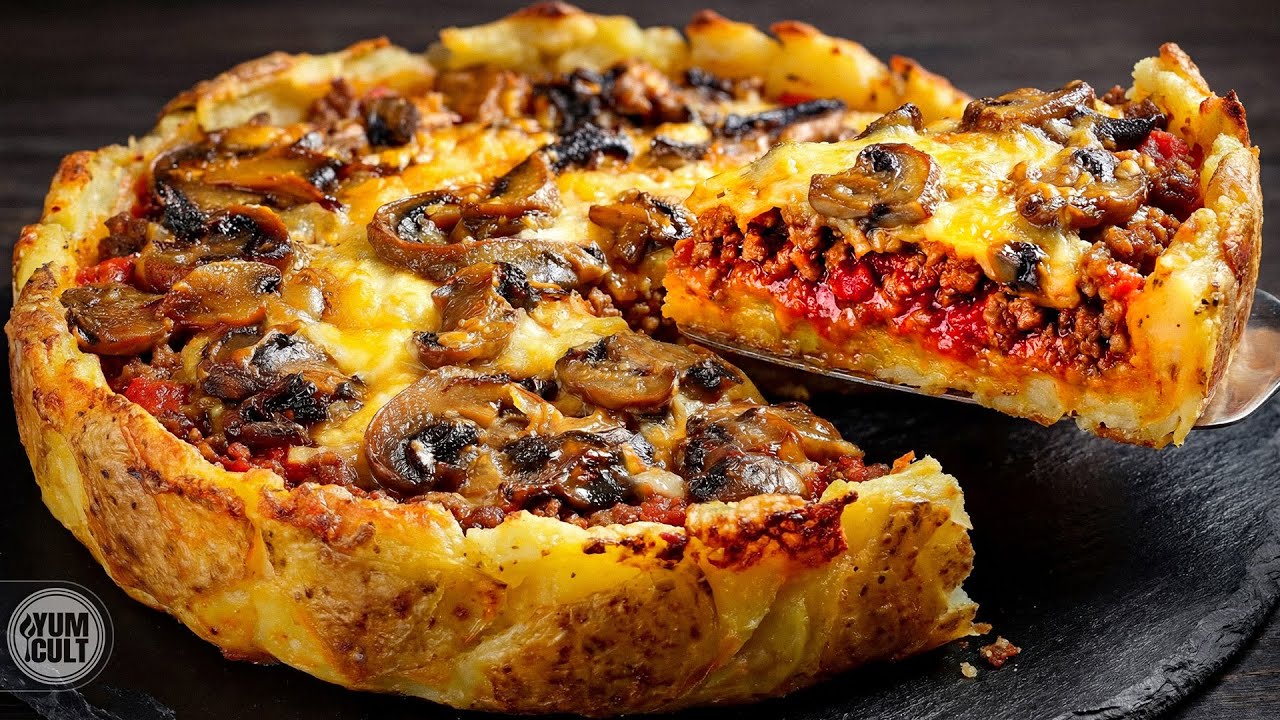
A savory potato, cheddar, and caramelized onion pie with a shattering, deep-golden crust achieved through cold butter lamination, blind baking, and a controlled high-heat finish. We broke down the most-watched YouTube pie methods to isolate the three non-negotiable steps that separate a soggy, pale disappointment from the kind of crispy-bottomed slice that stands up on its own.
“Most homemade savory pies come out with a pale, limp crust and a filling that turns to steam-soaked mush inside. The fix is not a better recipe — it's understanding three physical principles: cold fat creates steam pockets that produce flake, blind baking sets the bottom before wet filling can saturate it, and a high-heat finish drives off the last of the trapped moisture. Get those three right and everything else is just seasoning.”
Why This Recipe Works
Pie is a structural argument. The crust is not decoration and it is not just a vessel — it is an engineered barrier between a wet, steaming filling and an oven that should be turning that barrier into something that shatters when you tap it with a fork. When the barrier fails, the pie fails. Understanding why it fails is the entire job of this recipe.
The Cold Fat Principle
Flaky pie crust is a lamination problem. When you cut cold butter into flour, you create hundreds of flat, coin-sized fat discs dispersed through a flour matrix. When those discs hit oven heat, the water inside them converts to steam and puffs outward, creating the distinct horizontal layers that make a great crust shatter rather than crack. If the butter is warm when it goes into the flour — from slow mixing, warm hands, or a summer kitchen — it smears into the flour rather than sitting in discrete pieces. The steam chambers never form. You get a uniform, dense, shortbread-like crust instead of the layered, shattering structure that defines great pastry.
This is why the food processor is the single most valuable tool for pie crust. It processes the butter in under 10 seconds — a fraction of the time it takes to work it in by hand. In those saved minutes, your butter stays frozen. Frozen butter means intact steam chambers. Intact steam chambers mean flake. The math is unambiguous.
The Blind Bake Logic
A raw pastry shell is a sponge. The moment wet filling touches unbaked dough, capillary action begins pulling moisture into the flour. The dough softens before it has a chance to set its structure in the oven. By the time the oven heat reaches the bottom crust, it is already compromised — it bakes to a pale, damp layer that no amount of additional cooking will rescue, because the filling above it is actively continuing to release steam directly into the pastry from above.
Blind baking — lining the shell with parchment, filling it with pie weights, and baking it alone for 15 minutes — solves this by setting the structural proteins in the flour before any filling contacts the surface. The proteins denature and form a semi-permeable barrier. When filling goes in on top of a blind-baked shell, it still releases moisture during baking, but it is releasing it into a crust that has already established its architecture. The filling cannot re-saturate what has already been set.
The Preheated Surface Effect
Every serious pie baker uses a preheated baking sheet or pizza stone on the center rack. The principle is identical to Neapolitan pizza: direct contact with a hot surface immediately drives bottom-crust temperature upward, creating an aggressive crispification at the base before the filling ever has time to migrate downward. A cold baking sheet produces an insulating air gap between the oven floor heat and the pie — the bottom crust heats slowly, steam has time to collect there, and the result is the pale, soft base that plagues so many home-baked pies.
The instant-read thermometer is the other critical tool here, because visual doneness cues for pie are notoriously unreliable. Butter content, egg wash composition, and oven calibration all affect color. A pie that looks deep golden at 35 minutes may have an internal temperature of 160°F — the filling is cooked, but the moisture trapped in the pastry layers has not fully escaped. The target is 190°F in the filling center, at which point the residual heat from the filling itself finishes driving moisture out of the crust layers above it. Pull it at 160°F and let it sit for 20 minutes and the steam migration reverses: moisture from the still-cooking filling soaks back upward into the crust from below.
Why the Filling Pre-Cook Matters
Potatoes and onions contain substantial free moisture — moisture that absolutely will migrate into the pastry during baking if it has not been cooked out beforehand. Pre-cooking the filling in a skillet is not just about flavor development; it is about moisture management. Every tablespoon of water that leaves the skillet during the pre-cook is a tablespoon that will not collect at the bottom of your blind-baked shell during the oven bake. The caramelized onions in particular release an enormous volume of water as their cell walls break down — water that, in a raw-assembled pie, would pool and form a steam bath around the bottom crust from the inside.
The crust is the point. Everything else is filling.
Where Beginners Mess This Up
Before we start, read this. These are the 4 reasons your the crispiest savory pie (golden crust every single time) will fail:
- 1
Warm butter in the dough: Pie crust works because solid fat creates distinct layers that expand into flaky pockets when they hit oven heat. If your butter melts into the flour during mixing — from warm hands, a warm kitchen, or cutting it in too slowly — you lose those layers entirely. The crust bakes dense and cracker-like instead of shattering. Keep butter refrigerator-cold until the moment it hits the flour, and work fast.
- 2
Skipping the blind bake: Adding wet filling directly to unbaked pastry is the number-one cause of soggy bottoms. The filling releases moisture during cooking that the raw dough absorbs before it has a chance to set. A 15-minute blind bake with weights creates a sealed, partially cooked shell that resists saturation. This step is not optional for a savory filling with any moisture content.
- 3
Not venting the top crust: The filling continues cooking and releasing steam inside the sealed pie long after the crust has set. Without adequate vents, that steam has nowhere to go — it condenses under the top crust and re-saturates it from the inside. Cut at least four generous slits in the top. They will not ruin the appearance. A pale, soggy lid will.
- 4
Pulling the pie too early: Internal temperature matters more than color. A crispy crust requires the internal moisture to fully evaporate from the pastry layers, which doesn't happen until the pie has been at high heat long enough. If it looks done at 35 minutes, it is probably 10 minutes away from actually done. Use a thermometer — the filling should hit 190°F and the bottom crust should be audibly crisp when tapped.
The Video Reference Library
Want to see it in action? Here are the exact videos we analyzed and combined to build this foolproof recipe translation:
The primary reference for this recipe. Demonstrates the cold butter lamination technique and blind baking sequence with clear visual cues for each stage of crust doneness.
Detailed breakdown of fat-to-flour ratios and why butter temperature is the single variable that determines crust texture. Watch the side-by-side comparison of warm versus cold butter results.
Covers filling moisture management and how to pre-cook ingredients to drive off excess water before they go into the shell. Essential for anyone who has pulled a beautiful-looking pie out of the oven only to find the bottom destroyed.
🛠️ Core Equipment
- 9-inch pie dish with straight sidesStraight sides ensure the crust bakes evenly without the bottom pulling away from the edges. Sloped sides create thin edge pastry that burns before the thick bottom sets.
- Pie weights or dried beansHold the blind-bake crust down during its initial set. Without weights, the pastry puffs and shrinks, creating an uneven surface that fills with liquid once the filling goes in.
- Pastry cutter or food processorCuts cold butter into flour without transferring hand heat. A food processor takes 10 seconds where hands take 3 minutes — and in those extra minutes, your butter warms and the flake window closes.
- Instant-read thermometerTakes the guesswork out of done-ness. Pie crust color varies by oven and butter fat content. Temperature is objective — 190°F filling means the interior is cooked through and the pastry moisture has escaped.
The Crispiest Savory Pie (Golden Crust Every Single Time)
🛒 Ingredients
- ✦2.5 cups all-purpose flour, plus more for dusting
- ✦1 cup (2 sticks) unsalted butter, cubed and frozen for 15 minutes
- ✦1 teaspoon fine sea salt
- ✦1 teaspoon sugar
- ✦6 to 8 tablespoons ice water
- ✦1.5 pounds Yukon Gold potatoes, peeled and thinly sliced (1/8-inch)
- ✦2 large yellow onions, thinly sliced
- ✦2 tablespoons unsalted butter (for filling)
- ✦1.5 cups sharp cheddar cheese, freshly grated
- ✦1/2 cup heavy cream
- ✦2 large eggs, beaten (divided — 1 for filling, 1 for egg wash)
- ✦1 tablespoon fresh thyme leaves
- ✦1/2 teaspoon garlic powder
- ✦1/4 teaspoon cayenne pepper
- ✦1 teaspoon apple cider vinegar
- ✦Flaky sea salt and cracked black pepper to taste
👨🍳 Instructions
01Step 1
Combine flour, salt, and sugar in a food processor. Add frozen butter cubes and pulse 8-10 times until the mixture resembles coarse breadcrumbs with pea-sized butter chunks still visible.
02Step 2
Add ice water one tablespoon at a time, pulsing once between each addition, until the dough just holds together when pinched. Add the apple cider vinegar with the last tablespoon of water. Do not over-mix.
03Step 3
Turn the dough onto a floured surface, divide in half, and shape each half into a flat disk. Wrap each disk in plastic wrap and refrigerate for at least 1 hour, or up to 2 days.
04Step 4
While the dough rests, make the filling. Melt 2 tablespoons butter in a large skillet over medium heat. Add the sliced onions and cook, stirring occasionally, for 15-18 minutes until deep golden and caramelized. Season with salt.
05Step 5
Add the sliced potatoes to the skillet, cover, and cook over low heat for 8-10 minutes until just barely fork-tender but not falling apart. Remove from heat. Stir in cheddar, cream, one beaten egg, thyme, garlic powder, cayenne, and black pepper. Let cool to room temperature.
06Step 6
Preheat oven to 425°F (220°C) with a baking sheet on the center rack — it should be hot when the pie goes in. Roll one dough disk on a floured surface to a 12-inch circle, about 1/8-inch thick. Transfer to a 9-inch pie dish, pressing gently into the corners. Trim, leaving 1 inch of overhang.
07Step 7
Line the shell with parchment, fill with pie weights or dried beans, and blind bake on the preheated sheet for 15 minutes. Remove weights and parchment, and bake for 5 more minutes until the bottom is pale gold and set.
08Step 8
Spoon the cooled filling into the blind-baked shell, spreading evenly. Roll the second dough disk to a 12-inch circle and lay it over the filling. Trim, press the edges together, and crimp to seal.
09Step 9
Cut four 1.5-inch vents in the top crust. Brush thoroughly with the remaining beaten egg, getting into the crimped edges. Sprinkle with flaky sea salt.
10Step 10
Bake at 425°F for 20 minutes, then reduce to 375°F (190°C) and bake for another 25-30 minutes until the crust is deep golden brown and the filling is visibly bubbling through the vents. Tap the bottom of the dish — it should sound hollow and crisp.
11Step 11
Rest the pie for 20 minutes before slicing. This allows the filling to set so it holds its shape instead of collapsing into the cut.
Nutrition Per Serving
Estimates based on standard preparation. Adjustments alter macros.
🔄 Substitutions
Instead of Yukon Gold potatoes...
Use Sweet potatoes or butternut squash
Higher sugar content means faster browning during the pre-cook stage. Watch the heat and expect a slightly sweeter filling. Reduce cayenne to balance.
Instead of Sharp cheddar...
Use Gruyère or aged Comté
Both melt cleaner than cheddar and bring a nuttier, more complex flavor. Gruyère is the classic choice for French-style savory tarts and works beautifully here.
Instead of Heavy cream...
Use Full-fat coconut cream
Dairy-free alternative that adds a mild sweetness. Works well with sweet potato variation. Use the same quantity.
Instead of All-purpose flour...
Use 1:1 gluten-free baking flour blend
Produces a slightly more crumbly crust with less flake due to the absence of gluten structure. Chill the dough longer (2 hours minimum) and handle it gently — it tears more easily than wheat-based pastry.
🧊 Storage & Reheating
In the Fridge
Store loosely covered at room temperature for up to 1 day, or refrigerated for up to 4 days. The crust softens in the fridge — re-crisp at 375°F for 10 minutes before serving.
In the Freezer
Freeze the baked and fully cooled pie, tightly wrapped, for up to 2 months. Reheat from frozen at 350°F for 30-35 minutes covered, then 10 minutes uncovered to re-crisp the crust.
Reheating Rules
Oven only. A 375°F oven for 10-12 minutes restores close to original crispness. The microwave turns the crust to cardboard — avoid entirely.
❓ Frequently Asked Questions
Why is my pie crust soggy on the bottom?
You almost certainly skipped the blind bake or didn't use a preheated baking surface. Raw pastry cannot compete with a wet filling — it absorbs moisture before it can set. Blind bake for 15 minutes with weights, then 5 minutes uncovered, before adding any filling.
Can I make the dough without a food processor?
Yes, but work faster and keep your hands cold. Use a pastry cutter or two butter knives to cut the butter into the flour, or freeze the butter and grate it on a box grater directly into the flour. The goal is cold fat distributed through flour before it has time to warm and incorporate.
My crust shrinks dramatically when I blind bake it. What went wrong?
Two likely causes: the dough wasn't rested long enough in the fridge (gluten didn't relax), or you stretched it to fit the dish instead of letting it drape. Always lift and ease the dough into corners — never pull or press it in. Give it a minimum 1-hour rest after rolling.
How thin should I slice the potatoes?
Exactly 1/8 inch — thin enough to pre-cook in 8-10 minutes without falling apart, thick enough to hold structure in the finished slice. Thicker than 1/4 inch and you risk underdone, chalky potato centers even after a full bake.
Can I assemble the pie the night before and bake it in the morning?
Yes, with one caveat: blind bake the bottom shell before refrigerating the assembled pie. If the bottom shell is raw when it goes in the fridge, overnight moisture migration from the filling will pre-sog it. Blind bake the shell, cool it completely, then assemble and refrigerate unbaked.
The top crust looks perfect but the bottom is still pale. How do I fix this?
Move the pie to the lowest oven rack for the final 10-15 minutes of baking. Bottom heat is what crisps the base, and most ovens concentrate their element heat there. The preheated baking sheet technique also addresses this directly — use both for best results.

The Science of
The Crispiest Savory Pie (Golden Crust Every Single Time)
We turned everything on this page into a beautiful, flour-proof PDF cheat sheet. Print it out, stick it to your fridge, and never mess up your the crispiest savory pie (golden crust every single time) again.
*We'll email you the high-res PDF instantly. No spam, just perfectly cooked meals.
AlmostChefs Editorial Team
We translate the internet's most popular cooking videos into foolproof, beginner-friendly written recipes. We analyze multiple methods, test them in our kitchen, and engineer a single "Master Recipe" that gives you the best possible result with the least possible stress.