Crispy German Potato Cake (Better Than Meat, Proven Right)
A layered, golden-crusted potato cake with caramelized onions, Gruyère, and fresh herbs — the German comfort food that's been quietly outperforming meat dishes on the internet for good reason. We broke down the technique so you get a shatteringly crisp exterior and a creamy, cohesive interior every single time.

“Three potatoes. That's the whole premise. No meat, no complicated technique, no specialty equipment beyond a decent skillet. What you get out of it — a golden, crispy-edged potato cake with caramelized onions, Gruyère, and herbs — has racked up millions of views because it tastes like something a German grandmother perfected over forty years. We analyzed the method and built the version that actually works without babysitting.”
Why This Recipe Works
Three potatoes. That is the entire raw material. What happens between pulling them out of the pantry and serving a golden, layered cake with a shattering crust and creamy, herb-laced interior is a study in how technique multiplies ingredients — and why this specific dish has millions of views from people who weren't expecting to be impressed by something this simple.
The Starch Problem
Potatoes contain two types of starch: amylose and amylopectin. On the cut surface of a sliced potato, both leach out immediately and begin behaving like paste when they hit heat. If you skip the ice water soak, that surface starch fuses adjacent slices together into a gummy mass that steams from the inside and never develops a true crust. The 15-minute soak dissolves the surface starch into the water, which you discard. What you're left with is a clean potato surface that crisps on contact with hot fat instead of seizing up.
The dry step matters equally. Residual water on the potato surface lowers the pan temperature the moment the potatoes hit it, triggering evaporation rather than the Maillard reaction. No Maillard, no crust, no cake. Pat them aggressively and don't rush into the pan.
The Onion Argument
Forty percent of this dish's flavor lives in the onion layer, and most people quit too early. Medium-high heat for 15-18 minutes gets you to deep golden — the stage where the natural sugars have fully converted and the sharp volatile compounds have cooked off completely. What remains is something almost sweet, intensely savory, and structurally soft enough to meld into the potato layers rather than sitting on top of them as a separate element.
If your onions are taking less than 12 minutes to color, your pan is too hot and you're getting caramelization without the slow flavor development that comes from properly timed Maillard chemistry. If they're taking more than 20 minutes, the heat is too low and you're steaming them in their own moisture rather than browning.
The Architecture of the Inversion
The potato cake is engineered around its flip. The bottom layer is your presentation surface — it needs to be perfect, which is why you build the most attractive arrangement of potato slices there. The middle layer is flavor: caramelized onions, garlic, and thyme tucked where they'll steam their aromatics upward through the top rice and downward through the crust. The top layer is structure: it receives the egg-mustard wash that binds it into a cohesive cap and the Gruyère that melts into a seam.
A cast-iron skillet isn't precious equipment here — it's the right tool for a specific job. Even heat distribution means the entire base browns at the same rate. A thin pan scorches one side while the other sits pale, and you can't fix that after the fact.
The vegetable broth poured around the edges is the interior cooking mechanism. It steams the middle layers through while the base crisps below, so you're running two cooking methods simultaneously: dry sear on the bottom, gentle steam in the center. This is why the cake is both crispy and creamy — not one or the other.
The Inversion Moment
Every other step in this recipe is forgiving. This one is not. Hesitate during the flip and the cake folds in on itself. Commit fully, keep the plate pressed tight against the rim of the skillet, and invert in one confident motion. The deep amber crust — which you verify by tilting the pan and checking the edge — is what holds the structure together. Flip too early and you have a pile. Flip at the right moment and you have a cake.
Finish with fleur de sel. This is not optional garnish. The coarse crystals add a textural crunch against the potato that fine salt mixed into the layers cannot replicate. One small thing, significant difference.
Where Beginners Mess This Up
Before we start, read this. These are the 4 reasons your crispy german potato cake (better than meat, proven right) will fail:
- 1
Skipping the starch soak: Unskinned starch on the potato surface behaves like glue — it fuses layers together unevenly and traps moisture that prevents browning. Soaking in ice water for 15 minutes removes excess surface starch so each layer can crisp independently. Skipping it produces a dense, steamed brick instead of a layered cake.
- 2
Wet potatoes hitting a hot pan: Water is the enemy of the Maillard reaction. If your potato slices aren't completely dry before they hit the butter, they steam instead of sear. The bottom layer sticks, the crust never forms, and you spend the rest of the cook trying to salvage something that was doomed in the first 30 seconds. Pat them dry aggressively — two rounds with paper towels if needed.
- 3
Rushing the caramelized onions: The recipe says 15-18 minutes and means it. Onions that are merely softened taste sharp and add little to the final dish. Onions that are deeply golden and collapsed taste sweet, complex, and savory — they become the flavor backbone of the entire cake. Medium-high heat, occasional stirring, full commitment.
- 4
Flipping too early: If you try to invert the cake before the bottom is deeply golden, it falls apart. The structural integrity depends on the bottom crust setting fully. Tilt the pan and look — you want a dark amber, not a pale yellow. If in doubt, wait another two minutes.
The Video Reference Library
Want to see it in action? Here are the exact videos we analyzed and combined to build this foolproof recipe translation:
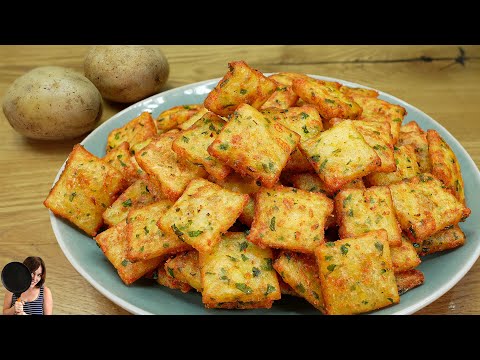
The original viral video that sparked the trend. Watch it for the layering technique and to understand what 'deeply golden' actually looks like before you attempt the inversion.
2. How to Caramelize Onions Properly
A focused tutorial on getting onions to the mahogany stage without burning. Useful reference for understanding the color and texture you're aiming for before they go into the potato cake.
3. Cast Iron Skillet FundamentalsCovers heat management and crust development in cast iron — directly applicable to getting the bottom layer of this potato cake right without scorching.
🛠️ Core Equipment
- Cast-iron skillet ↗Even heat distribution is non-negotiable for a cake that needs to crisp uniformly across its entire base. A thin pan creates hot spots that burn one corner while leaving the rest pale. [Cast iron](/kitchen-gear/review/cast-iron-skillet) retains heat evenly and gives you the predictable Maillard reaction you need.
- Large flat plate or cutting board for inverting ↗The inversion is the moment of truth. You need a surface at least as wide as the skillet so the cake lands cleanly without collapsing. A cutting board with a lip is ideal — it catches any juices and gives you a stable platform to slide from.
- Pastry brush ↗For applying the egg yolk and mustard wash evenly over the top layer before adding cheese. An even coat creates a uniform golden top. A spoon smears and puddles.
- Mandoline or sharp knife ↗Uniform potato slice thickness is the difference between layers that cook together and layers where some are done and some are still raw. Aim for 2-3mm. A [mandoline](/kitchen-gear/review/mandoline-slicer) gets there faster and more consistently than a knife, but a sharp knife with patience works.
Crispy German Potato Cake (Better Than Meat, Proven Right)
🛒 Ingredients
- ✦3 large russet potatoes, peeled and thinly sliced
- ✦2 medium yellow onions, thinly sliced into half-moons
- ✦4 tablespoons unsalted butter, divided
- ✦2 tablespoons extra virgin olive oil
- ✦3 cloves garlic, minced
- ✦1 teaspoon fresh thyme leaves
- ✦2 tablespoons fresh flat-leaf parsley, chopped
- ✦1 teaspoon kosher salt
- ✦1/2 teaspoon freshly ground black pepper
- ✦1/4 teaspoon smoked paprika
- ✦2 tablespoons grated Gruyère cheese
- ✦1 tablespoon fresh chives, finely sliced
- ✦1/2 cup low-sodium vegetable broth
- ✦1 egg yolk
- ✦2 tablespoons whole grain Dijon mustard
- ✦Fleur de sel for garnish
👨🍳 Instructions
01Step 1
Soak the sliced potatoes in ice water for 15 minutes to remove excess starch, then drain thoroughly and pat completely dry with paper towels.
02Step 2
Heat 2 tablespoons of butter with the olive oil in a large cast-iron or heavy-bottomed skillet over medium-high heat until the butter foams, about 2 minutes.
03Step 3
Add the sliced onions and cook, stirring occasionally, until deep golden brown and caramelized, about 15-18 minutes. Transfer to a plate.
04Step 4
Return the pan to medium-high heat and add the remaining 2 tablespoons of butter.
05Step 5
Layer half of the dried potato slices evenly across the bottom of the skillet, seasoning with half the salt, pepper, and smoked paprika.
06Step 6
Scatter the caramelized onions and minced garlic evenly over the potato layer, then sprinkle with thyme leaves.
07Step 7
Arrange the remaining potato slices on top in an even layer, seasoning with the remaining salt, pepper, and smoked paprika.
08Step 8
Pour the vegetable broth gently around the edges of the potato cake and press down firmly with a spatula to compact the layers.
09Step 9
Cook over medium heat without disturbing for 8-10 minutes until the bottom begins to brown and crisp. You should hear a steady, gentle sizzle.
10Step 10
Whisk together the egg yolk and Dijon mustard in a small bowl, then carefully brush this mixture evenly over the top surface of the potato cake.
11Step 11
Sprinkle the grated Gruyère cheese evenly over the surface and continue cooking for another 8-10 minutes until the cheese melts and the bottom is deeply golden brown.
12Step 12
Place a large flat plate or cutting board over the skillet. In one confident motion, invert the pan to flip the potato cake onto the plate.
13Step 13
Garnish immediately with fresh parsley, sliced chives, and a pinch of fleur de sel.
14Step 14
Cut into wedges and serve while the exterior is still crispy and the interior remains creamy and tender.
Nutrition Per Serving
Estimates based on standard preparation. Adjustments alter macros.
🔄 Substitutions
Instead of Unsalted butter...
Use Ghee or clarified butter
Higher smoke point and a nuttier, more complex flavor. Creates an even more pronounced golden crust. Best option if you want to push the browning further without burning.
Instead of Gruyère cheese...
Use Aged Emmental or Swiss cheese
Similar melting behavior with a slightly milder flavor and marginally lower fat. The structural result is identical — the taste is a touch less assertive.
Instead of Whole grain Dijon mustard...
Use Tahini mixed with lemon juice and a small clove of garlic
Keeps the dish dairy-free and vegan if you also skip the egg yolk. Adds a nutty, slightly earthy note that pairs well with the potato. Use a 2:1 ratio of tahini to lemon juice.
Instead of Russet potatoes...
Use Purple or Peruvian potatoes
Higher anthocyanin content and a lower glycemic index. The visual impact is dramatic — the interior turns a deep violet. Flavor is earthier and slightly more mineral.
🧊 Storage & Reheating
In the Fridge
Store covered in the refrigerator for up to 3 days. The interior holds well but the crust softens — plan to re-crisp it before serving.
In the Freezer
Not recommended. The potato cell structure breaks down after freezing and thawing, resulting in a watery, soft texture that won't re-crisp.
Reheating Rules
Place leftover wedges in a dry cast-iron or nonstick skillet over medium heat for 4-5 minutes per side. The crust revives fully. Microwave only if you have no other option — it heats through but destroys the texture.
❓ Frequently Asked Questions
Why did my potato cake fall apart when I flipped it?
The bottom wasn't done yet, or the flip was too hesitant. The crust is the structural binder — if it's still pale and soft, the layers have nothing holding them together. Wait for deep amber and flip with full commitment in one smooth motion.
Can I make this without cheese?
Yes, but the top layer will be less cohesive and the crust less pronounced. If you're going dairy-free, replace the Gruyère with a tablespoon of nutritional yeast mixed into the egg wash — it adds a savory note and helps with browning.
Do I need a cast-iron skillet specifically?
No, but you need something heavy with even heat distribution. A thick stainless steel or carbon steel pan works. Avoid thin nonstick — the heat is too uneven and you won't get the crust you're after. If all you have is nonstick, use the heaviest one you own and add 3-4 minutes to each browning stage.
My bottom layer burned before the potatoes cooked through. What happened?
Heat was too high and the broth evaporated before the interior cooked. After pouring in the broth, reduce to medium — not medium-high. The broth needs to gently steam the interior for 8-10 minutes while the base crisps slowly. If your stove runs hot, start at medium-low.
Can I prep this ahead for a dinner party?
Caramelize the onions and slice and soak the potatoes up to 24 hours ahead. Store the drained, dried potato slices between damp paper towels in the fridge. Assemble and cook the cake fresh — the whole active cook is under 25 minutes once your components are ready.
What do I serve this with?
A sharp dressed green salad cuts the richness perfectly. Crème fraîche or sour cream alongside handles the role of a sauce without overpowering the potato. For a full meal, a fried or poached egg on top turns it into a satisfying dinner.
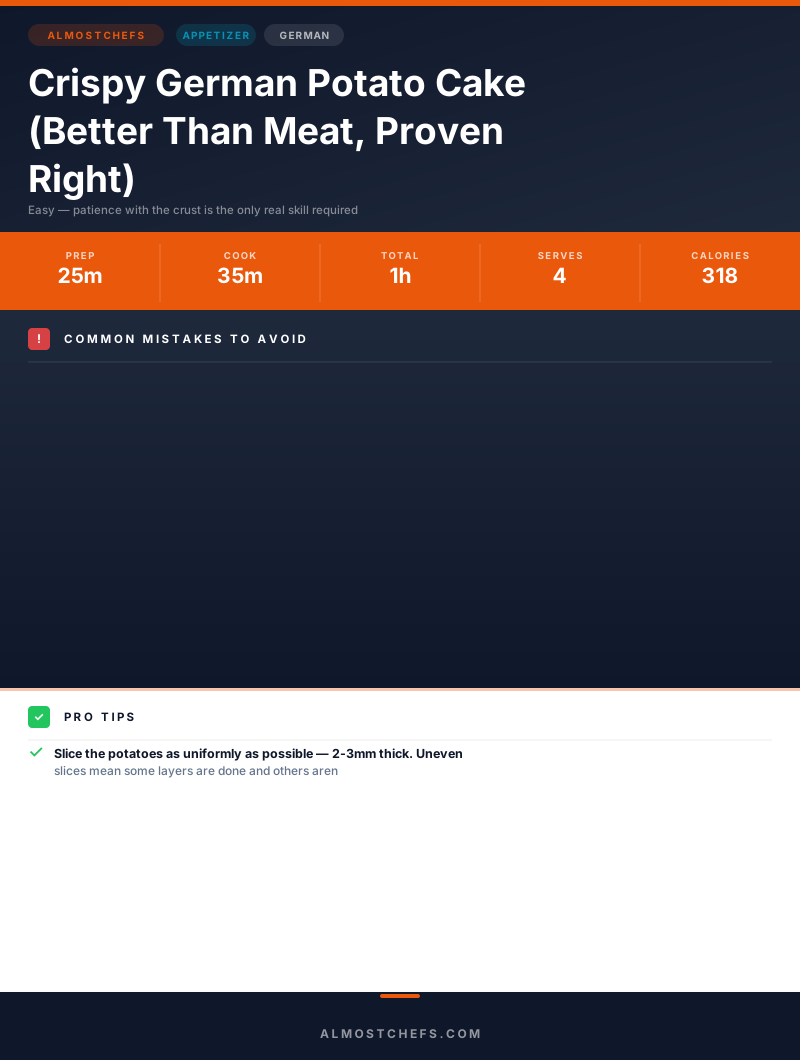
The Science of
Crispy German Potato Cake (Better Than Meat, Proven Right)
We turned everything on this page into a beautiful, flour-proof PDF cheat sheet. Print it out, stick it to your fridge, and never mess up your crispy german potato cake (better than meat, proven right) again.
*We'll email you the high-res PDF instantly. No spam, just perfectly cooked meals.
AlmostChefs Editorial Team
We translate the internet's most popular cooking videos into foolproof, beginner-friendly written recipes. We analyze multiple methods, test them in our kitchen, and engineer a single "Master Recipe" that gives you the best possible result with the least possible stress.