Creamy Chicken Soup with Vegetables (The Bowl That Actually Heals You)
A thick, velvety chicken soup loaded with tender vegetables, shredded chicken, and a rich cream base built on a proper homemade stock foundation. We broke down every popular YouTube method to engineer one version that delivers restaurant-depth flavor from a single pot.
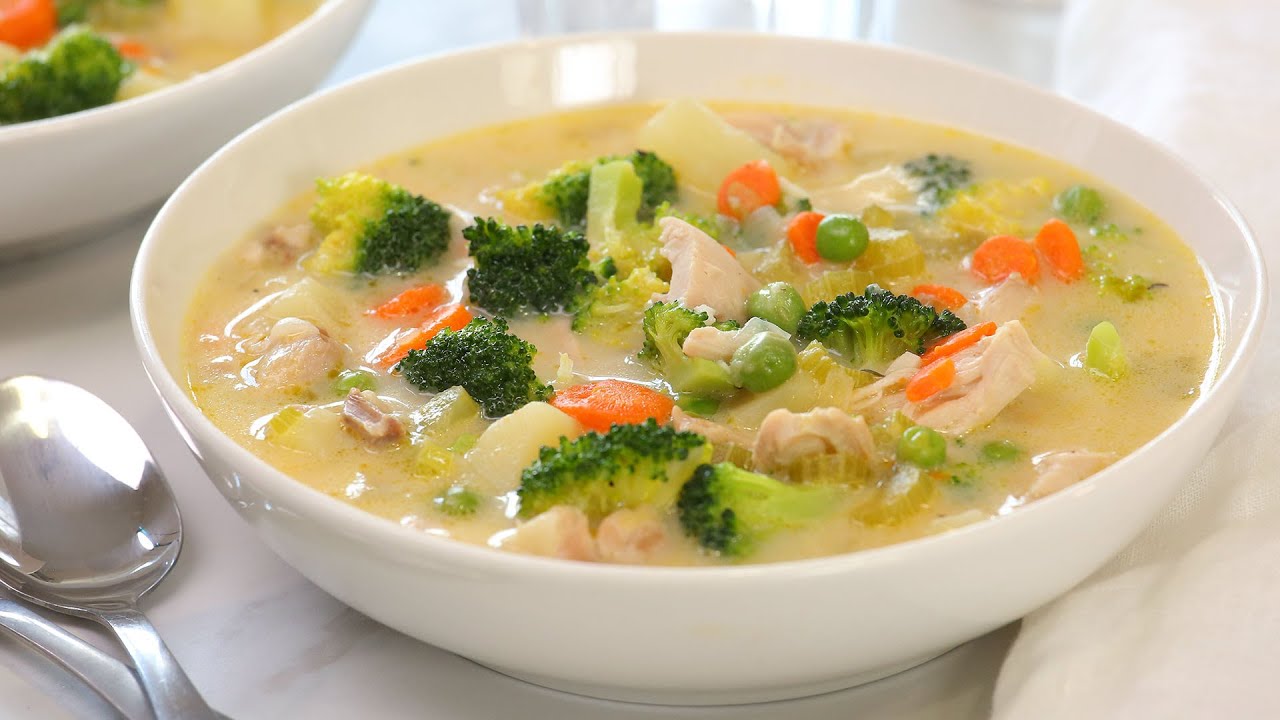
“Most creamy chicken soups are just chicken broth with a slurry of flour and heavy cream dumped in at the end. The result tastes flat, starchy, and one-dimensional. The difference between that and a bowl that tastes like it simmered all day comes down to two moves: building a proper aromatic base before any liquid touches the pan, and adding the cream at exactly the right temperature. We tested every shortcut the internet recommends so you don't have to.”
Why This Recipe Works
Creamy chicken soup is the most forgiving dish in the comfort food canon — and that's exactly why so many versions of it are mediocre. When something can be assembled badly and still taste decent, there is little pressure to understand why the good versions taste exceptional. But there is a significant difference between soup that is fine and soup that causes people to stop talking mid-sentence. That difference is entirely technical.
The Roux Is Not Optional
The single biggest mistake in cream soups is treating the thickener as an afterthought. Most quick recipes instruct you to dissolve flour in cold water and stir it into simmering broth, which produces a serviceable texture with an unmistakable raw-starch aftertaste that no amount of seasoning covers. A proper roux — butter and flour cooked together in fat over direct heat for a full two minutes — undergoes a partial gelatinization that eliminates the raw flour flavor entirely while creating a more stable, smoother thickening agent. The fat coats each starch granule, preventing clumping and producing that silky body that makes the broth coat a spoon.
The ratio matters: one tablespoon of butter to one tablespoon of flour per cup of liquid you want moderately thick. For a soup this size, three tablespoons of each produces a texture that's substantial without being paste-like. Increase the flour ratio and you get a chowder. Decrease it and you get a brothy soup with a faint cream tint. Choose intentionally.
Layered Seasoning Versus End Seasoning
Professional cooks season in layers. Home cooks season at the end. This is the largest single gap between restaurant-quality soup and home-cooked soup, and it applies directly here. When you salt the onions as they hit the pan, the salt draws out intracellular moisture through osmosis, accelerating the softening process and concentrating the natural sugars. The same principle applies to the carrots and celery — a pinch of salt at the vegetable stage means you're building flavor into the foundation of the dish, not just adjusting the liquid that surrounds it.
The smoked paprika on the chicken does something different. Applied before searing, it blooms in the hot fat and creates a layer of complex, mildly smoky flavor that permeates the broth during the long simmer. Added directly to the broth at the end, the same paprika tastes harsh and one-dimensional. The order of operations is not about tradition — it's chemistry.
Why Mixed Chicken Matters
The standard recommendation of boneless chicken breast as a universal default is responsible for more dry, flavorless soup than any other single instruction in home cooking. Breast meat is almost entirely fast-twitch muscle fiber with very little intramuscular fat or connective tissue. It cooks quickly, it dries out quickly, and it contributes almost nothing to the surrounding broth. Chicken thighs contain both slow-twitch fibers and significantly higher collagen content. During the 20-minute simmer, that collagen partially converts to gelatin, which dissolves into the broth and creates that thick, lip-coating body that signals richness without additional cream.
A 50/50 split of breast and thigh gives you the best of both: shredded breast provides clean, lean bite, while thigh meat contributes the fat and body that make the broth taste like it simmered for hours. Using a Dutch oven rather than a thin pot ensures that this simmer happens at a steady, even temperature — no hot spots scorching the bottom while the center stays under-extracted.
The Cream Addition Is a Temperature Problem
Heavy cream is an emulsion — fat droplets suspended in water, held together by milk proteins. That emulsion is stable up to approximately 180°F. At a full rolling boil (212°F), the proteins denature and the fat separates, rising to the surface in visible pools. This is why every cream soup recipe that ends in a greasy, broken mess has the same cause: cream added to boiling liquid. The fix is simple and non-negotiable — reduce to the lowest simmer before the cream touches the pot, pour it in slowly, and never let the soup return to a boil afterward.
This is also why reheating cream soups requires attention. Microwaves create localized superheating that can push the liquid past the breaking point even if the average temperature seems fine. Stovetop reheating on low, with frequent stirring, keeps the temperature below the emulsion breakdown threshold and preserves the texture you built the night before.
Building Depth Without Eight Hours
This soup delivers complex flavor in just over an hour because the technique front-loads all the flavor-building work. The sear on the chicken creates Maillard reaction compounds — the same reaction responsible for the flavor of seared steak or roasted coffee. The fond left in the Dutch oven after searing is pure concentrated flavor. When the broth goes in, it dissolves that fond off the bottom and distributes it throughout the entire pot. Skip the sear, skip this step, and you've voluntarily discarded the single most efficient flavor source in the entire recipe.
Dried thyme and rosemary added with the broth — not at the end — have time to fully hydrate and release their volatile aromatic oils during the simmer. Added in the last five minutes, they taste raw and sharp. Given 25 minutes at a low simmer, they meld into the background and contribute to an overall impression of depth rather than announcing themselves as individual herbs.
That is the architecture of a bowl that tastes like it took all day.
Where Beginners Mess This Up
Before we start, read this. These are the 4 reasons your creamy chicken soup with vegetables (the bowl that actually heals you) will fail:
- 1
Adding cream to boiling liquid: Heavy cream breaks when introduced to a full boil — the fat separates from the proteins and you get a greasy, curdled mess instead of a silky emulsion. Pull the pot off peak heat, let it drop to a steady simmer, then stir in the cream slowly. The temperature difference is the entire reason your soup looks wrong.
- 2
Skipping the roux or adding flour directly: Dumping raw flour into hot soup without first cooking it in fat produces a gluey, pasty texture with a distinct raw flour aftertaste. A proper roux — equal parts butter and flour cooked together for 2 minutes — creates the thickening power without the starch flavor. The 2-minute cook time is non-negotiable.
- 3
Using chicken breast only: Breast meat shreds fine but contributes almost nothing to the stock's body. Chicken thighs contain more collagen and intramuscular fat, which dissolve into the broth and create that unctuous, lip-coating quality that signals depth of flavor. A 50/50 split is the minimum. All thighs is not a crime.
- 4
Under-seasoning the vegetables: Vegetables need salt at the time they hit the pan, not just at the end. Salting the mirepoix during the sauté phase draws out moisture and concentrates flavor before any liquid is added. Waiting until the end means you're seasoning liquid, not the actual vegetables — and every bite will taste vaguely bland no matter how much salt you add later.
The Video Reference Library
Want to see it in action? Here are the exact videos we analyzed and combined to build this foolproof recipe translation:
The source video that inspired this breakdown. Clear technique on building the cream base without breaking, and useful close-ups of proper vegetable sauté color before the broth goes in.
Deep dive on roux ratios and why the fat-to-flour ratio matters for final soup consistency. Essential for understanding the difference between a thin bisque and a thick, spoonable chowder texture.
Covers the aromatics-first approach and the timing of cream addition. Useful secondary reference for troubleshooting broken or separated cream bases.
🛠️ Core Equipment
- Dutch oven or heavy-bottomed stockpotEven heat distribution is critical for building the roux without scorching and simmering the soup without hot spots. A thin pot will scorch the flour base in under 60 seconds.
- Wooden spoon or silicone spatulaMetal utensils scratch the pot surface and disrupt the roux. A flat-edged spatula lets you scrape the fond off the bottom of the pot — that's where the flavor lives.
- Instant-read thermometerChicken must reach 165°F internal temperature. Guessing by texture alone consistently produces either undercooked chicken or overcooked, stringy meat.
- Two forks or stand mixer paddle attachmentFor shredding the cooked chicken. The stand mixer method takes 20 seconds and produces perfect, even shreds. Two forks take two minutes and produce the same result. Either works.
Creamy Chicken Soup with Vegetables (The Bowl That Actually Heals You)
🛒 Ingredients
- ✦1.5 pounds boneless chicken thighs and breasts, mixed
- ✦3 tablespoons unsalted butter
- ✦1 tablespoon olive oil
- ✦1 large yellow onion, diced
- ✦3 cloves garlic, minced
- ✦3 medium carrots, peeled and sliced into half-moons
- ✦3 stalks celery, sliced
- ✦2 medium Yukon Gold potatoes, peeled and cubed
- ✦1 cup frozen corn kernels
- ✦1 cup frozen peas
- ✦1/3 cup all-purpose flour
- ✦5 cups low-sodium chicken broth
- ✦1 cup heavy cream
- ✦1 teaspoon dried thyme
- ✦1/2 teaspoon dried rosemary
- ✦1 bay leaf
- ✦1/2 teaspoon smoked paprika
- ✦Sea salt and freshly ground black pepper to taste
- ✦2 tablespoons fresh parsley, chopped, for garnish
👨🍳 Instructions
01Step 1
Pat the chicken dry with paper towels. Season generously on both sides with salt, pepper, and smoked paprika.
02Step 2
Heat a [Dutch oven](/kitchen-gear/review/dutch-oven) over medium-high heat. Add 1 tablespoon butter and the olive oil. Sear the chicken for 3-4 minutes per side until golden. Transfer to a plate — it does not need to be fully cooked at this stage.
03Step 3
Reduce heat to medium. Add the remaining 2 tablespoons butter. Add the diced onion and a pinch of salt. Sauté for 5-6 minutes until softened and translucent.
04Step 4
Add the garlic, carrots, and celery. Cook for 3-4 minutes, stirring frequently, until the celery loses its raw snap and the carrots begin to soften at the edges.
05Step 5
Sprinkle the flour evenly over the vegetables. Stir constantly with a [wooden spoon or spatula](/kitchen-gear/review/silicone-spatula) for 2 full minutes, coating every piece of vegetable. The mixture will look dry and paste-like. That is correct.
06Step 6
Add the chicken broth one cup at a time, whisking after each addition to prevent lumps. Add the thyme, rosemary, and bay leaf. Bring to a gentle boil.
07Step 7
Return the seared chicken to the pot. Add the cubed potatoes. Reduce to a steady simmer and cook uncovered for 20-25 minutes, until the potatoes are fork-tender and the chicken registers 165°F on an instant-read thermometer.
08Step 8
Transfer the chicken to a cutting board. Using two forks or a stand mixer with the paddle attachment, shred the chicken into bite-sized pieces. Return the shredded chicken to the pot.
09Step 9
Add the frozen corn and peas directly to the pot. Simmer for 3-4 minutes until heated through.
10Step 10
Reduce heat to low. Remove the bay leaf. Slowly pour in the heavy cream while stirring constantly. Do not allow the soup to return to a boil after this point.
11Step 11
Taste and adjust salt and pepper. Ladle into bowls and finish with fresh chopped parsley.
Nutrition Per Serving
Estimates based on standard preparation. Adjustments alter macros.
🔄 Substitutions
Instead of Heavy cream...
Use Full-fat coconut milk
Dairy-free alternative that produces a slightly sweeter, more tropical flavor profile. Use unsweetened and stir in off-heat the same way. The consistency is nearly identical.
Instead of All-purpose flour...
Use Cornstarch slurry (2 tablespoons cornstarch mixed with 3 tablespoons cold water)
Gluten-free thickening option. Add the slurry in the last 10 minutes of simmering. Produces a slightly glossier finish than flour. Do not cook the slurry in butter — add it directly to the liquid.
Instead of Chicken thighs and breasts...
Use Turkey breast and thigh meat
Same technique, nearly identical result. Great for post-holiday turkey. Cook time may be slightly shorter if the turkey is already cooked — reduce the simmer to 10 minutes.
Instead of Yukon Gold potatoes...
Use Cauliflower florets
Lower carb option. Cut into 1-inch pieces. They cook faster than potato — check for tenderness at the 12-minute mark instead of 20. Adds a subtle earthiness that works well with the thyme.
🧊 Storage & Reheating
In the Fridge
Store in an airtight container for up to 4 days. The soup will thicken significantly as it cools — this is normal. Thin with a splash of broth when reheating.
In the Freezer
Freeze before adding the heavy cream, in portions, for up to 3 months. Thaw overnight in the refrigerator, reheat to a simmer, then stir in the cream fresh.
Reheating Rules
Reheat gently on the stovetop over low-medium heat, stirring frequently. Add broth as needed to reach desired consistency. Microwave reheating works but stir every 90 seconds to prevent the cream from separating at the edges.
❓ Frequently Asked Questions
Why is my creamy soup grainy or curdled?
The cream was added to liquid that was too hot. Heavy cream breaks at a full boil — the fat separates from the proteins. Always reduce to a low simmer before adding cream, and pour it in slowly while stirring. If it has already broken, whisk vigorously off heat and add a small knob of cold butter to help re-emulsify.
Can I use milk instead of heavy cream?
Whole milk works but produces a noticeably thinner, less rich result. If using milk, increase the flour in your roux by one extra tablespoon to compensate for the lower fat content. Do not use skim or 2% — they have too little fat to maintain a stable emulsion and the soup will taste watery.
How do I make this soup thicker?
Three options: add an extra tablespoon of flour to the roux, mash some of the cooked potato directly into the broth before adding cream, or simmer uncovered for an additional 10 minutes to reduce the liquid. Do not add raw flour to finished soup — it will taste starchy and uncooked.
Can I make this in a slow cooker?
Yes, with adjustments. Sear the chicken and cook the roux on the stovetop first — there is no substitute for these steps. Then transfer everything except the cream to the slow cooker and cook on low for 6-7 hours. Add the cream in the last 30 minutes on low, lid slightly ajar to prevent boiling.
My soup tastes flat even after seasoning. What went wrong?
Under-seasoning early in the process is the most common cause. Salt added only at the end seasons the liquid, not the components. Each layer — the chicken, the vegetables, the broth — needs to be seasoned at the time it hits the pan. Also check your broth: low-sodium store-bought broth often needs significantly more salt than recipes expect.
What vegetables can I add or swap?
This soup is extremely forgiving on vegetable swaps. Green beans, zucchini, parsnips, diced turnips, or mushrooms all work. Add harder vegetables (parsnips, turnips) with the potatoes. Add softer vegetables (zucchini, mushrooms) in the last 8-10 minutes to prevent them from disintegrating.

The Science of
Creamy Chicken Soup with Vegetables (The Bowl That Actually Heals You)
We turned everything on this page into a beautiful, flour-proof PDF cheat sheet. Print it out, stick it to your fridge, and never mess up your creamy chicken soup with vegetables (the bowl that actually heals you) again.
*We'll email you the high-res PDF instantly. No spam, just perfectly cooked meals.
AlmostChefs Editorial Team
We translate the internet's most popular cooking videos into foolproof, beginner-friendly written recipes. We analyze multiple methods, test them in our kitchen, and engineer a single "Master Recipe" that gives you the best possible result with the least possible stress.