Creamy Chicken Mushroom Soup (The Weeknight Comfort Bowl Done Right)
Tender chicken and golden-sautéed cremini mushrooms in a velvety, cream-finished broth. We broke down the technique behind every step — browning order, roux timing, cream temperature — so you get restaurant depth in under an hour with pantry staples.

“Most creamy soups fail at the same three moments: mushrooms that steam instead of brown, cream that breaks into greasy pools, and chicken that goes rubbery from too much heat. None of those failures are mysterious. They're all predictable, and they're all preventable once you understand what's actually happening in the pot.”
Why This Recipe Works
Creamy chicken mushroom soup looks simple. Broth, chicken, mushrooms, cream. The ingredient list is short enough to memorize. But the number of ways to produce a mediocre version of this soup is remarkable — pale mushrooms, grainy cream, rubber chicken, roux lumps — and almost every failure traces back to the same root cause: treating comfort food like it doesn't have rules.
It does. They're just easier to follow than most people expect.
The Mushroom Problem
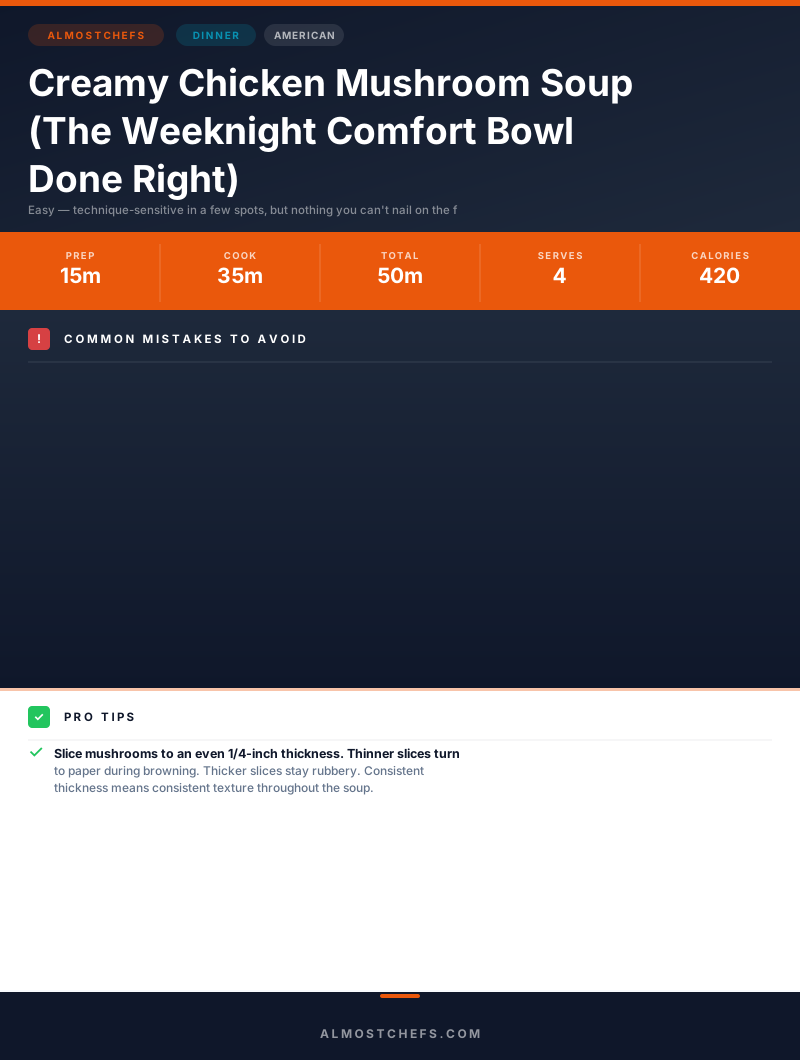
Mushrooms are roughly 90% water by weight, which means they contain more liquid than almost any other vegetable you'll cook with. This is both their greatest asset and the most common source of failure. Add too many to a lukewarm pan and they immediately begin releasing that liquid, which drops the pan temperature below the Maillard threshold. The mushrooms simmer in their own liquid instead of browning, and the window for developing flavor closes before it ever opened.
The fix is straightforward: use a heavy-bottomed pot preheated to medium-high, add the mushrooms in a single layer, and don't touch them for the first 2-3 minutes. That sustained contact with a hot surface is what triggers browning. You should hear an active sizzle, not a wet hiss. Once the contact side is golden, you can stir. By then, the moisture has already been driven off and the flavor is locked in.
Deep golden-brown mushrooms contribute an almost meaty umami base to the soup — the same glutamate compounds found in aged cheese and soy sauce. Pale, steamed mushrooms taste like warm water with a mild earthy note. They're not the same ingredient at that point. They just happen to share a name.
The Roux Question
Two tablespoons of flour cooked into butter and vegetables sounds trivial. It isn't. The roux does two things: it thickens the soup, and it determines whether that thickness tastes rich or starchy. Raw flour has a chalky, papery taste that persists through simmering if you don't cook it out at the beginning. One to two minutes of stirring over medium heat — until the mixture turns faintly golden and smells nutty — destroys the raw starch compounds and replaces them with a neutral, slightly toasty base that thickens cleanly.
Add the broth slowly at first, whisking as you go. The flour-fat mixture needs to hydrate evenly before it can absorb a large volume of liquid without clumping. A few tablespoons at a time for the first 30 seconds, then a steady stream once the base is smooth. This is the step where a whisk earns its place in the drawer — a spoon won't break lumps; a whisk prevents them.
Cream Is Not Invincible
Heavy cream contains approximately 36% fat, which gives it a remarkable ability to stay smooth and stable in hot liquids — but only up to a point. Sustained boiling forces the fat globules to coalesce and separate from the water fraction, leaving an oily sheen on the surface and a thinner liquid below. This is not a disaster, but it's disappointing, and it's entirely avoidable.
The rule is simple: once the cream goes in, the pot does not boil again. A gentle simmer — a bubble breaking the surface every few seconds — is the ceiling. Two to three minutes of gentle warming is all you need to integrate the cream and bring the soup to serving temperature. If you need to hold the soup before serving, keep it on the lowest possible heat setting with the lid cracked, and stir it every few minutes to prevent hot spots from forming near the bottom.
Chicken Breast Timing
Bite-sized pieces of chicken breast cook fast — faster than most people expect. At a gentle simmer in seasoned broth, they're cooked through in 10-12 minutes. The proteins in chicken breast are tightly wound and contract aggressively when overcooked, squeezing out moisture and turning each piece from tender to stringy. There's no way back from overcooked chicken breast. The margin between done and overdone is narrow, and the only tool that reliably catches it is a timer and a willingness to check early.
Test a piece at the 10-minute mark. No pink means done. Pull the pot off heat immediately and let carryover heat handle the rest while you prepare the cream. The chicken will continue cooking for another 1-2 minutes from residual heat even off the burner — account for that, not against it.
This is weeknight food built on precision. The precision just happens to be simple.
Where Beginners Mess This Up
Before we start, read this. These are the 4 reasons your creamy chicken mushroom soup (the weeknight comfort bowl done right) will fail:
- 1
Crowding the mushrooms: Mushrooms are 90% water by weight. Add too many to the pan at once and they steam in their own liquid instead of browning. You end up with pale, flabby mushrooms that taste like nothing instead of the deep, caramelized umami base the soup depends on. Cook them in a single layer without stirring for the first 2-3 minutes — let the Maillard reaction do its work before you touch them.
- 2
Adding cream to a boiling pot: Heavy cream destabilizes at sustained high heat. The fat separates from the liquid and you get an oily, broken surface instead of a silky, cohesive broth. Once you add the cream, the pot should never come back to a full boil. A gentle simmer — barely a bubble breaking the surface — is the ceiling.
- 3
Undercooking the roux: Two tablespoons of flour stirred into hot fat needs 1-2 full minutes of cooking before you add any liquid. Raw flour tastes exactly like raw flour — starchy, chalky, and wrong. The roux is done when it smells faintly nutty and has turned from white to pale gold. Don't rush this step.
- 4
Overcooking the chicken: Chicken breast cut into bite-sized pieces cooks in 10-12 minutes at a gentle simmer. Beyond that, the proteins contract and squeeze out moisture — you get chewy, stringy chunks instead of tender bites. Pull it off heat the moment there's no pink visible. Carryover heat handles the rest.
The Video Reference Library
Want to see it in action? Here are the exact videos we analyzed and combined to build this foolproof recipe translation:

The source video for this recipe. Clear breakdown of the mushroom browning step and the cream incorporation technique. Watch the timing on the roux — it's the detail most home cooks skip.
2. How to Brown Mushrooms Properly
A focused breakdown of why mushrooms steam instead of sear and exactly how to fix it. Applies directly to any soup or sauté that calls for golden-brown mushrooms.
3. Cream Sauce Science — Why It Breaks and How to Fix ItExplains the fat-protein dynamics behind cream sauces and soups. If you've ever had a cream soup turn greasy or grainy, this is the video that explains why.
🛠️ Core Equipment
- Large heavy-bottomed pot or Dutch oven ↗Even heat distribution is critical for browning mushrooms without scorching and for holding a stable simmer during the cream phase. A thin-walled pot creates hot spots that burn the roux and break the cream.
- Wooden spoon or silicone spatula ↗You need to scrape the fond (browned bits) off the pot bottom when deglazing with wine. Metal utensils scratch the coating on enameled pots; a wooden spoon or stiff spatula does the job without damage.
- Whisk ↗For adding broth to the roux without lumps. Pouring liquid over flour paste while stirring with a spoon almost always produces lumps. A whisk breaks them before they form.
Creamy Chicken Mushroom Soup (The Weeknight Comfort Bowl Done Right)
🛒 Ingredients
- ✦3 tablespoons unsalted butter
- ✦1 pound boneless, skinless chicken breast, cut into bite-sized pieces
- ✦10 ounces cremini mushrooms, thinly sliced
- ✦1 medium yellow onion, finely diced
- ✦3 garlic cloves, minced
- ✦2 tablespoons all-purpose flour
- ✦5 cups low-sodium chicken broth
- ✦1 cup heavy cream
- ✦1 teaspoon dried thyme
- ✦1 bay leaf
- ✦1/2 teaspoon ground black pepper
- ✦1 teaspoon kosher salt
- ✦1/4 cup dry white wine (optional)
- ✦2 tablespoons fresh parsley, chopped
- ✦1/4 teaspoon freshly grated nutmeg
👨🍳 Instructions
01Step 1
Melt butter in a large heavy-bottomed pot over medium-high heat until foaming, about 1 minute.
02Step 2
Add the sliced mushrooms in a single layer. Do not stir for the first 2-3 minutes. Let them brown on the contact side, then stir and continue cooking until they release their liquid and turn deep golden brown, approximately 5-7 minutes total.
03Step 3
Reduce heat to medium. Add the diced onion and minced garlic to the mushrooms, stirring constantly for 3-4 minutes until softened and fragrant.
04Step 4
Sprinkle the flour over the vegetables. Stir continuously for 1-2 minutes until the flour smells faintly nutty and turns pale gold. This is your roux.
05Step 5
Pour in the white wine if using, scraping the bottom of the pot to release all browned bits. Simmer for 1 minute to reduce slightly.
06Step 6
Gradually pour in the chicken broth while whisking continuously to prevent lumps. Add the bay leaf, thyme, salt, and black pepper.
07Step 7
Bring to a gentle simmer and add the chicken pieces, distributing them evenly throughout the broth.
08Step 8
Simmer uncovered for 10-12 minutes until the chicken is cooked through with no pink remaining. Stir occasionally.
09Step 9
In a small bowl, whisk the heavy cream with the grated nutmeg. Reduce heat to low, then slowly pour the cream into the pot while stirring continuously.
10Step 10
Warm the soup gently for 2-3 minutes. Do not let it return to a boil.
11Step 11
Remove from heat. Discard the bay leaf. Taste and adjust salt and pepper.
12Step 12
Ladle into bowls and garnish with fresh chopped parsley. Serve immediately.
Nutrition Per Serving
Estimates based on standard preparation. Adjustments alter macros.
🔄 Substitutions
Instead of Heavy cream...
Use Half-and-half (1 cup) or Greek yogurt (3/4 cup, stirred in off heat)
Half-and-half produces a lighter mouthfeel with the same stable behavior at heat. Greek yogurt adds a slight tang and extra protein but must be added off heat — it will curdle if boiled.
Instead of All-purpose flour...
Use Cornstarch slurry (1 tablespoon cornstarch whisked with 2 tablespoons cold water)
Gluten-free option that produces a glossier, cleaner finish. Add it during the broth stage rather than with the vegetables, since cornstarch doesn't need to cook out the way flour does.
Instead of Cremini mushrooms...
Use Mix of cremini, shiitake, and oyster mushrooms (10 oz total)
More complex, layered earthiness. Shiitake adds stronger umami; oyster mushrooms add a silkier texture. Remove shiitake stems before slicing — they're tough and fibrous.
Instead of Boneless chicken breast...
Use Shredded rotisserie chicken (2 cups, added with the cream)
Cuts 15 minutes from the cook time and produces silkier, more tender meat since it's already fully cooked. Skip the simmering step for the chicken and add it at the end just to warm through.
🧊 Storage & Reheating
In the Fridge
Store in an airtight container for up to 3 days. The soup thickens considerably as it sits — add a splash of chicken broth when reheating to restore consistency.
In the Freezer
Freeze before adding the cream for best results. Cream-based soups can separate when frozen and thawed. If you must freeze the finished soup, thaw overnight in the fridge and reheat gently, whisking to re-emulsify.
Reheating Rules
Reheat on the stovetop over low heat, stirring frequently. Do not microwave at high power — the uneven heat will break the cream. If it looks separated, whisk vigorously while warming and it will usually come back together.
❓ Frequently Asked Questions
Why did my cream soup turn grainy or oily on top?
The cream got too hot. Heavy cream separates when it reaches a sustained boil — the fat breaks from the liquid and rises. Once this happens, whisk the soup vigorously off heat. If it doesn't come back together, add a tablespoon of cold butter and whisk hard. Prevention is easier than rescue: keep the heat at a gentle simmer after adding cream.
Can I make this soup ahead of time?
Yes, with one adjustment. Make the entire soup through Step 8 (before adding the cream), refrigerate, and add the cream fresh when reheating. This prevents separation and keeps the texture cleaner. The soup base actually improves overnight as the flavors meld.
My soup tastes bland even though I followed the recipe. What went wrong?
Three likely causes: the mushrooms weren't browned enough (pale mushrooms contribute almost no flavor), the roux was undercooked (still tastes raw and starchy), or the seasoning was only added at the end rather than in layers. Each stage of cooking is a flavor-building opportunity. If you salted only at the finish, the salt sits on top of the soup rather than integrating into it.
Can I use chicken thighs instead of breast?
Yes, and you should consider it. Thighs have more fat and collagen, which means they stay tender longer under heat and add more body to the broth. They can handle 15-18 minutes at a simmer without going tough. If you use thighs, cut them to the same bite-sized pieces as the recipe specifies.
Do I have to use wine?
No. The wine deglazes the pot and adds a layer of acidity and complexity, but the soup is complete without it. If skipping, deglaze with 1/4 cup of the chicken broth instead, or add 1 teaspoon of apple cider vinegar at the end to mimic the brightness the wine provides.
Why is there nutmeg in a chicken soup?
Nutmeg is a classic addition to cream-based sauces (it's in béchamel for the same reason). It doesn't taste like nutmeg in the finished dish — it disappears into the background and adds a faint warmth that makes cream sauces taste rounder and more complex. A quarter teaspoon is barely detectable on its own but the soup would taste slightly flat without it.
The Science of
Creamy Chicken Mushroom Soup (The Weeknight Comfort Bowl Done Right)
We turned everything on this page into a beautiful, flour-proof PDF cheat sheet. Print it out, stick it to your fridge, and never mess up your creamy chicken mushroom soup (the weeknight comfort bowl done right) again.
*We'll email you the high-res PDF instantly. No spam, just perfectly cooked meals.
AlmostChefs Editorial Team
We translate the internet's most popular cooking videos into foolproof, beginner-friendly written recipes. We analyze multiple methods, test them in our kitchen, and engineer a single "Master Recipe" that gives you the best possible result with the least possible stress.