Creamy Cajun Chicken Pasta (The 30-Minute Weeknight Weapon)
Tender seared chicken tossed with penne in a bold, spiced cream sauce that builds heat without losing richness. We analyzed the most popular YouTube methods to lock in the exact spice ratio, sear technique, and sauce consistency that makes this dish genuinely craveable instead of just aggressively salty.
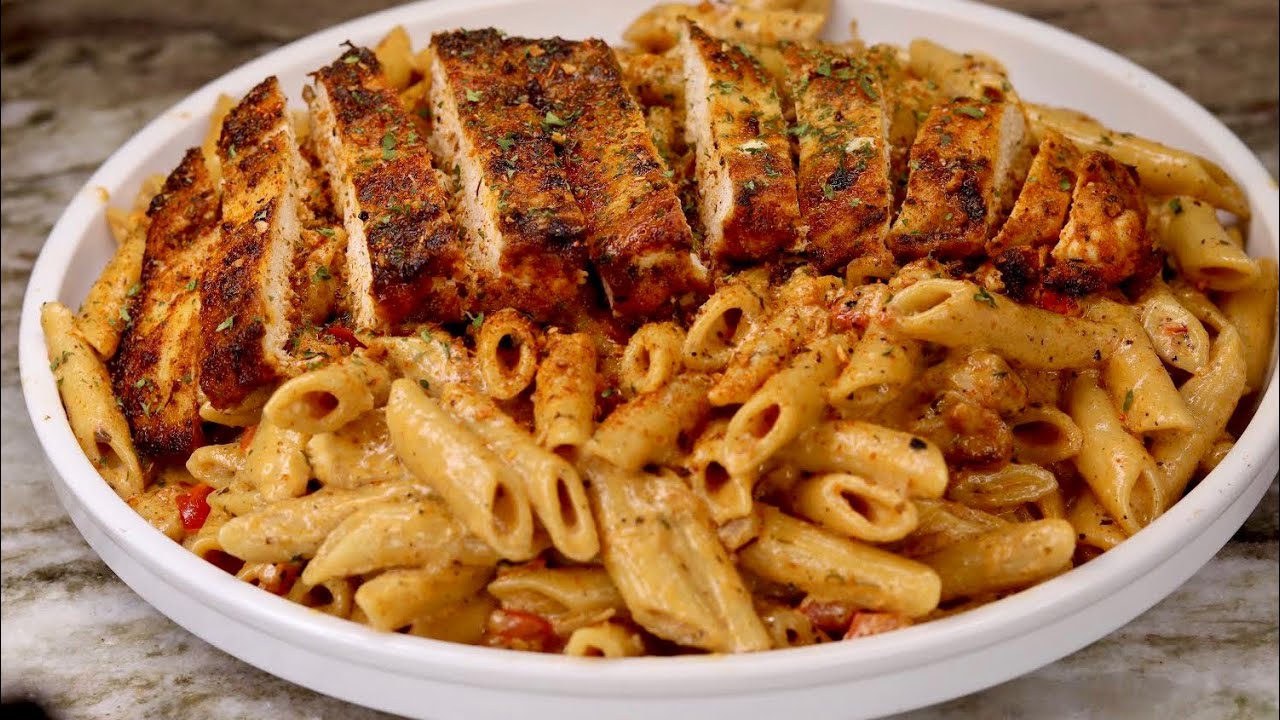
“Cajun chicken pasta has a reputation problem. Every restaurant version is either drowning in cream with zero heat, or so aggressively spiced it numbs your face by the third bite. Neither is the goal. The goal is a sauce that's rich enough to coat every strand of pasta, bold enough to announce itself, and calibrated enough that you want another forkful instead of a glass of milk. Getting there is less about the spice blend and more about when and how you build the sauce.”
Why This Recipe Works
Cajun chicken pasta sits in an awkward culinary middle zone — it's Southern by spice, Italian by format, and American by appetite. The best versions feel effortless and inevitable, like someone built exactly the sauce your pasta needed. The worst versions taste like a cream sauce that got into a fight with a spice rack and lost. The difference is almost entirely about technique, not ingredients.
The Sear Is the Sauce Foundation
This is the most important sentence in this recipe: the chicken sear builds the sauce. When properly seasoned chicken hits a hot, lightly oiled cast iron skillet and is left alone for three to four minutes, two things happen simultaneously. The exterior proteins denature and form a crust that retains interior moisture. And the spiced, caramelized crust leaves behind a layer of browned fond — concentrated flavor compounds fused to the pan surface — that no amount of added seasoning can replicate. When you deglaze with white wine or stock, those compounds dissolve into the liquid and become the base of your cream sauce. Pale, steamed chicken produces pale, steamed-tasting sauce. The sear is not optional. It is the recipe.
This is also why pan size matters. A chicken breast cut into strips needs room to make contact with the hot surface without releasing steam from its neighbors. A twelve-inch stainless steel skillet handles 1.5 pounds of chicken strips in a single layer with just enough space between pieces. Anything smaller and you're steaming by the second strip, destroying the very fond you're trying to build.
The Cream Sauce Sequence
Cream sauce fails for one of two reasons: either the fat breaks because of excessive heat, or it's underseasoned because the spice was added all at once instead of in layers. Both are timing problems. After the vegetables have softened and the garlic has bloomed — sixty seconds, no more — the deglaze with wine or stock is your reset button. It drops the pan temperature, lifts the fond, and creates the liquid foundation the cream will emulsify into. Letting it reduce by half concentrates that foundation before the fat is introduced.
The cream goes in only after the pan has had thirty seconds to settle from the deglaze. Then it simmers — not boils — at medium-low until it coats the back of a spoon. This takes four to five minutes of patience. The temptation to crank the heat and rush the reduction is the most common failure point in home cream sauce cooking. A rapid boil causes the fat to separate from the liquid before the emulsion has fully stabilized. The result is a pool of butter floating above a thin, broken sauce. Keep it gentle. The sauce will get there.
The Pasta Timing Problem
Most recipes tell you to cook pasta according to package directions and then add it to the sauce. This is wrong for cream pasta specifically, and understanding why changes how you cook it forever. Pasta that's fully cooked before it hits the sauce continues cooking from residual heat. It absorbs liquid aggressively from the sauce. Over two to three minutes of tossing and serving, it goes from perfectly al dente to slightly swollen and soft, while the sauce simultaneously thickens beyond its target consistency because the pasta has taken its liquid.
Pulling the pasta two minutes early solves both problems at once. Undercooked pasta needs time in the sauce — and that time in the sauce is exactly the time it needs to reach the right texture. The pasta finishes, the sauce loosens slightly as the pasta hydrates it, and both elements meet in the middle at the right consistency. This is the technique professional pasta cooks use in every kitchen. It requires an instant-read thermometer mindset: trust calibration over intuition.
Why the Lemon Juice Matters
Heavy cream is rich, fat-forward, and without acidity, monotonous. The two tablespoons of lemon juice added at the end of cooking are doing structural work, not just flavoring. The acidity cuts through the fat coating on the palate, which is why the dish suddenly tastes brighter and more complex after the lemon goes in than before. Without it, every subsequent bite tastes progressively heavier and more one-dimensional as the fat accumulates. With it, the dish stays lively and balanced from the first forkful to the last. The Parmesan adds a secondary layer of umami-driven complexity from its glutamate content, and together the acid and umami prevent the cream from dominating every other element.
The Cajun seasoning layering — half on the chicken before the sear, half into the sauce during the simmer — is the same principle applied to heat. Spices bloomed in fat during the sear undergo different chemical transformations than spices dissolved in cream. The first layer produces toasted, slightly smoky heat. The second produces a raw, brighter, more volatile spice character. Together they create the depth that single-application seasoning never achieves.
Where Beginners Mess This Up
Before we start, read this. These are the 4 reasons your creamy cajun chicken pasta (the 30-minute weeknight weapon) will fail:
- 1
Undersearing the chicken: The sear is not cosmetic. A properly seared chicken breast develops a crust through the Maillard reaction that locks in juices and contributes browned fond to the pan — the same fond that becomes the backbone of your cream sauce. If the chicken is pale and steamed instead of dark brown and crusted, your sauce will taste flat before you've added a single spice.
- 2
Adding cream to a too-hot pan: Heavy cream breaks when it hits a screaming-hot surface too fast. You get greasy, separated sauce instead of the smooth, emulsified coating you're after. After deglazing with chicken stock or white wine, let the pan temperature drop for 30 seconds before introducing the cream. Control the heat, control the sauce.
- 3
Overcooking the pasta: Cajun cream sauce is thick and clingy. If the pasta is already at full doneness when it hits the sauce, it continues cooking in the residual heat and absorbs too much liquid, turning the sauce from silky to gluey. Pull the pasta 2 minutes early — it finishes in the pan.
- 4
Using pre-ground spice blends without adjusting: Store-bought Cajun seasoning varies wildly in salt content. Some blends are 40% salt by weight. If you season the chicken with a heavy hand and then add more to the sauce, the result is aggressively salty and one-dimensional. Always taste the blend before using and reduce added salt accordingly.
The Video Reference Library
Want to see it in action? Here are the exact videos we analyzed and combined to build this foolproof recipe translation:
The source video for this recipe. Strong focus on the sauce-building sequence and how to manage heat during cream reduction. Clear timestamps for each stage.
Deep dive on the Maillard reaction and why pan temperature before the chicken hits the surface determines everything. Essential watch if your sears are consistently pale.
Covers emulsification, heat management, and how pasta water starch stabilizes a cream sauce. Directly applicable to the technique in this recipe.
🛠️ Core Equipment
- 12-inch stainless steel or cast iron skilletThe sear requires sustained high heat and a surface that doesn't release the fond. Non-stick pans prevent the browning you need. A wide pan also ensures the chicken pieces aren't crowded, which causes steaming instead of searing.
- TongsFor pressing the chicken flat during the sear and flipping without piercing the crust. A fork punctures the meat and lets the juices run out before the chicken rests.
- Large pasta pot with salted waterThe pasta needs to cook in water that tastes like mild seawater — roughly 1 tablespoon of salt per gallon. Under-salted pasta water produces flat pasta that no amount of sauce can rescue.
- Instant-read thermometerChicken is done at 165°F internal temperature. Cutting into it to check releases the juices you worked to keep inside. A thermometer gives you a definitive answer without destroying the sear.
Creamy Cajun Chicken Pasta (The 30-Minute Weeknight Weapon)
🛒 Ingredients
- ✦1.5 pounds boneless skinless chicken breasts, sliced into 1-inch strips
- ✦12 ounces penne pasta
- ✦2 tablespoons Cajun seasoning, divided
- ✦1 teaspoon smoked paprika
- ✦1/2 teaspoon garlic powder
- ✦1/2 teaspoon onion powder
- ✦1/4 teaspoon cayenne pepper (adjust to heat preference)
- ✦2 tablespoons olive oil
- ✦1 tablespoon unsalted butter
- ✦5 garlic cloves, minced
- ✦1 medium yellow onion, thinly sliced
- ✦1 red bell pepper, thinly sliced
- ✦1/2 cup dry white wine or low-sodium chicken stock
- ✦1.5 cups heavy cream
- ✦1/2 cup freshly grated Parmesan cheese
- ✦2 tablespoons fresh lemon juice
- ✦1/4 cup fresh flat-leaf parsley, chopped
- ✦Salt and freshly cracked black pepper to taste
- ✦Reserved pasta water (at least 1/2 cup)
👨🍳 Instructions
01Step 1
Bring a large pot of heavily salted water to a boil. Cook penne 2 minutes less than the package directions. Reserve 1/2 cup pasta water before draining.
02Step 2
While water heats, combine 1.5 tablespoons Cajun seasoning, smoked paprika, garlic powder, onion powder, and cayenne in a small bowl. Toss the chicken strips with half the spice mixture and a pinch of salt until evenly coated.
03Step 3
Heat olive oil in a 12-inch skillet over medium-high heat until shimmering. Add chicken in a single layer — do not crowd the pan. Sear undisturbed for 3-4 minutes per side until a deep golden crust forms and internal temperature reads 165°F.
04Step 4
Transfer chicken to a cutting board. Let it rest 5 minutes, then slice against the grain into bite-sized pieces.
05Step 5
Reduce heat to medium. Add butter to the same pan. Once melted, add the sliced onion and bell pepper. Sauté for 4-5 minutes until softened and slightly caramelized.
06Step 6
Add minced garlic and cook for 60 seconds until fragrant. Do not let it brown — bitter garlic ruins the sauce.
07Step 7
Pour in white wine or chicken stock to deglaze, scraping up all the browned bits from the bottom of the pan with a wooden spoon. Let it reduce by half, about 2 minutes.
08Step 8
Reduce heat to medium-low. Wait 30 seconds for the pan temperature to drop slightly, then pour in the heavy cream. Stir in the remaining spice mixture. Simmer gently for 4-5 minutes, stirring occasionally, until the sauce thickens enough to coat the back of a spoon.
09Step 9
Stir in Parmesan cheese until fully melted and incorporated. Add lemon juice and taste for seasoning.
10Step 10
Add the drained pasta to the sauce and toss to coat. If the sauce is too thick, add pasta water a splash at a time until it reaches a silky, coating consistency.
11Step 11
Fold in the sliced chicken and half the parsley. Toss gently to combine and warm through for 1-2 minutes.
12Step 12
Plate immediately. Top with remaining fresh parsley and extra Parmesan. Serve hot.
Nutrition Per Serving
Estimates based on standard preparation. Adjustments alter macros.
🔄 Substitutions
Instead of Heavy cream...
Use Full-fat coconut cream
Dairy-free alternative that maintains the richness and viscosity of the sauce. Adds a faint sweetness that softens the Cajun heat slightly. Works well — not a compromise.
Instead of Penne...
Use Rigatoni or cavatappi
Tubular pastas with ridges hold cream sauce better than smooth shapes. Rigatoni is especially good — the wide tubes trap sauce inside. Avoid spaghetti or linguine, which slip out of the thick sauce.
Instead of Chicken breast...
Use Boneless skinless chicken thighs
More forgiving to cook — thighs don't dry out at higher internal temperatures the way breasts do. Slightly richer flavor. Reduce sear time by 1 minute per side.
Instead of White wine...
Use Low-sodium chicken stock with 1 teaspoon apple cider vinegar
Replaces both the liquid volume and the acidity that wine brings to the deglaze. The vinegar sharpens the fond reduction the same way wine does.
🧊 Storage & Reheating
In the Fridge
Store in an airtight container for up to 3 days. The sauce thickens considerably when cold.
In the Freezer
Cream-based pasta sauces do not freeze well — the emulsion breaks on thawing and the texture becomes grainy. Make fresh.
Reheating Rules
Reheat gently in a skillet over low heat with a splash of chicken stock or water, stirring frequently. The added liquid re-emulsifies the sauce as it warms. Microwave works in a pinch — cover the bowl and stop to stir every 45 seconds.
❓ Frequently Asked Questions
Why is my cream sauce breaking and turning greasy?
The heat was too high when you added the cream. Cream breaks when it hits an overly hot surface — the fat separates from the liquid and you get a greasy pool instead of a cohesive sauce. Let the pan cool slightly after deglazing before adding cream, and maintain a gentle simmer throughout. If it breaks, whisk in a splash of pasta water over low heat — the starch can sometimes rescue a mild break.
Can I make this less spicy?
Yes. Omit the cayenne entirely and reduce the Cajun seasoning to 1 tablespoon total. The dish will still have paprika warmth and garlic depth without the heat. For even milder results, choose a salt-and-herb Cajun blend rather than a hot variety.
My chicken is dry. What went wrong?
Either it was overcooked or not rested before slicing. Chicken breast is lean and has almost no fat buffer against heat — it goes from perfectly cooked to dry in about 60 seconds of overcooking. Use a thermometer and pull at 165°F. Then rest for 5 full minutes before slicing. The residual heat will bring it safely to temperature while the juices redistribute.
Can I use milk instead of heavy cream?
Whole milk will produce a thinner sauce that may not coat the pasta well. If you use it, whisk in 1 tablespoon of flour with the butter before adding vegetables to build a light roux, which will give the sauce enough body. Half-and-half is a better middle ground than whole milk and doesn't require a roux.
Why do I need to reserve pasta water?
Pasta water is starchy from the dissolved surface starch of the pasta as it cooks. That starch acts as a natural emulsifier, binding the fat in the cream with the water molecules in the sauce to create a smooth, cohesive coating. When the sauce is too thick, adding a splash of pasta water loosens it while actually improving its texture. Plain tap water doesn't have this effect.
What Cajun seasoning brand do you recommend?
Tony Chachere's is the standard reference point — balanced heat, reasonable salt level, widely available. Slap Ya Mama is hotter and slightly less salty. Whatever you use, taste a pinch before seasoning and adjust your added salt accordingly, since blends vary enormously in sodium content.

The Science of
Creamy Cajun Chicken Pasta (The 30-Minute Weeknight Weapon)
We turned everything on this page into a beautiful, flour-proof PDF cheat sheet. Print it out, stick it to your fridge, and never mess up your creamy cajun chicken pasta (the 30-minute weeknight weapon) again.
*We'll email you the high-res PDF instantly. No spam, just perfectly cooked meals.
AlmostChefs Editorial Team
We translate the internet's most popular cooking videos into foolproof, beginner-friendly written recipes. We analyze multiple methods, test them in our kitchen, and engineer a single "Master Recipe" that gives you the best possible result with the least possible stress.