Pan-Fried Crab Cakes (Stop Destroying the Lump Meat)
Golden pan-fried crab cakes built around whole lump crab meat, panko crust, and a yogurt binder that holds everything together without drowning the seafood. The critical step most recipes skip: 30 minutes of refrigeration before frying so the cakes survive the pan without falling apart.
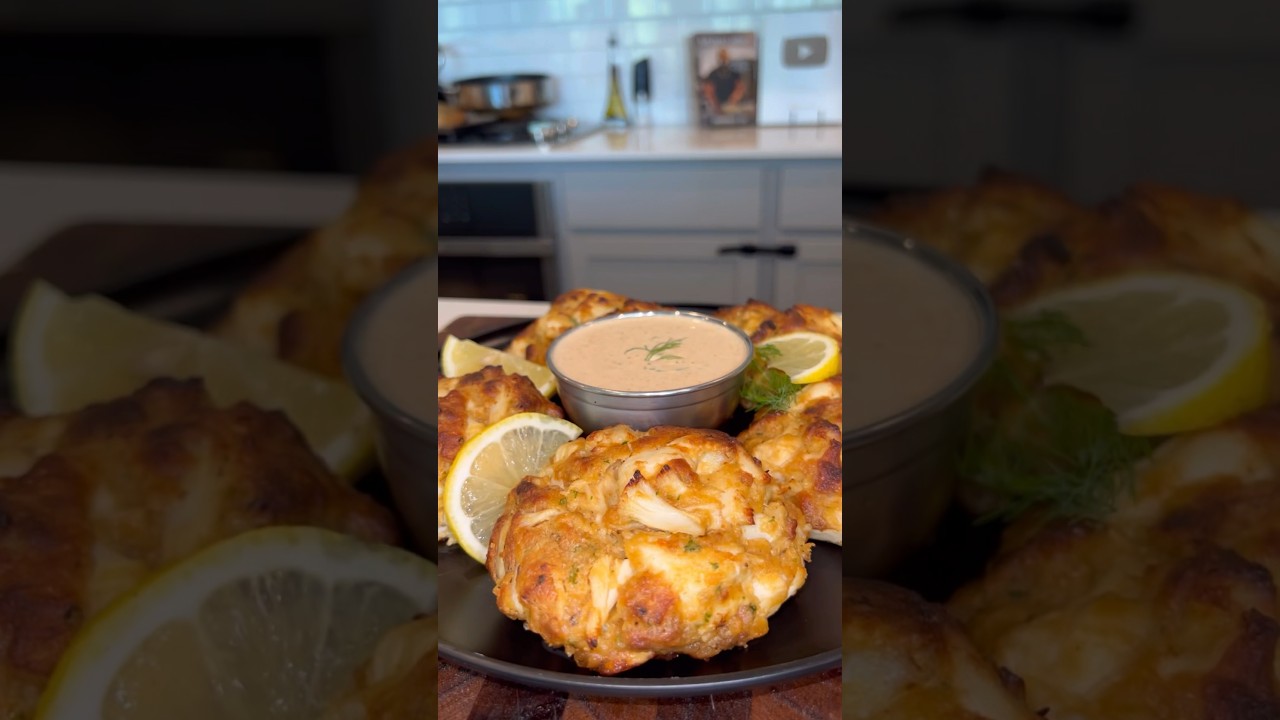
“Most homemade crab cakes fail in one of two ways: they fall apart in the pan, or they're more binder than crab. Both problems come from the same source — not respecting what lump crab meat actually is and what it needs to hold a shape. The solution is less mixing, less filler, and 30 minutes in the refrigerator before the cakes ever see heat.”
Why This Recipe Works
Crab cakes occupy a narrow technical space between two failure modes: too much binder (you're eating a breadcrumb patty that tastes faintly of crab) and too little structure (the cake falls apart in the pan). Most home recipes fail toward one of these poles. The version here is calibrated specifically to avoid both, using a minimal binder ratio and a chilling step that gives the structure time to set before heat enters the equation.
The Lump Meat Problem
The name is the clue: lump crab meat is defined by its texture — large, intact muscle bundles with a fibrous structure that holds together under moderate handling. The moment you start stirring aggressively, those bundles shred into fine fibers that can't support themselves without a heavy binder matrix. More shredding requires more binder, which means more filler, which means less crab flavor. The spiral is self-defeating.
The solution is to mix the wet binder ingredients — yogurt, egg, dijon, seasonings — completely before the crab touches anything. Then the crab goes in last and gets folded, not stirred. Four or five gentle turns of a spatula is all it takes. The lump pieces should still be visibly intact in the finished mixture. If it looks like uniform crab paste, you've gone too far.
The Chilling Step Is Structural Engineering
Egg white proteins begin to firm when chilled. Greek yogurt thickens slightly in the cold. Panko breadcrumbs absorb moisture from the binder over time, swelling slightly and locking into the mixture. All three of these changes happen during the 30-minute refrigeration step, and all three are working toward the same goal: a cake that holds its shape under the physical stress of being slid into a hot pan, pressed slightly by its own weight, and flipped.
Skipping refrigeration means you're putting a structurally loose patty into a hot pan and hoping for the best. The outside crust forms before the interior has enough cohesion to support it, and the cake breaks along the fault lines between the crab pieces when you try to flip. The 30 minutes are not optional.
The Panko Ratio
Only 1/4 cup of panko goes inside the cakes — enough to absorb excess moisture from the yogurt and provide minimal internal structure without becoming detectable as texture. The remaining 3/4 cup coats the exterior to create the crust. This ratio matters because panko inside the cake is filler, and filler competes with crab for space in every bite. The goal is maximum crab-to-binder ratio that still holds a shape.
Panko also outperforms regular breadcrumbs for the crust. Panko particles are larger, more irregular, and more porous than standard breadcrumbs. Under heat, that irregular surface area crisps more aggressively and produces a crunchier exterior that doesn't soften as quickly. A cast iron skillet at medium-high heat is the right delivery mechanism — the retained heat of cast iron doesn't drop when the cold cakes hit the surface, which means the crust begins forming immediately rather than gradually.
The Oil Temperature Window
Crab cakes need to go into hot oil, not warm oil. The difference is whether the crust sets before the cake starts to stick. In cold oil, the exterior of the cake heats gradually and sticks to the pan before the Maillard reaction can create a protective crust layer. In properly heated oil — shimmering, fluid, immediately responsive when the cake makes contact — the exterior proteins firm and crisp almost instantly, and the cake releases cleanly from the pan when ready to flip.
"When ready to flip" is the other critical phrase. Don't try to flip on a schedule. The cake tells you when it's ready: the bottom crust is deep golden and the cake releases cleanly from the pan when you try to slide the spatula under it. If it resists, it's not done. Wait 30 more seconds. Forcing the flip before the crust has fully formed is the second most common cause of crab cake structural failure, right behind skipping the refrigeration step.
The Seasoning Architecture
Old Bay does specific work here: it provides celery-forward salinity, mild heat, and a characteristic maritime seasoning note that amplifies rather than competes with crab flavor. Dijon mustard adds background sharpness and emulsification — the vinegar-and-mustard combination helps bind the fat from the yogurt into a uniform coating around the crab pieces. Worcestershire adds depth through fermented umami without adding liquid volume. Together they build a flavor profile that supports crab rather than overpowering it.
The lemon is added raw to the binder, not as a finish on the plate. This ensures the citrus brightness is distributed throughout the cake rather than concentrated on the surface, which means the first bite and the last bite taste the same.
Where Beginners Mess This Up
Before we start, read this. These are the 4 reasons your pan-fried crab cakes (stop destroying the lump meat) will fail:
- 1
Overmixing the crab: Lump crab meat is exactly that — large, intact lumps of cooked crab muscle. The moment you stir aggressively, those lumps shred into fine fibers that can't hold together without a lot of binder. Use a gentle folding motion and stop the moment the ingredients are distributed. There should still be visible lump pieces in the mixture.
- 2
Skipping the refrigeration step: The binder — egg, Greek yogurt, dijon — needs time to set and coat the crab and panko. Without chilling, the cakes are structurally loose and will break apart when you try to flip them. Thirty minutes in the refrigerator allows the proteins in the egg and yogurt to firm slightly and glue the structure together.
- 3
Too much filler: The purpose of panko is structural, not flavorful. Only 1/4 cup goes inside the cakes — just enough to absorb moisture and provide internal scaffolding. The rest coats the exterior for crust. Recipes that use a full cup of breadcrumbs inside the cakes are making crab-flavored bread patties.
- 4
Pan not hot enough before adding the cakes: Crab cakes placed in a cold or under-heated pan stick before a crust forms and release reluctantly, tearing the surface. The oil must be shimmering and hot — not smoking, but visibly fluid and immediate when the cake makes contact. You should hear a confident sizzle the moment the cake hits the pan.
The Video Reference Library
Want to see it in action? Here are the exact videos we analyzed and combined to build this foolproof recipe translation:
Covers the folding technique that preserves lump crab structure, the visual cues for proper chilling, and the pan temperature check before adding the cakes. Essential viewing for first-timers.
🛠️ Core Equipment
- Heavy nonstick or cast iron skilletEven heat distribution across the full base of the cake is essential for a uniformly golden crust without hot spots that burn one edge while the other is still pale. A [cast iron skillet](/kitchen-gear/review/cast-iron-skillet) retains heat well and maintains temperature when cold cakes are added, preventing the pan from cooling down mid-cook.
- Wide flat spatulaCrab cakes are fragile. A wide spatula supports the full diameter of the cake when flipping rather than pivoting it from one edge, which causes the interior to break free from the crust. Slide the spatula completely under the cake before lifting.
- Baking sheet with wire rackAfter pan-frying, resting the finished cakes on a wire rack prevents the bottom crust from steaming soft in its own residual moisture. A solid sheet without a rack traps steam and softens the crust you just worked to build.
Pan-Fried Crab Cakes (Stop Destroying the Lump Meat)
🛒 Ingredients
- ✦1 lb lump crab meat, carefully picked over for shells
- ✦1 cup panko breadcrumbs, divided (1/4 cup for binder, 3/4 cup for coating)
- ✦1/2 cup plain Greek yogurt
- ✦1 large egg, lightly beaten
- ✦2 tablespoons dijon mustard
- ✦1 tablespoon Old Bay seasoning
- ✦1 tablespoon fresh lemon juice
- ✦1 tablespoon Worcestershire sauce
- ✦2 green onions, finely chopped
- ✦2 tablespoons fresh flat-leaf parsley, finely chopped
- ✦2 tablespoons vegetable oil, for frying
- ✦Lemon wedges, for serving
- ✦Remoulade or tartar sauce, for serving
👨🍳 Instructions
01Step 1
Pick through the crab meat carefully, removing any shell or cartilage fragments. Handle as gently as possible to keep the lump pieces intact.
02Step 2
In a large mixing bowl, combine the Greek yogurt, beaten egg, dijon mustard, Old Bay, lemon juice, Worcestershire sauce, green onions, and parsley. Whisk until uniform.
03Step 3
Add the 1/4 cup of panko to the wet mixture and stir to combine. Let rest 2 minutes so the panko absorbs some of the liquid.
04Step 4
Add the crab meat to the bowl. Using a silicone spatula or your hand, fold gently until just combined. Large lump pieces should still be visible. Do not stir.
05Step 5
Divide the mixture into 8 equal portions. Shape each into a patty about 1 inch thick, handling as little as possible.
06Step 6
Spread the remaining 3/4 cup panko on a plate. Gently press each patty into the panko to coat both sides and the edges.
07Step 7
Place the coated crab cakes on a plate or sheet pan, cover loosely, and refrigerate for 30 minutes minimum.
08Step 8
Heat vegetable oil in a heavy skillet over medium-high heat until shimmering. Carefully lower the chilled crab cakes into the pan, leaving space between each.
09Step 9
Cook undisturbed for 3-4 minutes until the bottom is deep golden brown. Slide a wide spatula fully under each cake and flip in one confident motion.
10Step 10
Cook the second side for 3-4 minutes until equally golden. Transfer to a wire rack and rest 2 minutes before serving with lemon wedges and sauce.
Nutrition Per Serving
Estimates based on standard preparation. Adjustments alter macros.
🔄 Substitutions
Instead of Lump crab meat...
Use Imitation crab (surimi)
Produces a much different result — lower in protein, softer in texture, noticeably sweeter. Functional as a budget substitute but not the same dish. Chop roughly before using.
Instead of Greek yogurt...
Use Mayonnaise
Traditional binder for crab cakes. Richer and fattier than yogurt, with a more neutral flavor. Either works — yogurt is lighter; mayo is more classically Chesapeake.
Instead of Panko breadcrumbs...
Use Crushed crackers (Ritz or saltine)
Saltines produce a slightly thinner crust; Ritz crackers add butteriness. Both work as a coating. Reduce any added salt if using salted crackers.
Instead of Old Bay seasoning...
Use Celery salt + paprika + cayenne (1 tsp + 1/2 tsp + pinch)
Approximates the Old Bay flavor profile. Not identical, but workable if Old Bay is unavailable.
🧊 Storage & Reheating
In the Fridge
Cooked crab cakes keep refrigerated in an airtight container for up to 2 days. The crust softens significantly in storage.
In the Freezer
Freeze uncooked crab cakes on a parchment-lined sheet pan until solid, then transfer to a zip bag. Cook from frozen within 1 month.
Reheating Rules
Reheat cooked crab cakes in a 375°F oven on a wire rack for 10-12 minutes to restore some crust crispness. The microwave softens the crust entirely and is not recommended.
❓ Frequently Asked Questions
Why do my crab cakes fall apart?
Two likely causes: you overmixed the crab (breaking the lump structure that holds everything together), or you skipped the refrigeration step. Both are equally responsible. Fold gently until just combined, then chill for at least 30 minutes before the pan. These two steps together are what make a structurally sound crab cake.
Can I bake crab cakes instead of pan-frying?
Yes. Brush or spray with oil and bake at 425°F on a wire rack for 15-18 minutes, flipping once halfway. The crust won't be as uniformly golden as pan-fried, but the interior texture will be nearly identical. Good for larger batches where monitoring a pan isn't practical.
What's the best crab meat to use?
Jumbo lump or lump crab meat, either fresh or canned. Jumbo lump gives you larger, more intact pieces and the best textural result. Claw meat is shredded and significantly stronger in flavor — it works in crab cakes but produces a very different texture. Fresh is better than canned if you have access to it.
How do I know when to flip the crab cakes?
When the bottom is deep golden brown and the cake releases cleanly from the pan without sticking. If you try to slide the spatula under and it resists, wait another 30 seconds — the crust will release on its own when it's fully set. Forcing the flip before the crust has formed is the most common cause of cakes breaking in the pan.
Can I make crab cakes ahead of time?
Yes — and they're better for it. Fully assembled uncooked cakes can refrigerate for up to 24 hours or freeze for up to 1 month. The extra chilling time gives the binder more time to set, which actually improves structural integrity. Cook directly from the refrigerator without bringing to room temperature first.
The Science of
Pan-Fried Crab Cakes (Stop Destroying the Lump Meat)
We turned everything on this page into a beautiful, flour-proof PDF cheat sheet. Print it out, stick it to your fridge, and never mess up your pan-fried crab cakes (stop destroying the lump meat) again.
*We'll email you the high-res PDF instantly. No spam, just perfectly cooked meals.
AlmostChefs Editorial Team
We translate the internet's most popular cooking videos into foolproof, beginner-friendly written recipes. We analyze multiple methods, test them in our kitchen, and engineer a single "Master Recipe" that gives you the best possible result with the least possible stress.