Classic Cottage Pie (The British Comfort Formula Done Right)
A savory ground beef and vegetable filling topped with creamy cauliflower-potato mash, baked until golden and bubbling. We broke down the most popular methods to build one foolproof technique that nails the filling consistency and topping texture every time.

“Most cottage pie is either watery filling that turns the bottom crust soggy, or a dry brick of meat topped with gluey mashed potatoes. The British figured out the physics of this dish centuries ago, and the modern home cook keeps breaking it by rushing the sauce reduction and skimping on the potato topping thickness. Three things separate forgettable cottage pie from the kind that makes people scrape the dish: building the filling properly with tomato paste, knowing when the sauce is actually done, and getting the topping peaks right so they brown instead of steam.”
Why This Recipe Works
Cottage pie is the kind of dish that deceives you with its simplicity. Ground beef, vegetables, mashed potatoes, oven. How complicated can it be? Complicated enough that most versions are either a watery stew wearing a potato hat or a dry, overworked brick with no textural contrast whatsoever. The British didn't develop this dish for centuries just to have it fail at 375°F because someone didn't reduce the sauce.
The Filling Is a Sauce, Not a Stew
This is the most important thing to understand about cottage pie and the most commonly ignored. The meat filling is not a wet braise that goes directly from pan to baking dish. It is a thickened sauce that needs to hold its shape before it meets the topping. Every minute of simmering after the broth goes in is reducing excess liquid and concentrating flavor. If your filling pours, it isn't ready.
The tomato paste is the other critical filling element that most cooks shortchange. Two tablespoons of raw tomato paste stirred into a hot pan tastes acidic and thin. Two tablespoons of tomato paste cooked for 90 seconds in direct contact with the pan bottom, stirred constantly until it darkens from bright red to a deep brick color, tastes like roasted tomato, caramel, and umami simultaneously. That transformation is the Maillard reaction at work — the same chemistry that makes seared steak taste different from boiled meat. The 90 seconds are not optional.
The mirepoix — onion, carrot, celery — does more than add vegetables. It creates the aromatic foundation that the beef builds on. Five minutes of proper sautéing softens the cell walls and releases the sugars, converting sharp raw vegetable flavor into something sweet and savory. Translucent onion is the minimum. Lightly golden onion is better. Do not rush this step.
The Topping Is a Crust
Most people treat the potato topping like a blanket — something to drape over the filling and smooth flat. This is wrong. The topping is a crust, and it behaves like one when you treat it correctly.
The cauliflower-potato blend mashes almost identically to all-potato because cauliflower has a naturally mild flavor that disappears in the presence of butter, cheese, and seasoning. What it adds is fiber and a slightly lighter texture that actually browns better than dense all-potato mash. You don't need to announce the cauliflower to anyone. They will not notice it. They will notice the topping is good.
The peaks you drag across the surface with a spoon are functional, not aesthetic. Raised ridges get direct oven heat while the valleys are insulated by surrounding mass. The ridges brown, the valleys stay creamy, and you get textural contrast in every bite. A flat topping gives you uniform pale gold across the entire surface — technically cooked, but texturally boring.
A potato ricer is worth owning for this recipe specifically. It produces a consistently smooth, lump-free mash without over-working the starch the way a food processor does. Over-worked potato starch goes gluey — it won't peak, it won't brown, and it develops a gummy texture that clings to the roof of your mouth. Mash once, fold in the cheese, stop.
The Oven Is Finishing, Not Cooking
Everything in the baking dish is already cooked when it goes into the oven. The 25-30 minutes at 375°F exists to do three things: heat the filling back to temperature, dry the surface of the topping enough for browning, and create the bubbling edges that signal the filling is fully active. The oven is not your safety net for undercooked filling or improperly set sauce. Do the work on the stovetop and the oven becomes what it's supposed to be — the finishing touch.
Let it rest five minutes before you cut it. The filling is still moving at 375°F and will pool the moment you break the surface. Five minutes of resting lets it firm back into something that holds a clean edge. This is the least demanding step in the entire recipe and the most frequently skipped.
Cottage pie is not complicated. It rewards patience on the stovetop, attention to the topping texture, and five minutes of restraint at the end. That's the entire formula.
Where Beginners Mess This Up
Before we start, read this. These are the 4 reasons your classic cottage pie (the british comfort formula done right) will fail:
- 1
Skipping the tomato paste cook-down: Tomato paste needs 60-90 seconds of direct heat in the pan before you add liquid. Raw paste tastes acidic and flat. Cooked paste tastes deep, sweet, and savory — it's the difference between a filling that tastes like it simmered all day and one that tastes like a can. Stir it constantly while it cooks and watch it darken slightly.
- 2
Not reducing the filling enough: The filling should be thick enough to hold its shape when you spoon it into the baking dish. If it looks like soup, keep simmering. A watery filling steams the potato topping from below, turning it gray and gummy instead of golden and set. Eight to ten minutes of gentle simmering is the minimum.
- 3
Spreading the topping flat: A flat topping browns unevenly and gives you no textural contrast. Use the back of a spoon to drag peaks across the surface. Those raised ridges get direct oven heat and turn deep golden brown while the valleys stay creamy. This takes 30 extra seconds and changes the entire dish.
- 4
Cutting immediately out of the oven: The filling is liquid at 375°F. Cutting a cottage pie the moment it comes out of the oven produces a molten, undifferentiated mess on the plate. Five minutes of resting lets the filling firm up enough to hold clean slices. This isn't optional if you want actual portions.
The Video Reference Library
Want to see it in action? Here are the exact videos we analyzed and combined to build this foolproof recipe translation:
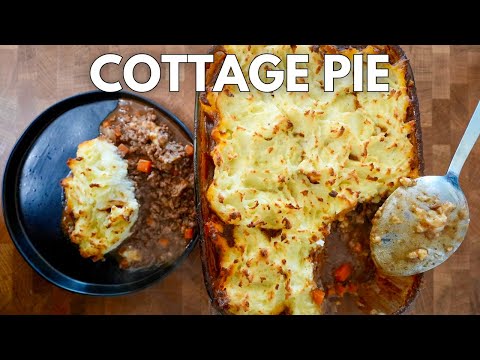
Clear walkthrough of the filling reduction technique and topping method. Strong visual cues for when the sauce has thickened to the right consistency.
2. Classic British Cottage Pie
Detailed breakdown of layering technique and oven timing. Useful reference for understanding peak formation and browning indicators.
3. Cottage Pie from ScratchCovers the vegetable prep and filling aromatics in depth. Good for first-timers who want a confident handle on the mirepoix base before tackling the full recipe.
🛠️ Core Equipment
- 9-by-13-inch baking dish ↗Surface area matters. A deeper, narrower dish gives you thick wet filling and thin topping. The 9x13 spreads the filling thin enough to heat through quickly and gives the topping maximum exposure to oven heat for browning.
- Large heavy-bottomed skillet ↗You need enough surface area to brown the beef without steaming it. Crowded beef sweats instead of browns, and pale gray ground beef produces a flat-tasting filling. A [cast iron skillet](/kitchen-gear/review/cast-iron-skillet) or wide stainless pan is ideal.
- Potato masher or ricer ↗A [potato ricer](/kitchen-gear/review/potato-ricer) produces the smoothest topping with the least effort. A masher works but leaves chunks — which is fine for texture. A food processor turns the cauliflower-potato mixture gluey through over-working the starch. Do not use a blender.
- Colander ↗Thorough draining is non-negotiable. Wet potatoes produce a watery topping that won't brown. Let the cauliflower and potatoes sit in the colander for two full minutes before returning to the pot.
Classic Cottage Pie (The British Comfort Formula Done Right)
🛒 Ingredients
- ✦2 tablespoons olive oil
- ✦1 large yellow onion, finely diced
- ✦3 medium carrots, cut into small dice
- ✦2 celery stalks, finely chopped
- ✦3 cloves garlic, minced
- ✦1 pound lean ground beef
- ✦2 tablespoons tomato paste
- ✦1 cup low-sodium beef broth
- ✦1 cup frozen peas
- ✦2 teaspoons fresh thyme leaves
- ✦1 teaspoon dried oregano
- ✦2 bay leaves
- ✦Salt and black pepper to taste
- ✦1.5 pounds russet potatoes, peeled and cut into chunks
- ✦8 ounces cauliflower florets, chopped small
- ✦4 tablespoons unsalted butter
- ✦1/4 cup low-fat milk
- ✦1/2 cup sharp cheddar cheese, shredded
👨🍳 Instructions
01Step 1
Preheat your oven to 375°F and position the rack to the middle setting.
02Step 2
Place potatoes and cauliflower in a large pot of cold salted water, bring to a boil over high heat, and cook until both are fork-tender, about 15 minutes.
03Step 3
Meanwhile, heat olive oil in a large skillet over medium-high heat. Add the diced onion, carrots, and celery and sauté until softened and the onion is translucent, about 5 minutes.
04Step 4
Stir in the minced garlic and cook until fragrant, about 30 seconds, then add the ground beef and break it apart with a wooden spoon as it browns, about 6-7 minutes total.
05Step 5
Add tomato paste to the meat mixture and stir constantly for 60-90 seconds until it darkens slightly and smells sweet and savory, then pour in the beef broth and scrape up all the browned bits from the pan bottom.
06Step 6
Stir in the peas, fresh thyme, dried oregano, and bay leaves. Reduce heat to medium-low and simmer for 8-10 minutes until the sauce thickens and holds its shape when spooned.
07Step 7
Season with salt and black pepper. Remove the bay leaves and transfer the filling to a 9-by-13-inch baking dish in an even layer.
08Step 8
Drain the cooked potatoes and cauliflower thoroughly in a colander and let sit for 2 minutes, then return to the pot.
09Step 9
Mash potatoes and cauliflower together with butter and milk until creamy but slightly textured. Fold in the shredded cheddar and adjust seasoning.
10Step 10
Spread the potato topping evenly over the filling, then use the back of a spoon to drag irregular peaks across the entire surface.
11Step 11
Bake until the topping is golden brown with lightly crisped peaks and the edges are visibly bubbling, approximately 25-30 minutes.
12Step 12
Remove from oven and let rest for 5 minutes before cutting and serving.
Nutrition Per Serving
Estimates based on standard preparation. Adjustments alter macros.
🔄 Substitutions
Instead of Lean ground beef...
Use Ground turkey or ground lamb
Turkey is milder and leaner — add an extra tablespoon of tomato paste to compensate for reduced richness. Lamb is more traditional in some regions and adds earthy depth. Both work well with the same technique.
Instead of Unsalted butter...
Use 3 tablespoons butter plus 1 tablespoon Greek yogurt
Reduces saturated fat while maintaining creaminess. The yogurt adds subtle tang that actually complements the savory filling. Don't go all-yogurt — the butter is load-bearing for texture.
Instead of Low-fat milk...
Use Unsweetened almond milk or low-sodium vegetable broth
Almond milk produces a lighter, slightly thinner topping. Vegetable broth adds savory depth to the mash itself. Either works. Avoid oat milk — it turns gluey when heated.
Instead of Sharp cheddar cheese...
Use Gruyère or omit entirely
Gruyère melts more smoothly and adds nuttier complexity. Omitting the cheese entirely produces a cleaner-tasting topping that lets the cauliflower-potato flavor stand on its own. Valid choice.
🧊 Storage & Reheating
In the Fridge
Store covered in the baking dish or in an airtight container for up to 4 days. The filling sets firmer as it chills, making leftover slices easier to serve cleanly.
In the Freezer
Freeze in individual portions for up to 3 months. Wrap tightly in foil, then plastic wrap. Thaw overnight in the refrigerator before reheating.
Reheating Rules
Cover with foil and reheat at 350°F for 20-25 minutes until heated through. Remove the foil for the last 5 minutes to re-crisp the topping. Microwave works but softens the topping — acceptable for a weeknight, not ideal.
❓ Frequently Asked Questions
What's the difference between cottage pie and shepherd's pie?
One ingredient: the protein. Cottage pie uses ground beef. Shepherd's pie uses ground lamb. The name follows the meat — shepherds tend sheep, so lamb is shepherd's pie. Everything else in the recipe is identical. If someone serves you 'shepherd's pie' made with beef, they are wrong.
Why is my topping gummy and gray instead of golden?
Two likely culprits. First, the filling was too wet when you added the topping — the steam from the liquid cooked the potatoes from below instead of the oven heat browning them from above. Reduce the filling until it holds its shape before topping. Second, you may have over-worked the potatoes, developing too much starch. Mash until just combined and stop.
Can I make cottage pie ahead of time?
Yes, and it's better for it. Assemble the full dish, cover tightly, and refrigerate for up to 24 hours before baking. Add 10-15 minutes to the bake time to account for the cold start. The filling sets more firmly overnight, giving you cleaner portions.
Do I need the cauliflower in the topping?
No. It's an optional addition that adds fiber and stretches the topping without detectably changing the flavor. If you want the classic version, use all russet potato with the same quantities of butter, milk, and cheese. The technique is identical.
Why does the filling need to simmer after adding the broth?
The broth needs to reduce and thicken before going into the oven. A wet filling steams the topping from below, preventing browning and creating a soggy interface between the two layers. Eight to ten minutes of simmering drives off excess liquid and concentrates the flavor. The filling is done when a spoon dragged through it leaves a slow-filling trail.
What potatoes work best for the topping?
Russet potatoes are the correct choice. Their high starch content produces a fluffy, light mash that browns well in the oven. Waxy potatoes like red or Yukon Gold hold their shape well for salads but produce a dense, sticky topping that doesn't peak or brown the same way. Stick with russets.
The Science of
Classic Cottage Pie (The British Comfort Formula Done Right)
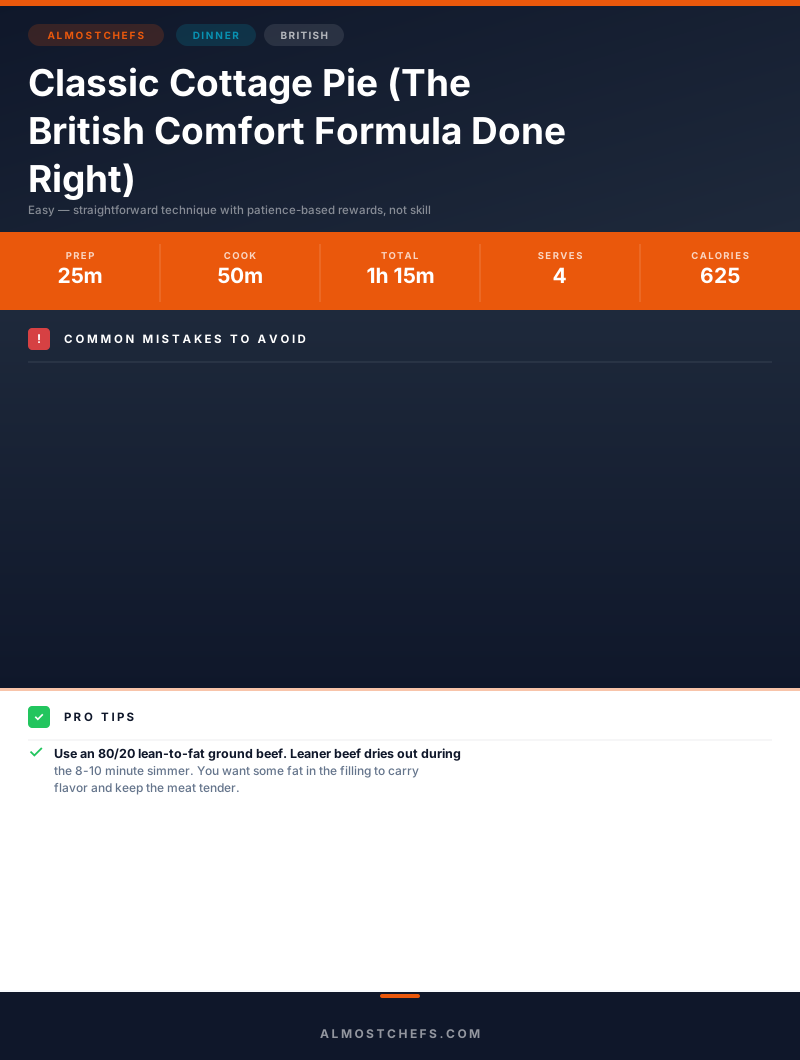
We turned everything on this page into a beautiful, flour-proof PDF cheat sheet. Print it out, stick it to your fridge, and never mess up your classic cottage pie (the british comfort formula done right) again.
*We'll email you the high-res PDF instantly. No spam, just perfectly cooked meals.
AlmostChefs Editorial Team
We translate the internet's most popular cooking videos into foolproof, beginner-friendly written recipes. We analyze multiple methods, test them in our kitchen, and engineer a single "Master Recipe" that gives you the best possible result with the least possible stress.