High-Protein Cottage Cheese Pancakes (38g Per Serving, No Compromise)
Cottage cheese and Greek yogurt pancakes that deliver 38g of protein per serving without tasting like a protein bar. We reverse-engineered the texture problem — blending the cottage cheese smooth — so you get fluffy, indulgent pancakes that happen to be a serious muscle-building breakfast.

“Most high-protein pancakes taste like protein bars pressed into a disc. They're chewy, dense, and smell faintly of vanilla-flavored chalk. The problem is never the protein content — it's the texture. Cottage cheese, when properly blended, produces a batter that behaves like buttermilk: creamy, slightly tangy, and capable of creating genuinely fluffy pancakes. Pair it with Greek yogurt and four eggs and you're at 38g of protein before you even get out of the gym clothes.”
Why This Recipe Works
There are two types of high-protein pancakes. The first type are regular pancakes with a scoop of powder tipped in — they taste like they were made in a supplement store kitchen, they have the chew of a protein bar, and they apologize for existing with every bite. The second type are built from the ground up around high-protein dairy, where the protein is structural rather than added. These are the second type.
The Cottage Cheese Problem (and Solution)
Cottage cheese pancakes have been around for decades. They've also been mostly disappointing for decades, for a reason nobody bothers to explain: cottage cheese curds do not integrate into batter. They sink, they sit, they create wet pockets surrounded by dry batter, and the result is a pancake that's simultaneously overcooked on the outside and raw in the center.
The fix is so simple it's almost embarrassing. Blend the cottage cheese until smooth. Sixty seconds in a food processor transforms the curds into a creamy liquid with the consistency of loose sour cream. This liquid integrates completely into the wet ingredients, distributes protein evenly through every bite, and creates the same creamy tang that buttermilk provides in traditional recipes. The blending step is the entire recipe. Everything else is just execution.
Why 38g of Protein Without Tasting Like a Supplement
The protein here comes from three sources working in parallel: cottage cheese (about 14g per cup), Greek yogurt (about 10g per half cup), and four eggs (24g total). That's 48g of complete protein before the batter hits the skillet. Add protein powder and you're pushing past 50g across four servings.
What makes this work nutritionally and culinarily is that all three sources are whole foods with their own fat, moisture, and flavor contribution. Cottage cheese adds creaminess and body. Greek yogurt adds tang and tenderness. Eggs add structure, richness, and the lift that makes these cook through without being dense. The protein powder, when used, slots in as a neutral amplifier — it increases the number without changing the character of the pancake.
The glycemic response is notably flat for a breakfast food. The fiber from the oat flour slows glucose absorption. The protein and fat from the dairy and eggs slow gastric emptying further. The result is steady energy for 3-4 hours — the opposite of the 45-minute crash that follows a stack of white-flour pancakes drowned in syrup.
Heat Management Is the Whole Game
Standard pancake batter is roughly 40% flour by weight. This batter is roughly 40% dairy protein. That changes the cooking physics significantly. Dairy proteins coagulate faster than gluten develops, which means this batter sets more quickly at the edges and more slowly at the center than you're used to. If your heat is too high, the exterior is done and the interior is still liquid. If your heat is too low, you get pale, steamed pancakes that never develop a crust.
Medium heat — a nonstick skillet at a temperature where butter foams but doesn't smoke — is the correct setting. The visual cues are: bubbles across the entire surface (not just the edges), matte appearance where previously glossy, and a clearly golden rim visible at the base. All three cues should be present before you flip. The second side takes roughly 60% of the time the first side took.
The Oat Flour Decision
Ground oats serve a structural function that almond flour or all-purpose flour can't fully replicate here. Oats contain beta-glucan, a soluble fiber that gels when hydrated, contributing to the slightly elastic, cohesive texture that keeps these pancakes from falling apart on the spatula. They also grind into a flour that's fine enough to disappear texturally while contributing subtle nuttiness.
Grind them finer than you think necessary. Coarsely ground oats produce gritty pancakes that read as undercooked even when the center is fully set. Forty-five seconds in a blender at high speed produces the right consistency — a powder you can't distinguish grain by grain.
The ratio is intentionally low (one-third cup for four servings) because the dairy proteins provide most of the structure. The oat flour is there to give the batter something to cling to, not to dominate.
Where Beginners Mess This Up
Before we start, read this. These are the 4 reasons your high-protein cottage cheese pancakes (38g per serving, no compromise) will fail:
- 1
Not blending the cottage cheese smooth: This is the only step that separates cottage cheese pancakes from cottage cheese chunks-in-pancakes. Unblended curds create dense, wet pockets that never cook through. Sixty seconds in a food processor or blender transforms the curds into a smooth, creamy base that integrates seamlessly with the other wet ingredients. Do not skip this.
- 2
Overmixing the batter: The moment you fold the dry ingredients into the wet, gluten development begins. Overworked batter produces tough, rubbery pancakes regardless of how much protein is in them. Stir just until no dry streaks remain — 10 to 12 folds maximum. Lumps are fine. Lumps cook out. Overworked batter does not recover.
- 3
Cooking on heat that's too high: High heat browns the outside in 60 seconds and leaves the center raw. Because this batter is thicker and more protein-dense than standard pancake batter, it needs slightly longer at medium heat to set through. Wait for bubbles to form across the surface and for the edges to look matte before flipping. Patience here is non-negotiable.
- 4
Flipping too early: Protein-rich pancakes are more fragile than flour-only versions before they're set. Flip too soon and the batter folds in on itself. Wait for a clearly golden underside — visible at the edges — and a surface that looks set rather than glossy. A thin, flexible spatula helps. A cast iron flip-happy instinct hurts.
The Video Reference Library
Want to see it in action? Here are the exact videos we analyzed and combined to build this foolproof recipe translation:
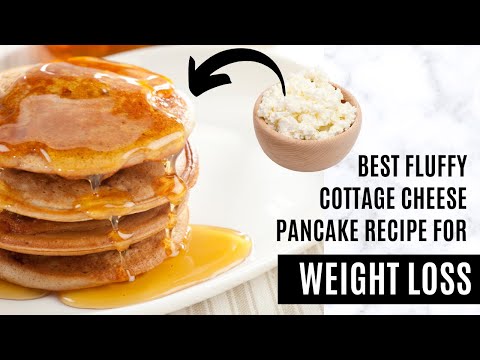
The source video for this recipe. Clear technique on blending the cottage cheese and managing heat for even cooking. Shows exactly what the batter consistency should look like before and after folding.
2. High Protein Pancake Techniques
Covers the science behind protein-enriched pancake batters and how to manage texture when using high-moisture dairy bases.
3. Meal Prep Pancakes That Actually Hold UpPractical guide to batch-cooking protein pancakes, including storage, reheating, and topping combinations that work for the week.
🛠️ Core Equipment
- Food processor or blender ↗The non-negotiable tool for this recipe. Cottage cheese curds must be blended completely smooth before mixing — 60 seconds in a food processor achieves what no amount of whisking can.
- Nonstick skillet or flat griddle ↗The high egg and protein content makes this batter significantly stickier than standard pancake batter. A well-seasoned nonstick surface with a small amount of butter prevents tearing when you flip.
- Thin flexible spatula ↗Cottage cheese pancakes are more delicate than flour-only versions before they're fully set. A thin spatula gets fully under the pancake in one motion. A thick or slotted spatula tears the edges.
- Large mixing bowl ↗The batter is thick and you'll be folding dry into wet. Enough surface area to fold without deflating the batter matters here — cramped folding leads to overworking.
High-Protein Cottage Cheese Pancakes (38g Per Serving, No Compromise)
🛒 Ingredients
- ✦1 1/2 cups low-fat cottage cheese, blended until smooth
- ✦1/2 cup plain nonfat Greek yogurt
- ✦4 large eggs
- ✦1/3 cup old-fashioned rolled oats, ground into flour
- ✦2 tablespoons vanilla protein powder (optional but recommended)
- ✦1 teaspoon vanilla extract
- ✦1 1/2 teaspoons baking powder
- ✦1/4 teaspoon sea salt
- ✦1/2 teaspoon ground cinnamon
- ✦1/4 teaspoon nutmeg
- ✦2 tablespoons raw honey or maple syrup, divided
- ✦1 cup fresh mixed berries (blueberries, raspberries, blackberries)
- ✦2 tablespoons unsalted butter or ghee, for cooking
- ✦1/4 cup additional Greek yogurt, for serving
- ✦2 tablespoons sliced raw almonds, for topping
👨🍳 Instructions
01Step 1
Blend the cottage cheese in a food processor until completely smooth with no visible curds, about 60 seconds.
02Step 2
Combine the blended cottage cheese, Greek yogurt, eggs, vanilla extract, and 1 tablespoon honey in a large mixing bowl. Whisk until fully incorporated.
03Step 3
In a separate bowl, whisk together the ground oats, protein powder, baking powder, sea salt, cinnamon, and nutmeg.
04Step 4
Fold the dry ingredients into the wet ingredients using a rubber spatula. Stir just until combined — batter should be slightly thick and pourable, with no dry streaks.
05Step 5
Heat 1/2 tablespoon butter in a nonstick skillet over medium heat until it foams and just begins to brown, about 1 minute.
06Step 6
Pour 1/4 cup batter onto the hot skillet. Cook undisturbed until edges look set and matte and the surface shows bubbles across the top, about 3 to 4 minutes.
07Step 7
Flip carefully using a thin flexible spatula and cook the second side until light golden and cooked through, about 2 to 3 minutes.
08Step 8
Transfer the finished pancake to a plate. Repeat with remaining batter, adding a small knob of butter to the skillet between batches.
09Step 9
Divide the pancakes among serving plates, 2 to 3 per person.
10Step 10
Top each stack with fresh mixed berries, a dollop of Greek yogurt, a light drizzle of remaining honey, and a scatter of sliced almonds. Serve immediately.
Nutrition Per Serving
Estimates based on standard preparation. Adjustments alter macros.
🔄 Substitutions
Instead of Plain nonfat Greek yogurt...
Use Plain 2% Greek yogurt or Icelandic-style skyr
Slightly richer mouthfeel. Flavor becomes more indulgent without sacrificing protein. Loses about 1-2g protein per serving — still well above standard pancakes.
Instead of Vanilla protein powder...
Use Unflavored whey isolate or collagen peptides
Cleaner taste. Lets the cottage cheese and berries lead. Allows full control over sweetness level. Can push protein to 42-45g per serving depending on brand.
Instead of Old-fashioned rolled oats...
Use Almond flour or finely ground cashew flour
Nuttier flavor. Denser but still tender crumb. Cuts carbs by 8-10g per serving. Better option for lower-carb preferences without going fully protein-powder-only.
Instead of Raw honey or maple syrup...
Use Monk fruit sweetener or erythritol blend
No meaningful taste difference with quality blends. Reduces total sugar to under 5g per serving. Cuts added sugars by 90% while maintaining the moisture that liquid sweetener provides.
🧊 Storage & Reheating
In the Fridge
Stack cooled pancakes with parchment between layers in an airtight container. Keeps for up to 4 days. Reheat in a toaster or dry skillet over medium-low heat — microwave makes them rubbery.
In the Freezer
Freeze in a single layer first, then stack in a zip bag for up to 2 months. Reheat directly from frozen in a toaster at medium heat, two cycles. The texture is genuinely better from frozen than from refrigerated.
Reheating Rules
Toaster is the best method — restores the slight crust on the exterior. Skillet over medium-low with a lid works well too. Avoid microwave unless you're eating immediately; it steams the pancake into softness within 60 seconds.
❓ Frequently Asked Questions
Can I taste the cottage cheese in these pancakes?
When properly blended, no. The cottage cheese contributes a very subtle tang — similar to buttermilk pancakes — but no dairy curd flavor or texture. The blending step is non-negotiable for this result. Unblended cottage cheese will make itself known.
Do I have to use protein powder?
No, but the protein count changes significantly. Without protein powder, you're at roughly 22-24g protein per serving, which is still excellent by pancake standards but not 38g. The recipe works without it — the texture is slightly more tender since protein powder can tighten batters.
Why are my pancakes falling apart when I flip them?
You flipped too early. The high egg and dairy protein content makes these pancakes more fragile than flour-only versions before they're set. Wait until the edges look completely matte and the surface shows bubbles across the entire top — not just the outer ring. The underside should be visibly golden at the edges before you attempt the flip.
Can I make these ahead for meal prep?
Yes, and they're excellent for it. Cook a full batch, cool completely, and freeze in a single layer before stacking. Reheat from frozen in a toaster. Add toppings fresh — berries and yogurt don't survive storage on the pancake itself.
What's the best way to grind oats into flour?
Blender on high for 45 seconds. You want a flour fine enough that you can't distinguish individual oat pieces. Coarser grinds produce a gritty texture that reads as undercooked even when the pancake is done. A coffee grinder also works and produces an even finer result.
Can I double the recipe?
Yes. The batter scales linearly. Blend cottage cheese in two batches if your food processor is small — overfilling a food processor produces uneven results. Keep in mind the batter thickens as it sits, so cook in batches quickly or thin with a splash of milk as needed.
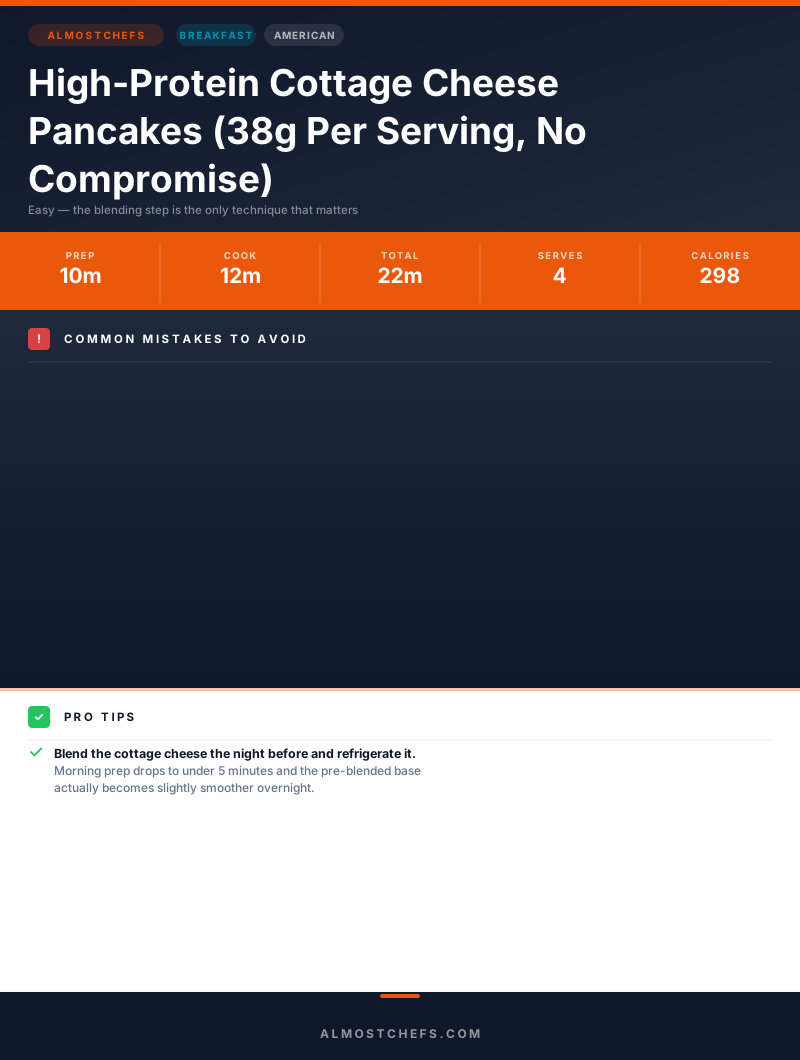
The Science of
High-Protein Cottage Cheese Pancakes (38g Per Serving, No Compromise)
We turned everything on this page into a beautiful, flour-proof PDF cheat sheet. Print it out, stick it to your fridge, and never mess up your high-protein cottage cheese pancakes (38g per serving, no compromise) again.
*We'll email you the high-res PDF instantly. No spam, just perfectly cooked meals.
AlmostChefs Editorial Team
We translate the internet's most popular cooking videos into foolproof, beginner-friendly written recipes. We analyze multiple methods, test them in our kitchen, and engineer a single "Master Recipe" that gives you the best possible result with the least possible stress.