High-Protein Cottage Cheese Pancakes (38g Protein, No Flour)
Fluffy cottage cheese pancakes built on a blended base of cottage cheese, Greek yogurt, and eggs — delivering 38g of protein per serving without flour. Topped with a quick berry compote and almond butter drizzle. We broke down the technique so you get light, golden results every time.
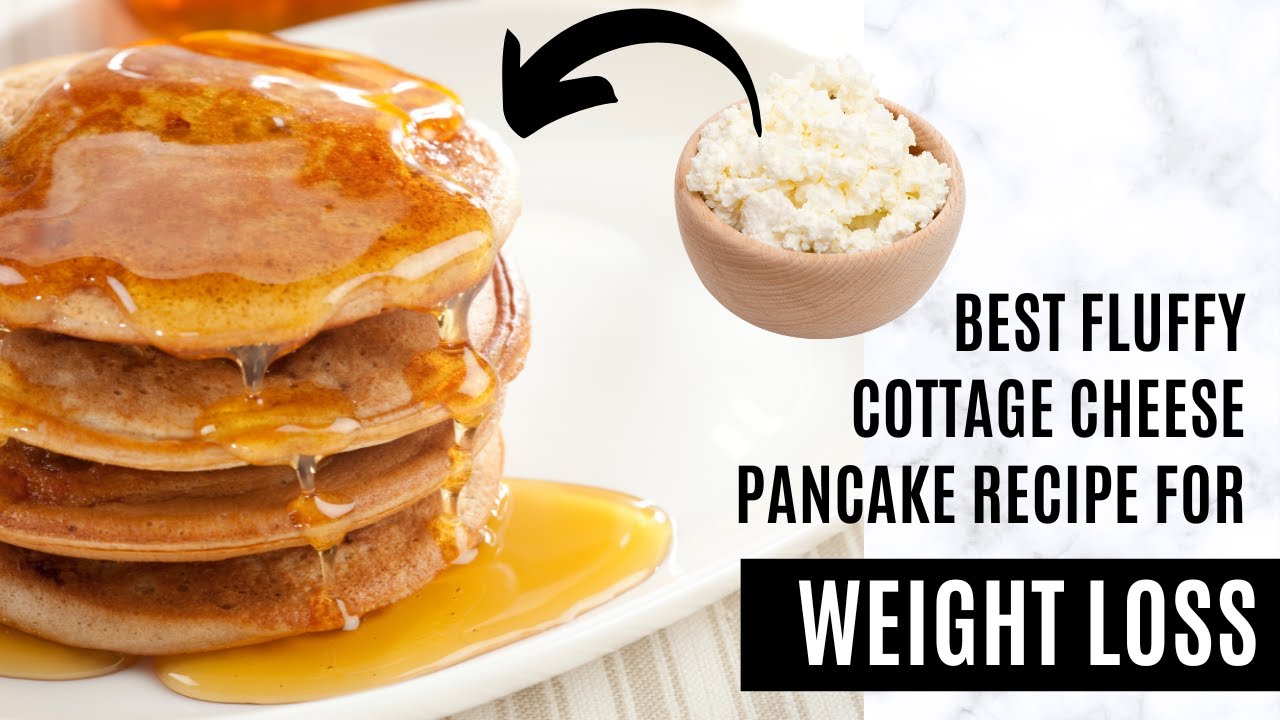
“Most high-protein pancake recipes taste like protein bars in pancake form — dense, rubbery, and somehow both dry and wet at the same time. The fix is not adding more protein powder. The fix is using cottage cheese as the structural base. Blended smooth, it creates a batter that behaves like a proper pancake batter, cooks up light and golden, and delivers 38 grams of protein per serving without a scoop of powder in sight.”
Why This Recipe Works
The cottage cheese pancake trend exists because someone finally asked the right question: what if the binder was also the protein source? Traditional pancake recipes use flour for structure, milk for liquid, and eggs for binding — then you add protein powder afterward and wonder why the result tastes like chalk mixed with batter. Cottage cheese eliminates that negotiation entirely. It provides structure, moisture, fat, and 14 grams of protein per serving, all in one ingredient.
The Blending Principle
Cottage cheese is not a liquid. It is a protein curd suspended in whey, and if you fold it into batter without blending, you get dense white lumps that don't cook through at the same rate as the surrounding batter. The fix is mechanical: 45-60 seconds in a food processor or blender until the curd structure is completely broken down and the mixture looks like heavy cream. This step converts a lumpy dairy product into a functional batter base. It is the entire recipe.
The Greek yogurt serves as the thinning agent. Full-fat cottage cheese alone produces batter that is too thick to spread properly on the skillet — the edges cook while the center stays raw. The yogurt loosens the consistency to something pourable while adding another 10 grams of protein per serving. Together, the two dairy proteins create a complete amino acid profile before a single egg is cracked.
Heat Management
Cottage cheese pancakes fail on heat more than any other variable. The moisture content is significantly higher than flour-based batter — you are essentially cooking a protein-dense custard on a flat surface. High heat sets the exterior immediately and traps liquid inside. What you get is a pancake that looks done from the outside and is raw in the center.
Medium heat on a quality nonstick skillet is not a preference — it is a structural requirement. The pancake needs 3-4 minutes on the first side to allow moisture to migrate upward and the protein network to set throughout. The visual cue is the edges: they should look completely matte and set, not just dry at the perimeter. If you flip before that point, the pancake tears because the interior hasn't built enough tensile strength to hold together under the spatula.
The Compote Calculus
Fresh berries added directly to pancake batter or piled raw on top read as an afterthought. The compote step converts them into something functional: a warm, lightly sweetened sauce with concentrated flavor that absorbs into the pancake stack rather than rolling off to the side of the plate. Four to five minutes over medium heat is enough to break down the cell walls and release the natural pectin, which gives the compote body without requiring any thickener.
The maple syrup in the compote is a deliberate choice over granulated sugar. Maple syrup's liquid form distributes into the berry liquid instantly, while granulated sugar can create crystallization spots if the heat fluctuates. One tablespoon is enough — the berries carry their own sweetness, and the goal is a sauce, not a syrup.
Flaxseed as Infrastructure
Ground flaxseed is doing work that most people attribute to luck. When ground flax hydrates — which happens during the 5-minute batter rest — it forms a mucilaginous gel that acts as a secondary binder. In a flourless batter held together almost entirely by protein, this gel provides the flexibility that prevents tearing during the flip. It also adds 4 grams of fiber per serving, which is the reason the blood sugar score on this recipe sits at 8 out of 10 despite the honey and maple syrup in the mix.
The almond butter drizzle is not decoration. The fat slows gastric emptying, extending satiety beyond what protein alone achieves. Warm it before drizzling — cold almond butter applied to warm pancakes seizes and clumps. Fifteen seconds in the microwave converts it from paste to sauce.
Where Beginners Mess This Up
Before we start, read this. These are the 4 reasons your high-protein cottage cheese pancakes (38g protein, no flour) will fail:
- 1
Not blending the batter long enough: Cottage cheese has a lumpy curd texture that does not smooth out by stirring. You need a food processor or blender running for 45-60 full seconds. Undermixed batter produces pancakes with dense white pockets — you can taste the raw curd in every bite. Blend until the batter looks like thick cream.
- 2
Skipping the 5-minute batter rest: The baking powder needs time to activate before it hits heat. Without the rest, the leavening fires all at once on the skillet surface and creates a burst rather than an even rise. Five minutes is the minimum. Ten is better if you are making the berry compote simultaneously.
- 3
Cooking on heat that is too high: Cottage cheese pancakes have significantly more moisture than flour-based ones. On high heat, the outside sets and browns while the inside remains raw and wet. Medium heat — genuinely medium, not medium-high — is required. If your pancakes brown in under two minutes, the pan is too hot.
- 4
Flipping too early: These pancakes need their edges to look fully set and slightly matte before flipping. If you flip when the center is still glossy and liquid, they fold and tear. Wait for the edges. The bottom can handle an extra 30 seconds. The structure cannot handle a premature flip.
The Video Reference Library
Want to see it in action? Here are the exact videos we analyzed and combined to build this foolproof recipe translation:
The foundational technique video for this recipe. Clear demonstration of batter consistency, skillet temperature, and the edge-set flip cue that makes or breaks the result.
🛠️ Core Equipment
- Food processor or high-speed blenderNon-negotiable for breaking down cottage cheese curds into a smooth batter. A standard whisk or hand mixer will not fully eliminate the lumps. The smooth emulsion is what gives these pancakes their light, cohesive texture.
- Nonstick skillet or flat griddleCottage cheese pancakes have lower structural integrity than flour-based ones — they need a surface they won't stick to. A good nonstick surface also lets you use minimal fat, which keeps the macros clean.
- Small saucepanFor the berry compote. The compote takes 4-5 minutes and can run simultaneously with the first batch of pancakes. Having a dedicated small pan keeps the compote from over-reducing.
- 1/4 cup measuring cupConsistent portion size matters here. These pancakes are harder to flip than standard ones — smaller, uniform rounds are significantly easier to manage than large irregular pours.
High-Protein Cottage Cheese Pancakes (38g Protein, No Flour)
🛒 Ingredients
- ✦1.5 cups low-fat cottage cheese
- ✦1 cup plain nonfat Greek yogurt
- ✦4 large eggs
- ✦2 tablespoons honey
- ✦1 teaspoon vanilla extract
- ✦1 teaspoon ground cinnamon
- ✦1/2 teaspoon baking powder
- ✦1/4 teaspoon sea salt
- ✦2 tablespoons ground flaxseed
- ✦1.5 cups fresh mixed berries (blueberries, raspberries, blackberries)
- ✦2 tablespoons water
- ✦1 tablespoon maple syrup
- ✦1/4 cup natural almond butter
- ✦1 tablespoon coconut oil or ghee for cooking
- ✦2 tablespoons chopped raw almonds for garnish
- ✦Fresh mint leaves for garnish (optional)
👨🍳 Instructions
01Step 1
Blend the cottage cheese, Greek yogurt, eggs, honey, and vanilla extract in a food processor for 45-60 seconds until completely smooth with no visible curds.
02Step 2
Transfer the blended mixture to a large bowl and fold in the cinnamon, baking powder, sea salt, and ground flaxseed until just combined.
03Step 3
Let the batter rest at room temperature for 5 minutes to allow the baking powder to activate.
04Step 4
Combine the fresh mixed berries with water and maple syrup in a small saucepan over medium heat.
05Step 5
Simmer the berry mixture for 4-5 minutes, stirring occasionally, until the berries begin to break down and release their juices into a light compote. Remove from heat.
06Step 6
Heat a nonstick skillet over medium heat and lightly coat with coconut oil or ghee.
07Step 7
Pour 1/4 cup of batter per pancake onto the hot skillet. Cook for 3-4 minutes until the edges look fully set and matte and the bottom is golden brown.
08Step 8
Flip carefully and cook the second side for 2-3 minutes until lightly browned and cooked through.
09Step 9
Transfer cooked pancakes to a serving plate and repeat with remaining batter, working in batches of 2-3 at a time.
10Step 10
Warm the almond butter gently — 15 seconds in the microwave or a brief stint over low heat — until it drizzles easily.
11Step 11
Stack the warm pancakes, spoon berry compote generously over the top, drizzle with almond butter, and garnish with chopped almonds and fresh mint if desired.
12Step 12
Serve immediately while warm.
Nutrition Per Serving
Estimates based on standard preparation. Adjustments alter macros.
🔄 Substitutions
Instead of Plain nonfat Greek yogurt...
Use Vanilla or plain Icelandic-style skyr
Slightly tangier and richer with marginally higher protein density. Skyr's thicker consistency creates a creamier batter. One-to-one swap.
Instead of Natural almond butter...
Use Natural peanut butter or powdered peanut butter mixed with water
Peanut butter delivers slightly more protein (8g versus 7g per 2 tablespoons) and is more budget-friendly. Powdered version cuts calories significantly while keeping the flavor. Reconstruct with water to a drizzle-able consistency.
Instead of Ground flaxseed...
Use Hemp seeds or chia seeds
Hemp seeds add all nine essential amino acids and 3g protein per tablespoon — a genuine upgrade if you have them. Chia seeds work as a binder but create a slight gel texture. Both are one-to-one swaps by volume.
Instead of Fresh mixed berries...
Use Frozen mixed berries or fresh strawberries with a splash of lemon juice
Frozen berries are equally nutritious, available year-round, and break down faster into compote — often a better choice than out-of-season fresh berries. Strawberries make a brighter, tangier sauce and hold up well for meal prep.
🧊 Storage & Reheating
In the Fridge
Stack cooled pancakes with parchment between layers in an airtight container. Keeps for up to 4 days. Berry compote stores separately in a jar for up to 5 days.
In the Freezer
Freeze individual pancakes on a parchment-lined sheet until solid, then transfer to a zip bag. Keeps for up to 2 months. Reheat from frozen — no thawing needed.
Reheating Rules
Reheat in a dry nonstick skillet over low heat for 2 minutes per side. This restores the slight crisp on the edges that makes these worth eating again. The microwave works but makes them soft and slightly gummy — use it only if time forces the issue.
❓ Frequently Asked Questions
Why are my cottage cheese pancakes falling apart when I flip them?
Two causes: the batter wasn't blended smooth enough, or you flipped too early. The curds create weak points in the structure when they aren't fully emulsified. Blend for the full 45-60 seconds. Then wait until the edges are completely set and matte before touching them — 3-4 full minutes on medium heat.
Do these actually taste like cottage cheese?
No. Blended cottage cheese loses its characteristic tang and texture entirely — it tastes mild, slightly creamy, and neutral. The vanilla, cinnamon, and honey dominate. Most people who eat these without being told have no idea what the base is.
Can I make these without a food processor?
A high-speed blender works identically. A standard blender works but takes longer — run it for 90 seconds and stop to scrape down the sides twice. A fork or hand mixer will not fully smooth the curds, and the texture will suffer noticeably.
Can I make the batter ahead of time?
Yes. The batter keeps in the fridge for up to 24 hours. The baking powder will lose some activity overnight, so the pancakes won't rise quite as much — but the difference is minor and the convenience is substantial. Stir the batter briefly before cooking.
How do I get 38g of protein per serving — that seems high?
The protein comes from three sources working together: cottage cheese (about 14g per serving), Greek yogurt (about 10g per serving), and eggs (about 12g per serving combined). No powder required. The almond butter and flaxseed contribute a few more grams on top.
Can I make these dairy-free?
Not easily while preserving the protein count. Cottage cheese and Greek yogurt are doing both the structural and nutritional heavy lifting. You could substitute silken tofu blended smooth for the cottage cheese and coconut yogurt for the Greek yogurt, but the protein per serving will drop to roughly 12-15g and the texture will be noticeably different.
The Science of
High-Protein Cottage Cheese Pancakes (38g Protein, No Flour)
We turned everything on this page into a beautiful, flour-proof PDF cheat sheet. Print it out, stick it to your fridge, and never mess up your high-protein cottage cheese pancakes (38g protein, no flour) again.
*We'll email you the high-res PDF instantly. No spam, just perfectly cooked meals.
AlmostChefs Editorial Team
We translate the internet's most popular cooking videos into foolproof, beginner-friendly written recipes. We analyze multiple methods, test them in our kitchen, and engineer a single "Master Recipe" that gives you the best possible result with the least possible stress.