High-Protein Cottage Cheese Breakfast Bowls (32g Protein Before 9am)
Creamy cottage cheese and Greek yogurt base layered with homemade toasted granola, raw honey, and walnuts. We broke down exactly why this combination delivers more protein than a chicken breast while tasting like dessert for breakfast — and how to build it without turning it into sugar soup.

“Most high-protein breakfasts taste like a compromise. Dry eggs, chalky shakes, or sad overnight oats that somehow still leave you hungry by 10am. This bowl fixes all of that. The cottage cheese and Greek yogurt base delivers 32g of complete protein per serving through actual food — no powder required — while the homemade granola gives you the crunch and sweetness that make this feel like something you'd pay $18 for at a wellness café. The difference between a mediocre version and a great one comes down to one thing: making your own granola instead of buying it.”
Why This Recipe Works
There is a category of breakfast food that markets itself as healthy by being small. A packet of oatmeal. A 100-calorie yogurt cup. A granola bar that's 40% corn syrup with a picture of a mountain on the wrapper. These things keep you full for approximately 90 minutes before the hunger comes back sharp and specific. This bowl is not that.
The Protein Architecture
Two cups of full-fat cottage cheese and one cup of Greek yogurt sounds like a lot of dairy for one recipe. It's not — it's four servings of a breakfast that delivers 32g of complete protein per bowl, before you count anything else. Cottage cheese is casein-dominant, which means it digests slowly and sustains satiety for hours rather than producing the quick spike-and-crash of whey. Greek yogurt's faster-digesting proteins complement it. Together they create a multi-phase protein release that keeps blood amino acid levels elevated through most of a morning.
The whisk matters more than you think. Hand-whisking leaves visible curd texture — some people prefer this, it's more like eating a chunky parfait. An immersion blender transforms the same two ingredients into something closer to mousse: completely smooth, slightly aerated, and indistinguishable from a premium Greek yogurt product. Neither version is wrong. The blended version photographs better and tends to get more enthusiastic reactions from people who think they don't like cottage cheese.
The Granola Problem
The granola section of any grocery store is a monument to missed opportunity. Most products spend their flavor budget on sugar and spend their fat budget on cheap refined oils that go rancid before you finish the bag. You are paying a premium price for an inferior ingredient that is actively working against the nutrition you're building the bowl around.
Making granola at home costs less, takes 15 minutes, and produces a product that is genuinely different from anything commercial. The key is the temperature: 325°F rather than the 350-375°F you'll see in most recipes. The lower temperature lets the walnuts and almonds toast through completely without the edges burning before the center cooks. Walnuts in particular scorch fast — they're higher in polyunsaturated fats than almonds, which makes them more susceptible to heat damage and also more prone to rancidity in bags that have been sitting on a shelf.
The coconut oil coat is the binding mechanism. As it heats in the oven, it creates a thin, even film over every oat and nut that crisps as it cools. Pull the granola when it looks slightly underdone — golden, not brown. It will crisp fully as it comes to room temperature, and the window between perfect and overdone is about 90 seconds.
The Assembly Logic
The well in the center of the cottage cheese base is not decorative. It gives the granola a landing zone that keeps it from sliding to the bowl's edge, and it concentrates the honey drizzle at the exact point where you're most likely to take your first bite. These are small details. They're also the details that separate a bowl that feels considered from one that feels like you just dumped things into a container.
Honey on top only — never mixed into the base. Mixing honey into cottage cheese hides the honey flavor in the dairy and adds sugar uniformly throughout, which is less interesting than hitting a pocket of it unexpectedly in a bite. The contrast between the plain, slightly tangy base and the sweet honey drizzle is what makes the bowl taste complex rather than flat.
The dried blueberries go into the granola while it's still warm for a specific reason: the residual heat softens them slightly and makes them adhere to the clusters rather than sitting as separate hard pellets in the finished bowl. It's a 10-second step that makes a noticeable difference in texture.
Store everything separately. This is the only rule that matters for meal prep. Granola in contact with dairy for more than 20 minutes is soft granola, and soft granola is just expensive oatmeal. The base keeps for three days in the fridge. The granola keeps for five days at room temperature. Assemble when you eat. That's the whole system.
Where Beginners Mess This Up
Before we start, read this. These are the 4 reasons your high-protein cottage cheese breakfast bowls (32g protein before 9am) will fail:
- 1
Using store-bought granola: Most commercial granola is 40-50% sugar by weight and uses refined oils that make it go rancid within days of opening. It also lacks the protein-supporting fats you get from properly toasted walnuts and almonds. Making your own takes 15 minutes and costs less. There's no version of this bowl that works as well with a bag from the cereal aisle.
- 2
Not letting the granola cool before assembling: Warm granola releases steam directly into the cold cottage cheese base, instantly turning your carefully toasted clusters into soggy mush. The granola must be fully cool and dry — at least 5 minutes on the baking sheet — before it touches the bowl. This step is easy to rush and always regretted.
- 3
Over-sweetening the base: Cottage cheese already has a mild sweetness from the lactose. Greek yogurt adds tang. Adding honey to both the base and the top doubles up the sugar before you've even counted the granola. Keep the sweetener on top only — a single drizzle of honey over the assembled bowl is enough. Mixing honey into the base hides the flavor anyway.
- 4
Using low-fat cottage cheese without adjusting texture expectations: Full-fat cottage cheese has the thick, creamy texture that makes this bowl feel indulgent. Low-fat versions are watery and separate quickly, especially once the granola is added. If you're using a reduced-fat version, drain it through a fine-mesh sieve for 10 minutes first or the whole bowl turns soupy within minutes.
The Video Reference Library
Want to see it in action? Here are the exact videos we analyzed and combined to build this foolproof recipe translation:
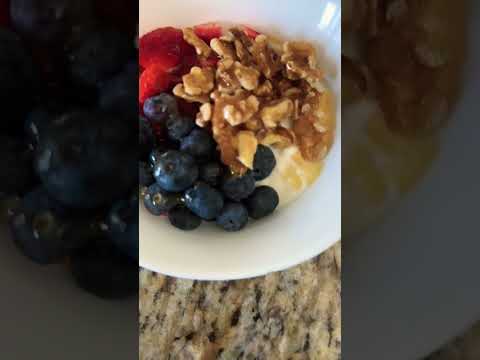
The source video that inspired this build. Clear technique for the cottage cheese base and granola layering order.
2. How to Make Homemade Granola
Solid walkthrough of granola toasting fundamentals — the halfway stir technique and how to read the golden-brown color.
3. Meal Prep Breakfast Bowls for the WeekPractical guide to scaling and storing protein breakfast bowls without the granola going soft.
🛠️ Core Equipment
- Rimmed baking sheet ↗The rim prevents granola from sliding off during the halfway stir. Flat cookie sheets are a spill risk and cool unevenly at the edges.
- Parchment paper ↗Granola sticks to bare metal as the coconut oil caramelizes. Parchment also makes cleanup instant and lets you slide the cooled granola directly into a storage container.
- Fine-mesh sieve ↗Essential if you're using low-fat or reduced-sodium cottage cheese, which tends to release liquid quickly. A 10-minute drain makes a significant textural difference.
- Large mixing bowl ↗The granola needs room to be stirred aggressively without losing ingredients over the side. A bowl that's too small leads to uneven coating and patchy toasting.
High-Protein Cottage Cheese Breakfast Bowls (32g Protein Before 9am)
🛒 Ingredients
- ✦2 cups full-fat cottage cheese
- ✦1 cup plain Greek yogurt
- ✦1 cup old-fashioned rolled oats
- ✦1/2 cup raw walnut pieces
- ✦1/4 cup raw almonds, roughly chopped
- ✦3 tablespoons raw honey
- ✦2 tablespoons coconut oil, melted
- ✦1 teaspoon vanilla extract
- ✦1/2 teaspoon ground cinnamon
- ✦1/4 teaspoon sea salt
- ✦2 tablespoons ground flaxseed
- ✦1/4 cup unsweetened dried blueberries
- ✦2 tablespoons raw sunflower seeds
- ✦1 tablespoon maple syrup, for drizzling
- ✦Fresh berries for topping (optional)
👨🍳 Instructions
01Step 1
Preheat your oven to 325°F and line a rimmed baking sheet with parchment paper.
02Step 2
Combine the rolled oats, walnut pieces, chopped almonds, flaxseed, sunflower seeds, cinnamon, and sea salt in a large mixing bowl. Stir to distribute evenly.
03Step 3
Drizzle the melted coconut oil and vanilla extract over the dry mixture. Stir vigorously until every oat and nut is evenly coated — no dry patches.
04Step 4
Spread the granola mixture in a single even layer across the prepared baking sheet. Break up any large clumps with the back of a spoon.
05Step 5
Toast in the oven for 12-15 minutes, stirring once at the halfway point. Pull when the oats are golden brown and the kitchen smells like toasted nuts.
06Step 6
Remove from the oven. Immediately stir in the dried blueberries while the granola is still warm so they soften slightly and adhere to the clusters. Let cool completely on the baking sheet for at least 5 minutes.
07Step 7
Whisk together the cottage cheese and Greek yogurt in a medium bowl until smooth and as uniform as possible.
08Step 8
Divide the cottage cheese mixture evenly among four serving bowls, creating a slight well in the center of each.
09Step 9
Spoon approximately 1/4 cup of fully cooled granola over each bowl.
10Step 10
Drizzle each bowl with 3/4 tablespoon of raw honey and 1/2 tablespoon of maple syrup.
11Step 11
Top with fresh berries if using. Serve immediately, or cover and refrigerate (without granola) for up to 3 days. Add granola just before eating.
Nutrition Per Serving
Estimates based on standard preparation. Adjustments alter macros.
🔄 Substitutions
Instead of Full-fat cottage cheese...
Use 2% Greek cottage cheese or Icelandic-style skyr
Skyr is thicker, tangier, and slightly creamier than standard cottage cheese. Same protein content. Drain skyr if it seems loose.
Instead of Raw honey...
Use Allulose or monk fruit sweetener (1.5 tablespoons total)
Allulose is the closest functional substitute — it dissolves, drizzles, and tastes nearly identical without the sugar spike. Monk fruit is sweeter per gram; use less.
Instead of Coconut oil...
Use Almond butter or tahini (2 tablespoons)
Creates chewier, denser granola clusters with a nuttier flavor. Adds 6g of additional protein per batch. Tahini adds a savory edge that works surprisingly well against the honey.
Instead of Unsweetened dried blueberries...
Use Unsweetened dried tart cherries or goji berries
Tart cherries have lower sugar and documented anti-inflammatory properties. Goji berries add extra antioxidants and a chewier texture. Both work without changing the assembly at all.
🧊 Storage & Reheating
In the Fridge
Store the cottage cheese base in airtight containers for up to 3 days. Keep granola completely separate at room temperature.
In the Freezer
The cottage cheese base does not freeze well — the curds separate and become grainy on thaw. Granola freezes fine for up to 2 months in a sealed bag.
Reheating Rules
This is a cold dish — no reheating needed or recommended. Assemble directly from the fridge.
❓ Frequently Asked Questions
Why does my granola go soft in the bowl?
Moisture from the cottage cheese and yogurt migrates into the granola the moment they make contact. The fix is simple: never add granola until you're about to eat. Even 20 minutes of contact softens the clusters noticeably.
Can I use low-fat cottage cheese?
You can, but drain it first. Low-fat cottage cheese has significantly more liquid than full-fat, and that liquid pools at the bottom of the bowl within minutes. Set it in a fine-mesh sieve over a bowl for 10 minutes before whisking with the yogurt.
Is this actually 32g of protein without protein powder?
Yes. One cup of full-fat cottage cheese contains approximately 25g of protein. One cup of plain Greek yogurt adds another 17g. Divided across four servings, that's roughly 10-11g from dairy alone before the nuts and seeds contribute their portion. The total lands at 32g per bowl.
Can I make this the night before?
The cottage cheese base, yes — make it in bulk and refrigerate. The granola must be stored separately at room temperature. Assemble in the morning. A pre-assembled bowl left overnight is a soggy bowl.
What makes this better than buying granola?
Control. Store-bought granola is typically 30-50% sugar by weight and uses refined seed oils that oxidize quickly after opening. Homemade granola lets you dial the sugar, choose the fat, and pick the nuts. It also costs about 40% less per serving at standard grocery prices.
Can I make this dairy-free?
Replace the cottage cheese with a thick, strained coconut yogurt and use a second dairy-free yogurt in place of the Greek yogurt. The protein numbers drop significantly — expect 8-12g per serving rather than 32g — but the texture and flavor are still solid.
The Science of
High-Protein Cottage Cheese Breakfast Bowls (32g Protein Before 9am)
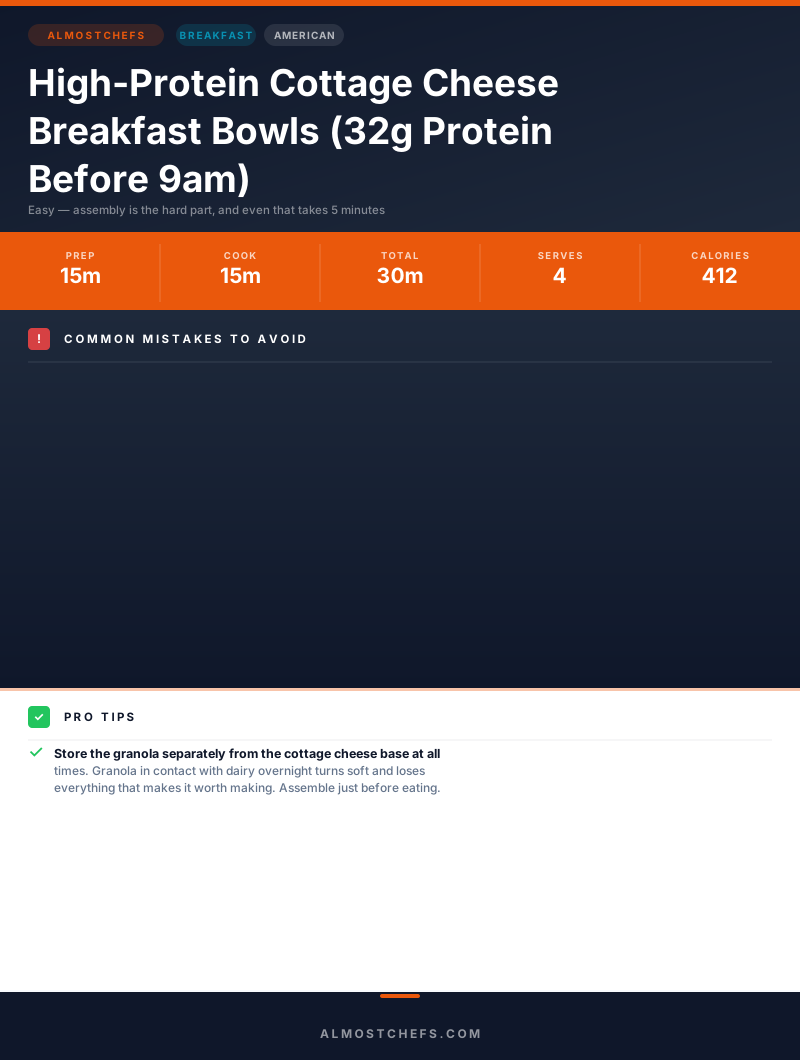
We turned everything on this page into a beautiful, flour-proof PDF cheat sheet. Print it out, stick it to your fridge, and never mess up your high-protein cottage cheese breakfast bowls (32g protein before 9am) again.
*We'll email you the high-res PDF instantly. No spam, just perfectly cooked meals.
AlmostChefs Editorial Team
We translate the internet's most popular cooking videos into foolproof, beginner-friendly written recipes. We analyze multiple methods, test them in our kitchen, and engineer a single "Master Recipe" that gives you the best possible result with the least possible stress.