The Proper Cornish Pasty (Britain's Original Pocket Meal)
A golden, flaky hand pie packed with seasoned beef chuck, diced potatoes, carrots, and rutabaga — the original working-class meal engineered to survive a tin mine and still taste like home. We broke down the technique to make the pastry foolproof and the filling genuinely satisfying.

“The Cornish pasty has survived 300 years of British culinary evolution without changing much, which should tell you something. It doesn't need reinvention. It needs precision. The failure points are consistent: greasy pastry that never crisps, raw-tasting vegetables, and filling that leaks through the seal before the oven even finishes the job. All three are technique problems. All three are fixable.”
Why This Recipe Works
The Cornish pasty is a 300-year-old solution to a specific engineering problem: how do you deliver a hot, complete meal to a man at the bottom of a tin mine with no utensils, no heat source, and hands so contaminated with heavy metals that the food itself can't be touched directly? The answer was a self-contained pastry envelope thick enough to serve as a handle, filled with enough caloric density to sustain hard labor, and sealed well enough to survive the journey down.
That problem no longer exists. The pasty, however, remains — because the solution turned out to be genuinely delicious.
The Pastry Is Structural, Not Decorative
Every decision in shortcrust pastry comes back to cold fat. When cold butter cubes are rubbed into flour, they flatten into thin sheets coated with flour. In the oven, the water in the butter converts to steam, and those steam pockets push the flour layers apart to create flakiness. If the butter warms up and fully incorporates into the flour, there are no pockets — just a dense, crumbly wall.
This is why you work quickly, why the butter comes straight from the fridge, and why the dough rests for 30 minutes before rolling. The rest period is about gluten relaxation: rolling activates gluten strands, which makes the dough elastic and springy. Rest neutralizes that elasticity so the dough holds its shape over the filling instead of contracting back into a ball.
The 1/8-inch thickness isn't arbitrary. Too thick and the pastry base becomes bready and doughy. Too thin and it tears when you fold it over a full cup of dense filling. At 1/8-inch, you get structural integrity without the chew, and the rolling pin gives you even pressure across the entire surface.
Raw Filling Is the Point
This surprises people, but the entire Cornish pasty technique depends on raw filling going into the pastry. Pre-cooked vegetables release moisture during baking and create a humid, soft interior that destroys the crust from the inside. Raw vegetables hold their moisture until the heat of the oven draws it out slowly, allowing the pastry to set before the steam can compromise it.
The consequence is strict: everything must be diced small. Rutabaga and potato at 1/4-inch cubes have approximately 35-40 minutes of cooking time available to them inside a sealed pastry at 400°F. Large chunks do not cook through in this window. You'll get a gorgeous golden pastry encasing a center that still crunches. Small, uniform cuts are the structural requirement that makes the raw fill method work.
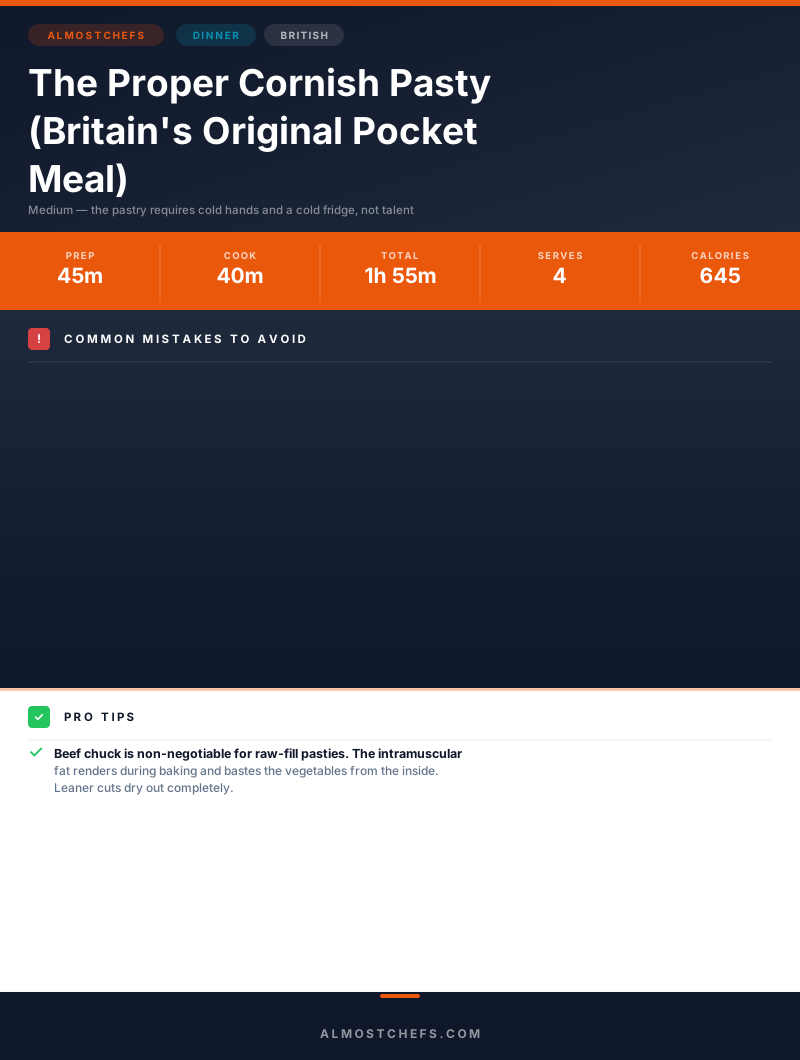
Beef chuck is the correct cut here. The collagen and intramuscular fat render during baking, creating a self-basting environment inside the sealed pastry. The beef fat coats the vegetables as it liquefies, carrying the thyme and black pepper flavor through the entire filling. Lean beef just sits there and dries out.
The Crimp Is Load-Bearing
In traditional Cornish crimping, the pastry is folded over and crimped along the curved top edge in a rope pattern — not along the straight base. The rope crimp creates overlapping layers of dough that fuse under heat, forming a seal strong enough to contain a full cup of filling that generates steam as it cooks. A fork crimp along the flat edge is faster and nearly as effective, but it requires firm, deliberate pressure along the entire seam.
A failed seal doesn't just mean filling on the baking sheet. It means steam escaping through the gap, which means the inside of the pastry gets blasted with direct moist heat. The crust goes from flaky to soggy in about 10 minutes. The seal is not a finishing touch — it's the mechanism that makes the whole technique work.
Why Rutabaga Belongs Here
Rutabaga is mild, slightly sweet, and breaks down a few minutes faster than potato under the same heat. It softens enough to absorb the beef fat and seasoning while providing a textural counterpoint to the firmer potato cubes. Swapping it entirely for more potato produces a denser, starchier filling that tastes flat.
It also has historical weight. Tin miners needed high-calorie, nutrient-dense food. Rutabaga provided vitamins C and potassium in a form that stored well through the winter. The recipe wasn't built for flavor optimization alone — it was built for survival. The flavors that survived that constraint are the ones worth keeping.
Where Beginners Mess This Up
Before we start, read this. These are the 4 reasons your the proper cornish pasty (britain's original pocket meal) will fail:
- 1
Warm butter in the pastry: Pastry flakiness is entirely about cold fat. Warm butter blends into the flour instead of remaining as distinct pockets that generate steam during baking. Those steam pockets are what create layers. Cold butter — straight from the fridge, handled briefly — is the only reason shortcrust pastry has any texture at all.
- 2
Undercooking the raw filling: The filling goes in raw, which means the potatoes and rutabaga need to be diced small — 1/4-inch cubes maximum. Large chunks won't cook through in 40 minutes. You'll bite into a crispy pasty with a hard, chalky center. Small cubes cook evenly and absorb the seasoned beef fat as they soften.
- 3
A weak crimp seal: The crimp is structural, not decorative. If the edge seal fails in the oven, the filling moisture escapes as steam, the pastry becomes soggy from the inside, and you lose half the filling to the baking sheet. Press firmly, fold deliberately, and use a fork to reinforce if you're uncertain about your hand-crimp.
- 4
Skipping the egg wash: Egg wash does two things: it gives the pasty its signature deep amber color, and it creates a thin protein layer that helps the crust stay crisp longer as it cools. An unwashed pasty looks pale and anemic. It also tastes slightly less rich on the exterior.
The Video Reference Library
Want to see it in action? Here are the exact videos we analyzed and combined to build this foolproof recipe translation:
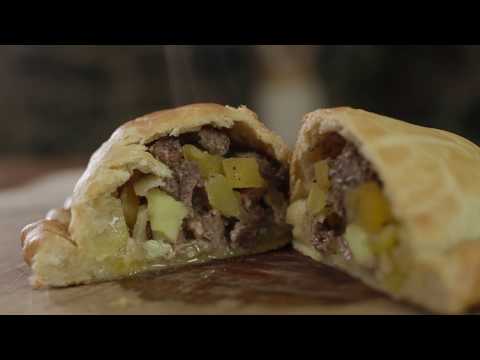
The primary reference for this recipe. Covers the pastry technique, raw filling prep, and the traditional rope crimp with clear close-ups of the correct texture at each stage.
2. Traditional British Hand Pies
Covers the history and regional variations of the Cornish pasty alongside a solid technique walkthrough.
3. The Perfect Shortcrust PastryDeep dive into cold-fat pastry science — explains why butter temperature determines flakiness and how to test dough consistency before resting.
🛠️ Core Equipment
- Rolling pin ↗You need even 1/8-inch thickness across a 7-inch circle. Uneven pastry means uneven baking — thin spots burn while thick spots stay doughy.
- Parchment paper sheets ↗Rolling the dough between two sheets of parchment eliminates flour sticking and tearing. It also makes transferring the delicate circles to the baking sheet clean and reliable.
- Pastry brush ↗A [pastry brush](/kitchen-gear/review/pastry-brush) distributes egg wash evenly without pooling. Finger-painted egg wash creates streaks and uneven browning.
- Heavy baking sheet ↗A [heavy baking sheet](/kitchen-gear/review/baking-sheet) conducts heat evenly from below, which is how you get a properly browned bottom crust instead of a pale, soft base that soaks through.
The Proper Cornish Pasty (Britain's Original Pocket Meal)
🛒 Ingredients
- ✦2 cups all-purpose flour
- ✦1 teaspoon salt
- ✦8 tablespoons cold unsalted butter, cubed
- ✦1 large egg
- ✦3 to 4 tablespoons ice water
- ✦1 pound beef chuck, cut into small cubes
- ✦3 medium russet potatoes, peeled and diced small
- ✦2 medium yellow onions, finely diced
- ✦2 medium carrots, peeled and diced small
- ✦1 small rutabaga, peeled and diced small
- ✦2 teaspoons fresh thyme leaves
- ✦1 teaspoon black pepper
- ✦3/4 teaspoon sea salt
- ✦1/4 teaspoon cayenne pepper
- ✦2 tablespoons beef broth
- ✦1 egg yolk, beaten with 1 tablespoon water for egg wash
👨🍳 Instructions
01Step 1
Combine the flour and salt in a large mixing bowl. Add the cold butter cubes and use your fingertips to rub the mixture together until it resembles coarse breadcrumbs, about 3 to 4 minutes.
02Step 2
Create a well in the center of the flour mixture and crack the whole egg into it. Gradually incorporate the flour using a fork while drizzling in the ice water one tablespoon at a time until the dough just comes together.
03Step 3
Form the dough into a disk, wrap it tightly in plastic wrap, and refrigerate for at least 30 minutes until firm and easy to handle.
04Step 4
Toss the beef cubes with the thyme, black pepper, sea salt, and cayenne in a medium bowl. Add the potatoes, onions, carrots, and rutabaga and gently mix to combine with the seasoned beef.
05Step 5
Preheat your oven to 400°F and line two large baking sheets with parchment paper.
06Step 6
Divide the chilled dough into 4 equal portions. Roll each piece between two sheets of parchment paper into a 7-inch circle, about 1/8-inch thick.
07Step 7
Spoon about 1 cup of the beef and vegetable filling onto the lower half of each dough circle, leaving a 1-inch border around the edges.
08Step 8
Drizzle 1/2 tablespoon of beef broth over each filling portion. Fold the top half of the dough over the filling to create a half-moon shape.
09Step 9
Press the edges firmly with your fingers to seal, then crimp the edge with a fork or fold it into a rope crimp for a tight, professional seal.
10Step 10
Transfer the pasties to the prepared baking sheets and brush the tops generously with the egg wash.
11Step 11
Bake for 35 to 40 minutes until the pastry is deep golden brown and a skewer inserted into the filling meets little resistance.
12Step 12
Rest on the baking sheet for 5 minutes before serving. The filling is volcanic immediately out of the oven.
Nutrition Per Serving
Estimates based on standard preparation. Adjustments alter macros.
🔄 Substitutions
Instead of All-purpose flour...
Use Whole wheat pastry flour
Slightly nuttier flavor and marginally less flaky result. Adds fiber without the dense texture of regular whole wheat. A 50/50 blend is a good middle ground.
Instead of Beef chuck...
Use Lean ground beef or venison
Less marbled texture but significantly lower saturated fat. Venison adds a clean, slightly gamey depth that pairs well with thyme.
Instead of Rutabaga...
Use Parsnips or turnips
Parsnips skew sweeter, turnips skew more peppery. Both work structurally. Turnips are the closer flavor match to rutabaga.
Instead of All butter pastry...
Use Half butter, half extra virgin olive oil
Reduces saturated fat while maintaining flakiness. The olive oil contributes a mild fruitiness that reads as slightly less traditional but not wrong.
🧊 Storage & Reheating
In the Fridge
Store in an airtight container for up to 3 days. Reheat in a 350°F oven for 10-12 minutes to restore the crust.
In the Freezer
Freeze baked or unbaked for up to 2 months. Unbaked gives better results — bake from frozen at 375°F for 55 minutes.
Reheating Rules
Oven only. Microwave turns the pastry limp and the filling watery. 350°F for 10-12 minutes from refrigerated, 15 minutes from frozen.
❓ Frequently Asked Questions
Why is my pastry soggy on the bottom?
Two likely causes. First, the filling moisture escaped because the crimp seal failed — press and fold more firmly next time. Second, the baking sheet was too thin and didn't conduct enough bottom heat. Use a heavy sheet or place a second sheet underneath to insulate and amplify heat.
Can I make the filling the night before?
You can season and prep the vegetables ahead, but don't salt the filling and let it sit overnight — salt draws moisture out of the potatoes and you'll have a wet, sloppy filling. Mix everything together and fill the pasties the same day you bake.
Do I have to use raw filling, or can I pre-cook it?
Traditional Cornish pasties always use raw filling. Pre-cooking draws out moisture and the filling becomes mushy during baking. The raw method keeps the vegetables intact and lets the beef fat baste everything in the sealed pastry environment.
Why did my pastry shrink and pull back from the edges?
The dough wasn't rested long enough. Gluten needs 30 minutes minimum in the fridge to relax after rolling. If you skip the rest or rush it, the pastry springs back when stretched over the filling and pulls away during baking.
What's the difference between a Cornish pasty and a regular hand pie?
Protected designation of origin aside, the key distinction is the raw filling method and the characteristic D-shaped crimp along the curved edge (not the flat base). Most American hand pies use pre-cooked filling and seal along the straight bottom edge. The raw fill and curved crimp are the technical signatures of a proper Cornish pasty.
Can I make smaller pasties for appetizers?
Yes. Divide the dough into 8 portions and roll to 4-inch circles. Fill with about 1/2 cup of filling each. Reduce baking time to 25-28 minutes at the same 400°F temperature. Check for deep golden color and test one with a skewer at 25 minutes.
The Science of
The Proper Cornish Pasty (Britain's Original Pocket Meal)
We turned everything on this page into a beautiful, flour-proof PDF cheat sheet. Print it out, stick it to your fridge, and never mess up your the proper cornish pasty (britain's original pocket meal) again.
*We'll email you the high-res PDF instantly. No spam, just perfectly cooked meals.
AlmostChefs Editorial Team
We translate the internet's most popular cooking videos into foolproof, beginner-friendly written recipes. We analyze multiple methods, test them in our kitchen, and engineer a single "Master Recipe" that gives you the best possible result with the least possible stress.