Golden Cornbread Muffins (The 20-Minute Side Dish You'll Make Forever)
Tender, slightly sweet cornbread muffins with a golden crust, crumbly interior, and fresh corn kernels throughout. We tested every common failure point — dense crumb, dry texture, flat tops — to give you one foolproof method that works every time.
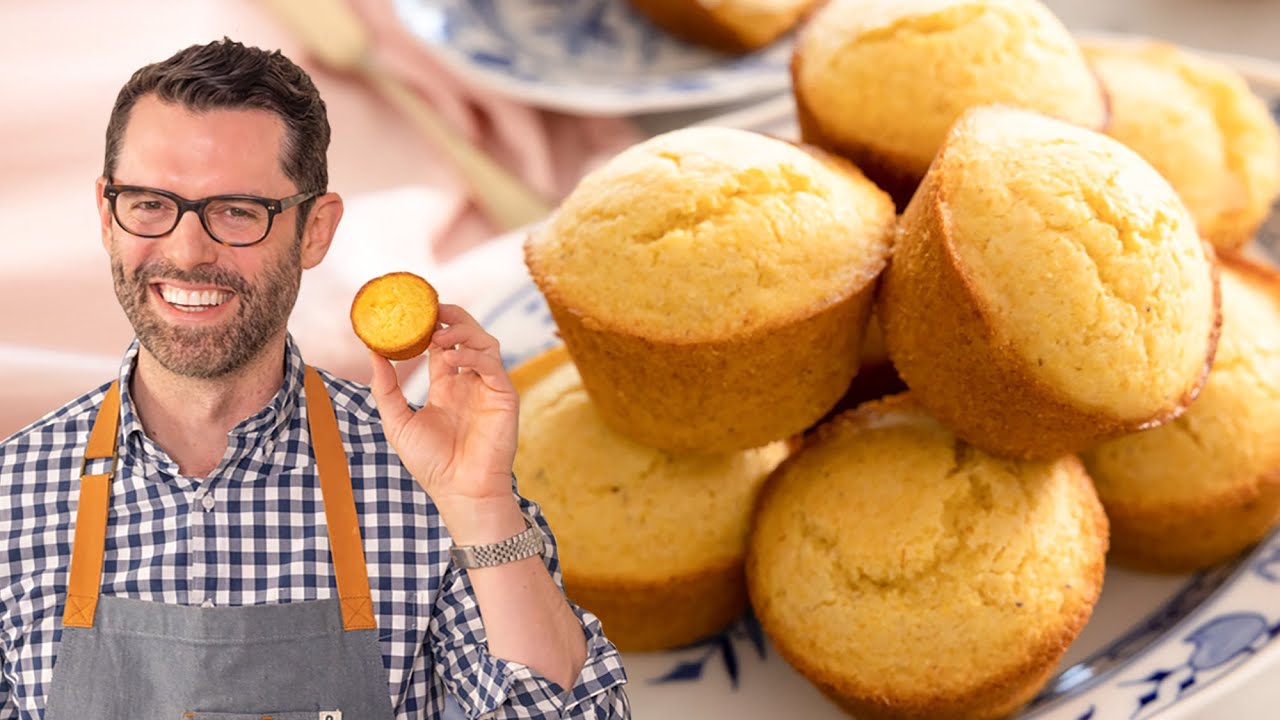
“Most cornbread muffins fail for one of two reasons: they're dense enough to anchor a boat, or they're so dry a single bite requires a full glass of water. The fix for both problems comes down to the same two moments — how you combine your wet and dry ingredients, and when you pull them out of the oven. Get those two things right and cornbread muffins become the easiest crowd-pleaser in your repertoire.”
Why This Recipe Works
Cornbread muffins sit at the intersection of quick bread and side dish — simple enough to throw together on a weeknight, substantial enough to carry a meal. The fact that so many recipes produce either dense hockey pucks or crumbling dry bricks suggests the technique is less intuitive than it looks.
The Mixing Moment
Every muffin recipe lives or dies at the combining step. The chemistry is straightforward: the moment liquid touches flour, gluten development begins. The more you stir, the more gluten forms, and gluten in a quick bread produces structure that's unwanted — chewiness, density, a tough crumb that pushes back when you bite it. The goal is a batter that barely holds together. Lumpy, rough, a little uneven. That's correct.
Twelve to fifteen strokes with a wooden spoon is the target. Count if you need to. The dry streaks disappear fast — you'll be surprised how few strokes it actually takes. From that moment forward, every additional stir is making the muffins worse. The corn kernels and chives go in last, folded rather than stirred, which lets you distribute them without triggering another round of gluten development.
Two Fats, One Purpose
This recipe uses both butter and olive oil, and it's not accidental. Butter provides flavor — the Maillard compounds that develop during browning, the dairy notes that signal "cornbread" to your brain before you've even tasted it. But butter solidifies as it cools, which is part of why some cornbread turns dry after the first hour. Olive oil stays liquid at room temperature and acts as a moisture anchor, keeping the crumb tender for days. The combination gives you flavor from the butter and longevity from the oil.
The muffin tin material matters here too. Dark pans run hotter at the same oven setting, which means the bottoms and sides brown faster than the centers can set. If you're baking in a dark tin, drop the temperature to 375°F and check at 18 minutes. Light-colored or aluminum tins can run at 400°F as written.
The Whole Grain Balance
Replacing part of the all-purpose flour with whole wheat flour introduces bran and germ into the crumb, which changes the texture — slightly more complex, slightly denser — but also adds fiber and slows the glucose absorption from the cornmeal's starch. The ratio here (1 cup all-purpose to 1/3 cup whole wheat) keeps the muffins tender without tipping into the grainy, heavy texture that full whole wheat recipes can produce.
Cornmeal is the structural backbone and the flavor core. Use a medium-grind cornmeal — labeled "polenta" in most stores — rather than fine-grind. Fine-grind produces a more uniform crumb that can read as cakey rather than cornbread. Medium-grind gives you that faintly gritty, slightly rustic texture that makes a cornbread muffin feel like a cornbread muffin.
Why Fresh Corn Matters
The corn kernels are not decoration. During baking, they steam slightly inside the muffin and release starch and natural sugar into the surrounding crumb, creating pockets of intensified corn flavor that ground cornmeal alone cannot produce. In peak summer corn season, cut the kernels directly off fresh ears — the difference against frozen is significant enough to change your plans. In the off-season, frozen kernels work, but they need to be fully thawed and patted dry. Wet frozen corn adds water to a batter that is already carefully calibrated.
The chives are doing similar work — small hits of allium brightness that cut through the sweetness and keep the muffins from feeling one-note. Don't sub scallions unless that's all you have; scallions are sharper and can overpower. Chives are subtle and precise.
The Temperature of Everything
Room temperature eggs and milk emulsify into melted butter cleanly. Cold eggs and cold milk hit hot fat and cause it to seize — you get greasy streaks in the batter rather than a cohesive mixture. Pull your dairy ingredients 30 minutes before you start, or run the egg under warm water for 60 seconds. The five minutes of patience pays off in texture.
These muffins are ready in 32 minutes start to finish. That's the window between deciding you want cornbread and putting it on the table. Make them once and they become the answer every time someone asks what they can bring to a potluck.
Where Beginners Mess This Up
Before we start, read this. These are the 4 reasons your golden cornbread muffins (the 20-minute side dish you'll make forever) will fail:
- 1
Overmixing the batter: Cornbread batter should look lumpy and rough when it goes into the tin. The moment you start chasing smooth, you're developing gluten from the flour and activating the cornmeal's starch in ways that produce a rubbery, dense muffin. Stir until the dry streaks disappear — roughly 12-15 strokes — then stop entirely.
- 2
Pulling them too early or too late: Underbaked cornbread is gummy at the center with a pale top. Overbaked cornbread is the dusty crumble that sticks to your molars. The toothpick test is reliable here — inserted in the center, it should come out with zero wet batter. A few dry crumbs are fine. The tops should be deep golden, not just blond.
- 3
Skipping the rest in the tin: Five minutes in the tin after baking isn't optional — it's the cooldown that lets the muffin structure set. Pull them immediately and the sides collapse as you handle them. Steam is still finishing the interior during those five minutes. Respect the rest.
- 4
Using cold eggs and milk: Cold dairy and cold eggs hit the melted butter and solidify it into greasy clumps before it can emulsify properly. Room temperature ingredients form a cohesive batter that distributes fat evenly, producing consistent texture from center to edge.
The Video Reference Library
Want to see it in action? Here are the exact videos we analyzed and combined to build this foolproof recipe translation:
The source video for this recipe. Clear walkthrough of batter consistency, fill level, and the visual cues for doneness — particularly useful for first-time cornbread bakers.
🛠️ Core Equipment
- Standard 12-cup muffin tinThe size of the cups directly controls baking time and rise. Mini or jumbo tins change everything — bake time can drop to 12 minutes or stretch to 28. Use a standard tin and follow the time range as written.
- Two mixing bowlsWet and dry must be mixed separately before combining. Dumping everything into one bowl and stirring is how you get pockets of unmixed flour and uneven leavening. Two bowls, one batter, no shortcuts.
- Wooden spoon or rubber spatulaElectric mixers are the enemy of cornbread. Hand mixing gives you tactile control — you can feel when the batter is just combined and stop before you've gone too far. A spoon keeps you honest.
Golden Cornbread Muffins (The 20-Minute Side Dish You'll Make Forever)
🛒 Ingredients
- ✦1 cup cornmeal (polenta)
- ✦1 cup all-purpose flour
- ✦1/3 cup whole wheat flour
- ✦1/4 cup cane sugar
- ✦1 tablespoon baking powder
- ✦1/2 teaspoon sea salt
- ✦1/4 teaspoon cayenne pepper
- ✦2 large eggs, room temperature
- ✦1 cup unsweetened almond milk, room temperature
- ✦4 tablespoons unsalted butter, melted and cooled slightly
- ✦2 tablespoons extra virgin olive oil
- ✦1 tablespoon raw honey
- ✦1 cup fresh corn kernels (or frozen, thawed and patted dry)
- ✦2 tablespoons fresh chives, finely minced
👨🍳 Instructions
01Step 1
Preheat your oven to 400°F. Line a standard 12-cup muffin tin with paper liners or grease each cup thoroughly with cooking spray.
02Step 2
Whisk together the cornmeal, all-purpose flour, whole wheat flour, cane sugar, baking powder, sea salt, and cayenne pepper in a large mixing bowl until fully combined.
03Step 3
In a separate bowl, beat the eggs, then whisk in the almond milk, melted butter, olive oil, and honey until smooth.
04Step 4
Pour the wet ingredients into the dry ingredients and stir gently with a wooden spoon until just combined — roughly 12-15 strokes. The batter should look lumpy. Stop stirring the moment dry streaks disappear.
05Step 5
Fold in the fresh corn kernels and minced chives with a spatula until evenly distributed.
06Step 6
Divide the batter equally among the prepared muffin cups, filling each about three-quarters full.
07Step 7
Bake for 18 to 22 minutes, until the tops are deep golden brown and a toothpick inserted into the center comes out clean or with a few dry crumbs.
08Step 8
Cool in the tin for 5 minutes, then transfer to a wire rack. Serve warm or at room temperature.
Nutrition Per Serving
Estimates based on standard preparation. Adjustments alter macros.
🔄 Substitutions
Instead of All-purpose flour...
Use Additional whole wheat flour or spelt flour
Produces a slightly denser, earthier crumb. Spelt is closer to all-purpose in texture. Add an extra tablespoon of liquid if the batter looks too thick.
Instead of Cane sugar...
Use Coconut sugar or maple syrup
Coconut sugar swaps 1:1. If using maple syrup, reduce almond milk by 2 tablespoons to compensate for the added liquid. Both add subtle caramel undertones.
Instead of Unsalted butter...
Use Ghee or avocado oil
Ghee adds a nutty richness and is easier to digest. Avocado oil produces a lighter, more neutral crumb. Both work at the same quantity.
Instead of Almond milk...
Use Oat milk or whole buttermilk
Oat milk produces a nearly identical result. Buttermilk reacts with the baking powder for a more pronounced rise and slightly tangy flavor. If using buttermilk, reduce baking powder to 2 teaspoons.
🧊 Storage & Reheating
In the Fridge
Store in an airtight container at room temperature for up to 2 days, or refrigerate for up to 5 days. Room temperature storage preserves the texture better — refrigeration can make cornbread stale faster.
In the Freezer
Freeze individually wrapped muffins for up to 3 months. Thaw at room temperature for 1 hour or reheat directly from frozen.
Reheating Rules
Wrap in a damp paper towel and microwave for 20-25 seconds, or place uncovered in a 350°F oven for 8-10 minutes. The oven method restores the crust; the microwave method preserves softness.
❓ Frequently Asked Questions
Why are my cornbread muffins dense and heavy?
Almost certainly overmixing. Once the wet ingredients hit the dry, gluten development begins immediately. The batter needs to be stirred just until the dry streaks are gone — usually 12-15 strokes. If you're mixing until smooth, you've gone too far.
Can I make these without corn kernels?
Yes. The kernels add texture and visual interest but they're not structurally essential. Without them the muffins are slightly more uniform in texture. You can also substitute diced jalapeños, roasted red pepper, or a small handful of shredded cheddar in their place.
Why did my muffins sink in the middle?
Either underbaked or the tin was disturbed while the centers were still setting. Don't open the oven door before the 18-minute mark. A toothpick test at 18 minutes is fine; just don't slam the oven shut when you reclose it.
Can I make this as a pan of cornbread instead of muffins?
Yes. Pour the batter into a greased 8x8 or 9x9 inch baking dish and bake at 400°F for 22-26 minutes. A cast iron skillet works particularly well — preheat the skillet in the oven, add a tablespoon of butter, pour in the batter, and bake. The contrast between the crispy cast iron crust and the tender interior is exceptional.
Is the cayenne pepper necessary?
It won't register as spicy at 1/4 teaspoon, but it plays an important role — it sharpens the corn flavor and prevents the muffins from tasting one-dimensionally sweet. Skip it if you're serving to young children or anyone heat-sensitive, but it genuinely improves the overall flavor profile.
How do I know when the muffins are done without overbaking them?
Three signals in combination: the tops should be deep golden (not pale yellow), a toothpick inserted in the center should come out clean or with a few dry crumbs (not wet batter), and the muffin edges should pull slightly away from the tin walls. If you only have one of these signals, give them another 2 minutes.
The Science of
Golden Cornbread Muffins (The 20-Minute Side Dish You'll Make Forever)
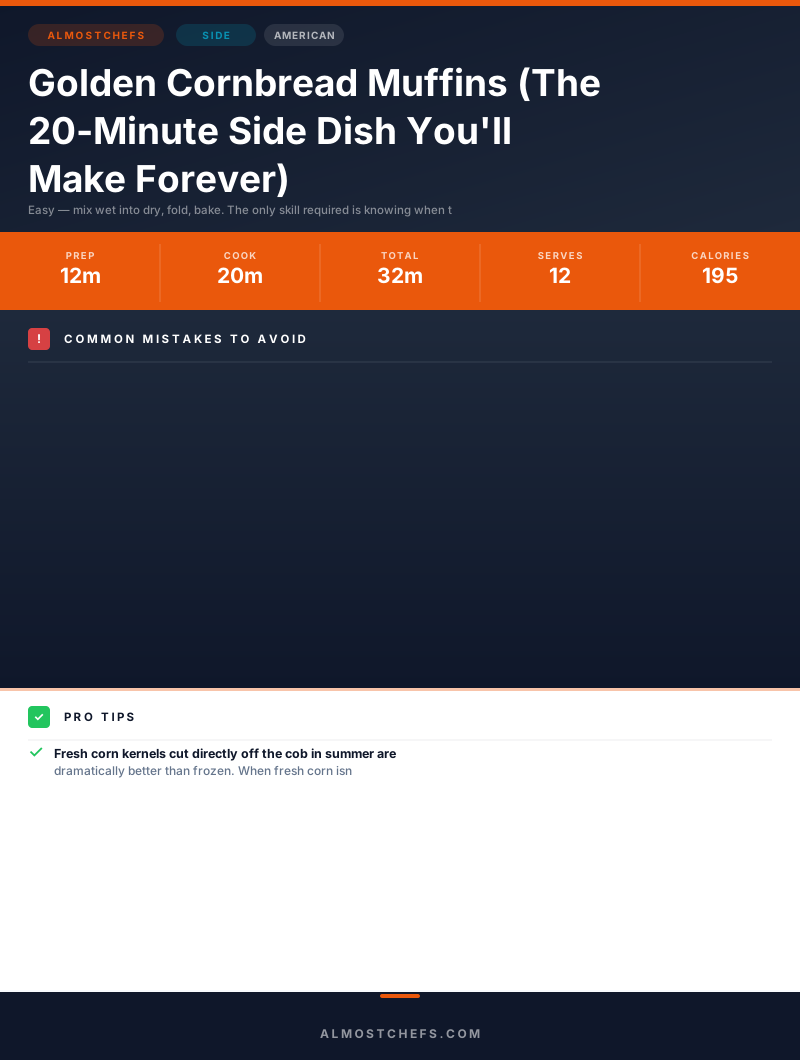
We turned everything on this page into a beautiful, flour-proof PDF cheat sheet. Print it out, stick it to your fridge, and never mess up your golden cornbread muffins (the 20-minute side dish you'll make forever) again.
*We'll email you the high-res PDF instantly. No spam, just perfectly cooked meals.
AlmostChefs Editorial Team
We translate the internet's most popular cooking videos into foolproof, beginner-friendly written recipes. We analyze multiple methods, test them in our kitchen, and engineer a single "Master Recipe" that gives you the best possible result with the least possible stress.