Classic Cast Iron Cornbread (Screaming-Hot Skillet Crust Method)
Cornbread built around the one technique that produces an irreplaceable bottom crust: pouring the batter into a preheated, smoking-hot cast iron skillet. The hot pan creates immediate contact browning on the bottom that no room-temperature pan can replicate. Buttermilk and baking soda provide the acid-base lift. Honey adds depth without sweetness.
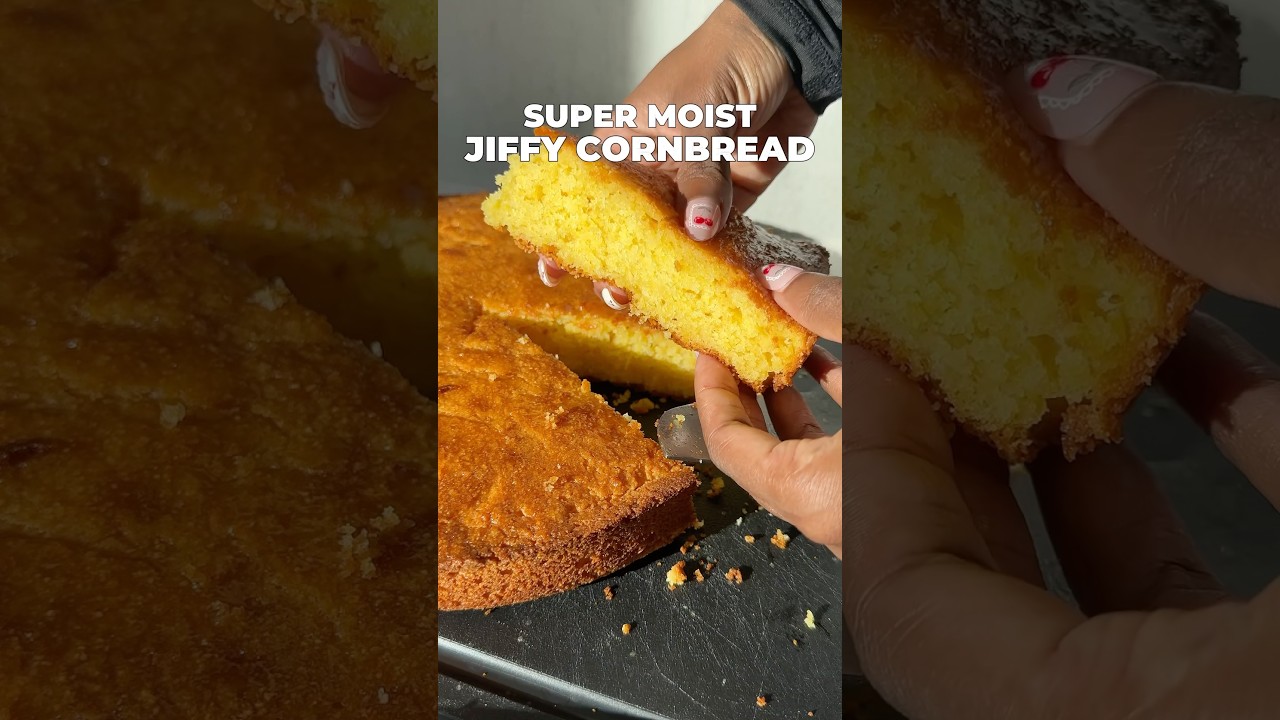
“Cornbread made in a cold skillet steams from the bottom up, producing a pale, dense base that no amount of oven time will fix. Cornbread made in a preheated cast iron skillet at 425°F gets immediate contact browning on the bottom surface — a crackly, caramelized crust that forms in the first 30 seconds before the batter even begins to rise. The skillet temperature is the recipe. Everything else is just batter.”
Why This Recipe Works
Cornbread is one of a small number of baked goods where the pan preparation contributes as much to the final result as the batter itself. You can have perfect batter and still produce mediocre cornbread if the skillet is cold. You can have adequate batter and produce exceptional cornbread if the skillet is screaming hot. Understanding what the heat does at each stage reveals why this recipe works when the standard method produces something forgettable.
The Hot Skillet Creates What No Batter Can
When batter is poured into a preheated 425°F cast iron skillet with a film of hot oil, what happens in the first 30 seconds is irreversible: the surface layer of batter in contact with the pan undergoes immediate Maillard browning and starch caramelization at the interface. This creates a distinct bottom crust — structurally separate from the crumb above it — with a crackly, almost crackerlike texture that cannot form any other way.
In a cold or room-temperature pan, the same batter warms slowly from the bottom. The moisture in the batter turns to steam before the temperature at the pan interface reaches browning temperature. The steam rises through the batter as it bakes, producing a pale, slightly gummy bottom layer with the texture of steamed cake rather than baked bread. No increase in baking time fixes this — by the time the bottom approaches browning temperature in a cold pan, the top is already overcooked.
Cast iron is not incidental. Its thermal mass allows it to absorb and hold substantial heat energy during the preheating period — typically 5–7 minutes at oven temperature — and then release that energy rapidly when cold batter contacts the surface. Thin metal pans have insufficient thermal mass; the batter dropping in cools the pan surface temperature below the browning threshold almost immediately.
The Buttermilk Acid-Base Chemistry
Baking soda is sodium bicarbonate — an alkaline compound with no leavening power on its own. It requires an acid to react. In this recipe, that acid is lactic acid from the buttermilk. When lactic acid and baking soda combine, they produce carbon dioxide as a byproduct. This CO2 is what creates the open crumb structure and rise in cornbread.
The reaction begins immediately when the wet and dry ingredients combine — not in the oven. This is why mixing speed matters: the CO2 is already forming while you fold. Work too slowly and you lose bubbles before they are trapped in the gluten network. Work too aggressively and you develop the gluten and collapse the bubble structure at the same time. Fold until just combined, immediately pour into the hot skillet, and get it in the oven. The batter has a limited window.
Baking powder provides a second, oven-activated leavening that continues the rise once the pan is hot. The combination of both leaveners is standard in acidic batters because neither alone produces adequate lift: baking soda reacts fast and consumes most of the available acid, while baking powder's second activation provides sustained leavening through the full baking period.
Why Not to Overmix
Cornmeal contributes no gluten — it is ground dried corn with no wheat protein. The all-purpose flour in this recipe does contain gluten, and that gluten develops when flour is hydrated and agitated. Developed gluten forms long, elastic chains that trap CO2 effectively but also create a chewy, tight, bread-like crumb. In cornbread, which should have a tender, open crumb that crumbles slightly when cut, developed gluten works against the final texture.
The instruction to mix until just combined — accepting a lumpy batter — is a gluten management strategy. Every stroke of the spatula after the dry flour disappears is developing gluten without adding any mixing benefit. Lumpy batter bakes into tender cornbread. Smooth batter bakes into tough cornbread. The lumps are incompletely hydrated dry ingredients that will finish hydrating during baking. Let them.
Honey as Architecture, Not Sweetener
The tablespoon of honey in this recipe is not a sweetener in the conventional sense. At 1 tablespoon for 8 servings, the per-serving contribution is negligible. Its function is flavor depth: honey contains over 200 flavor compounds including organic acids, phenolics, and carotenoids that interact with the cornmeal flavor and add complexity to the background. The result is a cornbread that tastes richer and more developed than one made with sugar alone, even though the sweetness level is nearly identical.
Honey is also hygroscopic — it attracts and retains moisture during baking. In a quick bread baked at high heat, this means the crumb stays slightly more tender at the center than it would with granulated sugar substituted at the same volume. The combined effect of the flavor compounds and the moisture retention produces cornbread that tastes like someone thought carefully about it, not like a pantry staple quickly assembled.
The Cornmeal-to-Flour Ratio
The 62/38 split weighted toward cornmeal (1.25 cups cornmeal to 0.75 cups flour) produces a crumb that is tender but slightly grainy, with enough gluten structure from the flour to hold together cleanly when sliced. Tipping too far toward cornmeal — 80% or more — produces a crumbly, dry result that falls apart when handled. Tipping too far toward flour erases the corn texture entirely and produces something that tastes like a yellow biscuit. The 62/38 split is the functional center of the American cornbread profile.
Where Beginners Mess This Up
Before we start, read this. These are the 4 reasons your classic cast iron cornbread (screaming-hot skillet crust method) will fail:
- 1
Cold or room-temperature skillet: The hot skillet technique is not optional — it is the entire reason this recipe exists. A cold skillet slowly transfers heat upward through the batter, which steams from below and produces a soft, pale bottom. A screaming-hot skillet with a thin coat of oil or butter creates instant contact browning the moment batter hits the surface. Preheat the skillet in the 425°F oven for at least 5 minutes before adding any batter.
- 2
Overmixing the batter: Cornbread batter follows the same rule as pancake batter: mix until just combined. Overmixing develops the gluten in the flour and activates the leavening agents too early, producing a tough, dense crumb with a gummy texture. The batter should look lumpy. Lumpy is correct. Stop mixing when you cannot see dry streaks.
- 3
Substituting regular milk for buttermilk: Buttermilk and baking soda is an acid-base reaction that produces CO2 bubbles responsible for the lift and open crumb of this cornbread. Regular milk has insufficient acidity to complete this reaction. If you have no buttermilk, add 1 tablespoon white vinegar or lemon juice to 1.25 cups regular milk and let it sit for 5 minutes — the acid content becomes sufficient.
- 4
Cutting before full cooling: Cornbread straight from the oven is structurally fragile — the starch network needs at least 5 minutes to set. Cutting immediately produces crumbling, falling-apart pieces. The rest is short but non-negotiable for clean slices.
The Video Reference Library
Want to see it in action? Here are the exact videos we analyzed and combined to build this foolproof recipe translation:
The primary reference for this recipe. Demonstrates the skillet preheating technique, batter consistency, and the sizzle that confirms correct pan temperature before pouring.
Covers the buttermilk acid-base reaction, how baking powder and baking soda work in combination, and why the crumb structure differs from Northern-style cornbread.
Broader context for cast iron baking including preheating technique and why thermal mass produces results that other pans cannot replicate.
🛠️ Core Equipment
- 10-inch cast iron skilletThermal mass is the defining variable. Cast iron holds heat aggressively and transfers it immediately to the batter surface on contact. No other pan material produces the same bottom crust. A 10-inch skillet is the standard size for this recipe's batter volume.
- Two mixing bowlsDry and wet ingredients must be combined separately before the final fold. Mixing wet ingredients into dry directly causes uneven hydration and requires additional mixing to incorporate, which develops gluten and toughens the crumb.
- Rubber spatula or wooden spoonFor the final fold — the gentle, minimal-stroke motion that just combines wet and dry without developing gluten. Electric mixers are inappropriate for cornbread batter.
- Toothpick or thin skewerThe definitive doneness indicator. Insert in the center — it should come out clean or with only dry crumbs. A wet toothpick means the center is underset; return to the oven for 2-minute increments.
Classic Cast Iron Cornbread (Screaming-Hot Skillet Crust Method)
🛒 Ingredients
- ✦1.25 cups yellow cornmeal
- ✦3/4 cup all-purpose flour
- ✦3 tablespoons granulated sugar
- ✦1.5 teaspoons baking powder
- ✦1/2 teaspoon baking soda
- ✦3/4 teaspoon kosher salt
- ✦2 large eggs, room temperature
- ✦1.25 cups buttermilk, room temperature
- ✦1/3 cup whole milk
- ✦4 tablespoons unsalted butter, melted, plus more for greasing
- ✦1 tablespoon honey
- ✦1 tablespoon vegetable oil, for the skillet
👨🍳 Instructions
01Step 1
Preheat the oven to 425°F. Place the cast iron skillet in the oven while it preheats. Let the skillet heat for at least 5–7 minutes after the oven reaches temperature.
02Step 2
Whisk together the dry ingredients in a large bowl: cornmeal, flour, sugar, baking powder, baking soda, and salt. Make a well in the center.
03Step 3
In a separate bowl, whisk together the wet ingredients: eggs, buttermilk, whole milk, melted butter, and honey. Whisk until fully combined.
04Step 4
Pour the wet ingredients into the dry ingredients. Fold gently with a rubber spatula using as few strokes as possible — just until no dry streaks remain. The batter will be lumpy. This is correct.
05Step 5
Remove the preheated skillet from the oven using heavy oven mitts. Add the vegetable oil and swirl to coat the bottom and sides. The oil should shimmer immediately and begin to smoke slightly.
06Step 6
Pour the batter directly into the hot oiled skillet. It should sizzle audibly when it hits the pan surface. Spread evenly with the spatula.
07Step 7
Return the skillet to the oven immediately. Bake at 425°F for 20–23 minutes until the top is golden brown, the edges have pulled slightly from the skillet sides, and a toothpick inserted in the center comes out clean.
08Step 8
Remove from the oven and let the cornbread cool in the skillet for at least 5 minutes before cutting.
09Step 9
Cut into wedges or squares directly in the skillet. Serve warm with butter.
Nutrition Per Serving
Estimates based on standard preparation. Adjustments alter macros.
🔄 Substitutions
Instead of Buttermilk...
Use Regular milk with acid added
Add 1 tablespoon white vinegar or lemon juice to 1.25 cups whole milk. Stir and let sit for 5 minutes until slightly curdled. The acidity becomes sufficient for the baking soda reaction. Not quite as tangy as true buttermilk but functionally equivalent.
Instead of All-purpose flour...
Use White whole wheat flour
Adds subtle nuttiness and slightly more fiber. Results in a marginally denser crumb that many prefer for a more substantial texture.
Instead of Whole milk...
Use 2% milk or unsweetened oat milk
2% milk reduces fat slightly with minimal texture impact. Oat milk produces a slightly sweeter crumb. Both work at the same volume.
Instead of Granulated sugar...
Use Brown sugar or maple syrup
Brown sugar adds molasses undertones that complement the cornmeal. Maple syrup at the same volume produces a subtler sweetness with a distinctive finish.
🧊 Storage & Reheating
In the Fridge
Wrapped tightly or in an airtight container for up to 4 days. The crumb firms up in the refrigerator.
In the Freezer
Wrap individual slices tightly in plastic wrap and freeze for up to 2 months. Thaw at room temperature for 30 minutes before reheating.
Reheating Rules
350°F oven wrapped loosely in foil for 8–10 minutes. Or cut-side down in a dry skillet over medium heat for 2 minutes to re-crisp the surface. Microwave works but produces a gummy texture.
❓ Frequently Asked Questions
Why doesn't my cornbread have a crispy bottom?
The skillet was not hot enough before the batter went in. The bottom crust forms through immediate contact browning between the batter and the hot pan surface — it happens in the first 30 seconds or not at all. The skillet needs to be in a 425°F oven for at least 5–7 minutes before pouring the batter. You should hear an audible sizzle on contact.
Can I use a different pan if I don't have cast iron?
A dark metal cake pan or oven-safe stainless skillet can be preheated the same way and will produce a reasonable bottom crust. Glass or ceramic baking dishes should not be preheated empty — they can crack under thermal shock. If using glass or ceramic, accept that you will not get the characteristic bottom crust and reduce oven temperature to 375°F.
Why is my cornbread dry?
Two possible causes: overmixing, which develops gluten and tightens the crumb, or overbaking. Cornbread should come out of the oven when the toothpick is just clean — not when it has been clean for 5 minutes. The center should look fully set but still have some spring when pressed gently.
Can I add mix-ins like jalapeño or cheddar?
Yes. Fold in up to 1 cup of additions at the very end, after the wet and dry ingredients are just combined. Diced jalapeño, shredded sharp cheddar, corn kernels, or diced scallions all work well. Do not exceed 1 cup total or the batter will be too heavy to rise properly.
Sweet or not sweet — which is correct?
This is a regional debate with no objectively correct answer. This recipe is slightly sweet — 3 tablespoons of sugar and 1 tablespoon of honey — which is closer to Northern-style cornbread. Traditional Southern cornbread uses little to no sugar. If you want Southern-style, reduce sugar to 1 tablespoon and omit the honey.
Why do I need both baking powder and baking soda?
They perform different jobs. Baking powder provides double-acting leavening — releasing CO2 twice, first on contact with liquid and again when it contacts oven heat. Baking soda reacts specifically with the acid in buttermilk to produce immediate CO2 that starts the rise before the pan enters the oven. Both are necessary to achieve the correct crumb texture in a recipe using acidic liquid.
The Science of
Classic Cast Iron Cornbread (Screaming-Hot Skillet Crust Method)
We turned everything on this page into a beautiful, flour-proof PDF cheat sheet. Print it out, stick it to your fridge, and never mess up your classic cast iron cornbread (screaming-hot skillet crust method) again.
*We'll email you the high-res PDF instantly. No spam, just perfectly cooked meals.
AlmostChefs Editorial Team
We translate the internet's most popular cooking videos into foolproof, beginner-friendly written recipes. We analyze multiple methods, test them in our kitchen, and engineer a single "Master Recipe" that gives you the best possible result with the least possible stress.