3-Ingredient Condensed Milk Chocolate Truffles (No Oven, No Nonsense)
Silky, intensely chocolatey truffles made with sweetened condensed milk, dark chocolate, and a tablespoon of butter — no thermometer, no tempering, no oven required. We analyzed the most popular YouTube methods to find the one ratio that produces a ganache firm enough to roll but soft enough to melt the moment it hits your tongue.
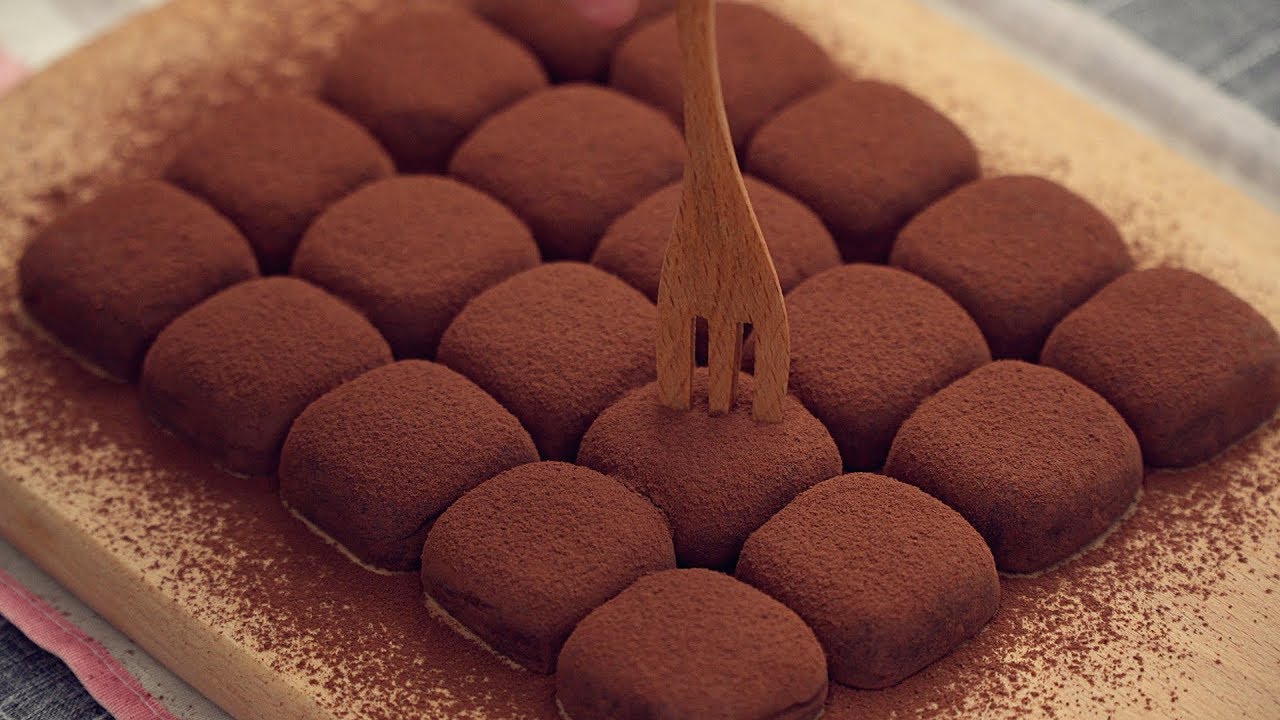
“Chocolate truffles have a reputation problem. People think they require a candy thermometer, tempered couverture, and a pastry degree. They don't. What they require is the right ratio of chocolate to condensed milk, the right chilling time, and the discipline to not skip either. Get those three things right and you produce something that tastes like it came out of a $40 box at an airport duty-free shop — except you made it in 25 minutes of active work.”
Why This Recipe Works
There is a category of recipe that gets dismissed as trivial precisely because it doesn't require expensive equipment or culinary training. Condensed milk chocolate truffles live in this category, and that dismissal is a mistake. The recipe is simple. The chemistry is not. Understanding why each step exists is the difference between producing something genuinely impressive and producing fudge that you rolled into a ball and called a truffle.
The Ratio Question
Every truffle is a ganache — an emulsion of fat and water-based liquid in which chocolate provides the fat and the condensed milk provides both the liquid and the sugar. The ratio of chocolate to condensed milk determines everything: too much liquid and the ganache never firms enough to roll; too little and it sets rock-hard in the refrigerator and shatters instead of yielding. The formula that works — 12 ounces of chocolate to one 14-ounce can of condensed milk — is not arbitrary. It produces a ganache that is firm enough to hold a sphere at refrigerator temperature but soft enough to collapse beautifully on the tongue at body temperature. This is the standard ganache 2:1 ratio (by weight, chocolate to cream) adjusted for condensed milk's higher sugar and lower water content.
The butter is not decoration. One tablespoon of fat added to the warm mixture creates an emulsion that is noticeably smoother and more glossy than the butter-free version. Fat disrupts the crystalline structure that would otherwise make the ganache slightly grainy, coating the cocoa particles and creating the silky mouthfeel you associate with expensive truffles. A heavy-bottomed saucepan gives you the controlled, gentle heat this step demands — the condensed milk needs to warm uniformly without scorching on the bottom while the rest of the pan stays cold.
Why Chocolate Quality Is Non-Negotiable
Chocolate chips are engineered not to melt. That sentence should be printed on every bag of chocolate chips in America. Manufacturers add extra cocoa butter stabilizers and emulsifiers specifically to help chips hold their shape in cookies at 375°F. Those same stabilizers prevent the chips from forming a smooth, glossy ganache. You get a grainy, slightly waxy mixture that never achieves the snap-to-silk transformation that makes a truffle a truffle.
Use a high-quality bar — 70% cacao, chopped finely — or professional-grade chocolate wafers designed for melting. The ingredient list should read: cocoa mass, cocoa butter, sugar, vanilla. If it includes soy lecithin in large quantities or "PGPR" (polyglycerol polyricinoleate, a cheap cocoa butter substitute), find a different chocolate. The quality delta between a $3 baking bar and a $7 couverture bar is enormous in a recipe with only three main ingredients. There is nowhere for inferior chocolate to hide.
The Physics of Chilling
Ganache sets because the fat crystallizes as it cools. This process takes time and cannot be shortcut. Two hours in the refrigerator allows the cocoa butter to form stable beta crystals — the same crystal structure responsible for the smooth, matte surface of properly tempered chocolate. Underset ganache has unstable crystal structures that feel slightly greasy on the tongue and soften too quickly when rolled.
The container shape matters more than most recipes acknowledge. Spreading the ganache in a shallow, wide dish maximizes surface area in contact with the cold refrigerator air, chilling the mixture from the top and sides simultaneously. A deep bowl insulates the center — you can have a perfectly set outer ring surrounding a still-liquid core after two hours, which produces inconsistent truffle texture. A sheet pan or 8x8 baking dish solves this entirely.
The Rolling Window
Ganache is temperature-sensitive in a way that becomes viscerally obvious the first time you try to roll warm truffles. At refrigerator temperature (38-40°F), it is firm, cooperative, and releases cleanly from a melon baller. At 68°F, it has softened enough to smear. At 72°F and above, it sticks to everything and cannot be shaped into a clean sphere.
This is why rolling in small batches matters — not because it's more precise, but because it limits how long the ganache spends outside refrigeration. A silicone spatula is the right tool for scraping every last bit of ganache from the pan cleanly; a wooden spoon leaves a film behind that represents a truffle you paid for but never got to eat. Work cold, work fast, return the pan to the fridge between batches, and the rolling becomes effortless.
The cocoa powder coating is the final act of contrast: slightly bitter, completely matte, chalky on the tongue for one second before the ganache underneath dissolves everything. Sift it first. The 30 seconds that takes is the cheapest upgrade in the entire recipe.
Where Beginners Mess This Up
Before we start, read this. These are the 4 reasons your 3-ingredient condensed milk chocolate truffles (no oven, no nonsense) will fail:
- 1
Using the wrong chocolate: Chocolate chips designed for baking contain stabilizers that prevent them from melting cleanly. The result is a grainy, slightly waxy ganache that never achieves the smooth, glossy texture truffles demand. Use a high-quality dark chocolate bar (70% cacao or higher) chopped finely, or chocolate wafers specifically labeled for melting. The quality of your chocolate is the quality of your truffle — there is nowhere to hide.
- 2
Overheating the chocolate: Chocolate seizes — turns into a grainy, stiff paste — when it gets too hot too fast. The condensed milk mixture should be warm, not boiling, when it hits the chocolate. If it's bubbling aggressively when you pour, wait 60 seconds. The residual heat in the pan is enough to melt finely chopped chocolate completely. Patience costs nothing; seized chocolate costs you the whole batch.
- 3
Rushing the chill time: Two hours in the refrigerator is the minimum for ganache that rolls cleanly. Underset ganache sticks to your hands, produces irregular shapes, and coats unevenly. If the mixture still feels tacky after 2 hours, it needs 30 more minutes — not faster hands. A properly chilled ganache releases cleanly from a melon baller with a single twist and holds its sphere shape without assistance.
- 4
Rolling with warm hands: Body heat melts chocolate. If your hands are warm, the truffle surface softens and the cocoa coating clumps and falls off instead of adhering evenly. Work fast, roll a few at a time, and return the tray to the fridge between batches if your kitchen is above 70°F. Rinse your hands in cold water and dry them thoroughly before each rolling session.
The Video Reference Library
Want to see it in action? Here are the exact videos we analyzed and combined to build this foolproof recipe translation:
The source video with the clearest demonstration of the correct ganache consistency before chilling and the rolling technique that produces clean, even spheres. Pay close attention to the texture at the 2-minute mark — that is what you are aiming for.
A thorough breakdown of ganache ratios and why the fat content of the chocolate matters for final texture. Excellent visual reference for identifying when the mixture has emulsified properly versus when it has split.
Covers every coating variation from cocoa powder to crushed pistachios to tempered chocolate shells. Useful once you have the base technique dialed in and want to add variety to a gift box or dessert platter.
🛠️ Core Equipment
- Heavy-bottomed saucepanEven, gentle heat prevents hot spots that scorch the condensed milk before the chocolate has time to melt. A thin pan creates a band of overheated sugar on the bottom while the rest stays cold. Any [saucepan](/kitchen-gear/review/saucepan) with a 2-3mm base works well here.
- Heatproof silicone spatulaYou need something that can scrape the edges and bottom of the pan continuously while the mixture comes together. A [silicone spatula](/kitchen-gear/review/silicone-spatula) resists the heat that would melt a plastic one and moves the mixture efficiently without incorporating air.
- Melon baller or small cookie scoopConsistent portion size is the difference between truffles that look handmade in a good way and truffles that look inconsistent and rushed. A melon baller produces 1-inch spheres with a single motion. Rolling by hand is viable but results in size variation that becomes obvious once they're plated.
- Parchment-lined sheet panThe ganache must chill on a flat, non-reactive surface so it releases cleanly. Wax paper works. Plastic wrap adheres to the ganache and tears when you try to remove it. A [sheet pan](/kitchen-gear/review/sheet-pan) gives you a stable, flat surface that fits in the refrigerator without bending.
3-Ingredient Condensed Milk Chocolate Truffles (No Oven, No Nonsense)
🛒 Ingredients
- ✦14 oz (1 can) sweetened condensed milk
- ✦12 oz (340g) dark chocolate, 70% cacao, finely chopped
- ✦1 tablespoon unsalted butter
- ✦1 teaspoon pure vanilla extract
- ✦1/4 teaspoon fine sea salt
- ✦1/2 cup Dutch-process cocoa powder, for rolling
- ✦Optional coatings: crushed toasted hazelnuts, shredded coconut, powdered sugar, or finely chopped pistachios
👨🍳 Instructions
01Step 1
Finely chop the dark chocolate and place it in a large heatproof bowl. The finer the chop, the faster and more evenly it will melt.
02Step 2
Combine the sweetened condensed milk, butter, and sea salt in a heavy-bottomed saucepan over medium-low heat. Stir continuously until the butter melts and the mixture is just beginning to steam — about 3-4 minutes. It should be hot to the touch but not simmering.
03Step 3
Pour the hot condensed milk mixture directly over the chopped chocolate. Let it sit undisturbed for 90 seconds, then stir slowly from the center outward in small circles until the mixture is completely smooth and glossy.
04Step 4
Add the vanilla extract and stir to combine. The finished ganache should be thick, smooth, and ribbon off the spatula in a slow, heavy stream.
05Step 5
Pour the ganache into a parchment-lined 8x8 baking dish or any shallow container. Smooth the surface flat. Press a piece of plastic wrap directly against the surface to prevent a skin from forming.
06Step 6
Refrigerate for a minimum of 2 hours, until the ganache is fully firm and no longer tacky to the touch. It should feel like cold fudge — dense and malleable, not liquid.
07Step 7
Prepare your coating station: spread Dutch-process cocoa powder in a shallow bowl. Set out your parchment-lined sheet pan for finished truffles.
08Step 8
Working quickly, use a melon baller or small cookie scoop to portion the ganache into 1-inch pieces. Roll each piece between your palms into a sphere using fast, light pressure — about 3-4 seconds per truffle.
09Step 9
Immediately drop each truffle into the cocoa powder and roll to coat evenly. Lift out with a fork, tap off the excess, and place on the prepared sheet pan.
10Step 10
Refrigerate the finished truffles for at least 15 minutes before serving to let the coating set. Store in an airtight container in the refrigerator.
Nutrition Per Serving
Estimates based on standard preparation. Adjustments alter macros.
🔄 Substitutions
Instead of Dark chocolate (70%)...
Use Milk chocolate or semi-sweet chocolate chips
Milk chocolate produces a sweeter, less intense truffle. Because condensed milk is already very sweet, using milk chocolate can tip the balance into cloying. If substituting, reduce the condensed milk to 10 oz to compensate. Semi-sweet chips work but produce a slightly waxy texture due to stabilizers — acceptable for a first attempt, not ideal for a finished product you're proud of.
Instead of Unsalted butter...
Use Coconut oil (refined, not virgin)
Produces a dairy-free ganache with a very similar texture. Refined coconut oil has a neutral flavor — do not use virgin coconut oil unless you want coconut-flavored truffles. The truffles will be slightly firmer at refrigerator temperature.
Instead of Dutch-process cocoa powder...
Use Natural cocoa powder
Natural cocoa is more acidic and slightly bitter. It works for rolling but the flavor is sharper and less round than Dutch-process. For a premium finish, black cocoa powder (ultra-dutched) produces the darkest, most intensely chocolatey coating.
Instead of Sweetened condensed milk...
Use Coconut condensed milk
Available in most health food stores and online. Produces a fully dairy-free, vegan-friendly truffle. The texture is nearly identical. There is a subtle coconut note in the background — pair it with a toasted coconut coating to make it intentional rather than accidental.
🧊 Storage & Reheating
In the Fridge
Store in an airtight container, layered between sheets of parchment paper, for up to 2 weeks. The flavor actually deepens after the first 24 hours as the vanilla and cocoa integrate.
In the Freezer
Freeze in a single layer on a sheet pan until solid, then transfer to a freezer bag for up to 3 months. Thaw in the refrigerator overnight — never at room temperature, which causes condensation that dissolves the cocoa coating.
Reheating Rules
Truffles are served cold or at room temperature, never heated. Remove from the refrigerator 10-15 minutes before serving for the best texture — cold ganache is too firm, room-temperature ganache is perfectly yielding.
❓ Frequently Asked Questions
Why did my ganache turn grainy and oily?
The chocolate seized, most likely because the condensed milk was boiling when it hit the chocolate, or the chocolate was overheated. You can sometimes rescue a broken ganache by adding a tablespoon of warm heavy cream or whole milk and stirring vigorously from the center. If it doesn't come back together, start over — the texture won't fully recover and every truffle will be grainy.
Can I use white chocolate instead?
Yes, but white chocolate contains no cocoa solids, so it has almost no structural strength. You'll need to refrigerate the white chocolate ganache for at least 3 hours before it firms enough to roll, and you'll need to work faster because it softens much quicker in warm hands. Coat in crushed freeze-dried raspberries or matcha powder instead of cocoa.
Do I have to use a melon baller or can I just roll by hand?
You can roll entirely by hand — pinch off roughly equal pieces from the chilled ganache and roll between your palms. The truffles will be slightly less uniform in size, which some people prefer because it looks more handcrafted. The melon baller is a time-saver, not a requirement.
Why is my cocoa coating clumpy and uneven?
Either the cocoa wasn't sifted, or the truffle was too warm when it hit the cocoa. Warm ganache melts the cocoa powder on contact, creating a thick, uneven paste instead of a fine, dusty coating. Sift the cocoa, work with cold truffles, and roll them immediately after shaping while the surface is smooth.
Can I make these ahead for a party?
Absolutely — these are better made ahead. The flavor improves significantly after 24 hours in the refrigerator as the vanilla, salt, and chocolate integrate. Make them 1-2 days before your event and store them in an airtight container. Remove from the fridge 15 minutes before serving.
What percentage of cacao should I use?
70% is the sweet spot for condensed milk truffles. It's intense enough to balance the sweetness of the condensed milk without tipping into bitter. Below 60% and the truffles taste like candy. Above 80% and you'll want to add a teaspoon of honey or maple syrup to the ganache to compensate for the bitterness.

The Science of
3-Ingredient Condensed Milk Chocolate Truffles (No Oven, No Nonsense)
We turned everything on this page into a beautiful, flour-proof PDF cheat sheet. Print it out, stick it to your fridge, and never mess up your 3-ingredient condensed milk chocolate truffles (no oven, no nonsense) again.
*We'll email you the high-res PDF instantly. No spam, just perfectly cooked meals.
AlmostChefs Editorial Team
We translate the internet's most popular cooking videos into foolproof, beginner-friendly written recipes. We analyze multiple methods, test them in our kitchen, and engineer a single "Master Recipe" that gives you the best possible result with the least possible stress.