Showstopping Rainbow Layered Desserts (No Baking Required)
Six vibrant mousse layers stacked in clear cups over a buttery graham cracker base — no oven, no special equipment, no shortcuts that matter. We reverse-engineered the most-viewed rainbow dessert videos to nail the one technique everyone skips: letting each layer set fully before pouring the next.
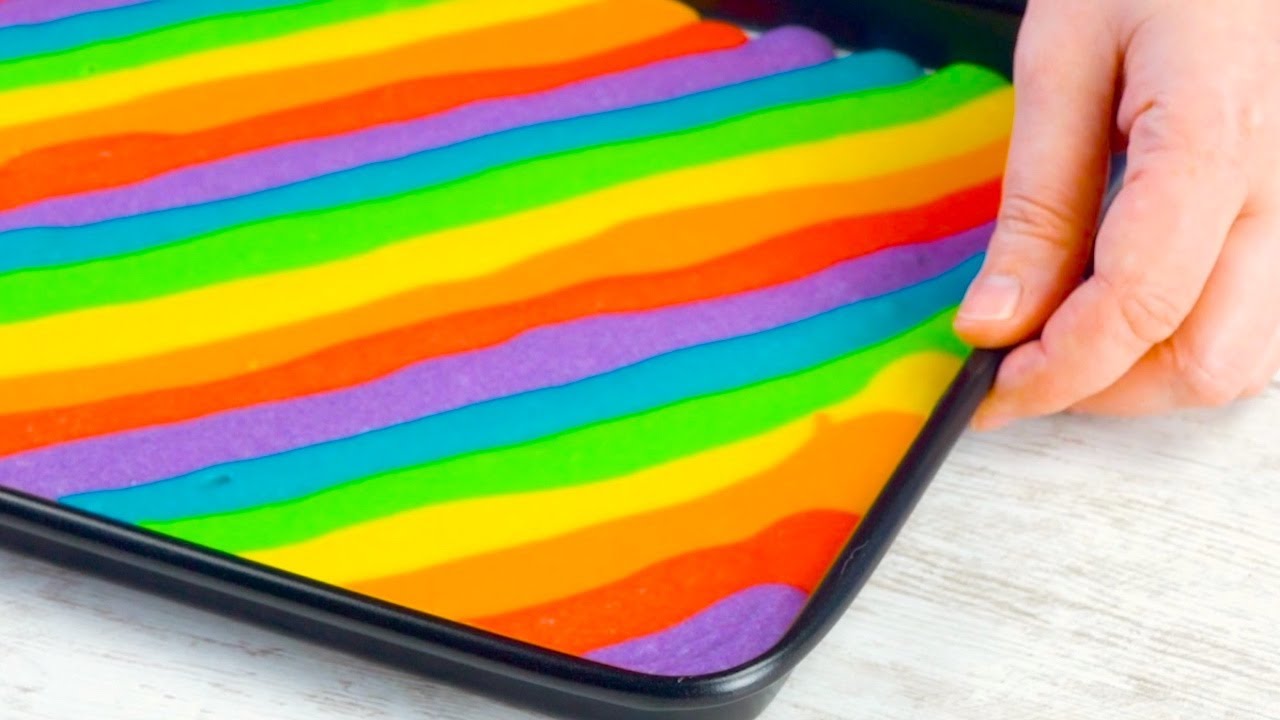
“Most rainbow desserts look incredible in the photo and collapse into a swirled mess when you spoon into them. The culprit is always the same: someone got impatient and poured the next layer before the previous one was fully set. These cups are built on a single discipline — wait for the layer to hold — and everything else is just color and cream.”
Why This Recipe Works
A rainbow layered dessert is not a complicated recipe. It is a patience test dressed up as a recipe. The technique is almost laughably simple — whip cream, add color, layer in a cup — and yet the internet is full of photos showing beautiful striped cups alongside comments explaining why the home version collapsed into a streaked, indistinct blur. Every single one of those failures has the same root cause: someone did not wait.
The Physics of Layering
Mousse is essentially a foam — air suspended in fat. When you pour a warm or unchilled mousse layer on top of one that has not yet set, the density difference causes the upper layer to sink through the lower one, dragging pigment with it. The result is a gradient of mixed color that no amount of garnish can disguise. The solution is thermodynamic: cold mousse firms because the fat crystallizes and the gelatin structure (from the whipped cream itself) stabilizes. Once that molecular scaffold is in place, the layer beneath will support the weight of the next addition without any mixing.
This is why the 30-minute chill window between layers is not a guideline — it is physics. You cannot shortcut it by using a colder fridge or a thinner layer. The layer must set to a specific firmness, and that takes the time it takes.
Gel Coloring Is Not Optional
The gap between a professional-looking rainbow dessert and an amateur one is almost always the colorant. Liquid food coloring — the kind in the little plastic bottles sold at every grocery store — is water-based. When you stir it into whipped cream, you are adding liquid to a fat-foam structure that was designed to exclude water. The foam weakens, the color dilutes, and the final result looks like something was washed in the sink. You end up with six nearly indistinguishable shades of pale pink through pale blue.
Gel food coloring is suspended in a glycerin or corn syrup base — not water. It is far more concentrated, fat-compatible, and does not destabilize the foam structure. A toothpick dip of AmeriColor Electric Blue produces a vivid cobalt that no amount of liquid coloring can match. The color wheel itself becomes the presentation when you use the right tool, which means the entire dessert's success is downstream of a $12 purchase.
Cream Cheese as the Structural Backbone
Most no-bake mousse recipes use whipped cream alone, and they work — until someone refrigerates the dessert for more than two hours, at which point the mousse deflates and weeps liquid around the edges. The addition of cream cheese fundamentally changes the structural calculus. Cream cheese is a semi-solid emulsified fat — it does not deflate, does not weep, and does not lose volume over time. When folded with whipped cream, it creates a hybrid structure that has the lightness of mousse with the stability of a set custard.
The one non-negotiable: the cream cheese must be fully at room temperature before you begin. Cold cream cheese has a crystalline fat structure that will never fully smooth out regardless of how long you beat it. You will spend five minutes chasing a lump that is physically incapable of dissolving, and those lumps will be visible in the finished cups. Leave it out for a full hour — or microwave it in 10-second bursts, checking constantly — before you start mixing.
The Graham Cracker Base as Structural Foundation
The measuring cup press technique is one of those steps that feels unnecessary until you skip it. A loose graham cracker base does not stay at the bottom — it migrates. As the first mousse layer is added and the cup is refrigerated, the moisture from the cream begins to hydrate the crumbs, which softens them and allows the weight of the mousse above to push them upward. The result is a murky first layer with visible crumb contamination, which destroys the clean horizontal band effect entirely.
Compress the base firmly until it behaves like a single cohesive disc rather than a collection of loose crumbs. If you press your fingernail into it and the indentation holds sharp edges, it is dense enough. If the crumbs scatter at the touch, press harder.
Color Sequencing and Visual Hierarchy
The standard rainbow order — violet at the base ascending to red at the top — is not arbitrary. The darkest, coolest colors at the bottom create visual weight that anchors the cup. Warm colors at the top read as the climax of the composition. Reversing this order (red at the base, violet on top) produces something that feels visually top-heavy and slightly wrong, even to viewers who cannot articulate why.
Color saturation should also follow a consistent rule: every layer should hit the same vibrancy level. A single undersaturated yellow band in the middle reads as a failure, not a creative choice. Adjust each bowl individually before layering — hold it up to a white background and compare against reference images until you are satisfied with the depth of color.
Where Beginners Mess This Up
Before we start, read this. These are the 4 reasons your showstopping rainbow layered desserts (no baking required) will fail:
- 1
Pouring the next layer too soon: Each mousse layer must be fully chilled and set before the next one goes on. If the lower layer is still soft, the warm mousse above sinks through it and the colors bleed into a muddy swirl. Thirty minutes minimum per layer in the fridge — no exceptions. Run your finger along the edge to confirm it holds before proceeding.
- 2
Using liquid food coloring instead of gel: Liquid food coloring dilutes the cream and throws off the consistency. Gel coloring is highly concentrated, so a tiny amount delivers vivid, saturated color without adding excess moisture. The difference between a washed-out pink and a neon magenta is entirely the type of coloring you use.
- 3
Overwhipping the cream: Heavy cream goes from soft peaks to butter faster than you expect, especially in a warm kitchen. Overwhipped cream becomes grainy and stiff, which makes it hard to divide and tint evenly. Whip to soft, billowy peaks — the kind that hold their shape but still have a slight curl at the tip — then stop.
- 4
Skipping the graham cracker compression step: A loose, crumbly base migrates upward into the first cream layer during chilling, creating a muddy bottom. Press the graham cracker mixture firmly with the flat bottom of a measuring cup until it is compact and level. This takes ten seconds and prevents a layering failure that cannot be fixed after the fact.
The Video Reference Library
Want to see it in action? Here are the exact videos we analyzed and combined to build this foolproof recipe translation:
The source video that inspired this method. Pay close attention to the moment they check layer firmness before adding the next color — that single discipline is what separates clean bands from a blurred mess.
Demonstrates a high-contrast color selection strategy using gel pigments and how to create visual balance across the full spectrum from warm to cool tones.
Focused breakdown of whipping cream to the correct peak stage and how temperature affects set time at each layer. Useful reference for understanding why cold cream whips better.
🛠️ Core Equipment
- Clear glass dessert cups or tumblersThe entire visual effect depends on seeing the layers from the side. Opaque cups or ramekins defeat the purpose entirely. Straight-sided glasses show the cleanest horizontal bands.
- Stand mixer or hand mixerWhipping heavy cream by hand is possible but inconsistent — you risk going too far trying to compensate for uneven speed. A mixer gives you control at the soft peak stage, which is the critical stopping point for this recipe.
- Fine-mesh sieveFor sifting powdered sugar into the cream cheese base. Unsifted powdered sugar leaves lumps that never fully incorporate, giving you a gritty texture in an otherwise silky mousse.
- Small offset spatula or spoonFor smoothing each layer perfectly level before chilling. An uneven layer looks sloppy through the glass and creates thick spots that set unevenly.
Showstopping Rainbow Layered Desserts (No Baking Required)
🛒 Ingredients
- ✦2 cups heavy whipping cream, very cold
- ✦8 oz full-fat cream cheese, softened to room temperature
- ✦1.5 cups powdered sugar, sifted
- ✦1 teaspoon pure vanilla extract
- ✦1/4 teaspoon fine sea salt
- ✦Gel food coloring: red, orange, yellow, green, blue, violet
- ✦1.5 cups graham cracker crumbs (about 12 full crackers)
- ✦4 tablespoons unsalted butter, melted
- ✦2 tablespoons granulated sugar
- ✦Whipped cream and rainbow sprinkles for topping
👨🍳 Instructions
01Step 1
Combine graham cracker crumbs, melted butter, and granulated sugar in a bowl. Mix until the crumbs resemble damp sand and hold together when pressed.
02Step 2
Divide the graham cracker mixture evenly among 6 clear dessert cups. Press firmly and evenly with the flat bottom of a measuring cup until fully compacted.
03Step 3
Refrigerate the cups for 15 minutes while you prepare the mousse.
04Step 4
Beat the softened cream cheese with a hand mixer on medium speed until completely smooth and lump-free, about 2 minutes. Add sifted powdered sugar, vanilla extract, and sea salt. Beat on low until combined, then increase to medium and beat for 1 additional minute.
05Step 5
In a separate bowl, whip the very cold heavy cream to soft peaks — the cream should hold its shape with a slight curl at the tip, not stand in stiff spikes.
06Step 6
Fold the whipped cream into the cream cheese mixture in three additions using a wide spatula, working gently to preserve the airiness. The finished mousse should be light, fluffy, and hold a soft shape.
07Step 7
Divide the mousse evenly into six small bowls. Add a small amount of gel food coloring to each bowl — red, orange, yellow, green, blue, and violet — and fold gently until the color is fully uniform.
08Step 8
Remove the cups from the refrigerator. Spoon the violet mousse as the first layer over the graham cracker base. Smooth the surface level with a small offset spatula. Return cups to the refrigerator for 30 minutes.
09Step 9
After 30 minutes, check that the violet layer is fully set by gently pressing the edge with your fingertip — it should hold without any give. Add the blue mousse layer, smooth, and refrigerate for another 30 minutes.
10Step 10
Repeat the layering process with green, yellow, orange, and red mousse, chilling fully between each layer. Total chilling time between all layers: approximately 3 hours.
11Step 11
Once all six layers are added and the final red layer is set, top each cup with a small rosette of whipped cream and a pinch of rainbow sprinkles.
12Step 12
Refrigerate the completed cups for at least 30 minutes before serving. Serve cold, straight from the refrigerator.
Nutrition Per Serving
Estimates based on standard preparation. Adjustments alter macros.
🔄 Substitutions
Instead of Heavy whipping cream...
Use Full-fat coconut cream (chilled overnight)
Whips to a similar texture but with a subtle coconut flavor. Ensure the can has been refrigerated for at least 12 hours so the fat separates and solidifies. Do not shake before opening.
Instead of Cream cheese...
Use Mascarpone
Richer and slightly less tangy. The mousse becomes more luxurious and a little denser. Reduce powdered sugar by 2 tablespoons to compensate for mascarpone's lower acidity.
Instead of Graham cracker crumbs...
Use Crushed shortbread cookies
More buttery and less sweet. Pairs especially well with the vanilla-cream mousse. Use the same quantity and binding ratio.
Instead of Gel food coloring...
Use Natural powder colorings (butterfly pea, beet, spirulina, turmeric)
Produces softer, more muted tones. Fully natural and clean-label but requires more product to hit saturation. The violet from butterfly pea powder is genuinely stunning.
🧊 Storage & Reheating
In the Fridge
Store covered with plastic wrap pressed directly against the top layer for up to 3 days. The mousse softens slightly over time but does not collapse or weep.
In the Freezer
Not recommended. The cream-based mousse separates on thawing and the graham cracker base becomes soggy. These are a refrigerator-only dessert.
Reheating Rules
Serve cold — no reheating required or appropriate. Remove from the refrigerator 5 minutes before serving for the best texture and cleanest flavor.
❓ Frequently Asked Questions
Why are my layers bleeding into each other?
The previous layer was not fully set before you added the next one. Each layer needs a full 30 minutes in the refrigerator — longer if your fridge runs warm. Test the edge with your fingertip before proceeding. If it gives at all, give it another 15 minutes.
Can I make these in a single trifle dish instead of individual cups?
Yes, but the effect is different. A single large trifle looks impressive from above but loses the clean side-view that makes individual cups dramatic. If going the trifle route, double the recipe and extend each layer chill time to 45 minutes.
My whipped cream went grainy and stiff. What happened?
You overwhipped it. Heavy cream goes from perfect soft peaks to overwhipped butter very quickly — within 30 seconds on a stand mixer. Once grainy, you cannot save it. Start fresh with cold cream, watch closely, and stop the moment you see the cream hold a soft peak with a slight curl.
How far in advance can I make these?
Up to 48 hours. The mousse firms up beautifully overnight and the graham cracker base stays crisp for about two days before it begins to soften from moisture migration. Day-of or day-before is the sweet spot.
The colors look dull in my version. What went wrong?
You either used liquid food coloring (which dilutes the cream and produces pale, washed-out results) or used too little gel coloring. Gel coloring should be added in small increments until you hit a vivid, almost-too-bright saturation — it will look slightly more subdued once folded through the full batch of mousse.
Can I use a flavored mousse instead of plain vanilla?
Absolutely. Strawberry extract in the red layer, citrus zest in the orange and yellow, peppermint in the green, and blueberry in the blue all work well. Keep the flavors subtle — 1/4 teaspoon per bowl — so they complement rather than compete with each other.

The Science of
Showstopping Rainbow Layered Desserts (No Baking Required)
We turned everything on this page into a beautiful, flour-proof PDF cheat sheet. Print it out, stick it to your fridge, and never mess up your showstopping rainbow layered desserts (no baking required) again.
*We'll email you the high-res PDF instantly. No spam, just perfectly cooked meals.
AlmostChefs Editorial Team
We translate the internet's most popular cooking videos into foolproof, beginner-friendly written recipes. We analyze multiple methods, test them in our kitchen, and engineer a single "Master Recipe" that gives you the best possible result with the least possible stress.