The Best Homemade Coleslaw (Stop Buying the Tub)
A creamy, crisp cabbage salad with a bright vinegar-forward dressing that actually tastes like something. We salt the cabbage first, drain it properly, and let the dressing meld overnight — three steps that separate real coleslaw from the watery, bland stuff at every cookout.
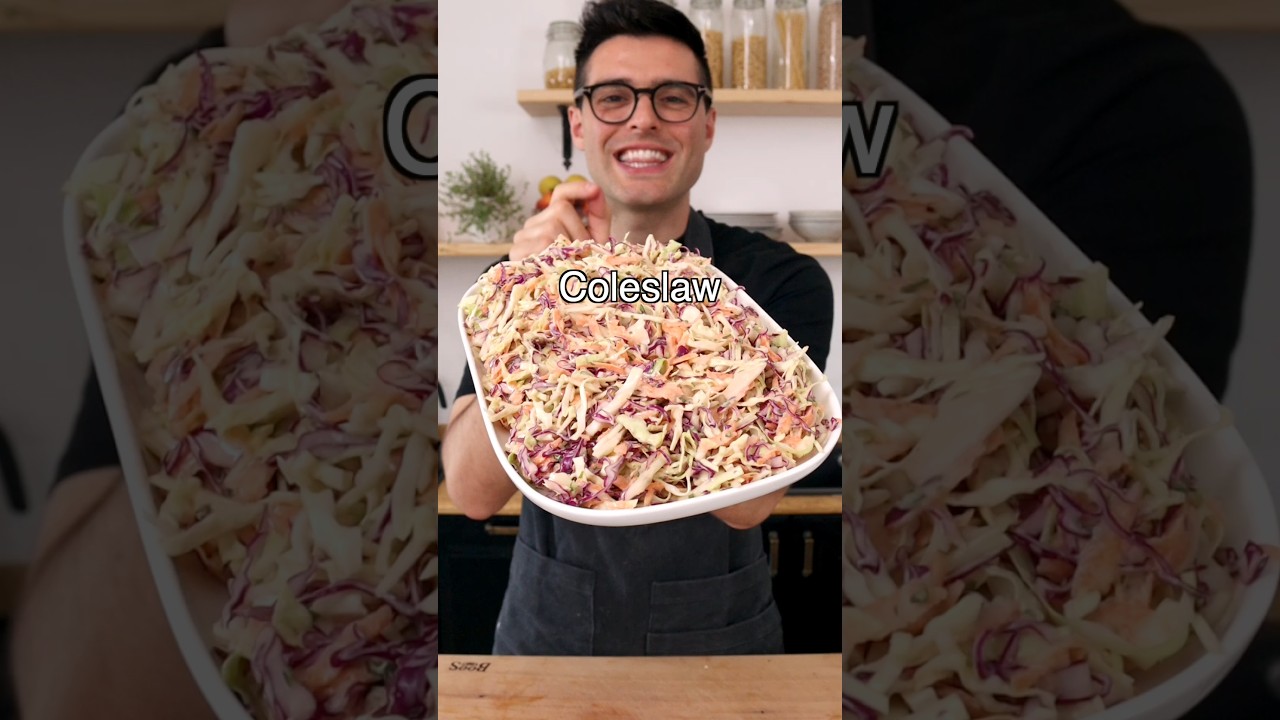
“Store-bought coleslaw is an exercise in mediocrity — watery, over-sweet, and dead on arrival. The homemade version most people make at home isn't much better because they skip the two steps that actually matter: salting the cabbage to pull out excess moisture, and giving the dressed slaw enough time to meld in the fridge. Fix those two things and you have a side dish that holds up, carries flavor, and earns its place next to whatever's coming off the grill.”
Why This Recipe Works
Coleslaw is not a salad. It is a dressed vegetable preparation that depends entirely on water management, and almost every bad batch of coleslaw is the result of ignoring that fact. Get the moisture under control and the rest of the recipe writes itself.
The Moisture Problem
A head of green cabbage is approximately 92% water by weight. That water is locked inside the plant cells under mild osmotic pressure — stable while the cabbage sits whole, but immediately active the moment you shred it and introduce salt or acid. The dressing begins pulling that moisture out the second it contacts the cabbage, and within 20 minutes you have a bowl of vegetables sitting in a diluted puddle that used to be your carefully seasoned dressing.
The fix is to extract that moisture deliberately, before the dressing ever gets involved. Salt the shredded cabbage, wait 20 minutes, and wring it out hard. You are not wilting the cabbage — you are controlling when and where the water leaves. By removing it upfront, the dressing that goes on afterward stays concentrated, coats the cabbage uniformly, and doesn't dilute over time. Slaw made this way stays crisp and properly dressed for three days. Slaw made without this step is already declining by hour two.
The Dressing Architecture
The dressing in this recipe follows a specific hierarchy: fat first, acid second, sweet third, aromatic fourth. Mayonnaise is the fat and the emulsifier — it binds the water-soluble vinegar and lemon juice into a single cohesive coating. Dijon acts as a secondary emulsifier and adds a sharp, peppery backbone that keeps the dressing from tasting flat. The celery seed is the ingredient most people skip and most people miss — it's the compound that makes coleslaw smell and taste like coleslaw, not just dressed cabbage.
The acid balance matters more than any other variable. White vinegar is sharp and neutral, which gives you a clean canvas. The lemon juice adds brightness without competing. Together they create a dressing that reads tart first, with the sugar cutting in afterward to round the edges. If the sweetness comes through before the acid, the ratio is wrong.
The Overnight Variable
Two hours of refrigeration is the minimum. Overnight is the target. This is not about safety — it's about flavor development. The acid gradually penetrates the cabbage cell walls, softening the texture from crunchy-raw to something more yielding and complex. The celery seed blooms in the emulsion. The Dijon integrates. The onion mellows from sharp to sweet. At the two-hour mark, you have coleslaw. At the twelve-hour mark, you have something worth talking about.
Why Greek Yogurt Belongs Here
The modified version of this recipe replaces half the mayonnaise with plain Greek yogurt. This is not a compromise — the yogurt's lactic acid works in concert with the white vinegar to create a brighter, more layered dressing. The texture stays fully creamy. The calories drop from 185 to 145 per serving, saturated fat falls to essentially nothing, and the protein nearly doubles. You lose a small amount of the rich, rounded fat character that full-fat mayo provides, but you gain a livelier, more distinct dressing that holds its personality better after an overnight rest.
A large mixing bowl with enough capacity to toss without spillage and a sturdy kitchen towel for wringing are the two pieces of equipment this recipe actually depends on. Everything else is pantry ingredients and patience.
The lesson coleslaw teaches is the same one every cold salad teaches: the dressing is not the dish. The preparation of the vegetable is the dish. Dress it correctly, give it time, and the dressing does the rest.
Where Beginners Mess This Up
Before we start, read this. These are the 4 reasons your the best homemade coleslaw (stop buying the tub) will fail:
- 1
Skipping the salt-and-drain step: Raw cabbage is about 92% water. If you dress it immediately, that water dilutes the dressing within 20 minutes and you get a soggy, puddle-at-the-bottom mess by the time it hits the table. Salting and draining pulls that moisture out before the dressing ever touches the vegetable — the slaw stays crisp and the dressing stays concentrated.
- 2
Not squeezing hard enough: Tipping the colander and shaking it is not draining. You need a kitchen towel, and you need to wring it like you mean it. The goal is to lose roughly a quarter cup of liquid per batch. If the cabbage feels dry when you put it in the bowl, you've done it right.
- 3
Dressing it and serving it immediately: The flavors need time. The acid softens the cabbage slightly, the sugar dissolves fully, and the celery seed blooms in the emulsion. Two hours is the minimum. Overnight is the target. Coleslaw dressed an hour before a party will be sharp and disjointed. Made the night before, it becomes something entirely different.
- 4
Over-sweetening the dressing: Sugar is a background note here, not the lead. The correct coleslaw dressing is tangy first, sweet second. If you can taste the sweetness before you taste the acid, you've gone too far. Add the sugar in two stages and taste between additions.
The Video Reference Library
Want to see it in action? Here are the exact videos we analyzed and combined to build this foolproof recipe translation:
The technique walkthrough this recipe is built around — clear instruction on the salt-drain method and why the overnight rest changes everything.
🛠️ Core Equipment
- Large colanderYou need airflow around the cabbage while it salts and releases liquid. A bowl traps the moisture underneath and partially defeats the purpose.
- Clean kitchen towelThe non-negotiable draining tool. Paper towels shred under the pressure required to actually extract moisture. A thin cotton or linen towel gives you the grip and durability to wring out the cabbage properly.
- Large mixing bowlColeslaw expands as you toss it. A bowl that's too small results in dressing on your counter and unevenly coated cabbage. Go bigger than you think you need.
- WhiskThe dressing needs to emulsify — mayo, acid, and Dijon need to come together into a single cohesive mixture, not separate layers. A fork won't do it properly.
The Best Homemade Coleslaw (Stop Buying the Tub)
🛒 Ingredients
- ✦1 small head green cabbage, shredded
- ✦½ small head red cabbage, shredded
- ✦2 medium carrots, shredded
- ✦¼ small yellow onion, minced
- ✦½ cup mayonnaise
- ✦3 tablespoons white vinegar
- ✦1½ tablespoons granulated sugar
- ✦¾ teaspoon kosher salt
- ✦¼ teaspoon freshly ground black pepper
- ✦½ teaspoon celery seed
- ✦1 tablespoon Dijon mustard
- ✦2 tablespoons fresh lemon juice
👨🍳 Instructions
01Step 1
Shred the green cabbage into thin, uniform strips using a sharp knife or food processor. Transfer to a large colander.
02Step 2
Shred the red cabbage and carrots using the same method and add them to the colander.
03Step 3
Sprinkle the shredded vegetables evenly with kosher salt, toss to distribute, and allow the mixture to sit at room temperature for 20 minutes.
04Step 4
Gather the salted cabbage mixture in a clean kitchen towel and wring out the accumulated liquid firmly over the sink. Work in batches until no more liquid drips from the towel.
05Step 5
Transfer the drained cabbage and carrots to a large mixing bowl. Add the minced yellow onion and toss gently to combine.
06Step 6
Whisk together the mayonnaise, white vinegar, granulated sugar, Dijon mustard, lemon juice, black pepper, and celery seed in a separate medium bowl until smooth and fully emulsified.
07Step 7
Taste the dressing and adjust: more vinegar for tartness, a pinch more sugar for sweetness, more Dijon for edge.
08Step 8
Pour the dressing over the vegetables and toss thoroughly until every piece of cabbage is evenly coated. Use your hands or two wooden spoons.
09Step 9
Cover the bowl tightly and refrigerate for at least 2 hours, or overnight.
10Step 10
Stir gently before serving to redistribute the dressing. Taste and adjust salt and pepper if needed.
Nutrition Per Serving
Estimates based on standard preparation. Adjustments alter macros.
🔄 Substitutions
Instead of Mayonnaise...
Use Plain Greek yogurt or a 50/50 blend of mayo and Greek yogurt
Slightly tangier, meaningfully lighter. The texture stays creamy and the yogurt's lactic acid complements the vinegar without competing. This is the preferred version for the modified recipe.
Instead of White vinegar...
Use Apple cider vinegar or rice vinegar
Apple cider vinegar adds warmth and subtle fruitiness. Rice vinegar is milder and slightly sweeter. Both work — white vinegar is sharper and more neutral, which is why it's the default.
Instead of Granulated sugar...
Use Honey or pure maple syrup
Use about two-thirds the volume — both are sweeter per gram than granulated sugar. Honey adds floral depth; maple adds earthy undertones. Neither is a neutral swap, but both are good.
Instead of Kosher salt...
Use Sea salt or pink Himalayan salt
Use slightly less by volume — these salts have denser crystal structures and will over-salt if substituted 1:1. The flavor difference is minimal.
🧊 Storage & Reheating
In the Fridge
Store covered in the refrigerator for up to 3 days. The salt-and-drain method is what keeps it from turning watery — undrained coleslaw should be eaten within 24 hours.
In the Freezer
Do not freeze. The cabbage cell structure breaks down completely when thawed, producing limp, waterlogged results.
Reheating Rules
Coleslaw is served cold. No reheating required. Stir before serving to redistribute the dressing that settles during storage.
❓ Frequently Asked Questions
Why is my coleslaw watery?
You skipped the salt-and-drain step, or didn't drain thoroughly enough. Cabbage releases its internal moisture into the dressing once they make contact. The only way to prevent it is to pull that moisture out before dressing. Salt the shredded cabbage, wait 20 minutes, and wring it out hard with a kitchen towel.
Can I make this ahead of time?
Yes — and you should. The overnight rest is when coleslaw becomes coleslaw. Freshly dressed slaw is sharp and disjointed. After 8-12 hours in the fridge, the acid has softened the cabbage slightly, the flavors have merged, and the whole dish comes into focus. Make it the night before.
Can I use a bag of pre-shredded coleslaw mix?
You can, and it will work. The tradeoff: pre-shredded mixes are often inconsistently cut and have been sitting in oxygen-depleted packaging, so the texture is softer before you even start. For a weeknight side dish, the bag is fine. For something you want to be proud of, shred fresh.
How do I keep coleslaw crispy for a party?
Dress it the night before using the salt-and-drain method. Keep it refrigerated right up until serving. The mistake most people make is dressing coleslaw hours ahead and letting it sit at room temperature, where the residual moisture continues releasing and the cabbage softens. Dress, refrigerate, serve cold.
Is coleslaw healthy?
In this form, reasonably so. The Greek yogurt substitution drops calories to around 145 per serving and cuts saturated fat significantly while adding protein. Cabbage is high in vitamin C and K, and the fermentable fiber feeds gut bacteria. The dressing is where the calories live — keep it measured and you have a genuinely good side dish.
What's the difference between vinegar slaw and creamy slaw?
Vinegar slaw skips the mayo entirely and uses a pure acid-oil-sugar dressing. It's lighter, sharper, and holds up better in heat — which is why it's common at fish shacks and taco stands where the slaw sits out. Creamy slaw uses mayonnaise as the emulsifier, which gives a richer, thicker coating. This recipe is creamy-forward with enough acid to keep it from being heavy.

The Science of
The Best Homemade Coleslaw (Stop Buying the Tub)
We turned everything on this page into a beautiful, flour-proof PDF cheat sheet. Print it out, stick it to your fridge, and never mess up your the best homemade coleslaw (stop buying the tub) again.
*We'll email you the high-res PDF instantly. No spam, just perfectly cooked meals.
AlmostChefs Editorial Team
We translate the internet's most popular cooking videos into foolproof, beginner-friendly written recipes. We analyze multiple methods, test them in our kitchen, and engineer a single "Master Recipe" that gives you the best possible result with the least possible stress.