Café-Quality Cold Matcha Latte (The Froth Secret No One Talks About)
A silky, vibrant green iced matcha latte made by dissolving ceremonial-grade matcha in a small amount of hot water before layering over milk and ice. We broke down the most-watched YouTube methods to find the exact technique that eliminates clumps and delivers a smooth, balanced drink every time.
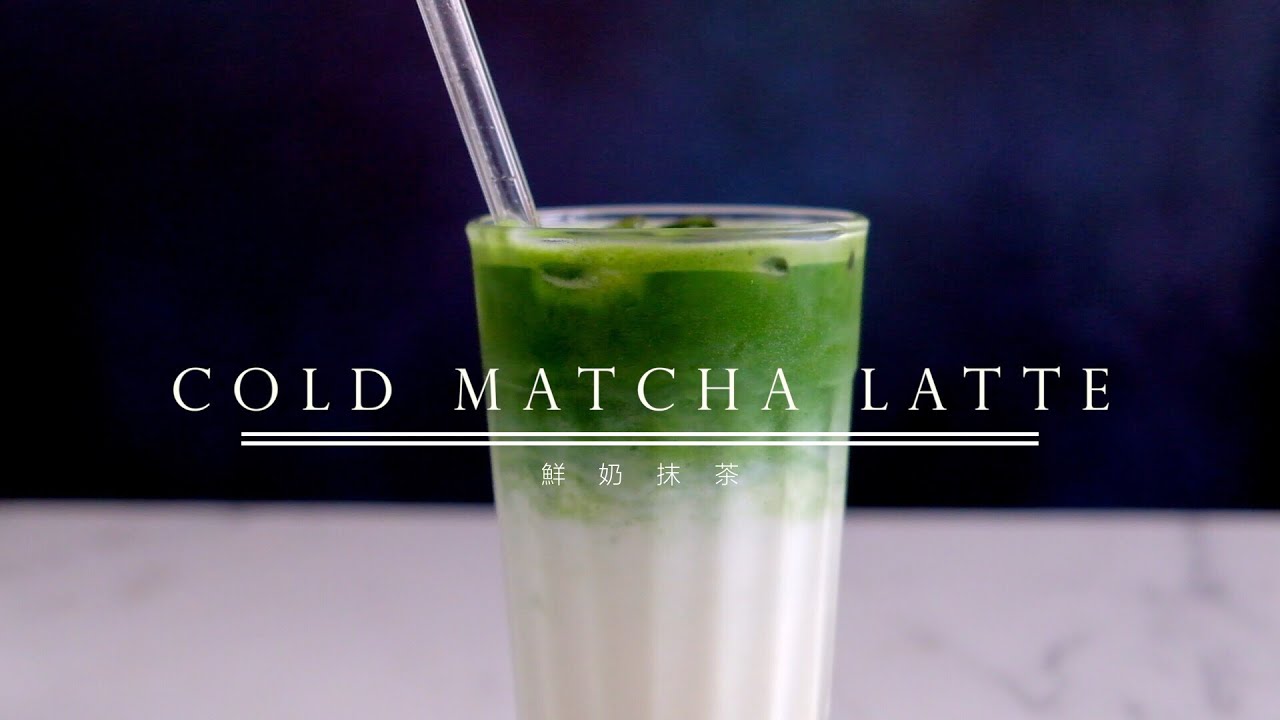
“Most homemade matcha lattes fail before the ice even goes in. The culprit is always the same: matcha powder dumped directly into cold liquid, where it clumps into bitter green islands that no amount of stirring will fix. The difference between a chalky, grainy mess and a smooth, vibrant café-quality latte comes down to one step almost everyone skips — and it takes thirty seconds.”
Why This Recipe Works
The cold matcha latte is one of three drinks in the world where the preparation technique matters more than the ingredient list. The other two are espresso and fresh-squeezed juice. In each case, a simple set of inputs produces wildly different results depending entirely on how you treat them in the first sixty seconds. Matcha is unforgiving of shortcuts, but it rewards correct technique with a flavor and texture that no café can reliably replicate at speed — which means making it at home properly is genuinely better than paying six dollars for a rushed version.
The Paste Step Is Everything
Every matcha preparation method in existence begins with the same non-negotiable foundation: dissolve the powder in a small amount of hot water before introducing anything cold. This is not optional. It is not a style preference. It is chemistry. Matcha powder is hydrophobic at low temperatures — the particles carry a slight surface charge that causes them to cluster together and repel cold water rather than absorbing it. When you dump powder into cold milk, you create a colloidal suspension of clumps that will never fully dissolve regardless of how long or how hard you stir.
Hot water at 165–170°F disrupts the powder's surface tension and allows the particles to hydrate evenly, producing a smooth, glossy paste in under thirty seconds of whisking. This paste is water-soluble and integrates immediately with cold liquid once it's ready. The order of operations is rigid: hot water first, paste second, cold liquid third. Reversing any of these steps produces the grainy, clumpy result that makes people think they dislike matcha when they actually dislike bad technique.
Temperature Is Not Trivial
The 165–170°F water temperature range is specific for a reason. Matcha contains catechins — a family of polyphenol antioxidants that are responsible for both the health benefits and the characteristic umami-forward bitterness of quality matcha. Above approximately 175°F, these compounds undergo rapid oxidation and produce harsh, astringent byproducts. The flavor shifts from complex and grassy to flat and medicinal. This is the same chemistry that makes overbrewed green tea taste like battery acid compared to a carefully steeped cup.
A temperature-controlled kettle set to the green tea preset (typically 160°F) is the most foolproof solution. If you are working with a standard kettle, boiling water dropped in temperature by approximately 1°F every 15 seconds in an open vessel — which means a 3–4 minute rest after boiling takes you from 212°F to roughly 165–170°F. This is not precision engineering, but it is close enough to produce consistent results without a thermometer.
The Whisking Mechanics
A bamboo chasen is not a piece of aesthetic equipment. Its 80 to 120 fine bamboo tines create micro-turbulence in the paste that a conventional whisk — with its widely-spaced wires — cannot replicate. The motion is a rapid W or M pattern across the surface, not a circular stirring motion. Circular motion causes the chasen tines to drag through the paste and creates a vortex that forces clumps to the edges of the bowl. The W pattern distributes force evenly across the entire paste surface and incorporates fine air bubbles that give the finished latte its characteristic soft texture.
An electric milk frother held just below the surface of the paste is the only acceptable substitute for a chasen. It produces sufficient turbulence to dissolve the powder and creates a light foam that improves the overall mouthfeel. A fork, a teaspoon, or a blender set to pulse each produce objectively inferior results for different mechanical reasons — none of them worth explaining at length, because the right tool costs eight dollars and lasts years.
Why Oat Milk Won
Oat milk's dominance in specialty matcha lattes is not a trend — it is a function of its macronutrient composition. Oats are high in complex carbohydrates and beta-glucan, a soluble fiber that creates natural viscosity in liquid. When processed into milk, this translates to a body and creaminess that other plant milks cannot match without added thickeners. Almond milk's thin, watery texture dilutes the matcha flavor and produces a flat, low-saturation drink. Coconut milk adds its own flavor, which competes with matcha's delicate grassy notes rather than supporting them.
Full-fat oat milk also froths cold better than alternatives because its higher solid content produces more stable foam. If you are layering the latte for presentation rather than stirring everything together, cold-frothed oat milk poured slowly over an ice base will hold its position above the matcha layer for several minutes — long enough to drink it at the pace a good latte deserves.
The Salt Amplifier
A pinch of sea salt in a sweet cold drink is one of the most effective and least used flavor hacks in home cooking. Salt suppresses bitterness receptors on the palate while simultaneously amplifying sweetness and umami. In a cold matcha latte, it does two things at once: it reduces the perception of matcha's inherent bitterness without adding more sweetener, and it makes the oat milk taste richer. The amount needed is sub-threshold — you should not taste salt, only notice that the drink tastes more complete than it did without it. Start with a small pinch. You will not go back.
Where Beginners Mess This Up
Before we start, read this. These are the 4 reasons your café-quality cold matcha latte (the froth secret no one talks about) will fail:
- 1
Adding matcha directly to cold liquid: Matcha is a finely ground powder with hydrophobic surface properties — it actively repels cold water. Pouring cold milk or ice water straight onto the powder creates immediate clumping that cannot be reversed by stirring. The clumps taste intensely bitter and the rest of the drink tastes like nothing. You must first dissolve the powder in a small amount of hot water to create a smooth paste before adding anything cold.
- 2
Using water that is too hot: Boiling water (212°F) scorches matcha's delicate catechin compounds and turns the flavor sharply bitter and astringent. The ideal temperature is 160–175°F — just off the boil by two to three minutes, or water from a kettle set to the green tea setting. This range dissolves the powder completely without degrading the grassy, umami-forward flavor that makes quality matcha worth drinking.
- 3
Skipping the whisking step: A spoon will not dissolve matcha properly. You need either a traditional bamboo chasen (matcha whisk) or a small electric milk frother used in a rapid W or M pattern. The goal is a smooth, slightly frothy paste with no visible powder particles. Thirty seconds of proper agitation is the entire difference between a gritty drink and a silky one.
- 4
Using low-grade culinary matcha for cold drinks: Culinary-grade matcha is designed for baking, where its bitterness is masked by sugar and fat. In a cold latte, there is nothing to hide behind — the bitterness hits immediately. Ceremonial-grade or premium culinary-grade matcha has a sweeter, more complex flavor profile that holds up uncut against cold milk. The price difference is worth every cent.
The Video Reference Library
Want to see it in action? Here are the exact videos we analyzed and combined to build this foolproof recipe translation:
The clearest breakdown of the hot-dissolve technique with detailed close-ups of correct whisking form. Covers both oat milk and dairy versions and explains why the paste step is non-negotiable.
Side-by-side comparison of correct versus incorrect matcha preparation methods. Useful for visualizing exactly what the paste consistency should look like before cold liquid is added.
Deep dive into matcha grades, whisking mechanics, and milk frothing for cold applications. Covers the science of why cold water fails and hot water succeeds at dissolving matcha powder.
🛠️ Core Equipment
- Bamboo matcha whisk (chasen)The fine tines of a chasen create micro-turbulence that breaks apart powder clumps and incorporates air simultaneously. A regular whisk's tines are too far apart to do this job. If you do not have one, a small electric milk frother is the only acceptable substitute.
- Small ceramic matcha bowl or wide mugYou need surface area to whisk effectively. A narrow glass or tall cup restricts wrist movement and produces uneven mixing. Any wide, shallow vessel works — the matcha bowl's shape is functional, not decorative.
- Electric milk frotherFor frothing the oat milk before layering. A frother turns cold oat milk into a thick, pourable foam that sits on top of the matcha base, creating the café-style gradient. Shaking milk in a jar works but produces coarser, faster-collapsing foam.
- Kitchen thermometer or temperature-controlled kettleWater temperature is the single most controllable variable in this recipe. A thermometer removes all guesswork. If you heat water in a standard kettle, let it sit for 3–4 minutes after boiling to reach the 165–170°F target range.
Café-Quality Cold Matcha Latte (The Froth Secret No One Talks About)
🛒 Ingredients
- ✦1.5 teaspoons ceremonial-grade matcha powder
- ✦2 tablespoons hot water (165–170°F)
- ✦1 cup oat milk (or whole milk), cold
- ✦1 tablespoon simple syrup or honey, to taste
- ✦1 cup ice cubes
- ✦Pinch of sea salt (optional, amplifies sweetness)
👨🍳 Instructions
01Step 1
Sift the matcha powder through a fine-mesh strainer into your matcha bowl or wide mug.
02Step 2
Heat water to 165–170°F. Pour 2 tablespoons over the sifted matcha powder.
03Step 3
Using a bamboo chasen or electric frother, whisk the matcha and hot water in a rapid W or M motion for 20–30 seconds until a smooth, slightly frothy paste forms with no visible clumps.
04Step 4
Add simple syrup or honey directly to the matcha paste and stir briefly to combine. This distributes sweetness evenly through the base before dilution.
05Step 5
Fill a tall glass with ice cubes.
06Step 6
Pour the cold oat milk over the ice, filling the glass about three-quarters full.
07Step 7
Slowly pour the matcha paste over the back of a spoon held just above the milk surface. This creates a layered effect — matcha floats on top of the milk.
08Step 8
Add a pinch of sea salt if using — it suppresses bitterness and amplifies the natural sweetness of the oat milk without making the drink taste salty.
09Step 9
Serve immediately, stirring just before drinking to combine the layers.
Nutrition Per Serving
Estimates based on standard preparation. Adjustments alter macros.
🔄 Substitutions
Instead of Oat milk...
Use Whole dairy milk or coconut milk
Whole milk produces a richer, creamier texture with a more traditional latte flavor. Coconut milk (the carton variety, not canned) adds a subtle sweetness that pairs well with matcha's grassy notes.
Instead of Simple syrup...
Use Maple syrup or agave nectar
Maple syrup adds a faint caramel undertone that complements ceremonial matcha. Agave is neutral and dissolves easily in cold liquid. Both work well as 1:1 substitutes.
Instead of Ceremonial-grade matcha...
Use Premium culinary-grade matcha
More bitter than ceremonial grade but still functional in a cold latte with adequate sweetener. Avoid standard culinary grade — the bitterness is too aggressive for an uncooked, unflavored application.
Instead of Ice cubes...
Use Frozen oat milk cubes
Pour oat milk into an ice cube tray and freeze overnight. These cubes chill the drink without ever diluting it as they melt — the single best upgrade for anyone who drinks matcha lattes daily.
🧊 Storage & Reheating
In the Fridge
The matcha paste (without milk or ice) keeps in an airtight jar for up to 48 hours. The assembled drink should be consumed immediately — ice dilution degrades both texture and flavor quickly.
In the Freezer
Not applicable for the assembled drink. The dry matcha powder stores in the freezer in an airtight container for up to 3 months with minimal quality loss.
Reheating Rules
Not applicable. This is a cold drink. If you want a hot matcha latte, scale the hot water up to 6 ounces total and skip the ice.
❓ Frequently Asked Questions
Why does my matcha always taste bitter?
Either your water is too hot (above 175°F scorches the delicate catechins), you are using culinary-grade powder in a cold drink with nothing to mask it, or you are under-sweetening. Ceremonial-grade matcha at 165–170°F with adequate sweetener should taste grassy and slightly sweet, not medicinal.
Can I make this without a matcha whisk?
Yes. A small electric milk frother used directly in the bowl works well for the paste step. A regular whisk technically works but takes significantly more effort and produces less consistent results. A fork does not work — the tines are too far apart to break up the fine powder.
What is the difference between ceremonial and culinary matcha?
Ceremonial-grade matcha is made from the youngest tea leaves, ground to a finer powder, and has a naturally sweeter, more complex flavor. It is meant to be consumed as a beverage with no additions. Culinary-grade is made from older leaves, is coarser, and is significantly more bitter — designed to be baked into desserts or blended into smoothies where other ingredients balance the flavor.
Why is my cold matcha latte clumpy even after whisking?
You likely added the cold milk before fully dissolving the powder, or your water temperature was too low to properly hydrate the matcha particles. Always create a fully smooth paste with hot water first. Once the paste is lump-free and slightly frothy, cold liquid can be added without any clumping.
How much caffeine is in a cold matcha latte?
One teaspoon of matcha contains approximately 35–50mg of caffeine, so this recipe (1.5 teaspoons) delivers roughly 50–75mg — comparable to a moderate cup of green tea, about half a standard espresso shot. Matcha also contains L-theanine, which moderates caffeine's effect and produces a calm, focused energy rather than the spike-and-crash of coffee.
Can I make this vegan?
It already is, using oat milk and agave or maple syrup as the sweetener. Check your matcha powder label for additives — pure matcha contains nothing but ground tea leaves and is inherently vegan.

The Science of
Café-Quality Cold Matcha Latte (The Froth Secret No One Talks About)
We turned everything on this page into a beautiful, flour-proof PDF cheat sheet. Print it out, stick it to your fridge, and never mess up your café-quality cold matcha latte (the froth secret no one talks about) again.
*We'll email you the high-res PDF instantly. No spam, just perfectly cooked meals.
AlmostChefs Editorial Team
We translate the internet's most popular cooking videos into foolproof, beginner-friendly written recipes. We analyze multiple methods, test them in our kitchen, and engineer a single "Master Recipe" that gives you the best possible result with the least possible stress.