Silky Cold Brew Coffee (Stop Overpaying for the Café Version)
A smooth, naturally low-acid coffee concentrate made by steeping coarsely ground beans in cold water for 12–24 hours. We broke down the most common home-brew mistakes to give you a foolproof method that produces café-quality results with zero equipment and zero heat.
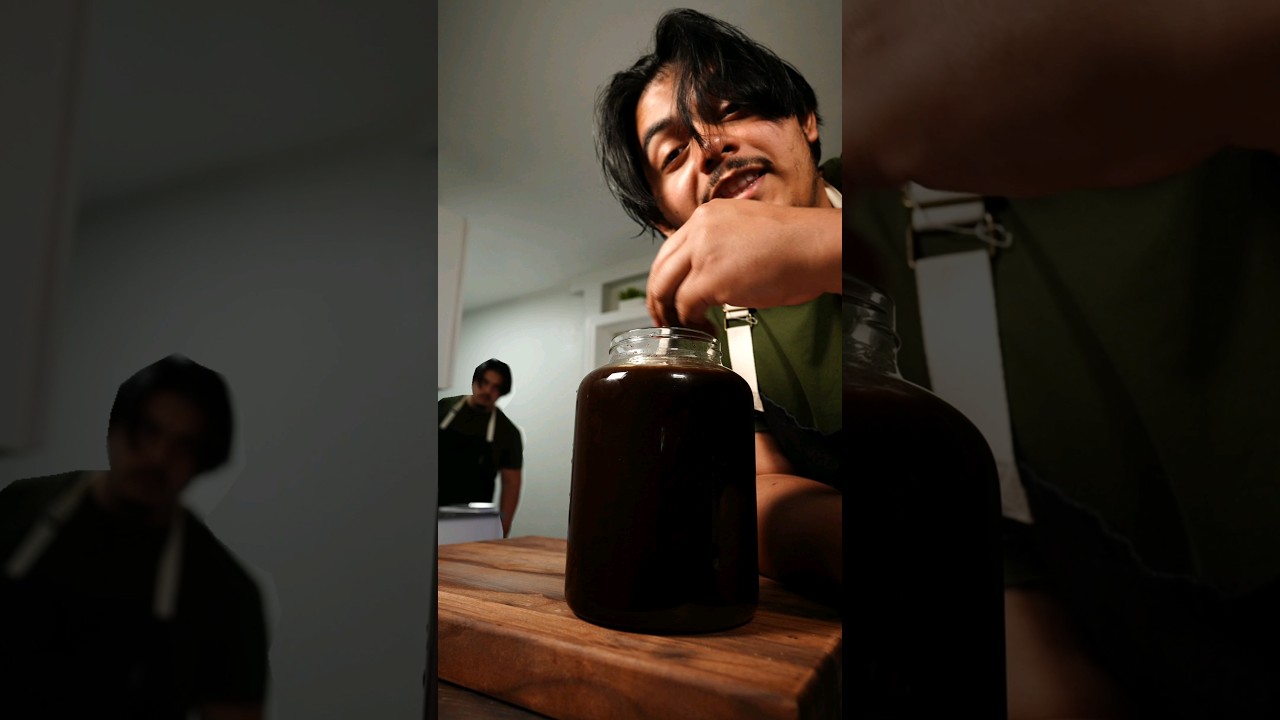
“Cold brew costs four dollars a cup at the café and roughly forty cents to make at home. The gap isn't quality — it's markup. The technique is stupidly simple: coarse grind, cold water, time. But most home attempts produce something either bitter, watery, or alarmingly close to motor oil. The difference is grind size, ratio, and not rushing the steep. We fixed all three.”
Why This Recipe Works
Cold brew is the laziest great coffee you will ever make. There is no blooming, no pour-over choreography, no precise temperature control. You combine two ingredients, put a lid on a jar, and wait. The problem is that "wait" is doing an enormous amount of work, and most home brewers get impatient with it in ways that quietly ruin the result.
The Chemistry of Cold Extraction
Hot water extracts coffee compounds aggressively and indiscriminately. In three to four minutes of contact, it pulls everything: the bright acids, the sweet sugars, the bitter tannins, the aromatic oils. This is why espresso tastes complex and why poorly timed pour-over tastes harsh. Heat is an accelerant that doesn't discriminate.
Cold water extracts selectively. Over 12–24 hours at refrigerator temperature, it preferentially draws out the sweet, chocolatey, and nutty compounds while leaving most of the harsh chlorogenic acids and bitter quinic acids behind. The result is a concentrate with 60–70% less acidity than hot-brewed coffee — smoother on the palate and significantly gentler on the stomach. This is not marketing language. It is measurable chemistry.
The tradeoff is time, and the people who skip it always end up with bad coffee. There is no four-hour cold brew that tastes like an eighteen-hour cold brew. The physics do not care about your morning schedule.
Grind Size Is Non-Negotiable
Fine grounds have an enormous surface area relative to their volume. In hot water, that surface area is an asset — fast, efficient extraction in seconds. In cold brew, it's a liability. The extended steep time turns a fine grind into an over-extracted, bitter disaster that no amount of milk or sweetener can rescue.
Coarse grind — the texture of rough sea salt — reduces surface area and forces the cold water to work harder for each compound it extracts. This self-limiting quality is what gives cold brew its characteristic smoothness. If you don't own a burr grinder that reaches a true coarse setting, buy coffee pre-ground specifically for cold brew. Using a blade grinder on its longest setting produces an inconsistent mix of fine and coarse particles that will give you uneven, muddy results.
The Two-Strain Principle
One pass through a mesh strainer removes the visible grounds. It does not remove the fine sediment — the nearly invisible particles that slip through a standard mesh and settle at the bottom of your concentrate. Left alone, this sediment continues extracting in the refrigerator, turning a clean concentrate progressively more bitter over days.
The second strain through a coffee filter or doubled cheesecloth catches this sediment and stops the extraction entirely. It takes two additional minutes. It is the difference between cold brew that tastes great on day one and still tastes great on day twelve.
The Salt Question
Half a teaspoon of sea salt in a four-serving recipe sounds wrong. It is not. Salt suppresses the perception of bitterness on the palate — this is documented sensory science, not folk wisdom. You will not taste saltiness in the final drink. What you will taste is the absence of any residual bitterness that even well-made cold brew can carry. It is a small thing that makes a noticeable difference, especially if you drink it black.
On Sweeteners and Additions
The vanilla, honey, cinnamon, and salt in this recipe are all additions to the finished drink — not to the concentrate. Keep your concentrate pure. Adding sweeteners or spices during steeping makes the concentrate inflexible; you're locked into those flavors for two weeks. Keep the concentrate clean and add everything at serving time so each glass can be adjusted to taste.
Cold brew is infrastructure. Make it right once and your coffee for the next two weeks costs less, tastes better, and takes thirty seconds to pour.
Where Beginners Mess This Up
Before we start, read this. These are the 4 reasons your silky cold brew coffee (stop overpaying for the café version) will fail:
- 1
Using a medium or fine grind: Fine grounds over-extract in cold water, pulling bitter, harsh tannins that no amount of milk or sweetener can mask. Cold brew demands a coarse grind — the consistency of rough sea salt. If your grinder only goes to 'medium,' you're better off buying pre-ground marketed specifically for cold brew.
- 2
Steeping at room temperature: Room-temperature steeping accelerates extraction unevenly and introduces bacterial growth risk after about 12 hours. The refrigerator slows extraction to a controlled crawl, giving you a clean, balanced concentrate. Always steep cold.
- 3
Under-steeping or over-steeping: Under 12 hours produces weak, sour concentrate that tastes like coffee-flavored water. Over 24 hours turns the concentrate astringent and flat — all the bright top notes have been extracted into bitterness. The 14–18 hour window is the sweet spot for most beans.
- 4
Skipping the second strain: One pass through a mesh strainer leaves fine sediment that turns gritty and bitter as the concentrate sits in the fridge. Always do a second pass through a coffee filter or doubled cheesecloth. The extra two minutes makes the difference between a smooth glass and one that needs chewing.
The Video Reference Library
Want to see it in action? Here are the exact videos we analyzed and combined to build this foolproof recipe translation:
The primary reference for this recipe. Covers ratio, grind size, and steep time with clear visual cues for when the concentrate is properly extracted.
🛠️ Core Equipment
- Large glass mason jar (32 oz or larger)Glass doesn't absorb coffee oils or impart flavors the way plastic containers do. After 20+ hours of steeping, those absorbed flavors become impossible to ignore. A wide-mouth jar also makes cleanup significantly easier.
- Fine-mesh strainerFirst-pass filtration to remove the bulk of the grounds quickly. Speed matters — you want to stop the extraction on your schedule, not whenever the strainer finishes dripping.
- Cheesecloth or unbleached coffee filtersSecond-pass filtration for a clean, sediment-free concentrate. Paper filters remove more oils for a brighter cup; cheesecloth preserves the oils for a fuller body. Choose based on your preference.
Silky Cold Brew Coffee (Stop Overpaying for the Café Version)
🛒 Ingredients
- ✦1 cup coarsely ground coffee beans
- ✦4 cups filtered water
- ✦1 cup whole milk or unsweetened almond milk
- ✦2 tablespoons pure vanilla extract
- ✦1 tablespoon raw honey or maple syrup
- ✦1/2 teaspoon sea salt
- ✦1/4 teaspoon ground cinnamon
- ✦2 ice cubes per serving
- ✦1 tablespoon unsweetened cocoa powder (optional)
- ✦1 pinch nutmeg (optional garnish)
👨🍳 Instructions
01Step 1
Combine the coarsely ground coffee and filtered water in a large glass jar, stirring gently to ensure all grounds are saturated and fully submerged.
02Step 2
Cover the jar with a lid or a layer of cheesecloth secured with a rubber band. Place in the refrigerator away from strong-smelling foods.
03Step 3
Allow the mixture to steep undisturbed in the refrigerator for 12 to 24 hours, depending on your desired strength. Fourteen to eighteen hours is the sweet spot for most beans.
04Step 4
Line a fine-mesh strainer with cheesecloth or a coffee filter. Slowly pour the cold brew through it into a clean glass container to separate liquid from grounds.
05Step 5
For a cleaner cup, strain a second time through a fresh coffee filter. Transfer the finished concentrate to a sealed glass bottle and refrigerate.
06Step 6
To serve, pour 3 to 4 ounces of concentrate into a tall glass filled with ice. Add 1 cup of your chosen milk and stir to combine.
07Step 7
Drizzle honey or maple syrup into the glass and stir until fully dissolved.
08Step 8
Sprinkle sea salt and ground cinnamon over the surface and give the drink a final stir. Add cocoa powder and nutmeg if using.
09Step 9
Taste and adjust sweetness or spice before serving immediately.
Nutrition Per Serving
Estimates based on standard preparation. Adjustments alter macros.
🔄 Substitutions
Instead of Regular ground coffee...
Use Organic, fair-trade ground coffee
Richer antioxidant profile and more complex flavor. The quality difference is more noticeable in cold brew than in hot coffee because there's nowhere for mediocre beans to hide.
Instead of Filtered water...
Use Purified or spring water
Removes potential chlorine that can flatten coffee flavor. If your tap water tastes fine on its own, filtered is sufficient.
Instead of Raw honey...
Use Monk fruit sweetener or stevia
Zero glycemic impact. Use sparingly — both are significantly sweeter than honey by volume. Start with half the amount and adjust.
Instead of Whole milk...
Use Coconut milk or oat milk
Oat milk is the closest texture match and complements coffee without competing with it. Coconut milk adds subtle sweetness and a richer mouthfeel. Both work well.
🧊 Storage & Reheating
In the Fridge
Store strained concentrate in a sealed glass bottle for up to 2 weeks. Do not store unstrained — the grounds continue extracting and the flavor degrades within hours.
In the Freezer
Freeze concentrate in ice cube trays. Drop cold brew cubes directly into a glass of milk for an iced drink that never gets watered down.
Reheating Rules
Cold brew can be gently warmed for a hot drink — pour concentrate into a mug and add hot water instead of cold milk. Do not microwave at full power; it kills the smooth low-acid character.
❓ Frequently Asked Questions
Why is my cold brew bitter?
Almost always a grind size problem. If you used anything finer than a coarse grind, you over-extracted. The second most common cause is steeping longer than 24 hours. Cold extraction is slow but not infinitely forgiving.
What's the difference between cold brew and iced coffee?
Iced coffee is hot-brewed coffee poured over ice. Cold brew is never exposed to heat at any point. The absence of heat means fewer acidic compounds are extracted — cold brew typically has 60–70% less acidity than hot coffee, which is why it tastes smoother and is easier on the stomach.
Can I use pre-ground coffee from the grocery store?
Only if it's labeled 'coarse grind' or 'cold brew grind.' Standard pre-ground coffee is medium grind — too fine for cold brew, which will produce a bitter, over-extracted concentrate.
Do I have to refrigerate it while steeping?
Yes. Room-temperature steeping extracts faster and less evenly, and after about 12 hours at room temp you're in bacterial growth territory. The refrigerator keeps extraction controlled and the drink safe.
How much caffeine is in cold brew concentrate?
Cold brew concentrate is significantly higher in caffeine than a standard cup of hot coffee because of the extended steep time and the coffee-to-water ratio. A 4 oz serving of concentrate (before diluting with milk) contains roughly 200mg of caffeine. Dilute accordingly.
Why does my cold brew taste watery even after 18 hours?
Your coffee-to-water ratio is too low or your grind is too coarse. Check your ratio — it should be 1 cup of ground coffee to 4 cups of water. If you're already at that ratio, grind slightly finer and steep for the full 24 hours.
The Science of
Silky Cold Brew Coffee (Stop Overpaying for the Café Version)
We turned everything on this page into a beautiful, flour-proof PDF cheat sheet. Print it out, stick it to your fridge, and never mess up your silky cold brew coffee (stop overpaying for the café version) again.
*We'll email you the high-res PDF instantly. No spam, just perfectly cooked meals.
AlmostChefs Editorial Team
We translate the internet's most popular cooking videos into foolproof, beginner-friendly written recipes. We analyze multiple methods, test them in our kitchen, and engineer a single "Master Recipe" that gives you the best possible result with the least possible stress.