The Classic Club Sandwich (Three Layers, Zero Compromises)
A triple-decker toasted sandwich built with crispy nitrate-free bacon, fresh-sliced turkey, ripe tomato, leafy greens, and a herbed Greek yogurt spread on whole grain bread. We broke down what makes a club sandwich actually worth building — and it comes down to toast temperature, layer order, and the spread.

“A club sandwich sounds simple until you eat a bad one. Soggy bread, flavorless turkey, spread that slides off, layers that collapse on the first bite. The triple-decker is actually a structural engineering problem dressed up as a lunch order. Get the toast right, get the spread right, and build in the correct order — that's the entire recipe.”
Why This Recipe Works
A club sandwich is three slices of toast, five ingredients, and one structural principle that most people ignore entirely. The reason diner club sandwiches taste better than homemade ones is not better ingredients. It's that diners have spent decades solving the physics of a triple-decker — how to keep it together, how to keep the bread crispy, and how to make every bite contain something from every layer. Understanding those three problems is the entire recipe.
The Toast Is Load-Bearing
You cannot build a club sandwich on warm bread. This isn't a preference — it's physics. A triple-decker carries tomatoes, avocado, and greens, all of which are actively releasing moisture from the moment they're cut. Soft bread absorbs that moisture and collapses within minutes. Genuine toast — golden, firm, with an audible hollow knock when tapped — creates a moisture barrier that extends your window of structural integrity from 2 minutes to 10.
The cast-iron skillet matters here because thin pans toast unevenly. You get one corner dark and one corner pale, and the pale corner is soft. Cast iron distributes heat uniformly across the surface, giving you even golden toast on every slice. Brush with olive oil before toasting — it conducts heat faster than dry bread and produces a crispier, more flavorful crust than plain dry toast.
Let the toast cool before you build. Hot toast releases steam that softens the bread from below. Sixty seconds is enough. This is a step worth taking.
The Moisture Problem
Two ingredients want to destroy your sandwich: tomatoes and avocado. Tomatoes shed free liquid constantly after slicing. Avocado oxidizes and softens. Both will soak into bread on contact.
The solution is sequencing. Slice your tomatoes and immediately pat the cut faces dry with a paper towel. Let them sit at room temperature for 10 minutes — cold tomatoes are waterlogged tomatoes. Place them above the bacon in your assembly, not directly on the bread. The bacon fat acts as a sacrificial moisture barrier, slowing the migration significantly. For avocado, slice it last, hit it with lemon juice, and use it in the upper tier where it contacts less bread surface area.
None of this eliminates moisture migration. It delays it. You still have a 10-minute window after assembly before the bread loses integrity. Build accordingly.
The Spread Architecture
Classic club sandwiches use mayonnaise. This version uses a herbed Greek yogurt spread, and the reason is not nutritional theater — it's functional. Mayonnaise at roughly 80% fat will make whole grain bread translucent and greasy within minutes of application. Greek yogurt at 10% fat does not. The spread stays on the surface longer, which means the bread stays structural longer.
The spread also goes on the interior-facing side of the middle bread slice — both faces. This is the adhesive layer that holds the two halves of the sandwich together when someone picks it up. Skipping the spread on the middle slice's top surface is why home club sandwiches slide apart at the seam.
Let the herbed yogurt sit for five minutes before spreading. Dill and basil need contact time with the yogurt's lactic acid to release their volatile oils. Spread it immediately after mixing and it tastes like seasoned yogurt. Wait five minutes and it tastes like an actual condiment.
Why the Order Is Not Arbitrary
Bottom layer: spread, bacon, tomato, greens. The bacon's fat faces the bread below. The tomato sits on the bacon's fat barrier. The greens sit loosely on top, providing volume without weight.
Middle bread slice: spread on both faces. This is the structural joint.
Upper layer: avocado, turkey, top bread. The avocado goes below the turkey because it's softer and needs the turkey's weight to compress it slightly into the bread, preventing it from sliding. The turkey folds neatly, giving the upper half uniform thickness.
This order exists to keep weight distributed evenly and to put each moisture source as far from the bread as possible. Reverse it and you have a sandwich that looks identical for 60 seconds, then falls apart.
The Cut and the Pick
A sharp serrated knife is non-negotiable. A dull knife compresses the layers downward, squeezing fillings toward the edges before it ever cuts through. The serrated blade saws through all three layers of toast cleanly without applying vertical pressure. One confident diagonal cut, corner-to-corner. Not straight across — diagonal.
The picks go in before the cut, not after. Insert them at a steep angle through all three layers, leaning slightly inward toward the center. When you cut diagonally, the two halves want to lean outward. The picks hold them vertical. This is the difference between a sandwich that looks like a diner sandwich and one that looks like a crime scene.
Where Beginners Mess This Up
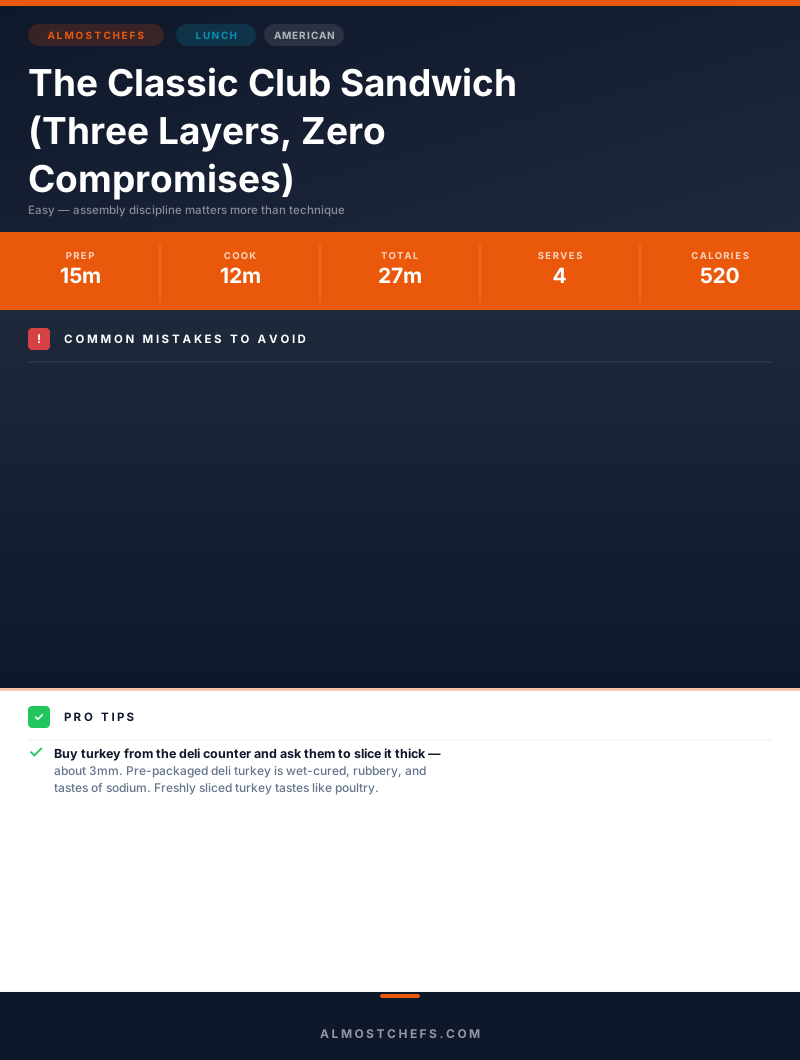
Before we start, read this. These are the 4 reasons your the classic club sandwich (three layers, zero compromises) will fail:
- 1
Under-toasting the bread: The toast has to be genuinely crispy — not just warm and tan. Three layers of wet ingredients (tomato, greens, avocado) will destroy soft bread within 90 seconds. You need structural integrity. Toast until golden and firm, then let it cool for 60 seconds before building. Soft toast is not toast.
- 2
Using cold, wet tomatoes straight from the fridge: Cold tomatoes are watery tomatoes. Slice them and let them sit at room temperature for 10 minutes. Pat the cut faces dry with a paper towel. This removes excess moisture that would otherwise soak into the bottom bread layer before you even take a bite.
- 3
Piling layers randomly: The order matters. Bacon goes on the bottom — its fat acts as a moisture barrier protecting the bread. Tomato goes above that, not below. Avocado goes on the second tier where it can't slide. The spread on both interior-facing surfaces of the middle slice is what holds the whole thing together.
- 4
Skipping the pick and cutting incorrectly: A club sandwich cut without securing picks through all three layers falls apart on contact. Insert the picks diagonally and cut corner-to-corner, not straight across. The diagonal cut reduces structural stress on the sandwich and keeps layers aligned.
The Video Reference Library
Want to see it in action? Here are the exact videos we analyzed and combined to build this foolproof recipe translation:
The primary reference for this recipe. Covers toast technique, spread ratios, and the layer-order logic that keeps a triple-decker from collapsing.
🛠️ Core Equipment
- Cast-iron skilletEven heat across the entire surface means every slice of bread toasts uniformly. A thin skillet creates hot spots. For a sandwich that lives and dies by its toast, this is not optional.
- Long wooden picks or sandwich skewersA triple-decker is three stories tall. Without vertical support, the middle layer slides out the moment someone picks it up. Picks are structural, not decorative.
- Sharp serrated bread knifeA dull knife compresses and drags through the layers instead of slicing cleanly. You want a single confident diagonal cut that reveals the cross-section without tearing the bread or pushing the fillings.
- Small mixing bowlThe herbed yogurt spread needs to be made separately and allowed to sit for a few minutes so the dill and basil bloom into the yogurt. Do not assemble it directly on the bread — it needs 5 minutes to come together.
The Classic Club Sandwich (Three Layers, Zero Compromises)
🛒 Ingredients
- ✦12 slices whole grain bread
- ✦8 slices turkey breast, freshly sliced
- ✦6 slices nitrate-free bacon
- ✦2 cups fresh leafy greens, loosely packed
- ✦2 medium ripe tomatoes, sliced
- ✦1/2 cup Greek yogurt
- ✦2 tablespoons whole grain Dijon mustard
- ✦1 tablespoon fresh lemon juice
- ✦2 teaspoons fresh dill, finely chopped
- ✦4 leaves fresh basil, torn
- ✦1/4 teaspoon sea salt
- ✦1/4 teaspoon black pepper
- ✦1 ripe avocado, sliced
- ✦4 thin slices Swiss cheese, optional
- ✦1 tablespoon extra virgin olive oil, for toasting
👨🍳 Instructions
01Step 1
Cook the nitrate-free bacon in a large skillet over medium-high heat, stirring occasionally, until the edges crisp and turn golden brown, about 8 minutes. Transfer to a paper towel to cool completely.
02Step 2
Arrange all bread slices on a cutting board and lightly brush one side of each slice with extra virgin olive oil.
03Step 3
Toast each oiled bread slice in a [cast-iron skillet](/kitchen-gear/review/cast-iron-skillet) over medium heat until golden and crispy, about 2 minutes per side. Watch carefully. Let cool 60 seconds before assembling.
04Step 4
Combine Greek yogurt, Dijon mustard, fresh lemon juice, chopped dill, and torn basil in a small bowl. Stir until smooth. Season with sea salt and black pepper. Let sit 5 minutes for the herbs to bloom.
05Step 5
Slice the tomatoes and pat the cut faces dry with a paper towel. Let them sit at room temperature for 10 minutes.
06Step 6
Spread the herbed yogurt mixture evenly onto one side of 8 of the toasted bread slices, using about 1 tablespoon per slice.
07Step 7
Layer the bacon pieces onto four of the spread-covered bread slices, breaking into pieces and distributing evenly.
08Step 8
Arrange the sliced tomatoes over the bacon in a single overlapping layer.
09Step 9
Top with a generous handful of fresh leafy greens, loosely tucked.
10Step 10
Place the remaining four spread-covered bread slices face-down on the greens, pressing very gently. These are your middle layers — both sides should now have spread on them.
11Step 11
Layer the sliced avocado on top of the middle bread slices, dividing evenly.
12Step 12
Layer the sliced turkey breast over the avocado, folding slices neatly. Add Swiss cheese here if using.
13Step 13
Top each sandwich with the final four plain toasted bread slices, pressing down lightly.
14Step 14
Insert long wooden picks diagonally through all three layers, two per sandwich. Cut each sandwich diagonally corner-to-corner with a [sharp serrated knife](/kitchen-gear/review/bread-knife). Serve immediately.
Nutrition Per Serving
Estimates based on standard preparation. Adjustments alter macros.
🔄 Substitutions
Instead of Greek yogurt spread...
Use Classic mayonnaise
Richer and more traditional. Use a good quality mayo — the flavor difference between supermarket and quality mayo is significant. The sandwich becomes noticeably heavier.
Instead of Whole grain bread...
Use Sourdough or white pullman loaf
Sourdough adds a pleasant tang and toasts with excellent crunch. Pullman is the deli classic — fine-crumbed, even layers, cuts cleanly. Either works; sourdough holds up slightly better to moisture.
Instead of Nitrate-free bacon...
Use Standard smoked bacon or turkey bacon
Standard bacon delivers more fat and smokiness. Turkey bacon is leaner but must be cooked until genuinely crispy or it turns rubbery and unpleasant — do not undercook it.
Instead of Fresh leafy greens...
Use Iceberg lettuce
The classic choice. Less nutritional value but better structural rigidity — iceberg holds its crunch longer than spinach or arugula and doesn't wilt under the weight of the upper layers.
🧊 Storage & Reheating
In the Fridge
A built club sandwich does not store well. If you must refrigerate, wrap tightly in plastic and consume within 4 hours before the toast is fully compromised.
In the Freezer
Not suitable for freezing once assembled. Individual components (cooked bacon, turkey) can be stored separately.
Reheating Rules
Do not reheat an assembled club sandwich. Toast fresh bread and rebuild from components. The reheating destroys the textural contract between crispy toast and cool, fresh fillings that defines the sandwich.
❓ Frequently Asked Questions
Why three layers of bread instead of two?
The middle layer of bread is structural — it divides the sandwich into two stable filling chambers that support each other's weight. Without it, the full pile of bacon, turkey, tomato, avocado, and greens slides and collapses. The triple-decker is not excess; it is engineering.
Can I make club sandwiches ahead of time?
Partially. Cook the bacon, make the spread, and slice the tomatoes (patted dry) up to an hour ahead. Toast the bread and assemble only when ready to eat. Once assembled, the clock is ticking — serve within 10 minutes.
My sandwich keeps falling apart when I pick it up. What am I doing wrong?
Two likely culprits: the picks aren't inserted at a steep enough diagonal angle to grip all three layers, or you cut the sandwich straight across instead of corner-to-corner. The diagonal cut compresses the layers slightly inward toward the center, which holds them together.
Is the avocado traditional in a club sandwich?
No. The traditional club sandwich uses only bacon, turkey, lettuce, tomato, and mayo. Avocado is a modern addition that works well but is not classic. If you want the original version, omit the avocado and use plain mayonnaise.
Why does my toast go soft so fast?
Tomatoes. They contain a significant amount of free moisture that migrates into bread on contact. Pat your tomato slices dry, position them above the bacon (which acts as a fat barrier), and assemble right before serving. The toast window for a club sandwich is approximately 10 minutes.
What's the right bread thickness for a club sandwich?
Between 10-12mm per slice. Too thin and the toast shatters when you apply spread pressure; too thick and the triple-decker becomes impossible to eat without dislocating your jaw. Standard sandwich loaf slices are usually right. Artisan loaves often run too thick — slice them yourself to control thickness.
The Science of
The Classic Club Sandwich (Three Layers, Zero Compromises)
We turned everything on this page into a beautiful, flour-proof PDF cheat sheet. Print it out, stick it to your fridge, and never mess up your the classic club sandwich (three layers, zero compromises) again.
*We'll email you the high-res PDF instantly. No spam, just perfectly cooked meals.
AlmostChefs Editorial Team
We translate the internet's most popular cooking videos into foolproof, beginner-friendly written recipes. We analyze multiple methods, test them in our kitchen, and engineer a single "Master Recipe" that gives you the best possible result with the least possible stress.