Classic Pancakes (Baking Powder Only, No Buttermilk — The Babish Method)
The simplest pancake that delivers: all-purpose flour, baking powder, whole milk. No buttermilk, no acid chemistry — just the clean, golden stack that Agent Cooper would call damn fine.

“The classic American pancake is the simplest version of the form: flour, baking powder, milk, egg, butter. No buttermilk, no elaborate chemistry, no overnight rest. The leavening is entirely baking powder — a self-contained acid-base system that activates on contact with liquid and again when it hits heat. What you're left with is a pancake with a genuine golden crust, a tender interior, and the kind of satisfying simplicity that Andrew Rea captured in his Twin Peaks tribute. Agent Cooper was right. These are damn fine.”
Why This Recipe Works
The classic American pancake is a study in minimal chemistry. Unlike buttermilk pancakes — which depend on the acid-base reaction between buttermilk and baking soda to generate CO2 — the classic version uses baking powder exclusively. Understanding why this is different, and why the simplicity is a feature rather than a compromise, explains every technique decision.
Baking powder is a complete leavening system. Regular baking powder contains both an acid (cream of tartar or sodium aluminum sulfate) and a base (baking soda), pre-combined with a starch to absorb moisture and prevent premature reaction. When liquid hits the powder, the first activation begins: the acid and base dissolve and start reacting, producing CO2 bubbles immediately. A second activation happens when the batter hits heat — double-acting baking powder has a second acid that only reacts above 120°F, providing a second burst of leavening when the pancake is on the griddle. The result is a pancake that rises both in the bowl (during the 2-minute rest) and in the pan — producing the tall, fluffy interior without any acid ingredient in the batter.
The sugar is a browning agent, not a sweetener. One tablespoon of sugar in 1.5 cups of flour sounds negligible — and it is, in terms of sweetness. But that sugar participates in the Maillard reaction when the batter surface reaches sufficient temperature on the griddle. The sugars in the batter interact with the milk proteins and flour to produce the characteristic golden-brown color on the pancake's surface. Without the sugar, the pancake can cook through without developing the appealing, slightly crispy exterior. The maple syrup provides the actual sweetness — which is why real maple syrup matters here. Pancake syrup is corn syrup with artificial maple flavoring; real maple syrup is a complex mixture of sugars, organic acids, and hundreds of flavor compounds that pancake syrup can't replicate.
Sifting is a 30-second technique with real impact. Flour and baking powder both have a tendency to clump, especially in humid environments. A clump of baking powder in the batter means an uneven distribution of leavening — some areas rise dramatically, others don't rise at all. Sifting breaks up these clumps and ensures the baking powder is uniformly distributed through the flour before the wet ingredients make contact. The secondary benefit is aeration: sifted flour has air incorporated between the particles, which translates to a slightly lighter batter and more even cooking.
The lumpy batter rule is a gluten management rule. Flour contains glutenin and gliadin proteins that, when hydrated and manipulated, link together into gluten — the elastic network that gives bread its chew and structure. In pancakes, you don't want this network to develop strongly. The more you stir, the more gluten forms, and the tougher the pancake becomes. Stopping at "just combined" — when the dry flour pockets are gone but visible lumps remain — means the gluten has barely formed. Those lumps are small concentrations of flour that haven't been fully hydrated yet; they cook out in the 2 minutes the pancake is on the griddle, leaving no trace in the finished product but preventing the excess mixing that would make the pancake chewy.
Whole milk fat content matters. The fat in whole milk contributes richness and tenderness to the final pancake. Lower-fat milk produces a slightly less tender result. The melted butter adds additional fat that coats the flour particles and further limits gluten development — fat inhibits gluten formation by coating the protein strands. This is another reason why pancake batter should be mixed minimally: the butter is doing work to keep the texture tender, and overmixing overwhelms that protective effect.
Build the stack correctly: wire rack in a 200°F oven if making multiple batches. The rack allows air to circulate so the bottom pancake doesn't steam against the plate. Real maple syrup, warmed, and a cold pat of unsalted butter that melts into the top pancake as it's poured. This is the breakfast Agent Cooper was describing.
Where Beginners Mess This Up
Before we start, read this. These are the 3 reasons your classic pancakes (baking powder only, no buttermilk — the babish method) will fail:
- 1
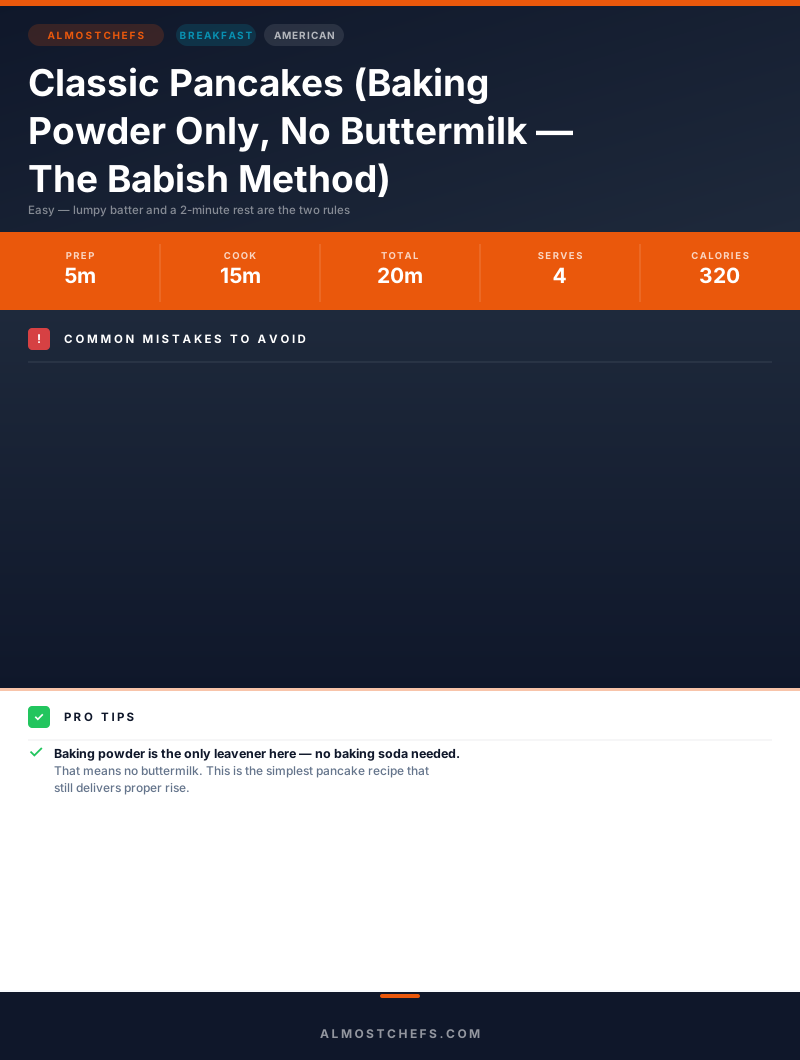
Pancakes are tough and dense: Batter was overmixed. Once the wet and dry ingredients make contact, gluten development begins immediately. Stir only until the visible dry flour pockets disappear — lumps are correct. A smooth batter means overworked gluten, which means a chewy, flat pancake.
- 2
Pancakes won't cook through before burning: Heat is too high. Medium heat is the correct setting — not medium-high. High heat browns the outside in 60 seconds before the inside has a chance to cook through. Reduce the heat and cook for a full 2 minutes before checking.
- 3
Uneven browning — dark spots and pale patches: Too much butter on the griddle, or hot spots from insufficient preheating. Use a thin, even coating of butter. Let the pan preheat for 3-5 minutes over medium before the first pour. Cast iron requires longer preheating to even out temperature distribution.
The Video Reference Library
Want to see it in action? Here are the exact videos we analyzed and combined to build this foolproof recipe translation:
Babish's Twin Peaks tribute recipe — the source for this method. The video demonstrates the sifting technique, the batter consistency check, and what properly lumpy batter looks like versus overmixed.
Systematic comparison of baking powder vs. buttermilk pancakes, testing fluffiness, texture, and flavor with controlled variables.
Weissman's technique breakdown on heat management, the bubble test for flipping, and keeping pancakes warm without steaming them.
🛠️ Core Equipment
- Griddle or large nonstick skilletA flat griddle allows multiple pancakes simultaneously. Nonstick requires less fat and produces more even browning. Cast iron works well but requires longer preheating and more fat.
- 1/4-cup measure or ladleConsistent portion size means consistent cooking time across all pancakes. A 1/4-cup portion produces a 4-5 inch pancake that cooks through properly.
- Fine mesh sifterFor aerating the flour and distributing the baking powder evenly. Clumped baking powder creates uneven rise. Sifting takes 30 seconds and makes a measurable difference.
Classic Pancakes (Baking Powder Only, No Buttermilk — The Babish Method)
🛒 Ingredients
- ✦1 1/2 cups all-purpose flour
- ✦3 1/2 teaspoons baking powder
- ✦1 tablespoon granulated sugar
- ✦1/4 teaspoon salt
- ✦1 1/4 cups whole milk
- ✦1 large egg
- ✦3 tablespoons unsalted butter, melted
- ✦1 teaspoon vanilla extract
- ✦Butter for the griddle
- ✦Maple syrup for serving
- ✦Fresh butter pat for serving
👨🍳 Instructions
01Step 1
Sift the flour, baking powder, sugar, and salt together into a large bowl.
02Step 2
Make a well in the center of the dry ingredients. Pour in the milk, egg, melted butter, and vanilla.
03Step 3
Stir from the center outward with a spatula, gradually incorporating the flour from the edges. Stop when just combined — the batter should be lumpy with visible pockets of flour.
04Step 4
Let the batter rest for 2 minutes. The baking powder will begin activating in the liquid.
05Step 5
Heat a griddle or large nonstick skillet over medium heat. Test with a drop of water — it should sizzle on contact. Brush lightly with butter.
06Step 6
Pour about 1/4 cup batter per pancake. Cook until bubbles form across the entire surface (including the center) and the edges look dry and matte — about 2 minutes.
07Step 7
Flip once with a confident motion. Cook 1-2 minutes more until golden brown. The pancake should spring back when gently pressed in the center.
08Step 8
Stack on a warm plate. Top with a generous pat of butter and warm real maple syrup.
Nutrition Per Serving
Estimates based on standard preparation. Adjustments alter macros.
🔄 Substitutions
Instead of Whole milk...
Use Any plant milk
Oat milk is closest in richness. Almond milk works but produces slightly thinner batter.
Instead of All-purpose flour...
Use 1-for-1 gluten-free blend
Look for a blend with xanthan gum included for proper binding.
Instead of Egg...
Use Flax egg (1 tbsp ground flax + 3 tbsp water)
Let rest 5 minutes to gel before using. Produces slightly denser pancakes.
Instead of Butter...
Use Vegetable oil or melted coconut oil
Less flavor but functionally equivalent. Use the same amount.
🧊 Storage & Reheating
In the Fridge
Airtight container, separated by parchment paper, up to 3 days.
In the Freezer
Freeze flat in a single layer first, then stack in a freezer bag with parchment between layers. Up to 2 months.
Reheating Rules
Toaster produces the crispest edges. Oven at 350°F for 5 minutes works for batches. Microwave is fastest but produces softer texture.
❓ Frequently Asked Questions
Why do classic pancakes only use baking powder and not baking soda?
Baking soda needs an acid to activate — like buttermilk or yogurt. Classic pancakes use regular whole milk, which isn't acidic. Baking powder contains its own acid and activates with liquid and heat, making it the right choice for a simple milk-based batter. No acid ingredient required.
How thick should pancake batter be?
It should pour slowly from a spoon but still flow — thicker than cream but thinner than cookie dough. If it plops without spreading at all, add a tablespoon of milk. If it runs flat immediately and produces a very thin pancake, add a tablespoon of flour.
Why do my pancakes have uneven browning — dark spots and pale patches?
Usually a heat distribution issue combined with too much butter. Let the pan preheat for 3-5 minutes over medium — cast iron requires the full 5 minutes. Use a very thin, even coating of butter rather than pooling it. Excess butter darkens wherever it pools.
What's the Twin Peaks connection?
Andrew Rea (Binging with Babish) recreated the pancake breakfast from Twin Peaks — Agent Cooper's iconic breakfast at the Double R Diner. The show features Cooper enthusiastically describing coffee and pancakes. The recipe is a straightforward tribute to simple American breakfast done right.
Can I add mix-ins like chocolate chips or blueberries?
Yes. Add them directly onto the poured batter on the griddle — don't mix into the batter. Folding them into the batter causes them to sink and burn on the pan surface. About 1-2 tablespoons per pancake, scattered onto the wet batter after pouring.
The Science of
Classic Pancakes (Baking Powder Only, No Buttermilk — The Babish Method)
We turned everything on this page into a beautiful, flour-proof PDF cheat sheet. Print it out, stick it to your fridge, and never mess up your classic pancakes (baking powder only, no buttermilk — the babish method) again.
*We'll email you the high-res PDF instantly. No spam, just perfectly cooked meals.
AlmostChefs Editorial Team
We translate the internet's most popular cooking videos into foolproof, beginner-friendly written recipes. We analyze multiple methods, test them in our kitchen, and engineer a single "Master Recipe" that gives you the best possible result with the least possible stress.