Classic Beef Stroganoff (The Creamy Sauce Secret Everyone Misses)
Tender seared beef, caramelized onions, and earthy mushrooms in a rich, tangy sour cream sauce over egg noodles. We broke down the most common failures in this Eastern European classic and built one foolproof weeknight technique that nails the sauce texture every time.

“Stroganoff looks simple. It is simple — until you rush the sear, crowd the pan, or dump cold sour cream into a screaming hot sauce and watch it curdle into grainy chunks. The difference between a stroganoff that tastes like a Russian grandmother made it and one that tastes like cafeteria beef stew comes down to three things: dry beef, a proper sear, and a sauce you never let boil again after the dairy goes in.”
Why This Recipe Works
Stroganoff is a 19th-century Russian dish that survived two world wars, Soviet rationing, and the American casserole era. It is not complicated. It is, however, unforgiving of impatience — and impatience is exactly what most home cooks bring to it.
The Sear Is The Recipe
Every other step in this dish builds on what happens in the first 10 minutes. Beef seared in a properly hot pan develops a Maillard crust — a layer of complex, savory compounds that forms when surface proteins react to temperatures above 300°F. This crust does two things: it adds deep flavor to the beef itself, and it deposits a layer of browned fond on the bottom of the pan that dissolves into the sauce during deglazing.
If the beef is wet when it hits the pan, the surface moisture immediately drops the pan temperature below browning threshold. The beef steams. It turns gray. The fond doesn't develop. The sauce tastes flat and the beef tastes like hot protein rather than seared meat. Thirty seconds with paper towels prevents all of this.
The two-batch approach matters for the same reason. Beef cubes packed into a pan cool the surface significantly. You want each piece to have air around it and direct contact with maximum heat. One crowded batch produces steamed meat. Two sparse batches produce seared meat. The distinction is everything.
Building the Sauce in Layers
After the beef is out, the fat and fond left in the pan are the foundation of the sauce. The onions go in first — not rushed, not on high heat, cooked properly for eight minutes until they're genuinely golden and sweet. Then the mushrooms, which need enough time to release their water and evaporate it before they'll brown. If you add the flour while the mushrooms are still wet, you get a paste that tastes raw. If you wait until the moisture is gone and they begin to brown, you get a roux that tastes nutty and complex.
The roux is one minute of stirring flour into hot butter-coated mushrooms. It's the structural component that gives the sauce body without requiring a long reduction. When the beef broth hits this roux during deglazing, it dissolves the fond, hydrates the starch, and begins building the glossy, coating sauce that makes stroganoff what it is.
Tomato paste and Dijon mustard are not garnishes. The tomato paste contributes caramelized sugars and body. The Dijon adds a background acidity that sharpens the sauce and prevents the sour cream from tasting dulled. Worcestershire brings fermented umami depth — the kind that makes a sauce taste like it simmered all day when it hasn't.
The Dairy Problem
The sour cream is where stroganoff lives or dies, and it's where most versions fail. Cold dairy hits a hot sauce and curdles immediately — the fat separates from the whey proteins and you get granular chunks floating in greasy liquid. There is no coming back from a fully broken sauce.
The fix has two components: temperature of the dairy and temperature of the sauce. The sour cream must be at room temperature before it goes in — not slightly cool, fully at room temp. And the sauce must come fully off the heat before the sour cream is added. Not on low. Off. Let it sit for 60 seconds first. Then stir the sour cream in gently with a wooden spoon, folding rather than whisking, until the sauce is smooth and uniform.
A Dutch oven helps here because its thermal mass retains heat evenly — you won't have hot spots that continue cooking the sauce after you've pulled it from the burner. Thin pans continue spiking in temperature briefly after leaving heat, which can be enough to break the dairy.
Why This Works Every Time
The 35-to-40-minute simmer before the sour cream goes in isn't just for tenderness — it's also where the sauce reduces to the right consistency. After that simmer, the sauce should coat the back of a spoon and leave a clean line when you draw your finger through it. If it doesn't, keep simmering. If it's already too thick, add a splash of broth. Get the consistency right before the dairy goes in, because you can't adjust it after without risking a broken sauce.
Serve over egg noodles, not pasta. The wide, flat surface of egg noodles catches the sauce in a way that spaghetti can't. Each forkful should have noodle, sauce, and beef in roughly equal proportion. Finish with parsley — not as decoration, but as a fresh counterpoint to a dish that's entirely rich, savory, and warm.
Where Beginners Mess This Up
Before we start, read this. These are the 4 reasons your classic beef stroganoff (the creamy sauce secret everyone misses) will fail:
- 1
Not drying the beef before searing: Surface moisture is the enemy of browning. If the beef cubes go into the pan wet, they steam instead of sear — and steam-cooked beef develops zero Maillard crust. That crust is where the deep, savory flavor lives. Pat every piece dry with paper towels and don't skip this step.
- 2
Crowding the pan: When you add too much beef at once, the pan temperature drops and the meat steams in its own liquid. You want two small batches in a hot pan, not one large batch that turns grey. Each cube needs direct contact with the hot surface and enough surrounding air to let moisture escape.
- 3
Adding cold sour cream directly to the hot sauce: Cold dairy hits a hot sauce and curdles — the fat separates from the protein and you get a broken, grainy texture instead of a silky cream sauce. The sour cream must be at room temperature before it goes in, and the heat must be off or on the absolute lowest setting when you stir it in.
- 4
Skipping the roux step: The flour cooked into the mushroom butter isn't optional. Without it, the sauce stays watery regardless of how long you simmer it. One minute of stirring flour into hot butter — creating a light roux — is what gives the finished sauce its body and glossy coating power.
The Video Reference Library
Want to see it in action? Here are the exact videos we analyzed and combined to build this foolproof recipe translation:
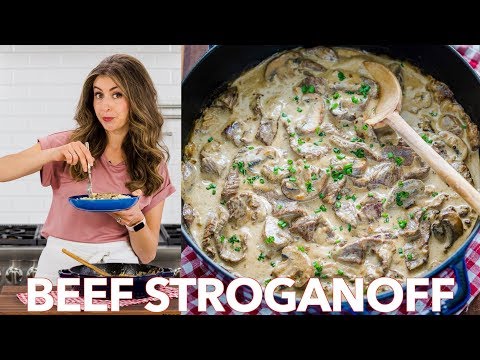
The source video for this recipe. Clean walkthrough of the sear technique, sauce building, and the exact moment to pull the heat before adding sour cream.
2. How to Make Beef Stroganoff
A detailed breakdown of the roux step and mushroom browning technique. Good reference for understanding why the flour goes in before the liquid.
3. The Perfect Stroganoff SauceFocused on sauce consistency and the temperature control required to incorporate sour cream without curdling. Useful for troubleshooting a broken sauce.
🛠️ Core Equipment
- Dutch oven or heavy-bottomed skillet ↗Even heat distribution is essential for a proper sear and consistent sauce. Thin pans create hot spots that scorch the fond before you can deglaze it. A [Dutch oven](/kitchen-gear/review/dutch-oven) also holds heat between batches so the second sear is as effective as the first.
- Wooden spoon or silicone spatula ↗For incorporating the sour cream without breaking the sauce. Metal utensils can encourage over-stirring and temperature spikes. Gentle folding with a wooden spoon is the move.
- Instant-read thermometer ↗Optional but useful. The sauce should never exceed 160°F after the sour cream is added. Above that temperature, dairy proteins coagulate and the sauce breaks. Knowing the temperature removes the guesswork.
- Paper towels ↗For drying the beef. Non-negotiable. Every drop of surface moisture delays browning and dilutes the pan fond.
Classic Beef Stroganoff (The Creamy Sauce Secret Everyone Misses)
🛒 Ingredients
- ✦1.75 pounds beef sirloin, cut into 1-inch cubes
- ✦3 tablespoons unsalted butter, divided
- ✦2 medium yellow onions, thinly sliced
- ✦10 ounces cremini mushrooms, sliced
- ✦3 cloves garlic, minced
- ✦2 tablespoons all-purpose flour
- ✦1.5 cups beef broth
- ✦2 tablespoons tomato paste
- ✦1.5 teaspoons Worcestershire sauce
- ✦1.5 teaspoons Dijon mustard
- ✦1.5 teaspoons sweet paprika
- ✦1.25 cups sour cream, at room temperature
- ✦10 ounces egg noodles
- ✦1 teaspoon salt, plus more to taste
- ✦0.5 teaspoon black pepper, plus more to taste
- ✦2 tablespoons fresh parsley, chopped
👨🍳 Instructions
01Step 1
Pat the beef cubes completely dry with paper towels on all sides.
02Step 2
Heat 1 tablespoon of butter in a large Dutch oven or heavy-bottomed skillet over medium-high heat until shimmering and just beginning to brown.
03Step 3
Working in two batches, sear the beef cubes for 3 to 4 minutes per side until deeply browned on each face. Transfer to a plate and repeat with the second batch.
04Step 4
Add the remaining 2 tablespoons of butter to the same pan. Cook the sliced onions over medium heat, stirring occasionally, until golden and softened, about 8 minutes.
05Step 5
Add the sliced mushrooms and minced garlic to the onions. Sauté over medium-high heat until the mushrooms release their moisture and the liquid evaporates, then continue until they begin to brown — about 5 minutes total.
06Step 6
Sprinkle the flour over the mushroom mixture and stir continuously for 1 minute to create a light roux. The mixture will look dry and slightly paste-like — that's correct.
07Step 7
Pour in the beef broth while stirring to deglaze the pan, scraping up all the browned bits from the bottom. Stir for about 2 minutes until the sauce begins to thicken.
08Step 8
Stir in the tomato paste, Worcestershire sauce, Dijon mustard, and paprika until fully combined.
09Step 9
Return the seared beef and any accumulated juices on the plate back to the pan. Bring the mixture to a gentle simmer.
10Step 10
Reduce the heat to medium-low and simmer uncovered for 35 to 40 minutes, stirring occasionally, until the beef is tender and the sauce has thickened slightly.
11Step 11
While the beef simmers, bring a large pot of well-salted water to a boil and cook the egg noodles according to package directions until al dente. Drain and set aside.
12Step 12
Remove the stroganoff from heat entirely. Season with salt and pepper. Let the sauce cool for 60 seconds off the burner.
13Step 13
Add the room-temperature sour cream and stir gently with a wooden spoon until fully incorporated and the sauce is smooth and creamy.
14Step 14
Let the stroganoff rest for 2 minutes, then taste and adjust seasonings.
15Step 15
Serve over the cooked egg noodles and garnish generously with fresh parsley.
Nutrition Per Serving
Estimates based on standard preparation. Adjustments alter macros.
🔄 Substitutions
Instead of Sour cream...
Use Full-fat Greek yogurt, at room temperature
Slightly more pronounced tartness and lighter texture. Use the same quantity. The temperature rule still applies — cold Greek yogurt will curdle just as fast as cold sour cream.
Instead of Beef sirloin...
Use Lean ground beef (93/7) or bison
Ground beef changes the dish significantly — more like a loose meat sauce than chunky stroganoff. Bison is closer in texture to sirloin with a richer, slightly gamier flavor. Skip the sear batching if using ground meat; brown it in a single layer and drain excess fat.
Instead of Egg noodles...
Use Whole wheat egg noodles or mashed potatoes
Whole wheat noodles add a nutty chew that works well against the rich sauce. Mashed potatoes are the Eastern European original base — arguably even better than noodles for catching the sauce.
Instead of All-purpose flour...
Use Cornstarch (use 1.5 tablespoons)
Creates a glossier, more translucent sauce. Slightly lighter body than flour. Mix the cornstarch with 2 tablespoons of cold broth before adding to prevent lumps.
🧊 Storage & Reheating
In the Fridge
Store the stroganoff and noodles separately in airtight containers for up to 3 days. Combined, the noodles absorb the sauce and turn mushy.
In the Freezer
Freeze the stroganoff sauce (without noodles, without sour cream) for up to 2 months. Add fresh sour cream when reheating from frozen. Sour cream doesn't freeze well — it separates on thawing.
Reheating Rules
Reheat gently on the stovetop over low heat with a splash of beef broth to loosen the sauce. Never bring to a boil. Stir constantly and pull from heat the moment it's hot through.
❓ Frequently Asked Questions
Why did my sour cream curdle?
Two causes: the sour cream was too cold, or the sauce was too hot when you added it. Both cause the dairy proteins to seize and separate. Always bring sour cream to room temperature before using, and always pull the pan fully off heat — not just to low — before stirring it in.
Can I use a slow cooker for this recipe?
For the beef and sauce, yes — sear the beef first, then add everything except the sour cream and noodles to the slow cooker on low for 6-8 hours. Stir in the sour cream at the very end with the heat off. The mushrooms will be softer than the stovetop version but the flavor is solid.
My sauce is too thin. How do I fix it?
Mix 1 tablespoon of cornstarch with 2 tablespoons of cold water and stir it into the simmering sauce (before the sour cream goes in). Simmer for 2 minutes and it will tighten. Don't add raw flour directly — it creates lumps and a raw flour taste.
What cut of beef works best if I can't find sirloin?
Beef tenderloin is more tender but expensive. Ribeye works well but adds significant fat. Chuck roast can substitute if you extend the simmer to 70-80 minutes — the connective tissue needs time to break down. Avoid pre-cut 'stew meat' — it's usually inconsistently sized and takes much longer to tenderize.
Can I make this ahead of time?
Yes, with one rule: make the stroganoff sauce completely but stop before adding the sour cream. Refrigerate the beef and sauce. When ready to serve, reheat gently on the stovetop and stir in fresh room-temperature sour cream at the end. This produces a better result than reheating a finished stroganoff.
Do I really need the Dijon mustard and Worcestershire sauce?
Yes. They're both umami amplifiers operating below the threshold of taste identification — you won't taste 'mustard' or 'Worcestershire,' but you'll notice their absence as a flatness in the sauce. Think of them the way you think of fish sauce in a Thai curry: not the main flavor, but the thing that makes everything else taste more like itself.
The Science of
Classic Beef Stroganoff (The Creamy Sauce Secret Everyone Misses)
We turned everything on this page into a beautiful, flour-proof PDF cheat sheet. Print it out, stick it to your fridge, and never mess up your classic beef stroganoff (the creamy sauce secret everyone misses) again.
*We'll email you the high-res PDF instantly. No spam, just perfectly cooked meals.
AlmostChefs Editorial Team
We translate the internet's most popular cooking videos into foolproof, beginner-friendly written recipes. We analyze multiple methods, test them in our kitchen, and engineer a single "Master Recipe" that gives you the best possible result with the least possible stress.