Perfect Churros with Hot Chocolate (The Spanish Street Food Formula)
Crisp, golden-fried dough batons dusted in cinnamon sugar, served with a thick, bittersweet Spanish-style hot chocolate for dipping. We broke down the most-watched YouTube methods to isolate the dough ratio, frying temperature, and chocolate consistency that separates elite churros from the greasy, hollow disappointments you've had at theme parks.
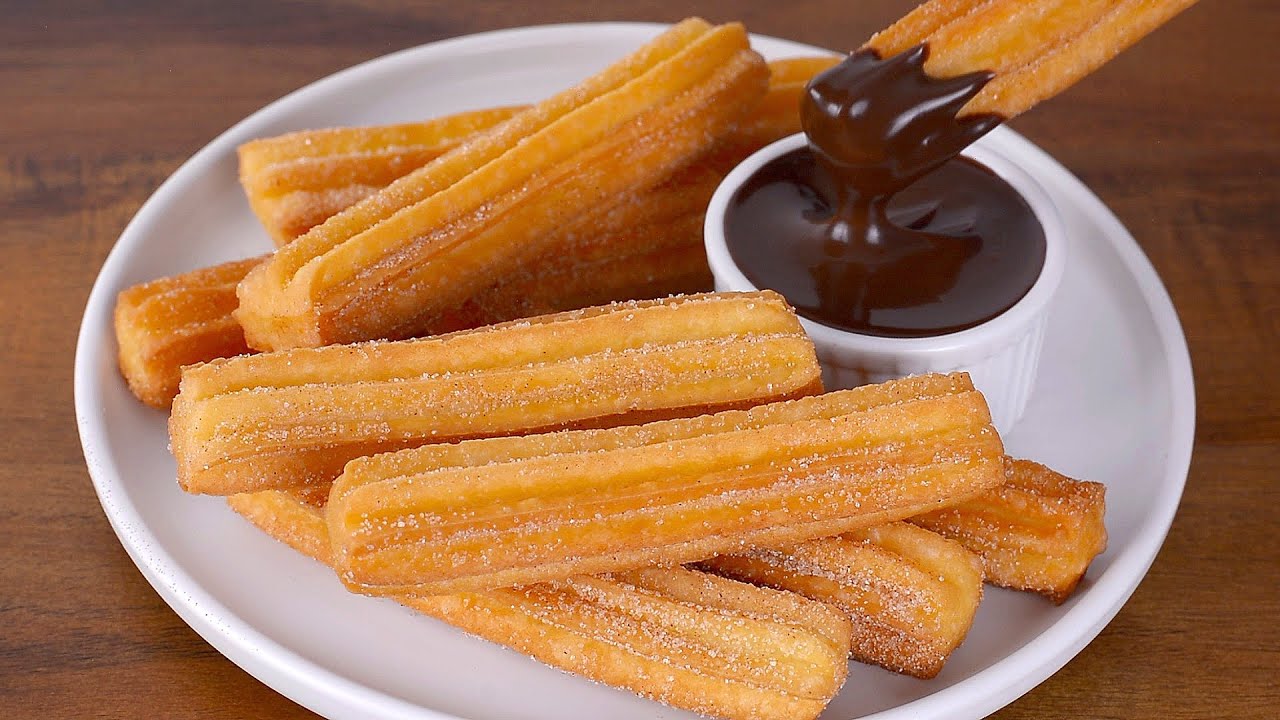
“Most churros recipes fail the same way every time: hollow tubes that deflate on contact, oily exteriors with raw dough centers, or thin chocolate sauce that tastes like cocoa powder dissolved in warm milk. Real Spanish churros are dense and chewy inside, shatteringly crisp outside, and the hot chocolate should coat a spoon like ganache. The difference is a cooked dough (choux-adjacent), the right oil temperature, and a chocolate that uses actual dark chocolate — not cocoa powder. All three are easy once you know what you're actually building.”
Why This Recipe Works
Churros exist at the intersection of French choux pastry technique and Spanish street food pragmatism, and that dual heritage explains both why they're so easy to make well and why so many home recipes get them catastrophically wrong. The dough is not a batter. It's not a bread dough. It's a panade — a cooked starch paste that behaves by entirely different rules than anything most home cooks encounter regularly. Understanding what you're building makes every step logical rather than arbitrary.
The Cooked Dough Principle
The defining technique is adding boiling water to flour and cooking the paste over heat before piping. This gelatinizes the starch granules, meaning the flour absorbs the water at a molecular level and creates a cohesive, elastic matrix that holds its star shape through the tip and doesn't dissolve in the hot oil. Raw flour mixed with cold water produces a batter, not a dough — it tears, spreads, and produces shapeless blobs rather than clean ridged batons. The butter goes into the water before the flour, distributing fat evenly through the paste so the final texture is tender rather than tough. One egg, added after the paste cools, enriches the dough and gives the exterior that characteristic glossy amber color during frying.
The ratio matters: equal parts water and flour by volume, with a small amount of fat and just enough egg to bind. Too much egg makes the dough too loose to pipe. Too little and the churros are dense and heavy rather than light and chewy at the center. This is the precise formula that produces the interior texture — crunchy outside, yielding inside — that defines an excellent churro.
The Frying Physics
Oil temperature is the entire game. At 360-365°F, something precise happens: the water content in the surface of the dough flash-vaporizes the instant it hits the oil, creating an outward pressure that prevents the fat from penetrating. The surface sets into a crust immediately, and the interior steam-cooks from within. Below 350°F, that flash-vaporization doesn't happen fast enough — oil seeps in before the crust forms, and you get the greasy, heavy churros that give street fair food a bad name. Above 375°F, the exterior browns and hardens before the interior has cooked, leaving a raw, gummy center inside an overcooked shell.
A Dutch oven is the right vessel here because its thermal mass keeps the oil temperature stable when cold dough hits it. A thin sauté pan loses 20-30 degrees per batch and takes too long to recover. The thermometer is not optional — it's the tool that turns frying from guesswork into engineering.
The star tip serves a structural purpose beyond aesthetics. Its ridges create surface area — six edges instead of one smooth curve — which means more of the dough is in direct contact with hot oil simultaneously. More surface contact equals more crisping per bite. A round tip produces smooth tubes that are aesthetically similar but texturally inferior. The ridges are the crunch.
The Spanish Hot Chocolate Standard
What makes Spanish hot chocolate distinct from every other version in the world is its consistency. It is not a drink. It is a sauce that happens to be served warm. At a traditional churrería in Madrid, the chocolate arrives in a small ceramic cup so thick that a churro inserted vertically stands upright without tipping. This is achieved with whole milk, real chopped dark chocolate, and cornstarch — not cocoa powder, not cream, not flour.
The cornstarch must be dissolved in cold milk before it contacts heat. Add dry cornstarch to hot liquid and it clumps instantly, creating an irreversible lumpy texture. Dissolve it cold, add it as a slurry, and it thickens the sauce gradually and smoothly as it heats, producing a velvety, coating consistency that clings to every ridge on the churro surface.
Dark chocolate at 70% cacao is the flavor specification, not a preference. Milk chocolate produces a sauce that's too sweet against the cinnamon sugar coating — the entire dish tips into cloying territory. Seventy percent gives you bittersweet depth that cuts through the fried richness and makes the contrast genuinely satisfying rather than just sugary.
The Assembly Logic
The cinnamon sugar roll happens immediately after frying — not a minute later, not after cooling. The residual surface oil on a freshly fried churro is the adhesive that holds the coating. Wait too long and the oil cools and sets, the coating slides off, and you're left with naked churros and a bowl of cinnamon sugar. Thirty seconds on a wire rack drains excess oil without losing the adhesive layer. Then roll. Then serve. Speed is the technique.
Where Beginners Mess This Up
Before we start, read this. These are the 4 reasons your perfect churros with hot chocolate (the spanish street food formula) will fail:
- 1
Using cold water in the dough: The dough must be made with boiling water. Cold or warm water doesn't fully gelatinize the starch in the flour, which means the dough won't hold its shape through the star tip and will tear or deflate in the oil. Boiling water is non-negotiable — it's what gives churros their dense, chewy interior structure.
- 2
Frying at the wrong temperature: Oil below 350°F produces greasy, pale churros that absorb fat instead of crisping. Oil above 375°F browns the exterior before the interior cooks through, leaving raw dough in the center. Use a thermometer. 360-365°F is the target window, and it needs to recover between batches.
- 3
Thin, watery chocolate sauce: Spanish hot chocolate is not a beverage — it's a dipping sauce that holds its shape on a spoon. It's made with real chopped dark chocolate, whole milk, and cornstarch to thicken. If yours runs off the churro like water, you used cocoa powder or skipped the cornstarch. Rebuild from scratch with 70% dark chocolate.
- 4
Overcrowding the frying pan: Adding too many churros at once drops the oil temperature dramatically, leading to greasy results across the entire batch. Fry in small groups of 3-4 at a time. Patience here is what separates a crisp exterior from a soggy one.
The Video Reference Library
Want to see it in action? Here are the exact videos we analyzed and combined to build this foolproof recipe translation:
The foundational technique video for this recipe — covers the boiling water dough method, piping directly into hot oil, and the thick Spanish-style chocolate sauce from scratch. Essential viewing for understanding the correct dough texture before you pipe.
Detailed breakdown of oil temperature management and batch frying technique. Excellent close-ups of the correct golden-brown color and the interior crumb texture you're aiming for.
Focuses on the chocolate dipping sauce specifically, with a clear explanation of the cornstarch ratio that produces the thick, coating consistency traditional to Spanish churrerías.
🛠️ Core Equipment
- Piping bag with large star tip (1M or 2D)The ridged star shape is not decorative — it dramatically increases surface area, which means more crisping per bite. A round tip produces smooth tubes that don't crisp as well. A large-diameter tip (at least 1/2 inch) ensures the interior cooks before the exterior burns.
- Deep, heavy-bottomed skillet or Dutch ovenA [Dutch oven](/kitchen-gear/review/dutch-oven) maintains oil temperature more consistently than a thin sauté pan. The thermal mass absorbs the heat drop when cold dough hits the oil, recovering faster between batches. Minimum 3-inch oil depth to allow even frying on all sides.
- Instant-read thermometerThere is no reliable visual substitute for measuring oil temperature. The wooden spoon bubble test is imprecise. A [thermometer](/kitchen-gear/review/instant-read-thermometer) is the only way to stay in the 360-365°F window that produces perfect churros consistently.
- Spider strainer or slotted spoonFor lifting churros cleanly out of the oil without dragging excess fat. A spider strainer's wide basket lets you drain multiple pieces simultaneously and transfer them to the wire rack quickly, which matters because churros continue cooking from residual heat for about 30 seconds after removal.
Perfect Churros with Hot Chocolate (The Spanish Street Food Formula)
🛒 Ingredients
- ✦1 cup water, boiling
- ✦1 cup all-purpose flour, sifted
- ✦1/2 teaspoon fine sea salt
- ✦1 tablespoon granulated sugar
- ✦1 tablespoon unsalted butter
- ✦1 large egg
- ✦1 teaspoon pure vanilla extract
- ✦Neutral oil for frying (canola or sunflower), about 4 cups
- ✦1/2 cup granulated sugar (for coating)
- ✦1.5 teaspoons ground cinnamon (for coating)
- ✦8 ounces 70% dark chocolate, finely chopped
- ✦2 cups whole milk
- ✦2 tablespoons granulated sugar (for chocolate)
- ✦1.5 tablespoons cornstarch
- ✦Pinch of fine sea salt (for chocolate)
- ✦1/4 teaspoon vanilla extract (for chocolate)
👨🍳 Instructions
01Step 1
In a medium saucepan, combine the boiling water, butter, salt, and 1 tablespoon sugar. Bring to a rolling boil over medium-high heat, then remove from heat.
02Step 2
Add the sifted flour all at once and stir vigorously with a wooden spoon until the dough pulls away from the sides of the pan and forms a cohesive ball, about 2 minutes.
03Step 3
Let the dough cool for 5 minutes, then beat in the egg and vanilla extract until fully incorporated and smooth.
04Step 4
Transfer the dough to a piping bag fitted with a large open-star tip (1M or 2D). Set aside.
05Step 5
Make the hot chocolate: whisk the cornstarch into 1/4 cup of the cold milk until fully dissolved. Combine remaining milk and 2 tablespoons sugar in a small saucepan over medium heat. Add the chopped dark chocolate and whisk until melted and smooth.
06Step 6
Add the cornstarch-milk slurry to the chocolate mixture and cook over medium-low heat, whisking constantly, for 3-5 minutes until the sauce thickens enough to coat the back of a spoon thickly. Add pinch of salt and vanilla. Keep warm on the lowest heat, stirring occasionally.
07Step 7
Pour oil into a deep heavy-bottomed pot or Dutch oven to a depth of at least 3 inches. Heat to 360-365°F over medium-high heat. Line a baking sheet with a wire rack.
08Step 8
Combine the coating sugar and cinnamon in a wide shallow bowl. Set next to the rack.
09Step 9
Pipe 4-5 inch lengths of dough directly into the hot oil, cutting with scissors or a sharp knife. Fry 3-4 churros at a time for 3-4 minutes, turning once halfway, until deep golden brown on all sides.
10Step 10
Remove churros with a spider strainer and transfer immediately to the wire rack for 30 seconds to drain, then roll in the cinnamon sugar while still hot.
11Step 11
Allow oil to return to 360-365°F between each batch. Check with the thermometer before adding the next round.
12Step 12
Serve churros immediately with the warm hot chocolate in individual cups or a shared bowl for dipping.
Nutrition Per Serving
Estimates based on standard preparation. Adjustments alter macros.
🔄 Substitutions
Instead of All-purpose flour...
Use 1:1 gluten-free flour blend
Produces a slightly more tender, less chewy interior. The dough may be slightly stickier — chill it for 10 minutes before piping if it's difficult to handle through the tip.
Instead of 70% dark chocolate...
Use Bittersweet chocolate chips (60-65% cacao)
More accessible and still produces a thick, rich sauce. Avoid anything below 60% — the sauce becomes too sweet and thin. Couverture chocolate gives the smoothest result.
Instead of Whole milk (for chocolate sauce)...
Use Full-fat oat milk or coconut milk
Oat milk produces a surprisingly close result due to its natural sweetness and body. Coconut milk adds a faint tropical note that pairs well with the dark chocolate. Avoid almond milk — too thin.
Instead of Unsalted butter (in dough)...
Use Coconut oil (refined, not virgin)
Refined coconut oil has a neutral flavor and the same fat content. Virgin coconut oil adds a coconut flavor that competes with the cinnamon. Use the same 1 tablespoon quantity.
🧊 Storage & Reheating
In the Fridge
Churros are best eaten immediately. If storing, keep uncoated in an airtight container for up to 1 day. The hot chocolate keeps refrigerated for up to 3 days in a sealed jar.
In the Freezer
Pipe and freeze raw dough portions on a parchment-lined sheet, then transfer to a freezer bag. Fry from frozen at 350°F (slightly lower) for 5-6 minutes. Do not freeze cooked churros — they turn soggy.
Reheating Rules
Reheat cooked churros in a 375°F oven on a wire rack for 5-7 minutes until re-crisped. Never microwave — it steams them into rubber. Reheat chocolate sauce on the stovetop over low heat with a splash of milk.
❓ Frequently Asked Questions
Why are my churros greasy?
Your oil was too cool when you added the dough. Below 350°F, the churros absorb oil instead of forming a crust immediately. Check your thermometer before each batch and wait for the temperature to fully recover between rounds. Also check that you're not overcrowding the pan.
Why is my dough too thin to pipe?
Either your flour wasn't sifted and clumped unevenly, or you added the egg before the dough cooled and it didn't incorporate properly. The dough should be thick enough to hold a ridge when you press it with a spoon. If it's runny, add 1-2 tablespoons of flour and beat vigorously.
Can I bake churros instead of frying them?
You can, but the result is a different food. Baked churros are more like soft breadsticks — they lack the shatteringly crisp exterior that makes churros worth eating. If you must bake, pipe onto a greased sheet and bake at 425°F for 18-22 minutes, then brush immediately with melted butter before rolling in cinnamon sugar.
How do I get the cinnamon sugar to stick?
Roll the churros immediately after they come out of the oil, while they're still hot and lightly coated in residual oil. The fat acts as the adhesive. If you drain them completely dry before rolling, the coating won't stick. Thirty seconds on the rack is enough drainage time.
My hot chocolate is lumpy. What happened?
The cornstarch wasn't fully dissolved before it hit the hot milk, or it was added too quickly. Always dissolve cornstarch in cold milk first, never in hot liquid. If you have lumps, strain the sauce through a fine-mesh sieve while it's still warm and it will smooth out.
Can I make the dough ahead of time?
Yes. The dough holds in a sealed piping bag in the fridge for up to 4 hours. Let it sit at room temperature for 15 minutes before piping — cold dough is stiff and harder to pipe cleanly through the star tip. Do not make it more than 4 hours ahead; the texture changes.

The Science of
Perfect Churros with Hot Chocolate (The Spanish Street Food Formula)
We turned everything on this page into a beautiful, flour-proof PDF cheat sheet. Print it out, stick it to your fridge, and never mess up your perfect churros with hot chocolate (the spanish street food formula) again.
*We'll email you the high-res PDF instantly. No spam, just perfectly cooked meals.
AlmostChefs Editorial Team
We translate the internet's most popular cooking videos into foolproof, beginner-friendly written recipes. We analyze multiple methods, test them in our kitchen, and engineer a single "Master Recipe" that gives you the best possible result with the least possible stress.