Foolproof Chocolate Truffles (The Two-Ingredient Technique That Actually Works)
Classic French-style chocolate truffles built on a precise ganache ratio — dark chocolate, warm cream, and a few minutes of patience. We broke down the most-watched truffle tutorials to identify the exact temperature windows and chocolate percentages that separate silky, melt-in-your-mouth centers from grainy, seized disasters.
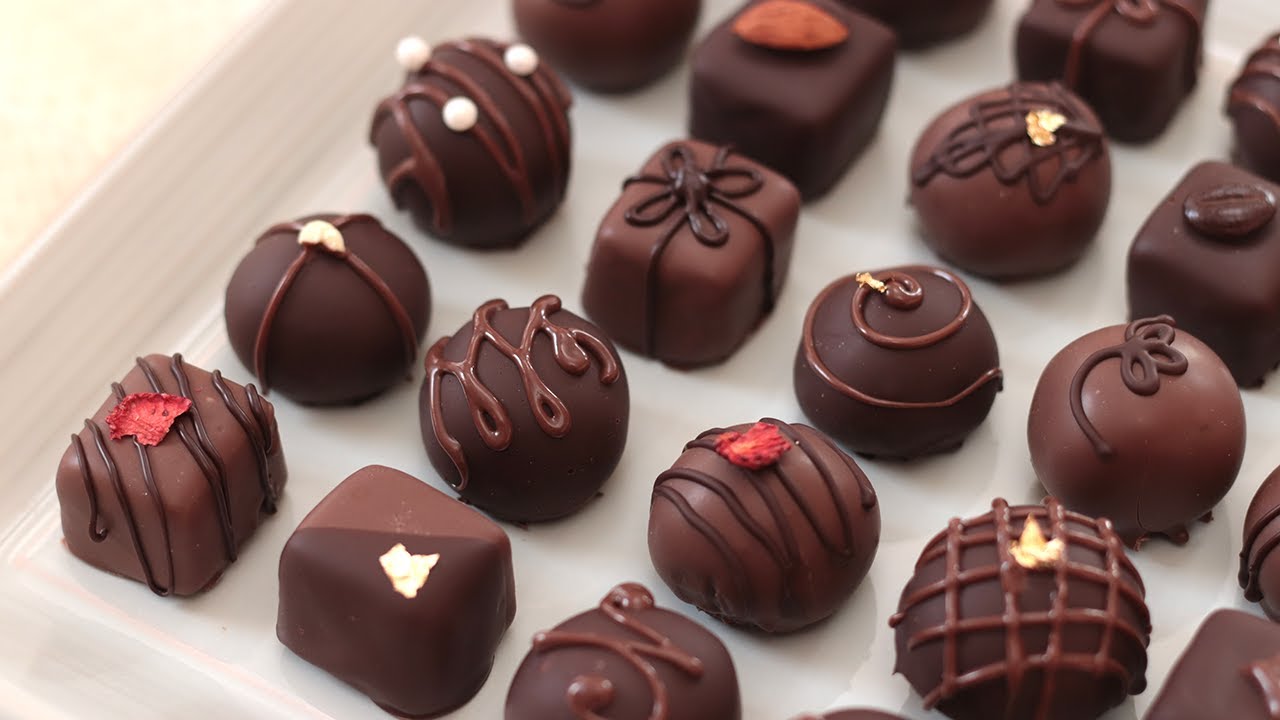
“Most homemade truffle recipes fail before the cream even hits the chocolate. Seized ganache, grainy centers, truffles that melt in your hands before they make it to the tray — all of it traces back to one fixable problem: ignoring temperature. Chocolate is not forgiving of improvisation. But follow the physics, and you end up with something that tastes like it came from a Parisian chocolatier.”
Why This Recipe Works
Chocolate truffles have the shortest ingredient list of any impressive dessert — dark chocolate, cream, butter — and yet they have a failure rate that would humble more complicated dishes. The reason is almost always the same: people treat ganache like a sauce when it is actually an emulsion, and they treat chilling time like a suggestion when it is actually a structural requirement. Fix those two mental models and every other step falls into place.
The Emulsion Underneath Everything
Ganache looks simple — chocolate melted into cream — but what you are actually building is a water-in-fat emulsion, not unlike mayonnaise or hollandaise. The cocoa butter in the chocolate must surround and stabilize tiny droplets of water from the cream, creating a unified, glossy matrix that holds its shape when cold and melts cleanly on the tongue. This process requires two things: cream at the right temperature and stirring at the right speed.
Too-hot cream — anything above 185°F — does two harmful things simultaneously. It scorches the milk solids in the cream, introducing bitter, cooked-dairy notes. And it introduces excess energy into the fat structure, causing the cocoa butter to separate rather than emulsify. The result is a pool of liquid fat floating on a grainy chocolate mass that no amount of additional stirring will repair. Pull the cream at the first sign of a bubble ring — around 175–180°F on an instant-read thermometer — and you eliminate the single most common ganache failure before it happens.
The stirring technique is equally non-negotiable. Aggressive whisking breaks the emulsion by shearing the fat droplets apart and incorporates air, which creates a dull, porous ganache instead of a dense, glossy one. A single silicone spatula moved slowly from the center outward mimics the technique professional chocolatiers use at scale: building the emulsion gradually from its core rather than trying to force it uniformly from all directions at once. Patience of about two to three minutes is all that separates the two outcomes.
Why the Chocolate Percentage Is Not Negotiable
The ratio of cocoa solids and cocoa butter in your chocolate directly determines the fat-to-liquid balance of the finished ganache. Dark chocolate in the 60–72% cacao range contains the right proportion of cocoa butter to handle the cream load without either staying too liquid to roll or setting so hard that the center cracks when you bite it. Lower-percentage chocolate floods the ganache with excess sugar and milk solids that throw off the balance; the ganache stays soft and sticky even after extended refrigeration. Higher-percentage chocolate produces a center with insufficient plasticity — technically correct, but unpleasant in texture.
This is also why the corn syrup matters. It is not there for sweetness — it is there as an invert sugar that prevents the ganache from crystallizing as it sets. Sucrose (table sugar) forms large, gritty crystals when it cools slowly. Invert sugars interfere with that crystallization, keeping the ganache smooth and uniform throughout. One tablespoon is enough. More would make the ganache too hygroscopic and the truffles would weep moisture.
The Physics of Rolling
The chill phase transforms a pourable liquid into a scoopable solid, and the minimum two-hour window is not conservative — it is thermodynamically accurate. Ganache at 40°F (standard refrigerator temperature) has fully solidified cocoa butter and is firm enough to hold a clean edge when scooped. At 50°F it is plastic and pliable. At 60°F it is already beginning to soften. Your hands are approximately 98°F.
This is why the rolling step requires speed and cold hands rather than precision. The goal is to apply enough friction to round the edges of each ganache portion before the heat transfer from your palms softens it past the point of cohesion. Working in small batches — ten truffles at a time — and returning the remaining ganache to the refrigerator between rounds keeps the material in its cooperative temperature range. A sheet pan lined with parchment and pre-chilled in the freezer for five minutes gives the rolled truffles a cold landing surface that immediately firms the exterior, locking in whatever shape you managed to achieve.
The Coating as Architecture
Cocoa powder does more than add bitterness and visual contrast — it acts as a moisture barrier that slows the transfer of condensation to the chocolate surface, delaying bloom and extending the window during which the truffles look pristine. Sifting the cocoa before rolling removes clumps that would otherwise create uneven coverage. Dutch-processed cocoa, which has been alkalized to reduce acidity, has a mellower, more rounded chocolate flavor that complements dark ganache without competing with it. Natural cocoa powder has sharper, more acidic notes that can overwhelm the subtle vanilla and butter notes in the center.
The truffles you end up with — irregular, dark, slightly dusty — look exactly as they should. Rustic is not a concession. It is the aesthetic of something made by hand from good ingredients, and it reads as such.
Where Beginners Mess This Up
Before we start, read this. These are the 4 reasons your foolproof chocolate truffles (the two-ingredient technique that actually works) will fail:
- 1
Pouring cream that is too hot: Cream that is actively boiling when it hits the chocolate scorches the cocoa solids and breaks the emulsion before it can form. Pull the cream off the heat the moment you see a ring of small bubbles around the edge — about 180°F. At that temperature it has enough energy to melt the chocolate fully without destroying the fat structure.
- 2
Stirring too aggressively: Ganache is an emulsion of fat and water. Vigorous stirring introduces air bubbles and shears the emulsion apart, producing a greasy, separated mess. Use a single silicone spatula. Stir slowly from the center outward in small circles, letting the emulsion build gradually rather than forcing it.
- 3
Skipping the chill time: Ganache needs a minimum of two hours in the refrigerator to set firm enough to scoop cleanly. Rushed ganache sticks to the scoop, tears rather than rolls, and turns into a fingerprint-covered nightmare at room temperature. There is no workaround. Plan for the chill.
- 4
Using the wrong chocolate percentage: Chocolate below 60% cacao contains too much sugar and milk solids, which throw off the fat-to-liquid ratio and produce a ganache that never fully sets. Chocolate above 80% cacao can result in a center that is too firm and slightly bitter. The 60–72% range is the structural sweet spot for rolling truffles.
The Video Reference Library
Want to see it in action? Here are the exact videos we analyzed and combined to build this foolproof recipe translation:
The primary reference video for this recipe. Clear demonstrations of the ganache emulsification technique, proper cream temperature, and the rolling and coating process from start to finish.
A deep-dive into the science of ganache ratios — why the cream-to-chocolate percentage matters and how to rescue a broken emulsion before it sets.
Side-by-side comparison of cocoa powder, tempered chocolate shell, and nut coatings. Covers the exact tempering curve for dark chocolate so your shell snaps cleanly instead of blooming white.
🛠️ Core Equipment
- Heavy-bottomed saucepanFor heating cream without scorching. Thin saucepans create hot spots that burn the cream on contact. A stainless or enameled pan distributes heat evenly so you can pull the cream at exactly the right moment.
- Digital instant-read thermometerThe difference between 170°F and 212°F cream is the difference between perfect ganache and seized chocolate. Visual cues are unreliable. A thermometer removes all guesswork and costs less than a pound of good chocolate.
- Bench scraper or melon ballerFor portioning cold ganache into consistent 1-inch portions before rolling. A melon baller creates uniform rounds in a single motion. Inconsistent sizing means some truffles set too hard while others are still soft at the same time.
- Wire cooling rack set over a sheet panFor coating truffles in tempered chocolate or cocoa. The rack lets excess coating drip through cleanly rather than pooling under each truffle and forming a flat, thick base.
Foolproof Chocolate Truffles (The Two-Ingredient Technique That Actually Works)
🛒 Ingredients
- ✦12 oz (340g) high-quality dark chocolate (60–72% cacao), finely chopped
- ✦3/4 cup heavy cream
- ✦2 tablespoons unsalted butter, cut into small cubes and softened to room temperature
- ✦1 tablespoon light corn syrup
- ✦1 teaspoon pure vanilla extract
- ✦1/4 teaspoon fine sea salt
- ✦1/2 cup Dutch-processed cocoa powder, sifted (for rolling)
- ✦Optional coatings: tempered dark chocolate, finely chopped toasted hazelnuts, or flaky sea salt
👨🍳 Instructions
01Step 1
Finely chop the dark chocolate and place it in a medium heat-proof bowl. The finer the chop, the faster and more evenly it melts — aim for pieces no larger than a pea.
02Step 2
Combine the heavy cream, corn syrup, and sea salt in a heavy-bottomed saucepan over medium heat. Warm to 175–180°F, watching for small bubbles forming around the edge of the pan. Remove immediately from heat.
03Step 3
Pour the warm cream over the chopped chocolate in a slow, steady stream. Let it sit undisturbed for 90 seconds so the residual heat can begin melting the chocolate.
04Step 4
Starting from the center of the bowl, stir slowly with a silicone spatula in small concentric circles, working outward gradually. The ganache will look broken and streaky at first — keep going. It will come together into a glossy, unified emulsion within 2–3 minutes.
05Step 5
Add the softened butter cubes and vanilla extract. Stir gently until the butter is fully incorporated and the ganache is completely smooth and glossy.
06Step 6
Press a sheet of plastic wrap directly onto the surface of the ganache to prevent a skin from forming. Refrigerate for a minimum of 2 hours, or up to 24 hours.
07Step 7
Line two sheet pans with parchment paper. Using a melon baller or a small cookie scoop (about 1 tablespoon), portion the chilled ganache into mounds on one prepared sheet pan.
08Step 8
Roll each mound briefly between your palms into a rough sphere. Speed matters more than perfection — a truffle with slightly irregular edges looks handmade and correct. One that has been over-handled looks greasy and collapsed.
09Step 9
Spread the sifted cocoa powder in a shallow bowl. Roll each truffle through the cocoa, tapping off any excess, and transfer to the second lined sheet pan.
10Step 10
Refrigerate the finished truffles for at least 15 minutes before serving so the cocoa coating sets against the surface. Serve at cool room temperature — about 65°F — for maximum flavor release.
Nutrition Per Serving
Estimates based on standard preparation. Adjustments alter macros.
🔄 Substitutions
Instead of Heavy cream...
Use Full-fat coconut cream
One-to-one substitution for a dairy-free ganache. Use chilled canned coconut cream — not coconut milk — for the correct fat content. Adds a faint coconut note that pairs well with dark chocolate.
Instead of Unsalted butter...
Use Refined coconut oil
Produces a slightly firmer ganache at room temperature. Use the same quantity. Avoid unrefined coconut oil, which will make the truffles taste like a beach.
Instead of Dark chocolate (60–72%)...
Use Milk chocolate
Reduce the cream by two tablespoons to compensate for milk chocolate's higher sugar and milk-solid content. The result is sweeter and softer. Chill time may increase to 3 hours.
Instead of Cocoa powder coating...
Use Finely ground toasted almonds or hazelnuts
Toast nuts at 350°F for 8 minutes, cool completely, then pulse in a food processor until sandy. Roll truffles exactly as you would with cocoa. Adds texture and nuttiness.
🧊 Storage & Reheating
In the Fridge
Store in an airtight container, layered between sheets of parchment, for up to 2 weeks. The cocoa coating may absorb moisture and soften slightly after day 5 — this is cosmetic, not a food safety issue.
In the Freezer
Freeze uncoated ganache balls on a sheet pan until solid, then transfer to an airtight freezer bag for up to 3 months. Thaw overnight in the refrigerator, then coat before serving.
Reheating Rules
Truffles do not reheat. Serve at cool room temperature (around 65°F) for peak texture and flavor. Remove from the refrigerator 20–30 minutes before serving.
❓ Frequently Asked Questions
Why did my ganache seize and turn grainy?
Seizing happens when water is introduced to melted chocolate in the wrong proportion — either too little (as with steam) or when the cream was too hot and broke the emulsion. A small amount of water causes the cocoa solids to clump around the sugar. To rescue seized ganache, add warm cream one tablespoon at a time, stirring slowly, until it smooths out.
Can I use chocolate chips instead of a bar?
Technically yes, but with caveats. Most chocolate chips contain stabilizers (often polyglycerol polyricinoleate) that prevent them from melting smoothly and produce a slightly waxy ganache. If chips are your only option, add an extra half tablespoon of butter to compensate for the fat structure.
My truffles are melting when I roll them. What went wrong?
The ganache was not cold enough. Return the bowl to the refrigerator for 20–30 minutes and try again. If they continue to melt immediately on contact, your kitchen is too warm — use gloves, work near an open window, or work in 5-truffle batches with refrigerator breaks between.
How do I get a perfectly round truffle?
You mostly don't — and that is the point. Hand-rolled truffles are supposed to look rustic and irregular. If you want perfect spheres, chill the rolled truffles for 10 minutes and do a quick second roll between your palms. But a slightly lumpy truffle with good cocoa coverage is indistinguishable from a sphere once it is in someone's mouth.
Can I make the ganache ahead of time?
Yes. The ganache can be made up to 72 hours in advance and refrigerated. Remove it from the fridge 15 minutes before portioning to make scooping easier. Alternatively, freeze ganache in a log wrapped in plastic wrap for up to 3 months — slice and roll directly from frozen.
What is the white film that sometimes appears on chocolate?
That is chocolate bloom — either fat bloom (cocoa butter separating to the surface) or sugar bloom (moisture dissolving and recrystallizing the sugar). It does not affect flavor or safety, only appearance. It occurs when truffles are stored in fluctuating temperatures or condensation forms on the surface. Keep storage temperature consistent to prevent it.

The Science of
Foolproof Chocolate Truffles (The Two-Ingredient Technique That Actually Works)
We turned everything on this page into a beautiful, flour-proof PDF cheat sheet. Print it out, stick it to your fridge, and never mess up your foolproof chocolate truffles (the two-ingredient technique that actually works) again.
*We'll email you the high-res PDF instantly. No spam, just perfectly cooked meals.
AlmostChefs Editorial Team
We translate the internet's most popular cooking videos into foolproof, beginner-friendly written recipes. We analyze multiple methods, test them in our kitchen, and engineer a single "Master Recipe" that gives you the best possible result with the least possible stress.