High-Protein Chocolate Mousse (38g Protein, Zero Compromise)
A silky, no-bake chocolate mousse that delivers 38g of protein per serving by replacing heavy cream with Greek yogurt and cottage cheese — without sacrificing the rich, airy texture that makes mousse worth eating. We built this from the ground up to taste indulgent and perform like a post-workout meal.

“Most protein desserts make a silent promise and break it immediately: they look like the real thing in the photo and taste like chalk dust in practice. This mousse is different because it's engineered from the inside out. The Greek yogurt and cottage cheese base isn't a compromise — it's a structural decision that produces a thicker, more stable mousse than heavy cream while adding 26g of protein before you've added a single scoop of powder. We fixed the texture, fixed the macros, and kept the chocolate flavor loud.”
Why This Recipe Works
Protein desserts fail for one reason: they prioritize the macros label and treat texture as an afterthought. The result is something that looks like dessert in a photo, reads like dessert on a nutrition panel, and tastes like protein shake poured into a cup and chilled. This mousse was built in the opposite direction — start with texture, solve the macros inside of it.
The Dairy Architecture
The foundational swap here is structural. Traditional chocolate mousse gets its airiness from whipped heavy cream — fat globules wrapped around air bubbles that hold their shape through temperature and mechanical force. The problem is that heavy cream is calorie-dense and protein-sparse: roughly 5g of fat and less than 1g of protein per tablespoon.
Greek yogurt and cottage cheese replace the cream not as a health compromise but as a textural upgrade. Greek yogurt provides lactic acid tang and a thick, stable base. Cottage cheese — fully emulsified — contributes casein protein, which is structurally unique among proteins: it forms a gel-like network when blended with acidic dairy, creating the silky, cohesive mouthfeel that makes this mousse feel rich rather than watery. Together, they deliver 26g of protein before a single gram of protein powder enters the equation.
The critical execution point is the blending time on the dairy phase. Cottage cheese contains visible curds that must be completely broken down before anything else is added. If the base isn't smooth, nothing downstream fixes it.
The Chocolate Stack
Unsweetened cocoa powder and chocolate protein powder work together rather than against each other. Cocoa provides the fat-soluble flavor compounds — the deep, complex bitterness that registers as real chocolate. The protein powder extends volume and sweetness. Neither alone is sufficient: cocoa without protein powder produces an acidic, thin mousse; protein powder without cocoa produces something that tastes like a supplement.
The espresso powder is the sleeper ingredient. At a half teaspoon, it adds no coffee flavor — but it actively suppresses the metallic, chalky notes that most protein powders carry. This is flavor chemistry, not folklore. The bitter compounds in espresso occupy the same taste receptors that protein powder bitterness targets, effectively masking it. Remove the espresso powder and the protein powder becomes detectable. Keep it and the mousse tastes like chocolate.
The Almond Butter Function
Natural almond butter — specifically the kind made from just almonds — emulsifies into the blended dairy base and contributes two things: fat for mouthfeel and a subtle nuttiness that reinforces the cocoa. The fat in almond butter acts as an emulsifier, binding the water-based dairy proteins with the fat-soluble cocoa compounds into a unified, stable matrix. This is why the mousse holds its texture for days in the fridge rather than separating.
A high-powered blender is non-negotiable for this step. The almond butter must be fully incorporated — any pockets of undissolved nut butter will separate during chilling and create oily streaks in the finished mousse.
Why the Chill Matters
The 15-minute minimum chill isn't about food safety — the mousse is fully edible straight from the blender. It's about protein physics. Casein proteins from the cottage cheese continue to cross-link and gel as the temperature drops, building the network that makes the mousse feel set rather than liquid. The cocoa continues to hydrate and bloom into the dairy base, deepening the chocolate flavor by 20-30% compared to the just-blended version.
Serve it warm and you have a thick smoothie with impressive macros. Serve it at 35°F and you have a mousse with impressive macros. Same ingredients, entirely different eating experience. The ramekins you use to chill individual portions also affect the final texture — shallower vessels set faster and more evenly than tall glasses.
Thirty-eight grams of protein. No baking. No tempering chocolate. No whipping anything. The technique is simple. The result isn't.
Where Beginners Mess This Up
Before we start, read this. These are the 4 reasons your high-protein chocolate mousse (38g protein, zero compromise) will fail:
- 1
Not blending the dairy base long enough: Cottage cheese has visible curds that must be fully emulsified before you add anything else. If you pulse it twice and move on, your mousse will have a grainy, lumpy texture no matter how long you chill it. Blend the Greek yogurt and cottage cheese together for a full minute until the mixture is completely smooth — it should look like thick sour cream with zero visible texture.
- 2
Adding protein powder without scraping the sides: Protein powder and cocoa are both hydrophobic — they resist incorporating into wet mixtures and love to cling to blender walls in dry clumps. If you blend straight through without pausing to scrape down the sides, you'll get dry streaks or pockets of powder in the final mousse. Stop halfway through the 2-3 minute blend, scrape every surface, then finish.
- 3
Skipping the espresso powder: Half a teaspoon seems cosmetic. It isn't. Espresso powder suppresses the bitterness receptors that protein powder activates, making the chocolate flavor taste cleaner and more intense without adding any coffee taste. Leaving it out doesn't just remove a flavor note — it makes the protein powder more detectable.
- 4
Serving immediately without chilling: The mousse comes out of the blender warm and slightly loose. The 15-minute chill isn't optional — it allows the dairy proteins to set, the cocoa to bloom fully into the base, and the almond butter to firm up. Serve it warm and it reads as a thick smoothie. Serve it chilled and it reads as mousse.
The Video Reference Library
Want to see it in action? Here are the exact videos we analyzed and combined to build this foolproof recipe translation:
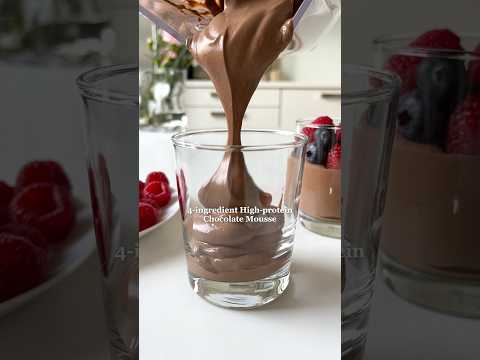
The source video for this recipe. Demonstrates the blender emulsification technique and the consistency you're targeting at each stage — particularly useful for the cottage cheese breakdown step.
2. Protein Dessert Science Explained
Deep dive into why Greek yogurt outperforms heavy cream as a mousse base from a protein and texture standpoint. Covers the dairy protein structures that create stability without chilling time.
3. No-Bake High-Protein Desserts for the WeekBatch prep context for making this mousse alongside other high-protein no-bake recipes. Useful if you're portioning for the week and want to see how the mousse holds up after 3-4 days in the fridge.
🛠️ Core Equipment
- High-powered blender ↗A standard blender will struggle to fully emulsify cottage cheese curds. You need sustained speed for at least 60 seconds on the dairy-only phase. An immersion blender in a deep container also works well for easier cleanup.
- Rubber spatula ↗For scraping the blender mid-process and for folding in the chopped dark chocolate at the end. Folding — not stirring — keeps the chocolate pieces intact and distributed, rather than melting them into the base.
- Serving glasses or ramekins ↗The mousse sets in whatever container you chill it in. Individual glasses make portioning precise and presentation clean. Wide, shallow ramekins set faster. Tall glasses let you see the layering.
- Fine-mesh sieve (optional) ↗If your blender isn't fully breaking down the cocoa powder, a quick pass through a sieve before dividing into glasses eliminates any remaining dry clumps. Worth doing on the first batch to check your equipment.
High-Protein Chocolate Mousse (38g Protein, Zero Compromise)
🛒 Ingredients
- ✦1 cup plain nonfat Greek yogurt
- ✦½ cup low-fat cottage cheese
- ✦¼ cup unsweetened cocoa powder
- ✦⅓ cup chocolate protein powder
- ✦3 tbsp natural almond butter
- ✦2 tbsp pure maple syrup
- ✦1 tsp vanilla extract
- ✦½ tsp instant espresso powder
- ✦¼ tsp sea salt
- ✦2 tbsp unsweetened almond milk
- ✦1 oz dark chocolate (70% cacao), finely chopped
- ✦2 tbsp sliced almonds for garnish
- ✦Fresh raspberries for topping (optional)
👨🍳 Instructions
01Step 1
Combine the Greek yogurt and cottage cheese in a blender. Pulse on high for 60 seconds until completely smooth with no visible curds.
02Step 2
Add the cocoa powder, chocolate protein powder, almond butter, maple syrup, vanilla extract, espresso powder, and sea salt to the blender.
03Step 3
Blend on medium speed for 2-3 minutes, stopping halfway to scrape down all sides and the bottom with a rubber spatula. Continue blending until fully incorporated with no dry streaks visible.
04Step 4
Pour in the almond milk and pulse 3-4 times to adjust consistency — stop when it's thick enough to hold a soft peak when a spoon is dragged through it.
05Step 5
Add the finely chopped dark chocolate and fold in gently with a rubber spatula using slow, deliberate strokes. Do not stir — fold, rotating the bowl, until the chocolate is evenly distributed.
06Step 6
Divide the mousse evenly among 4 serving glasses, using approximately ¾ cup per serving. Smooth the tops with a spoon.
07Step 7
Refrigerate uncovered for at least 15 minutes, or up to 4 hours for a firmer set.
08Step 8
Top with sliced almonds and fresh raspberries immediately before serving. Serve cold.
Nutrition Per Serving
Estimates based on standard preparation. Adjustments alter macros.
🔄 Substitutions
Instead of Greek yogurt and cottage cheese base...
Use 1 cup silken tofu plus ½ cup cashew cream
Creates a fully vegan version with roughly 36g protein per serving. Silken tofu blends completely smooth and has a slightly silkier texture than the dairy version. Expect a subtly earthier flavor that pairs especially well with espresso.
Instead of Chocolate protein powder...
Use 3 tbsp unsweetened cocoa powder plus 2 scoops vanilla protein powder
Gives you more control over chocolate intensity and eliminates artificial chocolate flavoring. The cocoa adds richer, more authentic bitterness. Reduce maple syrup by half a tablespoon to compensate for the extra unsweetened cocoa.
Instead of Almond butter...
Use Peanut butter or sunflower seed butter
Peanut butter deepens the chocolate flavor and adds 1-2g extra protein per serving. Sunflower seed butter works for tree nut allergies and is slightly less assertive — it disappears into the chocolate base more completely than almond or peanut.
Instead of Maple syrup...
Use 2 tbsp honey or 1 tbsp monk fruit sweetener
Honey adds subtle floral complexity but raises the sugar count slightly. Monk fruit keeps carbs lower with zero aftertaste — best option if you're tracking macros tightly. Both integrate cleanly without changing the mousse texture.
🧊 Storage & Reheating
In the Fridge
Store covered with plastic wrap pressed directly against the surface (to prevent a skin from forming) for up to 4 days. Flavor improves on day 2.
In the Freezer
Freeze in individual portions for up to 6 weeks. Thaw in the fridge for 2-3 hours — the texture softens back to mousse consistency. Do not microwave to thaw.
Reheating Rules
This recipe is not reheated. Serve cold, always. If it's been frozen, allow it to thaw slowly in the fridge overnight for the best texture recovery.
❓ Frequently Asked Questions
Can I taste the cottage cheese?
Not if you blend it correctly. Cottage cheese at full blender speed for 60+ seconds becomes indistinguishable from a thickened cream base. The tang you taste is the Greek yogurt, not the cottage cheese. If you can detect cottage cheese in the final mousse, your blender didn't fully emulsify it — blend longer next time.
Why is my mousse grainy?
Two possible causes: underdone blending of the dairy base (cottage cheese curds not fully broken down), or dry protein powder that wasn't fully incorporated. Fix both by blending longer and always scraping the sides mid-blend. A fine-mesh sieve pass before chilling can rescue a slightly grainy batch.
Can I use a different protein powder?
Yes, but results vary. Whey-casein blends set firmest. Pure whey makes a slightly looser mousse. Plant-based powders (pea, hemp) can add earthiness — compensate with extra vanilla and a pinch more espresso powder. Avoid collagen powders here: they don't contribute to texture the same way.
How do I get more protein per serving?
Add a second scoop of protein powder and increase almond milk by 1 tablespoon to maintain consistency. You can also swap the almond milk for a high-protein milk alternative (like Fairlife) for an additional 3-4g without changing the flavor profile.
Is this actually a mousse or a pudding?
The distinction is texture and technique. Traditional mousse achieves its lightness from whipped air — egg whites or cream. This version achieves its texture through dairy protein emulsification and cold setting. It's denser than a classic French mousse but lighter than a standard pudding. The consistency control is in your hands: fewer almond milk pulses = mousse, more = pudding.
Can I make this ahead for a dinner party?
Yes — it's actually better made the night before. The 8-12 hour chill produces a firmer, more developed mousse. Make it without toppings, cover with plastic wrap pressed directly to the surface, and refrigerate overnight. Add almonds and raspberries immediately before serving.
The Science of
High-Protein Chocolate Mousse (38g Protein, Zero Compromise)
We turned everything on this page into a beautiful, flour-proof PDF cheat sheet. Print it out, stick it to your fridge, and never mess up your high-protein chocolate mousse (38g protein, zero compromise) again.
*We'll email you the high-res PDF instantly. No spam, just perfectly cooked meals.
AlmostChefs Editorial Team
We translate the internet's most popular cooking videos into foolproof, beginner-friendly written recipes. We analyze multiple methods, test them in our kitchen, and engineer a single "Master Recipe" that gives you the best possible result with the least possible stress.