Chocolate Chip Cookies (Oat Flour, Brown Butter Upgrade, Underbake Method)
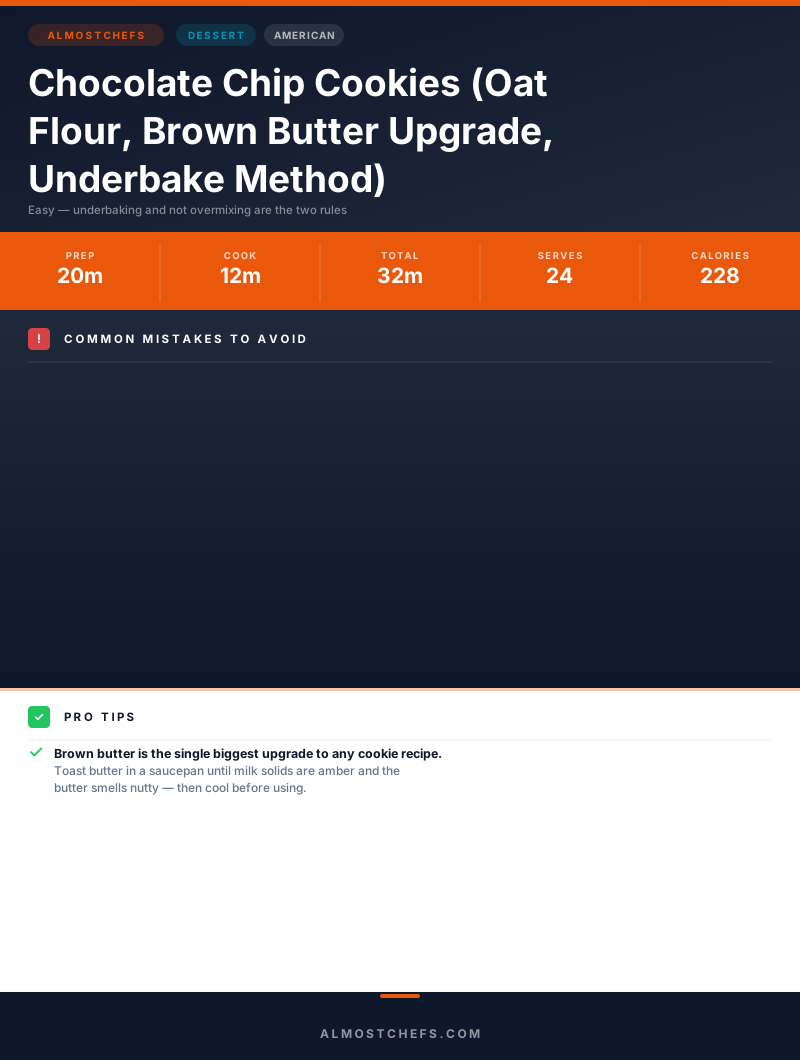
Chocolate chip cookies built on a flour-oat flour blend for fiber and chew, brown butter for depth, and a deliberate underbake that produces gooey centers. The brown butter is the upgrade. The underbake is the technique.

“The chocolate chip cookie is the most reproduced baked good in the American kitchen, which means the distance between a good one and a great one is entirely technique. Three decisions separate a bakery-quality cookie from a flat, crispy disc: brown butter (the single highest-return upgrade in cookie baking), a flour-oat flour blend (adds fiber and a nutty depth that all-purpose can't match), and a deliberate underbake that pulls the cookies when they look underdone. These decisions compound. The result is a cookie with toffee-butter depth, chewy edges, gooey center, and a texture that holds for days instead of hardening overnight.”
Why This Recipe Works
The chocolate chip cookie is a fat-sugar-flour emulsion baked until partially set, and every technique decision affects the final balance of spread, texture, and flavor. This recipe uses three specific modifications from the standard all-purpose-flour-softened-butter approach, each with a measurable impact.
The oat flour substitution changes the texture profile. Oats are high in beta-glucan — a soluble fiber — and contain more fat than wheat flour. When rolled oats are ground into flour and incorporated into cookie dough, two things happen: the beta-glucan absorbs moisture and creates a chewier, more tender crumb; and the fat in the oats contributes a subtle nuttiness that plain all-purpose flour doesn't have. The reduced protein content of oat flour (compared to all-purpose) means less gluten formation, which also contributes to a more tender cookie. The 3/4-cup-to-1.5-cup ratio preserves enough wheat gluten structure for the cookies to hold together while introducing the textural and flavor benefits of the oats.
Brown butter produces flavor through the Maillard reaction. Regular softened butter contains milk solids (the protein and lactose fraction of butter) suspended in fat. When butter is heated in a saucepan, the water evaporates first, then the milk solids — now without the protection of surrounding water — begin to undergo Maillard browning. At approximately 250°F, the proteins and sugars react to produce pyrazines, furans, and other aromatic compounds associated with toasted, nutty flavors. The resulting brown butter has a profoundly different flavor profile than plain butter — described variously as nutty, toffee-like, and caramel-adjacent. In a cookie, this flavor is distributed through every bite. Using a stand mixer to cream the cooled brown butter with sugars incorporates air that produces the lift and structure the cookies need.
The underbake technique exploits carryover cooking. When a cookie is removed from a 375°F oven and placed on a baking sheet, the baking sheet is still at oven temperature — hot enough to continue cooking the cookie's bottom for several minutes. The cookie's interior temperature continues to rise for approximately 5 minutes after leaving the oven as heat conducts from the exterior toward the center. A cookie pulled from the oven when the edges are set and golden but the center still looks pale and puffy will have a fully cooked, gooey center after 5 minutes of carryover cooking on the sheet. A cookie pulled when the center looks set and done in the oven will have a firm, dry center once cooled — overbaked by the time the carryover is factored in.
Flaky salt on top is a flavor amplifier. Salt suppresses bitterness (which is why a small amount of salt in coffee makes it taste less bitter) and enhances sweet and savory flavors. A small flake of sea salt on the surface of a chocolate chip cookie sits on top of the chocolate and caramelized sugar, creating bursts of salt-sweet contrast with each bite. This is not decoration — it measurably improves the flavor by creating dynamic contrast rather than uniform sweetness.
Where Beginners Mess This Up
Before we start, read this. These are the 3 reasons your chocolate chip cookies (oat flour, brown butter upgrade, underbake method) will fail:
- 1
Cookies spread flat and crispy: Butter was too warm (melted or nearly melted), dough wasn't chilled, or baking soda has lost potency. Butter should be soft but not greasy. Chill the dough for at least 30 minutes before baking — or freeze scooped dough balls for 15 minutes. Baking soda older than 6 months should be tested or replaced.
- 2
Cookies are hard once cooled: Overbaked. The cookies should look underdone when they come out — edges golden, center pale and puffy. They firm up significantly as they cool on the hot baking sheet. If they look fully done in the oven, they're already overbaked.
- 3
Cookies are tough and dense: Batter was overmixed after the flour was added. Once flour contacts butter and sugar, gluten development begins. Fold the dry ingredients in gently until just combined — visible streaks of flour are acceptable at this stage.
The Video Reference Library
Want to see it in action? Here are the exact videos we analyzed and combined to build this foolproof recipe translation:
Babish's oat flour cookie recreation, demonstrating the brown butter technique, the underbake visual, and the cooling process that finishes the texture.
Systematic testing of cookie variables — butter state, sugar ratios, flour types, and rest times — with measured spread and texture comparisons.
Weissman's technique breakdown on brown butter execution, the chocolate mix strategy, and flaky salt finishing.
🛠️ Core Equipment
- Stand mixer or electric hand mixerFor creaming butter and sugar to the correct light, fluffy consistency — about 3-4 minutes. Under-creamed butter produces flat, dense cookies. By hand produces inconsistent results.
- Cookie scoop (1.5 tablespoon)Consistent portion size ensures all cookies bake at the same rate. Uneven scoops produce cookies that are done at different times on the same sheet.
- Light-colored rimmed baking sheetsDark pans absorb more heat and produce cookies with burnt bottoms before the centers set. Light-colored aluminum sheets produce even browning.
Chocolate Chip Cookies (Oat Flour, Brown Butter Upgrade, Underbake Method)
🛒 Ingredients
- ✦1 cup unsalted butter, softened to room temperature
- ✦3/4 cup granulated sugar
- ✦3/4 cup packed brown sugar
- ✦2 large eggs, room temperature
- ✦2 teaspoons pure vanilla extract
- ✦1 1/2 cups all-purpose flour
- ✦3/4 cup old-fashioned rolled oats, finely ground into oat flour
- ✦1 teaspoon baking soda
- ✦1 1/2 teaspoons sea salt
- ✦2 cups semi-sweet chocolate chips
- ✦1 cup chopped walnuts or pecans (optional)
- ✦Flaky sea salt for topping
👨🍳 Instructions
01Step 1
Preheat oven to 375°F. Line two baking sheets with parchment paper.
02Step 2
Cream softened butter, granulated sugar, and brown sugar together for 3-4 minutes until light, fluffy, and pale in color.
03Step 3
Add eggs one at a time, beating thoroughly after each. Add vanilla and stir to combine.
04Step 4
Grind rolled oats in a blender or food processor until they reach a fine flour consistency.
05Step 5
Whisk together all-purpose flour, oat flour, baking soda, and salt in a separate bowl.
06Step 6
Add dry ingredients to wet ingredients and fold gently with a spatula until just combined — stop as soon as dry streaks disappear.
07Step 7
Fold in chocolate chips and nuts if using.
08Step 8
Scoop dough using a 1.5-tablespoon cookie scoop, placing 2 inches apart on prepared sheets. Sprinkle tops with flaky sea salt.
09Step 9
Bake 9-12 minutes until edges are golden brown but centers still look underdone and puffy. This is correct.
10Step 10
Cool on the baking sheet for 5 minutes before transferring to a wire rack.
11Step 11
Let cool completely — they continue to set as they cool.
Nutrition Per Serving
Estimates based on standard preparation. Adjustments alter macros.
🔄 Substitutions
Instead of All-purpose flour...
Use Increase to 2.25 cups total, skip oat flour
Standard recipe. Slightly less nutty but still excellent.
Instead of Butter (soften method)...
Use Brown butter — cook until amber, cool to solid, use same amount
The highest-return upgrade available. Adds toffee-nut depth. Let it resolidify before creaming.
Instead of Granulated sugar...
Use Coconut sugar
Lower glycemic index. Subtle caramel notes. Cookies may brown slightly faster — watch at 9 minutes.
Instead of Semi-sweet chips...
Use 60-70% dark chocolate bar, roughly chopped
More sophisticated flavor. Irregular pieces create different melting patterns. Mix with some chips for variety.
Instead of Walnuts...
Use Pecans or skip entirely
Both work. Pecans are slightly sweeter. Omitting nuts produces a cleaner chocolate flavor.
🧊 Storage & Reheating
In the Fridge
Airtight container at room temperature for 5 days. Add a slice of bread to keep them soft.
In the Freezer
Freeze scooped unbaked dough balls up to 3 months. Bake from frozen, add 2 minutes. Or freeze baked cookies up to 2 months.
Reheating Rules
Warm in a 300°F oven for 3-4 minutes to restore gooey center. Microwave 10-15 seconds also works.
❓ Frequently Asked Questions
Why should I brown the butter?
Browning butter toasts the milk solids — the same Maillard reaction that makes bread toast and seared steak taste complex. It produces hundreds of new flavor compounds, adding nutty, toffee-like depth that regular softened butter cannot achieve. The difference in the final cookie is significant and unmistakable.
Why do I need to refrigerate the dough?
Chilling does three things: the flour fully hydrates (creating chewier texture), the sugars concentrate (deeper flavor), and the fat resolidifies (less spreading in the oven = thicker cookies). One hour minimum, 24-36 hours produces noticeably better cookies.
Why are my cookies flat and crispy?
Usually butter was too warm — either melted or very soft — before creaming, which means the cookies spread aggressively in the oven. Always use butter at cool room temperature. Also check that baking soda isn't expired — it loses potency and can't provide lift.
Can I use chocolate chunks instead of chips?
Yes — many bakers prefer it. Roughly chopped bar chocolate creates thin, organic pools and streaks throughout the cookie, while chips are designed to hold their shape. Use a mix of both for the best result: structural chips plus melty chocolate streaks.
What's the best chocolate?
Semi-sweet chips (Ghirardelli or Guittard are reliable) are the classic choice. For a more sophisticated cookie, use a 60-70% dark chocolate bar, roughly chopped. Milk chocolate produces sweeter, more nostalgic cookies.
How do I know when cookies are done?
They should look slightly underdone — edges set and golden brown, center pale and puffy. They firm up significantly on the hot baking sheet over the next 5 minutes. If they look fully done in the oven, they're already overbaked and will be hard once cooled.
The Science of
Chocolate Chip Cookies (Oat Flour, Brown Butter Upgrade, Underbake Method)
We turned everything on this page into a beautiful, flour-proof PDF cheat sheet. Print it out, stick it to your fridge, and never mess up your chocolate chip cookies (oat flour, brown butter upgrade, underbake method) again.
*We'll email you the high-res PDF instantly. No spam, just perfectly cooked meals.
AlmostChefs Editorial Team
We translate the internet's most popular cooking videos into foolproof, beginner-friendly written recipes. We analyze multiple methods, test them in our kitchen, and engineer a single "Master Recipe" that gives you the best possible result with the least possible stress.