Chocolate Cake (Boiling Water Method, Dutch Cocoa, Cream Cheese Frosting)
A moist chocolate cake built on the boiling water technique that blooms the cocoa and produces a darker, deeper flavor. The boiling water is the upgrade. The buttercream is the finish.
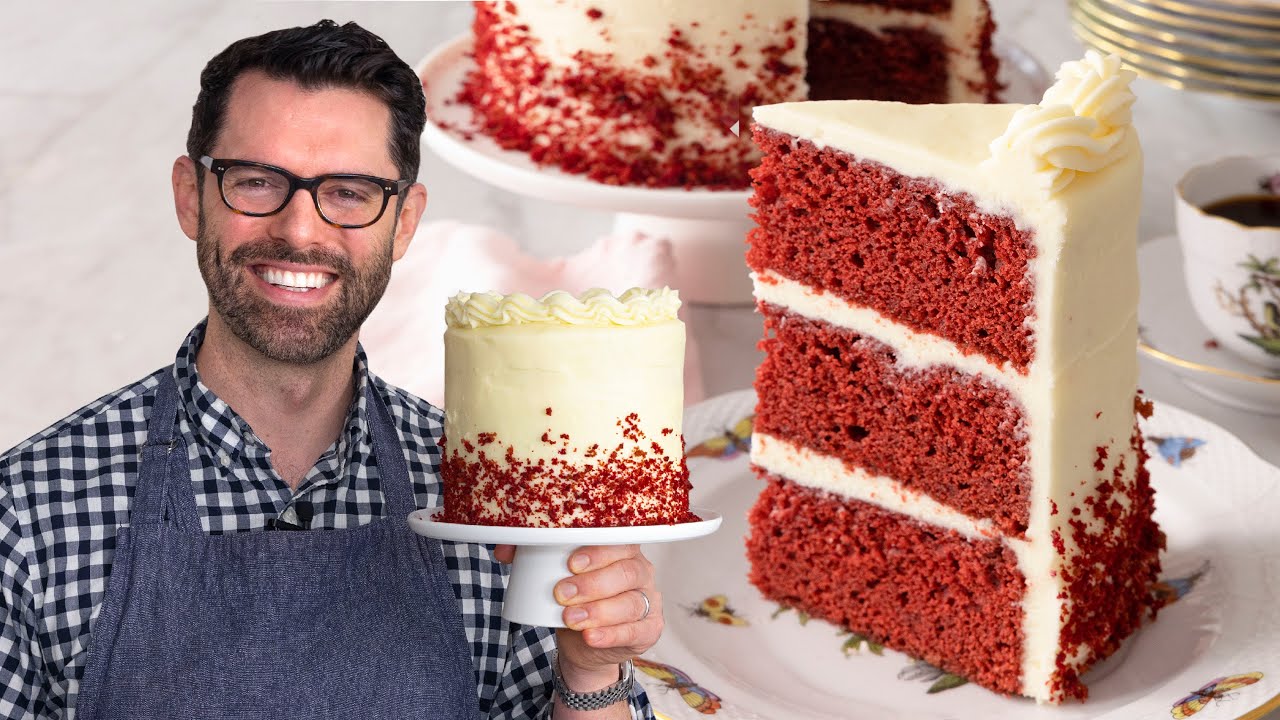
“The difference between a good chocolate cake and a great one is almost always the cocoa. Specifically, whether the cocoa was bloomed — dissolved in a hot liquid that releases its volatile aromatic compounds and dissolves the fat globules in the cocoa powder — or just mixed in dry and sent to the oven. This recipe uses boiling water as the blooming agent, Dutch-process cocoa for color and depth, and oil instead of butter for a crumb that stays moist for three days. The frosting is a chocolate buttercream that is thick enough to pipe and rich enough to justify its own serving.”
Why This Recipe Works
Chocolate cake is the most common home baking project in the English-speaking world, and it is wildly inconsistent in quality because most recipes treat the cocoa powder as an ingredient rather than an ingredient that requires activation. Cocoa powder dropped dry into a bowl of flour and mixed with room-temperature liquid produces a functional chocolate cake. Cocoa powder dissolved in boiling water first produces a different cake entirely. The technique is called blooming, and it's the single biggest variable in the quality of the finished product.
Why Boiling Water Blooms Cocoa
Cocoa powder is the solid material left after the fat (cocoa butter) has been pressed out of roasted cacao beans. It contains a complex mixture of flavonoids, methylxanthines (theobromine, caffeine), polyphenols, and volatile aromatic compounds — hundreds of compounds that collectively produce the flavor we recognize as chocolate.
The problem is that cocoa powder in its dry state is not fully releasing these compounds. The fat globules that remain after pressing (about 10-22% fat in natural cocoa, higher in Dutch-process) partially encapsulate flavor compounds. The volatile aromatics — pyrazines, aldehydes, and ketones created during roasting — are partially bound in the solid matrix and unavailable.
Boiling water does two things simultaneously. It dissolves the remaining cocoa fat globules, releasing the trapped aromatic compounds. And it partially dissolves and disperses the flavor molecules into the liquid, where they can distribute evenly through the entire batter rather than sitting concentrated in dry pockets of cocoa. The result is a more uniform chocolate flavor throughout the crumb — darker in color and more intense in taste — compared to dry-incorporated cocoa.
The thin batter that results from the boiling water addition is not a flaw. It means the starches have partially hydrated and the fat has dispersed. During baking, the excess liquid evaporates and leaves behind a more open, tender crumb structure than a thick batter produces. This is why oil-bloomed chocolate cakes stay moist for days where dense butter cakes go stale by day two.
Dutch-Process vs. Natural Cocoa: The Alkalization Difference
Natural cocoa is slightly acidic, with a pH around 5-6. Dutch-process cocoa has been treated with an alkaline solution (potassium carbonate) to neutralize the acids, raising the pH to around 7-8. This single chemical change produces multiple effects on the finished bake.
Color: alkalization causes Maillard browning reactions to proceed differently. Dutch-process cocoa is significantly darker — almost mahogany — compared to the reddish-brown of natural cocoa. The darkness intensifies further in a cake batter because the alkalization increases the absorption of light by the cocoa particles.
Flavor: the alkaline environment neutralizes sharp, fruity, acidic notes and allows the deeper, more rounded chocolate flavors to come forward. Natural cocoa can taste slightly astringent or sharply bitter. Dutch-process tastes darker, less sharp, and more of what most people think of as "chocolate."
Leavening: natural cocoa's acidity reacts with baking soda (an alkali) to produce carbon dioxide and leavening. Dutch-process cocoa, already neutralized, does not trigger this reaction. This recipe uses both baking soda (which reacts with the buttermilk's acidity) and baking powder (which reacts thermally) — both leavening agents are present regardless of the cocoa pH. Do not substitute natural for Dutch-process and expect identical results.
Oil vs. Butter: Fat Physics in Cake Batter
Both oil and butter are fats, but they behave differently in a batter.
Butter is approximately 80% fat, 18% water, and 2% milk solids. The water evaporates during baking, contributing steam for leavening, but it also means the finished crumb has less moisture retained after baking. The milk solids contribute a complex dairy flavor. Butter-based cakes are rich, flavorful, and have a tender crumb — but they stale faster because the moisture driven off during baking is moisture that won't be there on day two.
Vegetable oil is 100% fat, with no water and no milk solids. It cannot evaporate during baking. It coats the flour proteins and starch granules more completely than melted butter because it's a pure liquid fat with no water competing for the same spaces. The result is a crumb that is uniformly lubricated — tender, moist, and resistant to drying out because there is no water to lose. Oil-based cakes are not as flavorful as butter-based cakes, which is exactly why this recipe uses oil for the cake and butter exclusively for the frosting: you get the moistness of oil in the crumb and the flavor of butter in every forkful of frosting.
Buttermilk and Baking Soda: Acid-Base Leavening
Baking soda (sodium bicarbonate) is an alkali that requires an acid to react and produce carbon dioxide. Buttermilk provides that acid. The reaction starts immediately when the two combine — which is why you mix this batter and bake it immediately rather than letting it rest. Resting allows the CO2 to escape before the oven heat can set the cell walls around the bubbles.
The baking powder (which contains its own acid) provides additional leavening through a heat-triggered reaction during baking — useful insurance against any CO2 lost before the cake goes in. Together, the two leavening agents produce a cake with a slightly open crumb structure that is ideal for a moist, tender result.
The one technique investment this recipe requires is the crumb coat. Without it — a thin primer layer of frosting that traps loose crumbs before the final layer goes on — dark crumbs appear throughout the white-ish final frosting every time the offset spatula drags across the surface. An offset spatula is the right tool for both coats. The crumb coat goes on thin and ragged. The final coat goes on thick and smooth. Twenty minutes in the refrigerator between the two is enough to set the crumb coat and make the final pass clean.
Where Beginners Mess This Up
Before we start, read this. These are the 4 reasons your chocolate cake (boiling water method, dutch cocoa, cream cheese frosting) will fail:
- 1
Using natural cocoa instead of Dutch-process: Natural cocoa is acidic. Dutch-process cocoa has been alkalized, which neutralizes the acid, deepens the color dramatically, and rounds out the sharp, fruity bitterness of natural cocoa into something richer and more chocolate-forward. The difference on a baked cake is significant — Dutch-process produces a darker, moister crumb with more intense chocolate flavor. If your cocoa doesn't say 'Dutch-process' or 'alkalized' on the label, it's natural cocoa, and the results will be noticeably inferior.
- 2
Overbaking — pulling the cake when a toothpick comes out clean: The toothpick test is not wrong, but in a moist oil-based chocolate cake, 'clean' means 'dry crumb attached' — not 'spotless.' A few moist crumbs on the toothpick at 33-35 minutes indicates the cake is done. A spotless toothpick at 40 minutes means you've overcooked it and lost the moisture that makes this recipe worth making. Pull the cakes when the edges have pulled away from the pan sides and the top springs back when lightly pressed.
- 3
Adding boiling water to cold batter too fast: The boiling water goes in last, and it goes in while being mixed on low speed. Adding it too fast or at too high a mixer speed splashes hot water, produces an uneven batter, and can partially cook the eggs in the outer edges of the batter. Stream it in slowly on the lowest mixer setting over 30-45 seconds. The batter will be thin — this is correct and expected.
- 4
Frosting a warm cake: Buttercream is an emulsion of fat and sugar. Applied to a warm cake, the fat melts, the emulsion breaks, and you get a greasy, sliding mess that looks like cake failure rather than dessert. Cakes must be completely cool — at room temperature, center and all — before frosting. This takes at least 2 hours on a wire rack. For a multi-layer cake, 4 hours is safer.
The Video Reference Library
Want to see it in action? Here are the exact videos we analyzed and combined to build this foolproof recipe translation:
The reference video for the boiling water technique and the chocolate buttercream. Covers the entire process from bloom to frost, with clear visual cues for batter consistency and frosting texture.
🛠️ Core Equipment
- Two 9-inch round cake pansThis recipe produces enough batter for two layers. Baking in one deep pan changes the heat penetration and produces a cake that is crispy and dry on the exterior before the center is cooked. Two standard 9-inch round pans produce layers that bake in 33-35 minutes with even doneness throughout.
- Stand mixer or hand mixerThe batter requires proper creaming of wet ingredients before the dry ingredients are added, and the boiling water needs to be incorporated while the mixer runs on low. A [stand mixer](/kitchen-gear/review/stand-mixer) with a paddle attachment handles this with both hands free. A hand mixer works but requires more careful coordination.
- Wire cooling rackCakes cooled in the pan sweat on the bottom, which softens the crumb and can make the bottom layer soggy. A wire rack allows air circulation on all sides. This is especially important for this recipe because the boiling water creates a thin, delicate crumb that holds moisture aggressively — it needs to cool openly.
- Offset spatulaEssential for two things: spreading the frosting between layers cleanly, and finishing the exterior with long, even strokes. A [quality offset spatula](/kitchen-gear/review/offset-spatula) makes the difference between a cake that looks professionally frosted and one that looks attacked.
Chocolate Cake (Boiling Water Method, Dutch Cocoa, Cream Cheese Frosting)
🛒 Ingredients
- ✦2 cups all-purpose flour
- ✦2 cups granulated sugar
- ✦3/4 cup Dutch-process cocoa powder
- ✦2 teaspoons baking soda
- ✦1 teaspoon baking powder
- ✦1 teaspoon fine salt
- ✦2 large eggs, room temperature
- ✦1 cup buttermilk, room temperature
- ✦1 cup vegetable oil
- ✦2 teaspoons pure vanilla extract
- ✦1 cup boiling water
- ✦1 1/2 cups unsalted butter, softened
- ✦3 cups powdered sugar, sifted
- ✦1/2 cup Dutch-process cocoa powder (for frosting)
- ✦1/3 cup heavy cream
- ✦2 teaspoons pure vanilla extract (for frosting)
- ✦1/4 teaspoon fine salt (for frosting)
👨🍳 Instructions
01Step 1
Preheat oven to 350°F. Grease two 9-inch round cake pans and line the bottoms with parchment circles. Grease the parchment.
02Step 2
In a large bowl or stand mixer bowl, whisk together flour, sugar, Dutch-process cocoa, baking soda, baking powder, and salt until fully combined with no cocoa clumps remaining.
03Step 3
Add eggs, buttermilk, vegetable oil, and vanilla to the dry ingredients. Mix on medium speed for 2 minutes until the batter is smooth, thick, and uniform in color.
04Step 4
Reduce mixer speed to low. Slowly stream in the boiling water over 30-45 seconds while the mixer runs. The batter will become very thin — noticeably thinner than standard cake batter. This is correct.
05Step 5
Divide the batter evenly between the two prepared pans. The batter will be very fluid — pour carefully.
06Step 6
Bake for 33-38 minutes, rotating the pans at the 20-minute mark, until the edges have pulled away from the pan sides and the tops spring back when lightly pressed in the center.
07Step 7
Cool in the pans on wire racks for 15 minutes, then invert onto the wire racks and remove the parchment. Cool completely — at minimum 2 hours — before frosting.
08Step 8
While the cakes cool, make the frosting: beat softened butter on medium speed for 3-4 minutes until pale and fluffy. Add cocoa powder and mix on low until just combined.
09Step 9
Add sifted powdered sugar 1 cup at a time, mixing on low after each addition until just incorporated before adding the next cup.
10Step 10
Add heavy cream, vanilla, and salt. Increase speed to medium-high and beat for 3-4 minutes until the frosting is very light, fluffy, and slightly paler in color.
11Step 11
Place one cooled cake layer on a serving plate or cake board. Spread about 1 cup of frosting over the top in an even layer using an offset spatula. Place the second layer on top.
12Step 12
Apply a thin crumb coat of frosting over the entire cake, covering all exposed surfaces. Refrigerate for 20 minutes to set the crumb coat.
13Step 13
Apply the final frosting layer generously over the entire cake. Smooth with long, even strokes of the offset spatula dipped in hot water and wiped dry between passes.
Nutrition Per Serving
Estimates based on standard preparation. Adjustments alter macros.
🔄 Substitutions
Instead of Dutch-process cocoa powder...
Use Black cocoa powder (replace half the Dutch cocoa)
Black cocoa is Dutch cocoa taken to extreme alkalization — it's what gives Oreos their color and distinctive flavor. Replacing half the Dutch cocoa with black cocoa produces a dramatically darker, more intensely flavored cake with a slightly drier crumb. Reduce by no more than half or the cake becomes too bitter.
Instead of Vegetable oil...
Use Melted coconut oil or avocado oil
Coconut oil adds a mild tropical note that pairs interestingly with dark chocolate. Avocado oil is neutral and produces an identical result to vegetable oil. Both work at a 1:1 substitution. Do not use olive oil — the flavor is too assertive.
Instead of Buttermilk...
Use Whole milk with 1 tablespoon white vinegar or lemon juice, rested 5 minutes
The acid is what matters for the baking soda reaction, not the dairy source. The homemade version produces an identical result in this recipe. Full-fat plain yogurt thinned with 2 tablespoons of milk also works.
🧊 Storage & Reheating
In the Fridge
Store frosted cake covered with a cake dome or inverted bowl for up to 4 days. The frosted cake actually improves in flavor on day 2-3 as the moisture from the crumb migrates into the frosting layers.
In the Freezer
Freeze unfrosted cake layers individually, wrapped tightly in two layers of plastic wrap and then foil, for up to 2 months. Thaw overnight in the refrigerator and frost once fully thawed. The frosting can be made fresh or frozen separately.
Reheating Rules
Serve at room temperature — refrigerated cake is denser and the chocolate flavor is muted. Remove from the refrigerator 30-45 minutes before serving. Do not microwave; it dries the crumb.
❓ Frequently Asked Questions
Why is the batter so thin after adding the boiling water?
The boiling water blooms the cocoa and dissolves the starch in the flour partially, producing a much thinner batter than a standard cake. This is correct. The thin batter creates a more open, tender crumb in the finished cake because the liquid evaporates during baking and leaves behind a delicate structure. Do not add more flour to compensate.
Can I use regular cocoa powder instead of Dutch-process?
You can, but the result will be noticeably different. Natural cocoa is more acidic and produces a more reddish-brown cake with a sharper, fruitier chocolate flavor. Dutch-process produces a darker, deeper, more rounded chocolate flavor. The baking soda in this recipe is calibrated for the acidity of buttermilk, not the additional acidity of natural cocoa — using natural cocoa may produce slightly less rise and a more acidic aftertaste.
Why does this recipe use oil instead of butter?
Oil is 100% fat. Butter is 80% fat, 18% water, and 2% milk solids. The water in butter evaporates during baking, and milk solids contribute flavor but also absorb moisture. An oil-based cake stays moist longer because there is no water to evaporate and no milk solids to absorb moisture from the crumb. The tradeoff is that butter contributes a richer, more complex dairy flavor. For a cake that will be served over multiple days, oil wins.
My frosting is too sweet. What do I do?
Add a pinch of salt and a tablespoon of strong brewed espresso or cold brew. Both cut perceived sweetness without altering the texture. You can also add 1 tablespoon of cream cheese for tanginess. If it's structurally too sweet (grainy, sugary mouthfeel), you've likely over-measured the powdered sugar — measure by weight next time.
How do I get clean, smooth frosting?
A bench scraper held vertically against the side of the cake while the turntable spins is the professional method. Absent a turntable, an offset spatula dipped in very hot water (not boiling) and wiped dry makes each pass smoother. The key is long, single, confident strokes — not short scrubbing motions.
Can I make this as a sheet cake instead of layers?
Yes. Pour all the batter into a greased and lined 9x13-inch pan and bake at 350°F for 38-45 minutes. Check at 38 minutes. A sheet cake takes slightly longer because the batter is deeper in the center. Frost directly in the pan or unmold once cooled.
The Science of
Chocolate Cake (Boiling Water Method, Dutch Cocoa, Cream Cheese Frosting)
We turned everything on this page into a beautiful, flour-proof PDF cheat sheet. Print it out, stick it to your fridge, and never mess up your chocolate cake (boiling water method, dutch cocoa, cream cheese frosting) again.
*We'll email you the high-res PDF instantly. No spam, just perfectly cooked meals.
AlmostChefs Editorial Team
We translate the internet's most popular cooking videos into foolproof, beginner-friendly written recipes. We analyze multiple methods, test them in our kitchen, and engineer a single "Master Recipe" that gives you the best possible result with the least possible stress.