Copycat Chipotle Chips and Salsa (Better Than the Restaurant)
Crispy homemade tortilla chips paired with a fire-roasted chipotle salsa that nails the smoky, chunky texture of the real thing. We broke down exactly what makes Chipotle's version addictive — then rebuilt it at home with less sodium and full ingredient control.

“Chipotle gives you those chips for free and you still go home wanting to make them. That should tell you something about how dialed in their recipe is. The secret isn't some proprietary spice blend — it's two things most home cooks skip: getting the oil to exactly 350°F before the first chip hits it, and charring the tomatoes until they're genuinely blackened, not just soft. We figured out both.”
Why This Recipe Works
Chipotle built a $10 billion company on the premise that fast food could use real ingredients assembled with precision. Their chips and salsa — given away free, barely noticed — are actually a masterclass in what happens when a kitchen controls quality at every variable. The oil temperature is consistent. The char on the tomatoes is deliberate. The blend ratio is calibrated. That's why your home version usually falls short: not because the recipe is complicated, but because you're treating the variables casually.
The Oil Temperature Problem
Most home cooks fry chips by the "it looks hot enough" method. It isn't. Oil that registers between 325°F and 340°F behaves like a fat sponge — the chip surface doesn't form a crust fast enough to repel absorption, so the interior fills with oil before it can dehydrate into a cracker. The result is heavy, translucent chips that feel wet even after cooling, because they are wet.
At 350°F, the chip surface flashes to a crust almost immediately on contact, sealing the interior from oil penetration. What you're actually doing is flash-dehydrating the tortilla from the outside in. The chip's structural integrity is set in the first 20 seconds of frying. After that, you're just browning it. A Dutch oven with high thermal mass holds the oil temperature stable across batches in a way a thin skillet physically cannot — and that consistency is the difference between batch one and batch four tasting identical.
The Char Is Not Optional
Chipotle's salsa has a distinct smoky depth that isn't coming entirely from the chipotle peppers in adobo. It's coming from the blackened tomato skins and blistered jalapeño flesh. When Roma tomatoes char under high heat, their skin develops Maillard compounds — the same reaction class behind seared meat — while the flesh beneath concentrates its natural acids and sugars. That char dissolves into the salsa and creates a flavor dimension that raw or gently roasted tomatoes simply don't have.
The char must be real. Black patches on the tomato skin, not just softening. If your vegetables come out looking pale after 10 minutes, you didn't reach temperature or your oven is running cold. Switch to broil for two to three minutes and finish the job. Charred vegetables look like a mistake. They are not.
The Pulse Discipline
A food processor is an excellent tool and a dangerous one. The line between "chunky restaurant-style salsa" and "tomato soup" is eight to ten pulses. Not eight to ten seconds of running — eight to ten individual pulse presses, each lasting half a second. Stop. Open the lid. Look. If you can see distinct chunks of tomato and pepper, you're there. If you can't, you've already gone too far and there's no recovery.
Chipotle's salsa is identifiable by texture. You can see pieces. That texture is what makes it pair with chips instead of just coating them. Smooth salsa disappears into the chip. Chunky salsa stands up against it.
Why This Version Is Actually Better
Chipotle's version uses kosher salt at volume, which pushes sodium to around 620mg per serving in the original. This version uses sea salt with restraint and leans harder on lime juice and adobo to build the same flavor complexity at 380mg. The acid does what salt usually has to do alone — it makes every other flavor louder without adding sodium.
The chips are the same story. Deep-frying in avocado oil instead of vegetable oil eliminates the rancid background note that comes from overheated polyunsaturated fats. You won't notice the difference in a restaurant because the volume of flavor overrides it. At home, in a quiet kitchen with one basket of chips, you will notice.
Fresh off the fryer, salted immediately, with a bowl of properly chunky fire-roasted salsa next to them — this version holds its own against the original. And it didn't cost you a burrito to find out.
Where Beginners Mess This Up
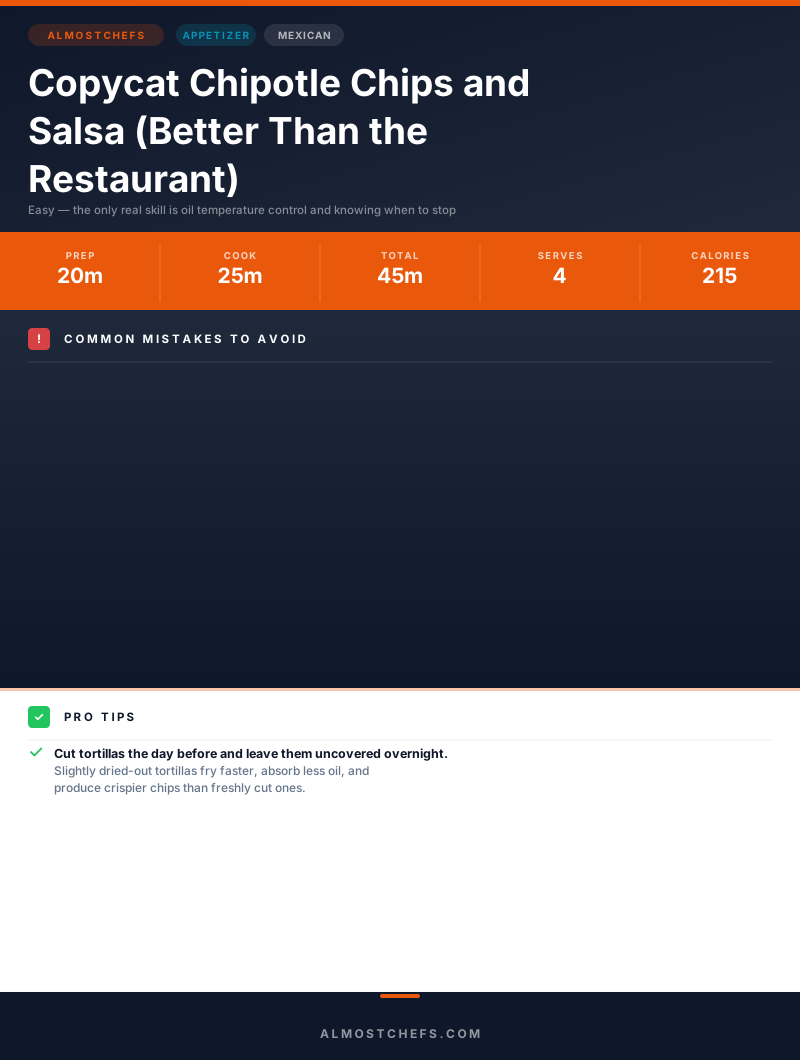
Before we start, read this. These are the 4 reasons your copycat chipotle chips and salsa (better than the restaurant) will fail:
- 1
Frying at the wrong oil temperature: Chips dropped into oil below 350°F absorb fat like a sponge before they have time to crisp. The result is greasy, limp chips that never recover — not even after cooling. Use a thermometer. Every batch. Let the oil recover between batches or the temperature drops and the second batch is always worse than the first.
- 2
Over-blending the salsa: Chipotle's salsa is chunky. The moment you run the food processor continuously instead of pulsing, you've made tomato soup. Eight to ten short pulses — count them — is the ceiling. Visible tomato pieces and pepper chunks are the goal. Smooth salsa is a different product entirely.
- 3
Skipping the char on the vegetables: The smokiness in Chipotle's salsa doesn't come entirely from the chipotle peppers — it comes from charred tomato skins and blistered jalapeños. If your roasted vegetables come out pale and soft, you've missed the flavor foundation. They should have real black patches before they leave the oven.
- 4
Salting the chips too late: Salt needs to hit the chips within 10 seconds of coming out of the oil or leaving the oven. That brief window of surface moisture is what makes the salt adhere. Salt chips that have already cooled and you're essentially salting the paper towel underneath them.
🛠️ Core Equipment
- Deep skillet or heavy-bottomed saucepan ↗Even heat distribution keeps the oil temperature stable across batches. A thin pan swings 30-40 degrees between batches, ruining your consistency. A [Dutch oven](/kitchen-gear/review/dutch-oven) is ideal.
- Instant-read thermometer ↗There is no reliable visual substitute for 350°F oil. Bubbling starts at 300°F. Smoking starts at 400°F. You need to hit the 50-degree window in between — and you can't eyeball it.
- Food processor or blender ↗A blender on low pulse works, but a [food processor](/kitchen-gear/review/food-processor) gives you more control over texture. You want chunky. The pulse function is mandatory — not optional.
- Cast-iron skillet or sheet pan ↗For charring the tomatoes and jalapeños. Cast iron holds heat better and creates more aggressive char contact than a sheet pan, but either works. You want direct dry heat against the vegetable surface.
Copycat Chipotle Chips and Salsa (Better Than the Restaurant)
🛒 Ingredients
- ✦6 corn tortillas, cut into triangles
- ✦2 cups vegetable oil for frying
- ✦1 teaspoon sea salt
- ✦2 pounds fresh Roma tomatoes
- ✦1 white onion, quartered
- ✦3 jalapeños, halved and seeded
- ✦2 chipotle peppers in adobo sauce
- ✦1 tablespoon adobo sauce from the can
- ✦1/2 cup fresh cilantro leaves
- ✦3 cloves garlic, minced
- ✦2 tablespoons fresh lime juice
- ✦1/2 teaspoon cumin
- ✦1/4 teaspoon black pepper
- ✦1/2 teaspoon kosher salt for salsa
- ✦1 tablespoon olive oil for salsa mixing
👨🍳 Instructions
01Step 1
Preheat your oven to 400°F if baking, or heat 2 cups of vegetable oil in a deep skillet to 350°F if frying.
02Step 2
Stack the corn tortillas and cut them into triangular chip-sized pieces with a sharp knife or kitchen shears.
03Step 3
Arrange Roma tomatoes, quartered onion, and halved jalapeños on a cast-iron skillet or directly on an oven rack. Roast at 400°F for 8-10 minutes until charred with visible black patches.
04Step 4
Transfer the charred vegetables to a food processor or blender. Add chipotle peppers, adobo sauce, minced garlic, cumin, and black pepper.
05Step 5
Pulse 8-10 times until you achieve a chunky salsa with visible tomato and pepper pieces. Do not run the machine continuously.
06Step 6
Pour salsa into a bowl. Stir in fresh cilantro, lime juice, and kosher salt. Drizzle with olive oil and adjust seasoning to taste.
07Step 7
If deep-frying: add tortilla triangles in small batches to 350°F oil. Fry 1-2 minutes until golden and crispy. Drain on paper towels and salt immediately.
08Step 8
If baking: arrange tortilla triangles in a single layer on a sheet pan, brush both sides lightly with oil, sprinkle with sea salt, and bake at 400°F for 8-10 minutes, shaking the pan once halfway through.
09Step 9
Let chips cool 2-3 minutes — they crisp as they cool. Transfer to a basket or bowl lined with parchment to maintain crunch.
10Step 10
Serve chips immediately alongside salsa while still warm.
Nutrition Per Serving
Estimates based on standard preparation. Adjustments alter macros.
🔄 Substitutions
Instead of Vegetable oil for frying...
Use Avocado oil
Higher smoke point (520°F vs 400°F) creates a cleaner-tasting chip with less oxidative degradation at high heat. Slightly more expensive but meaningfully better at temperature.
Instead of Corn tortillas (deep-fried)...
Use Air-fried or baked chips
Reduces calories by 40-50% per serving. Texture stays crispy with minimal compromise. Brush generously with oil before baking or the chips go leathery instead of crispy.
Instead of White onion...
Use Red onion
Adds mild sweetness and slightly more complex flavor to the salsa. Contains higher quercetin levels. Use the same quantity — the flavor difference is subtle but worth it.
Instead of Corn tortillas (traditional yellow)...
Use Organic blue corn tortillas
Nuttier, earthier flavor. Lower glycemic index. May fry slightly faster due to density differences — watch the first batch closely.
🧊 Storage & Reheating
In the Fridge
Store salsa in an airtight container for up to 5 days. Flavor peaks at day 2 as the chipotle smoke fully integrates. Give it a stir and re-season with lime before serving.
In the Freezer
Freeze salsa in portioned containers for up to 3 months. Chips do not freeze well — make fresh.
Reheating Rules
Chips can be re-crisped in a 350°F oven for 4-5 minutes directly on the rack. Never microwave — they go soft and stay soft.
❓ Frequently Asked Questions
Why are my homemade chips greasy?
The oil temperature was too low when the chips went in. Chips fried below 325°F absorb fat aggressively before they can form a crust. Get the oil to 350°F and verify it with a thermometer before every batch. Also, don't crowd the pan — too many chips at once drops the oil temperature sharply.
Can I use canned tomatoes instead of fresh?
Fire-roasted canned tomatoes work in a pinch and actually add good smoky depth. But they contain more liquid than roasted fresh Roma tomatoes, so your salsa will be thinner. Drain them before blending and expect to adjust your lime and salt accordingly.
How do I get the salsa to taste less bitter?
Bitterness usually comes from over-blending the jalapeño seeds and skin, or from under-ripe tomatoes. Make sure your jalapeños are seeded before roasting and use ripe Roma tomatoes — they should be deep red with no green at the stem. A pinch of sugar can also counteract bitterness without sweetening the salsa noticeably.
Is this the actual Chipotle recipe?
Close, but not identical. Chipotle's salsa is made in large batches with commercial equipment that controls char and texture in ways a home kitchen can't fully replicate. What this recipe nails is the flavor profile — the smoky heat from chipotle peppers, the bright lime-cilantro finish, and the chunky texture. The gap between this and the restaurant version is small.
Can I make the chips ahead of time?
Yes — up to 3 days ahead. Store in an airtight container at room temperature. Re-crisp them in a 350°F oven for 5 minutes before serving. They won't be quite as good as fresh-fried, but they're close enough for casual entertaining.
How do I control the heat level of the salsa?
The heat lives in two places: the jalapeños and the chipotle peppers. For milder salsa, seed the jalapeños fully and reduce to one chipotle pepper with half the adobo sauce. For more heat, leave some jalapeño seeds in and add a third chipotle pepper. Adjust in one-variable steps so you know which element is controlling the heat.
The Science of
Copycat Chipotle Chips and Salsa (Better Than the Restaurant)
We turned everything on this page into a beautiful, flour-proof PDF cheat sheet. Print it out, stick it to your fridge, and never mess up your copycat chipotle chips and salsa (better than the restaurant) again.
*We'll email you the high-res PDF instantly. No spam, just perfectly cooked meals.
AlmostChefs Editorial Team
We translate the internet's most popular cooking videos into foolproof, beginner-friendly written recipes. We analyze multiple methods, test them in our kitchen, and engineer a single "Master Recipe" that gives you the best possible result with the least possible stress.