Copycat Chipotle Barbacoa (Better Than the Real Thing)
Slow-braised beef chuck roast with chipotle peppers, adobo sauce, and warm spices cooked until it falls apart. We broke down the chain's signature method and rebuilt it at home — lower sodium, no preservatives, and a smoke depth the restaurant version can't touch.
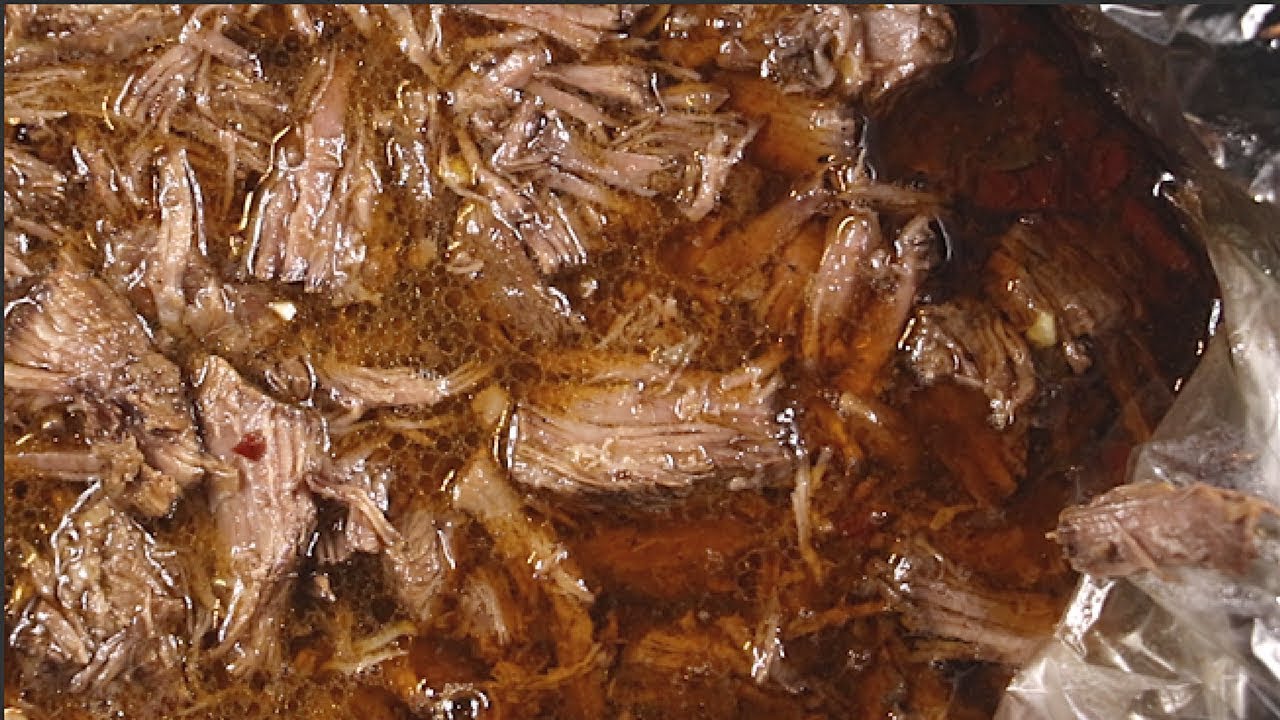
“Chipotle's barbacoa has a cult following for one reason: the texture. That pull-apart, saucy, smoke-forward beef that coats everything it touches. The chain isn't doing anything magic — they're just braising chuck roast low and slow with chipotle peppers and adobo. Make it at home and you control the sodium, cut the preservatives, and hit a smoke depth the restaurant version doesn't have time for.”
Why This Recipe Works
Chipotle's barbacoa is one of the chain's great achievements — not because it's complicated, but because they committed to a technique most fast casual restaurants won't. Low and slow braised beef with chipotle peppers. That's it. The entire flavor profile lives in that one decision.
Making it at home doesn't require culinary school. It requires patience and a Dutch oven.
The Sear Is Non-Negotiable
Every barbacoa recipe that skips the sear produces inferior results. This is not an opinion. The Maillard reaction — the browning that happens when meat hits high heat — creates hundreds of aromatic compounds that don't exist in raw beef. When you braise without searing, those compounds never form, and the braising liquid has nothing to extract. You get pale, flat-tasting beef.
Three to four minutes per side over medium-high heat. Don't move the meat while it's on the heat. Let the crust build. That brown crust is not cosmetic — it's the flavor foundation the entire seven-hour braise is built on.
Chuck Roast Is the Only Answer
Barbacoa needs collagen. Collagen is what converts to gelatin during the long braise, creating the sticky, pull-apart texture that coats your rice bowl and holds together in a burrito. Chuck roast has more collagen than almost any other common beef cut — which is why it's inexpensive and why it transforms so dramatically between raw and finished.
The conversion happens around 200-205°F internal temperature. Below that, the collagen is still tough and the meat resists the fork. Above it, the beef literally falls apart when you look at it. A instant-read thermometer removes all guesswork. You're not cooking to time — you're cooking to temperature.
The Chipotle Blend Is the Whole Dish
The sauce defines barbacoa. Chipotle peppers in adobo are doing three things simultaneously: providing smoke from the dried smoked jalapeños, providing heat from the capsaicin, and providing tang from the adobo sauce itself. Blend them completely smooth with the dry spices and apple cider vinegar before they touch the pot.
The vinegar is not optional. Seven hours of braising without acid produces flat, heavy beef. The apple cider vinegar keeps the flavors bright and prevents the long cook from collapsing everything into a monotone mush. It's the difference between barbacoa that wakes your palate up and barbacoa that puts it to sleep.
Liquid Discipline
One cup of broth. That's the whole recipe. Every additional cup of liquid you add dilutes the chipotle concentration and prevents the sauce from reducing into the clingy coating that makes this dish work. Barbacoa is not a stew. The braising liquid should be covering roughly one-third of the meat, not submerging it.
If you over-add liquid — it happens — the fix is simple: remove the lid at the end and simmer on the stovetop for 10-15 minutes until the excess evaporates. The concentration comes back. The flavor returns. The texture firms up into exactly what you want.
The Shred Happens in the Pot
Not on a cutting board. Not in a separate bowl. In the pot, in the braising liquid, with two forks. As you pull the beef apart, every strand immediately drinks the sauce that surrounds it. This is how the barbacoa achieves that uniformly coated, deeply flavored result instead of dry shredded beef with sauce ladled on top as an afterthought.
Pull the bay leaves. Shred everything else. Stir. Taste. Adjust. Serve.
The restaurant has been doing this for decades. Now you know why it works.
Where Beginners Mess This Up
Before we start, read this. These are the 4 reasons your copycat chipotle barbacoa (better than the real thing) will fail:
- 1
Skipping the sear: The brown crust you build by searing the chuck roast on all sides is not optional. That Maillard reaction creates hundreds of flavor compounds that the braising liquid then pulls into the entire batch of meat. Skip the sear and you get pale, one-dimensional beef. The 15 minutes it takes is non-negotiable.
- 2
Not blending the chipotle sauce smooth: Leaving chunks of chipotle pepper or whole garlic in the braising liquid produces uneven heat distribution — you get bites that are mouth-numbing and bites that are bland. Blend it completely. The goal is a uniform, brick-red slurry that coats the meat evenly.
- 3
Pulling the beef too early: Chuck roast needs to hit an internal temperature above 200°F before the collagen fully converts to gelatin. At 190°F it's still chewy. At 205°F it falls apart on contact. Six hours at 325°F gets you there — but if your oven runs cool, go the full eight. Trust the fork test, not the clock.
- 4
Drowning the meat in liquid: Barbacoa is not a soup. One cup of beef broth is sufficient. Too much liquid dilutes the chipotle concentration and prevents the braising sauce from reducing into the rich, clingy coating that makes the final shred so flavorful. If your pot looks like it's swimming, simmer it down uncovered at the end.
The Video Reference Library
Want to see it in action? Here are the exact videos we analyzed and combined to build this foolproof recipe translation:
The source video this recipe was built from. Solid technique walkthrough covering the sear, the chipotle blend, and the oven braise timing.
🛠️ Core Equipment
- Dutch oven with tight-fitting lidThe vessel that makes or breaks the braise. You need it for searing on the stovetop and then transferring directly to the oven. A [Dutch oven](/kitchen-gear/review/dutch-oven) distributes heat evenly across the bottom and sides, preventing the hot spots that scorch the bottom layer while the center stays undercooked.
- Blender or food processorFor turning the chipotle peppers, adobo sauce, and spices into a smooth, uniform paste. An immersion blender works in a pinch but won't get the sauce as silky. A [high-powered blender](/kitchen-gear/review/blender) finishes in 30 seconds and makes cleanup easier.
- Two heavy forksFor shredding the beef directly in the pot so it absorbs the braising liquid as it pulls apart. Bear claws work faster if you have them, but two forks get the job done. The shredding happens in the pot — not on a cutting board — so the meat drinks the sauce.
- Instant-read thermometerTakes the guesswork out of doneness. You're looking for 203-205°F internal temperature, which is when collagen fully converts and the beef yields completely. An [instant-read thermometer](/kitchen-gear/review/instant-read-thermometer) eliminates the six-hours-and-hope method.
Copycat Chipotle Barbacoa (Better Than the Real Thing)
🛒 Ingredients
- ✦3 pounds beef chuck roast, trimmed of excess fat
- ✦4 chipotle peppers in adobo sauce
- ✦3 tablespoons adobo sauce from the can
- ✦2 tablespoons apple cider vinegar
- ✦2 tablespoons olive oil
- ✦1 tablespoon ground cumin
- ✦1 tablespoon dried oregano
- ✦1 teaspoon garlic powder
- ✦1 teaspoon onion powder
- ✦1 teaspoon smoked paprika
- ✦1 teaspoon kosher salt
- ✦1/2 teaspoon black pepper
- ✦1/2 teaspoon cayenne pepper
- ✦1 cup low-sodium beef broth
- ✦1/2 cup diced onion
- ✦3 cloves garlic, minced
- ✦2 bay leaves
- ✦1 tablespoon honey
👨🍳 Instructions
01Step 1
Preheat your oven to 325°F. Pat the beef chuck roast completely dry with paper towels and season all sides generously with kosher salt and black pepper.
02Step 2
Heat olive oil in a large Dutch oven over medium-high heat until shimmering. Brown the chuck roast on all sides for 3-4 minutes per side until a deep golden crust forms. Set aside on a plate.
03Step 3
In a blender or food processor, combine the chipotle peppers, adobo sauce, apple cider vinegar, cumin, oregano, garlic powder, onion powder, smoked paprika, and cayenne. Blend until completely smooth.
04Step 4
Pour the blended chipotle sauce into the Dutch oven. Add the beef broth, diced onion, minced garlic, bay leaves, and honey. Return the seared chuck roast to the pot.
05Step 5
Bring the liquid to a gentle simmer on the stovetop, then cover with a tight-fitting lid and transfer to the preheated oven.
06Step 6
Braise for 6-8 hours, checking at the 6-hour mark. The beef is done when it shreds easily with a fork and an instant-read thermometer reads 203-205°F.
07Step 7
Remove the pot from the oven. Discard the bay leaves. Using two forks, shred the beef directly in the pot, pulling it apart into bite-sized pieces.
08Step 8
Stir the shredded beef into the cooking liquid to combine thoroughly. Taste and adjust salt, pepper, or cayenne as needed.
09Step 9
If the mixture is too wet, simmer uncovered on the stovetop over medium heat for 10-15 minutes until the liquid reduces to a saucy, clingy consistency.
10Step 10
Serve immediately in bowls, burritos, or tacos topped with fresh cilantro, lime juice, diced white onion, and cotija cheese.
Nutrition Per Serving
Estimates based on standard preparation. Adjustments alter macros.
🔄 Substitutions
Instead of Beef chuck roast...
Use Grass-fed or pasture-raised chuck roast
Slightly richer, more complex beef flavor. Higher omega-3 content. Cooks identically — no timing adjustments needed.
Instead of Olive oil...
Use Avocado oil
Higher smoke point (520°F vs 375°F) means better browning at high sear temperatures. Nearly identical flavor profile.
Instead of Low-sodium beef broth...
Use Homemade bone broth or low-sodium vegetable broth with 1 tablespoon apple cider vinegar
Bone broth adds body and collagen depth. The apple cider vinegar replicates the acidity that keeps the braise bright. Significant flavor upgrade.
Instead of Honey...
Use Blackstrap molasses or pure maple syrup
Deeper, more robust flavor than honey. Both have lower glycemic indices and higher mineral content. Use the same quantity.
🧊 Storage & Reheating
In the Fridge
Store in an airtight container with some of the braising liquid for up to 4 days. The liquid keeps the meat moist and the flavors continue to develop.
In the Freezer
Freeze in portion-sized containers or zip-lock bags for up to 3 months. Freeze with braising liquid to prevent freezer burn.
Reheating Rules
Reheat in a covered skillet over medium-low heat with a splash of beef broth for 5-7 minutes, stirring occasionally. Microwave works but dries the edges — add a tablespoon of water and cover with a damp paper towel.
❓ Frequently Asked Questions
How close does this actually taste to Chipotle's barbacoa?
Very close — and in some ways better. The main difference is smoke depth and freshness. Chipotle uses a commissary process that prioritizes consistency at scale. A home braise with fresh garlic, whole chipotles, and quality chuck roast produces more dimensional flavor. The texture is identical when the collagen fully converts.
Can I make this in a slow cooker instead of the oven?
Yes, with one non-negotiable condition: sear the meat first. Slow cookers can't generate enough surface heat to build a crust, so you must sear on the stovetop before transferring. Cook on low for 8-10 hours. The texture is slightly less caramelized than the oven version but the flavor is the same.
My barbacoa came out dry. What happened?
Two likely causes. First, you pulled it before the collagen fully converted — undercooked chuck roast is tough and dry, not tender. Second, you discarded the braising liquid. The shredded beef must be stored and served with the cooking liquid, which is what gives it the moist, saucy consistency.
Can I use a different cut of beef?
Chuck roast is the right call because of its high collagen content, which converts to gelatin during the long braise and creates that sticky, pull-apart texture. Brisket works as a substitute with similar results. Leaner cuts like round or sirloin will produce drier, tougher results regardless of cook time — avoid them.
How do I adjust the heat level?
The chipotle peppers are the primary heat source. The recipe calls for four — use two for mild, four for medium, six for hot. The cayenne pepper adds a different kind of heat (sharper, faster). Reduce or eliminate the cayenne separately from the chipotles if you want smoky flavor without the burn.
Why does the recipe use apple cider vinegar?
Acid is essential in a long braise. It keeps the flavor bright and prevents the dish from tasting flat and heavy after seven hours of cooking. The vinegar also helps tenderize the beef surface during the early stages of cooking. Without it, long-braised beef can taste one-dimensional and muddy.
The Science of
Copycat Chipotle Barbacoa (Better Than the Real Thing)
We turned everything on this page into a beautiful, flour-proof PDF cheat sheet. Print it out, stick it to your fridge, and never mess up your copycat chipotle barbacoa (better than the real thing) again.
*We'll email you the high-res PDF instantly. No spam, just perfectly cooked meals.
AlmostChefs Editorial Team
We translate the internet's most popular cooking videos into foolproof, beginner-friendly written recipes. We analyze multiple methods, test them in our kitchen, and engineer a single "Master Recipe" that gives you the best possible result with the least possible stress.