Authentic Chimichurri (The Sauce That Makes Everything Better)
A vibrant, herbaceous Argentine sauce built on fresh parsley, cilantro, garlic, and red wine vinegar. We stripped the method down to what actually matters — herb-to-oil ratio, rest time, and why you should never use a blender — to deliver the condiment that makes grilled meat worth eating.
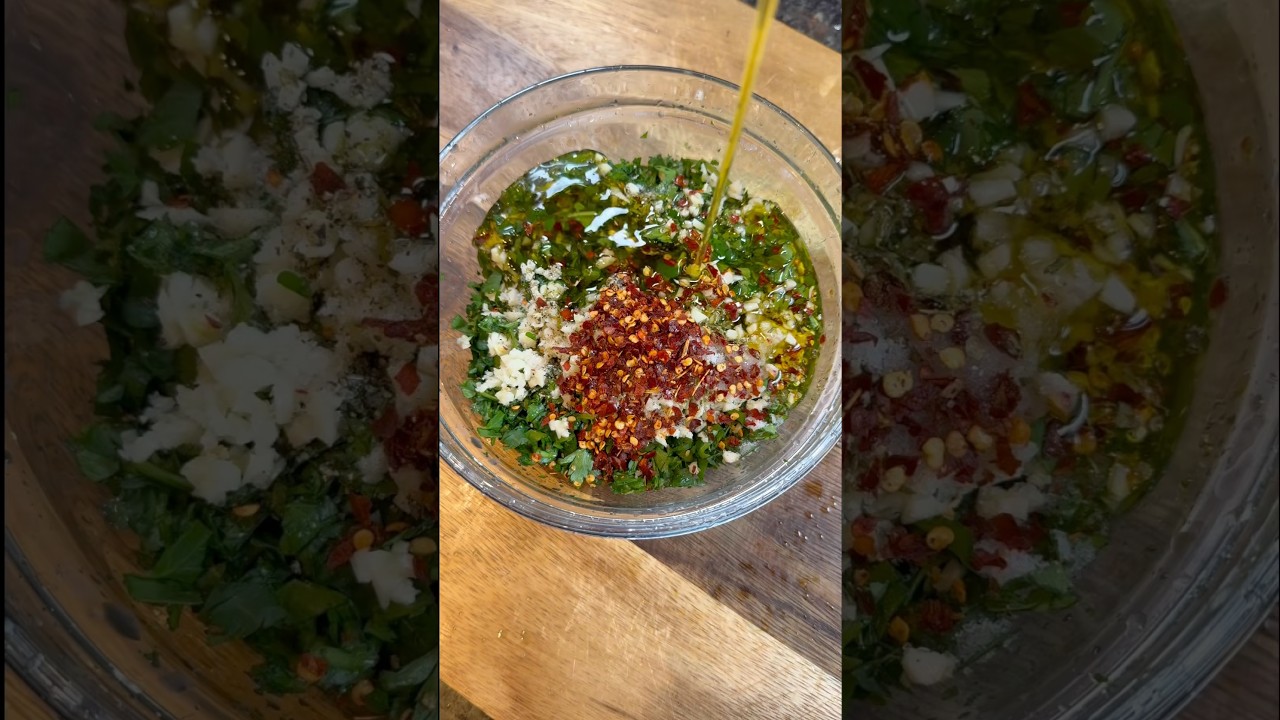
“Chimichurri is one of the few condiments where the recipe is almost impossible to get wrong — and yet most people get it wrong. They blend it into a paste, skip the rest time, or drown the herbs in oil until the whole thing tastes like a salad dressing with ambitions. The sauce is supposed to be chunky, verdant, and aggressively tangy. Here's how to make it that way.”
Why This Recipe Works
Chimichurri is the sauce that proves simplicity is a skill, not a shortcut. Six ingredients, no heat, no technique beyond the ability to hold a knife — and yet it's one of the most immediately recognizable, aggressively craveable condiments in the world. The reason most homemade versions disappoint has nothing to do with the ingredient list. It has everything to do with two decisions that seem inconsequential until you understand the chemistry behind them: how you cut the herbs, and whether you wait.
The Knife Mandate
Every chimichurri recipe tells you to chop. Most people reach for a food processor anyway because it's faster and the pile of parsley looks daunting. This is the mistake that kills the sauce before it's made.
When you blitz fresh herbs in a food processor, you do three things: you shred the cell walls instead of slicing through them, you generate heat from the blade friction, and you push the herbs into prolonged contact with the oil. The result is a murky, emulsified paste — technically chimichurri in the same way a fast-food patty is technically beef. The volatile aromatic oils in fresh parsley and cilantro are contained in tiny glands on the leaf surface. A sharp knife slices through the leaf cleanly, releasing those oils gradually. A processor macerates and oxidizes them instantly.
The chop you're aiming for is small but not fine — about 3-4mm pieces. You should be able to see individual herb fragments in the finished sauce, suspended in oil and vinegar like a mosaic rather than dissolved into it.
The Rest Period
Fifteen to twenty minutes at room temperature is not a suggestion. It's the step where raw garlic becomes something you want to eat.
Freshly minced garlic contains allicin — the compound responsible for its sharp, sometimes acrid bite. When garlic makes contact with the acid in the red wine vinegar, a mild pickling reaction begins. Allicin starts converting into softer, more nuanced sulfur compounds. At the same time, the vinegar begins drawing moisture from the herb cells, concentrating the flavors and softening the textural contrast between the herbs and oil. A rested chimichurri and a freshly made chimichurri taste like different sauces.
The practical implication: make your chimichurri before you light the grill, not after. The sauce will sit happily at room temperature while your meat cooks, and it will be significantly better for it.
Acid Balance
The combination of red wine vinegar and fresh lemon juice is doing something specific. Vinegar provides consistent, sustained acidity — it's the backbone note that cuts through fat on the palate. Lemon juice provides a brighter, more volatile citrus note that lifts the top end of the flavor profile. Together they create a layered acidity that neither ingredient achieves alone.
The ratio matters. Too much acid and the sauce tastes thin and aggressive. Too little and it reads as an herb oil, pleasant but not energizing. The quarter-cup of vinegar to two tablespoons of lemon juice is calibrated to give you a sauce that finishes clean and makes you immediately want another bite of whatever you put it on.
The Oil Question
Use the best extra virgin olive oil you own. There is no cooking in this recipe — no heat to mask cheap oil's flaws, no caramelization to add sweetness, no browning to add complexity. The oil's flavor comes through completely unfiltered. A grassy, peppery high-quality olive oil turns chimichurri into something memorable. A bland or rancid oil turns it into something forgettable.
The quantity matters too. Half a cup for 1.5 cups of herbs sounds conservative, and it is — intentionally. The herbs should dominate. This is not a vinaigrette. The oil is a vehicle, not the destination.
Chimichurri is one of those recipes where the ceiling is exactly as high as the quality of your ingredients and the patience of your process. Both of those things are entirely within your control.
Where Beginners Mess This Up
Before we start, read this. These are the 4 reasons your authentic chimichurri (the sauce that makes everything better) will fail:
- 1
Using a blender or food processor: A blender destroys the texture that makes chimichurri chimichurri. It emulsifies the oil into the vinegar, pulverizes the herbs into a paste, and turns a bright green sauce into something that looks and tastes like pesto's sad cousin. Use a knife. Always. The coarse chop is load-bearing.
- 2
Skipping the rest time: Raw garlic in chimichurri is harsh and acrid. The 15-20 minute rest at room temperature allows the garlic's volatile sulfur compounds to mellow and the vinegar to macerate the herbs slightly, softening their raw bite. Serve it immediately and it tastes unfinished. Wait and it tastes complex.
- 3
Using dried parsley: Dried parsley is to chimichurri what instant coffee is to espresso. It lacks the volatile aromatic compounds that give the sauce its brightness. Fresh Italian flat-leaf parsley is non-negotiable. If your supermarket only has curly parsley, buy it — it's still infinitely better than dried.
- 4
Over-oiling the sauce: The herb-to-oil ratio should lean toward herbs, not oil. A sauce that's 70% olive oil is a marinade. You want to see distinct flecks of green suspended in a glossy emulsion, not herbs drowning in a sea of fat. Measure the oil — don't free-pour.
The Video Reference Library
Want to see it in action? Here are the exact videos we analyzed and combined to build this foolproof recipe translation:
The foundational technique video — covers herb chopping method, proper oil ratio, and how long to rest before serving. Shows exactly what the finished texture should look like.
🛠️ Core Equipment
- Sharp chef's knife and cutting boardThe only tool you need, and the quality matters. A sharp blade bruises herbs less during chopping, preserving the volatile aromatic oils that give chimichurri its brightness. A dull knife crushes and oxidizes.
- Glass jar with tight-fitting lidFor storage and mixing. A mason jar lets you shake to recombine after separation in the fridge, and glass won't absorb herb and vinegar aromas the way plastic does.
- Medium mixing bowlLarge enough that you can fold in seasonings without crowding. Cramped mixing leads to uneven seasoning distribution — salty in one pocket, bland in another.
Authentic Chimichurri (The Sauce That Makes Everything Better)
🛒 Ingredients
- ✦1 cup fresh Italian parsley, packed
- ✦1/2 cup fresh cilantro, packed
- ✦4 garlic cloves, minced
- ✦1/2 cup extra virgin olive oil
- ✦1/4 cup red wine vinegar
- ✦2 tablespoons fresh lemon juice
- ✦1 teaspoon dried oregano
- ✦1/2 teaspoon red pepper flakes
- ✦1/2 teaspoon ground cumin
- ✦1/4 teaspoon sea salt
- ✦1/8 teaspoon black pepper
- ✦2 tablespoons finely diced white onion
- ✦1 tablespoon finely minced fresh green onion
- ✦1/4 teaspoon smoked paprika
👨🍳 Instructions
01Step 1
Wash the parsley and cilantro thoroughly under cold running water. Pat completely dry with paper towels — wet herbs dilute the sauce and accelerate browning.
02Step 2
Chop the parsley and cilantro by hand into small, uniform pieces, discarding tough stems. You want approximately 1.5 cups of combined chopped herbs. Do not use a food processor.
03Step 3
Mince the garlic cloves finely with a sharp knife until you have a near-paste consistency. Uniform size ensures even flavor distribution through the sauce.
04Step 4
Combine the chopped herbs and minced garlic in a medium bowl. Stir gently to blend.
05Step 5
Pour in the olive oil and stir to coat all the herbs evenly.
06Step 6
Add the red wine vinegar and fresh lemon juice. Whisk briefly until the sauce looks slightly emulsified.
07Step 7
Sprinkle in the dried oregano, red pepper flakes, cumin, salt, and black pepper. Stir to distribute evenly.
08Step 8
Fold in the diced white onion and green onion. Stir gently — you want to incorporate without bruising the herbs further.
09Step 9
Add the smoked paprika and give the sauce one final thorough stir.
10Step 10
Let the chimichurri rest at room temperature for 15-20 minutes before serving. This step is not optional.
11Step 11
Taste and adjust: more salt for depth, more vinegar for tang, more red pepper flakes for heat.
12Step 12
Serve immediately at room temperature, or transfer to a glass jar and refrigerate. Always bring to room temperature before serving.
Nutrition Per Serving
Estimates based on standard preparation. Adjustments alter macros.
🔄 Substitutions
Instead of Red wine vinegar...
Use Apple cider vinegar
Slightly sweeter and milder. Works well but produces a less classically Argentine flavor profile. Use the same quantity.
Instead of Extra virgin olive oil...
Use Avocado oil
More neutral flavor, lighter texture, better for longer storage. Loses some of the peppery richness that olive oil contributes.
Instead of Dried oregano...
Use Fresh oregano (1.5 tablespoons chopped)
More vibrant and herbaceous. If using fresh, add it with the parsley and cilantro, not at the seasoning stage.
Instead of White onion...
Use Red onion or shallot
Shallots are milder and integrate more seamlessly. Red onion adds slight sweetness and a more complex bite. Both are excellent upgrades.
🧊 Storage & Reheating
In the Fridge
Store in a glass jar with a tight lid for up to 1 week. The color will darken slightly after day 2 — that's oxidation, not spoilage. Flavor remains excellent.
In the Freezer
Freeze in ice cube trays, then transfer cubes to a zip-lock bag for up to 3 months. Thaw a cube at a time in the fridge overnight.
Reheating Rules
No reheating — chimichurri is always served at room temperature. Pull it from the fridge 20-30 minutes before serving. Shake or stir to recombine the separated oil and vinegar.
❓ Frequently Asked Questions
Why does my chimichurri taste too harsh?
Raw garlic. Either mince it more finely so it distributes through the sauce instead of concentrating in clumps, or extend your rest time to 30 minutes. The vinegar needs time to take the edge off. Some cooks let freshly minced garlic sit in the vinegar alone for 5 minutes before adding the herbs — this pre-macerates it and dramatically reduces harshness.
Can I make chimichurri in a blender?
Technically yes. You should not. A blender over-processes the herbs into a paste, emulsifies the oil fully, and destroys the chunky texture that defines chimichurri. If you want a smooth herb sauce, make salsa verde. Chimichurri is supposed to have visible herb pieces.
How long does chimichurri last?
Up to 1 week refrigerated in a sealed glass jar. The bright green color fades after a couple of days due to chlorophyll oxidation, but the flavor remains good. If it smells off or has grown anything fuzzy, discard it.
Do I have to use cilantro?
No. Traditional Argentine chimichurri is parsley-only. The cilantro in this recipe adds brightness and a slightly different aromatic character, but it's optional. If you're cilantro-averse, simply increase the parsley to 1.5 cups.
What's the difference between chimichurri and salsa verde?
They're cousins, not twins. Italian salsa verde often includes capers, anchovies, and Dijon mustard — it's more complex and savory. Argentine chimichurri is simpler and more acidic, built to cut through the richness of grilled meat rather than to stand alone as a condiment.
Why did my chimichurri turn brown?
Oxidation. Chlorophyll in the parsley and cilantro degrades when exposed to air and acid over time. It's normal and doesn't affect safety or flavor. To slow it down: press plastic wrap directly onto the surface of the sauce before sealing the jar, minimizing air contact.

The Science of
Authentic Chimichurri (The Sauce That Makes Everything Better)
We turned everything on this page into a beautiful, flour-proof PDF cheat sheet. Print it out, stick it to your fridge, and never mess up your authentic chimichurri (the sauce that makes everything better) again.
*We'll email you the high-res PDF instantly. No spam, just perfectly cooked meals.
AlmostChefs Editorial Team
We translate the internet's most popular cooking videos into foolproof, beginner-friendly written recipes. We analyze multiple methods, test them in our kitchen, and engineer a single "Master Recipe" that gives you the best possible result with the least possible stress.